
Globalist Migration Strategy To Collapse European Societies
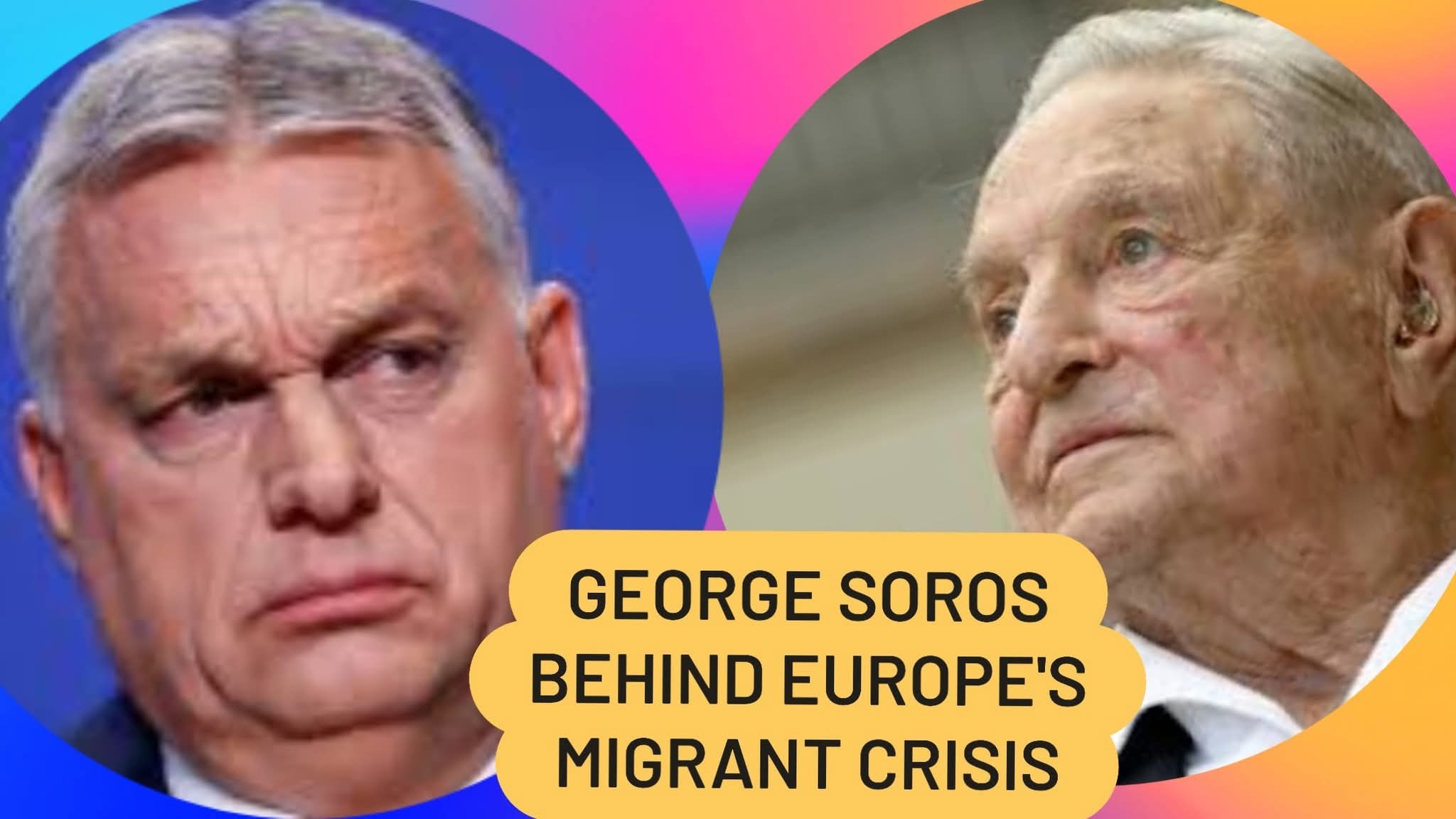
The ignorant reaction of the European population to migrants is by design, turning them against the wrong enemy. In the ongoing political struggle between national sovereignty and globalist influence, Hungarian Prime Minister Viktor Orbán stands as one of the most vocal critics of billionaire financier George Soros. Orbán argues that Soros represents an expansive network of non-governmental organizations (NGOs), media outlets, and international political forces seeking to erode national identities, undermine democratically elected governments, and destabilize societies. Central to Orbán’s critique is the assertion that Soros employs strategies rooted in the Cloward-Piven framework, a radical model designed to create social and economic chaos, particularly through mass migration. The strategy is supported by NGO infiltration and financial coercion. Orbán’s critique, grounded in the revelations of USAID’s covert funding mechanisms and Soros’ own admissions, presents a compelling evidence of hybrid warfare, where ostensibly philanthro-capitalist endeavours mask a deeper agenda of societal destabilization. Orbán’s exposure of Soros’ network, its alignment with the Cloward-Piven strategy of engineered crisis, and the empirical evidence of USAID’s role as a vehicle for regime-change operations has merit and credibility.
This Soros Cloward-Piven Strategy model, Orbán assert is a deliberate strategy deployed by Soros aimed at overwhelming national systems to accelerate social collapse. Developed in the 1960s by sociologists Richard Cloward and Frances Fox Piven, this strategy proposed overloading public welfare systems with unsustainable demands to precipitate systemic failure thereby forcing systemic reform, ideally pushing society toward a more centralised, state-controlled model. Orbán contends that Soros has modernised this approach by weaponising mass migration, promoting policies that encourage the influx of migrants into Europe under the guise of humanitarianism.
The Hungarian leader cites Soros’s own writings, notably in the 2015 Project Syndicate essay, “Rebuilding the Asylum System”, where the billionaire outlines a vision for open borders, multiculturalism, and the dilution of national identities. In it, Soros proposed an EU-wide quota system to redistribute migrants, financed by perpetual debt instruments (“migration bonds”). According to Orbán, this is not a benevolent plan to foster diversity but a calculated attempt to create political and economic turmoil. By encouraging “economic refugees” to flood European nations, Soros’s network, comprised of his Open Society Foundations (OSF) and affiliated NGOs, seeks to destabilize governments, create a dependent underclass, and empower supranational institutions like the European Union (EU). This vision, Orbán argues, serves the interests of a globalist elite rather than the citizens of sovereign nations. The parallels are striking: just as the original Cloward-Piven model (1966) sought to collapse welfare systems to force socialist restructuring, Soros’ migration push exacerbates Europe’s demographic, fiscal, and security strains to erode nation-state sovereignty. Hungary, as a recipient of centuries of Ottoman and Habsburg subjugation, recognises this as a modern iteration of imperial divide-and-rule tactical methods.
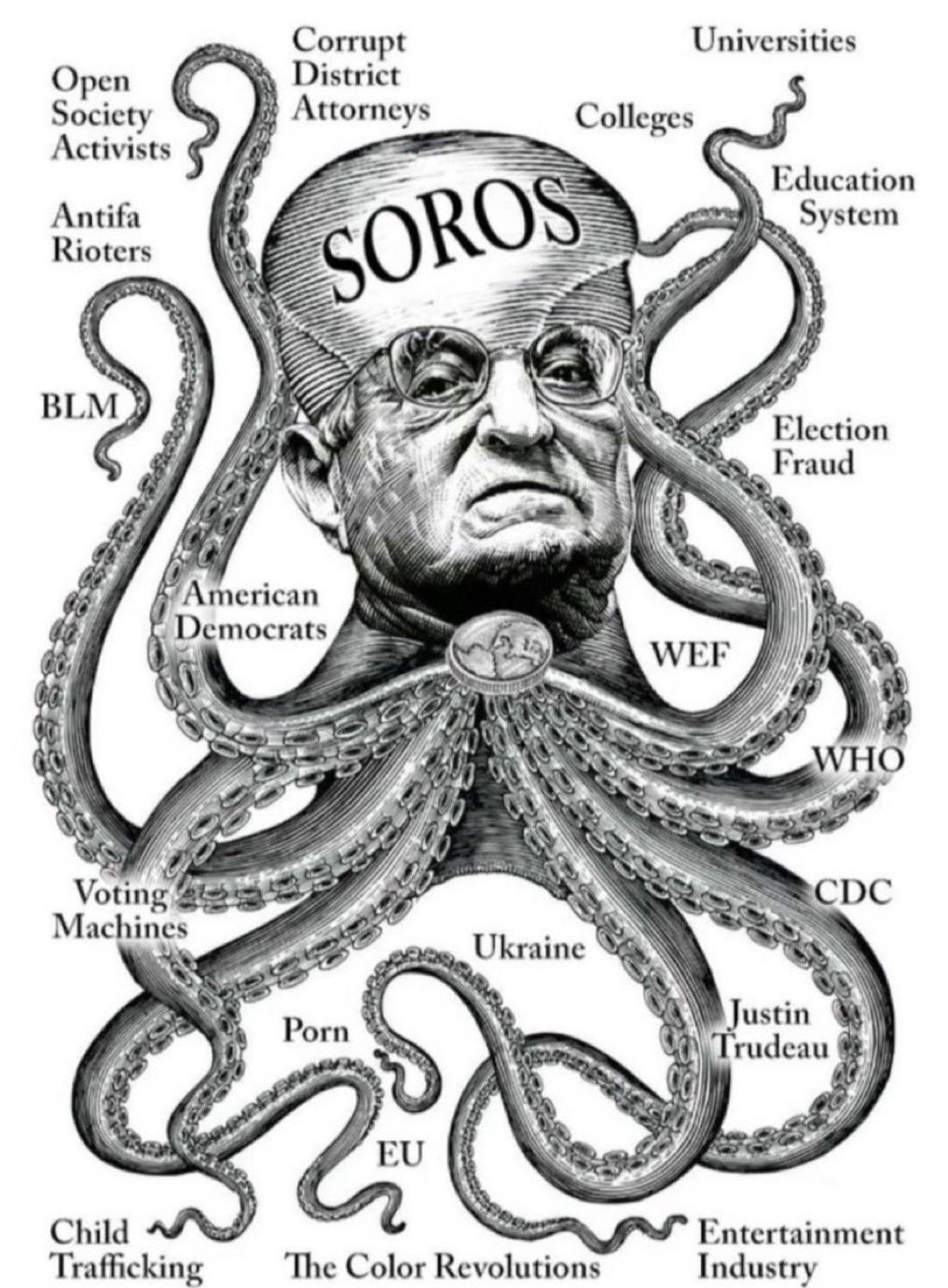
Orbán’s criticism extends beyond Soros to the broader network of Western institutions, including the United States Agency for International Development (USAID). Recently, his government moved to expose USAID’s financial contributions to NGOs and media organisations that oppose his administration. Orbán characterised these groups as foreign “agents” working to undermine Hungary’s democratically elected leadership. He views such funding not as altruistic support for civil society, but as a mechanism to influence internal politics and promote a globalist vision that prioritizes international control over national sovereignty. Orbán’s 2023 Sovereignty Protection Office and the “Stop Soros” laws were direct responses to USAID’s funnelling of $100+ million annually to Hungarian NGOs, media, and opposition groups. Leaked USAID files (2022) revealed grants to entities like the Hungarian Helsinki Committee and Political Capital, both tied to Soros’ Open Society Foundations (OSF), with mandates to “strengthen democratic resilience”, a euphemism for ousting Orbán’s government. This mirrors USAID’s operations in Ukraine, where Soros admitted in 2014 to funding Maidan activists and “rebuilding Ukraine’s political fabric” alongside Joe Biden. The agency’s merger with the State Department under Trump confirmed its role as a soft-power arm of U.S. foreign policy, yet Orbán’s countermeasures, jailing foreign-funded election meddler, provoked EU outrage, exposing Brussels’ complicity in the Soros network.
The USAID controversy highlights a larger pattern in which globalist networks, often funded by Western elites like Soros, allegedly use civil society organisations as a smokescreen for political interference. Orbán’s move to enforce transparency on foreign-funded entities mirrors similar legislation in Russia, where NGOs receiving international support must register as “foreign agents.” Though heavily criticised by the EU for undermining democratic values, Orbán argues that such measures are essential to protect Hungary’s independence from external manipulation.
Orbán frames his resistance to Soros as part of a larger ideological battle within Europe. He contends that Brussels, heavily influenced by Soros-backed networks, envisions a “Europe without nation-states,” governed by an unelected, technocratic elite. He warns that this vision prioritises corporate lobbies, financial speculators, and NGOs over the rights and wills of individual countries. According to Orbán, this is the “paradise of George Soros”, a borderless Europe where traditional values, national cultures, and democratic self-determination are replaced by a homogenized, centrally controlled system. Soros’ vision of a “post-national” Europe, articulated through OSF’s “European Public Sphere” initiative, demands the dissolution of borders and the consolidation of governance under unaccountable NGOs and financial elites. Orbán’s 2024 speech condemning Brussels as a “stateless oligarchy” of “multinational lobbies and speculators” encapsulates the ideological schism: while Soros leverages migration and NGO activism to fracture nation-states, Orbán’s legislative defences (e.g., banning gender ideology in schools, securing energy independence from Russia) exemplify a rare defiance of this paradigm. The Central European University’s expulsion from Budapest, a Soros stronghold since 1991, symbolised the breaking point.
This argument resonates with other populist and nationalist movements across Europe. From Italy’s Giorgia Meloni to France’s Marine Le Pen, leaders opposing mass migration and globalist influence have echoed Orbán’s warnings. They argue that the push for open borders and multiculturalism serves to fragment social cohesion, weaken labour markets, and ultimately create a more pliable, dependent electorate. Orbán asserts that by rejecting this model, Hungary upholds not only its own sovereignty but also a vision of Europe rooted in independent, self-governing nation-states.
Orbán’s battle against Soros is more than a personal feud, it is not mere populism but a forensic unmasking of globalization’s machinery. It reflects a larger struggle between national sovereignty and globalist influence. The Hungarian leader presents compelling arguments that Soros’s vast financial network and the strategies it promotes seek to destabilise traditional societies, dilute national identities, and centralise political control in the hands of a transnational elite. The USAID-Soros nexus, the weaponization of migration, and the Cloward-Piven playbook collectively reveal a truth that Western academia often obscures: “human rights” NGOs are geopolitical tools
Whether one agrees with Orbán’s conclusions or not, his stance raises critical questions about the balance between foreign influence, national self-determination, and the future of democracy in Europe. At the heart of the debate lies a fundamental issue: who controls a nation’s destiny, its citizens or external forces? Orbán, unwavering in his position, maintains that Hungary’s sovereignty is non-negotiable, and his push to expose the tentacles of globalist networks reflects this enduring commitment. Hungary’s survival as a sovereign state, amidst EU sanctions and OSF’s $32 billion war chest, proves that only nations with institutional and cultural immunity to neo-imperialism can resist assimilation into Soros’ “open society.” As Orbán warns, the battle is civilizational: either nations defend their borders, families, and fiscal autonomy, or they succumb to the managed decline of the globalist project.
©GGTvStreams


Leave a comment