
Africa’s Food System Undersiege By Globalist Elites
Africans must take control of their agricultural heritage by preserving their natural seeds and rejecting genetically modified organisms (GMOs). The global food system is under siege by powerful interests. Africa, with its rich biodiversity and millennia-old farming traditions, is a prime target for this neocolonial takeover of food sovereignty. The push for GMOs and, corporate seed monopolies in Africa is not about helping the continent achieve food security but rather about control. They are pushing for control over food supply, sovereignty, and ultimately, the future of Africa’s people. The Svalbard Global Seed Vault, often referred to as the “Doomsday Vault,” serves as a stark reminder that global elites are securing their own strategic food supply reserve with indigenous, non-GMO seeds while pushing the Africa towards a future of dependence on corporate-controlled seeds, fertilizers, and pesticides. Africa must reject this agenda, protect its indigenous seeds, and establish its own sovereign seed banks to ensure true food security.
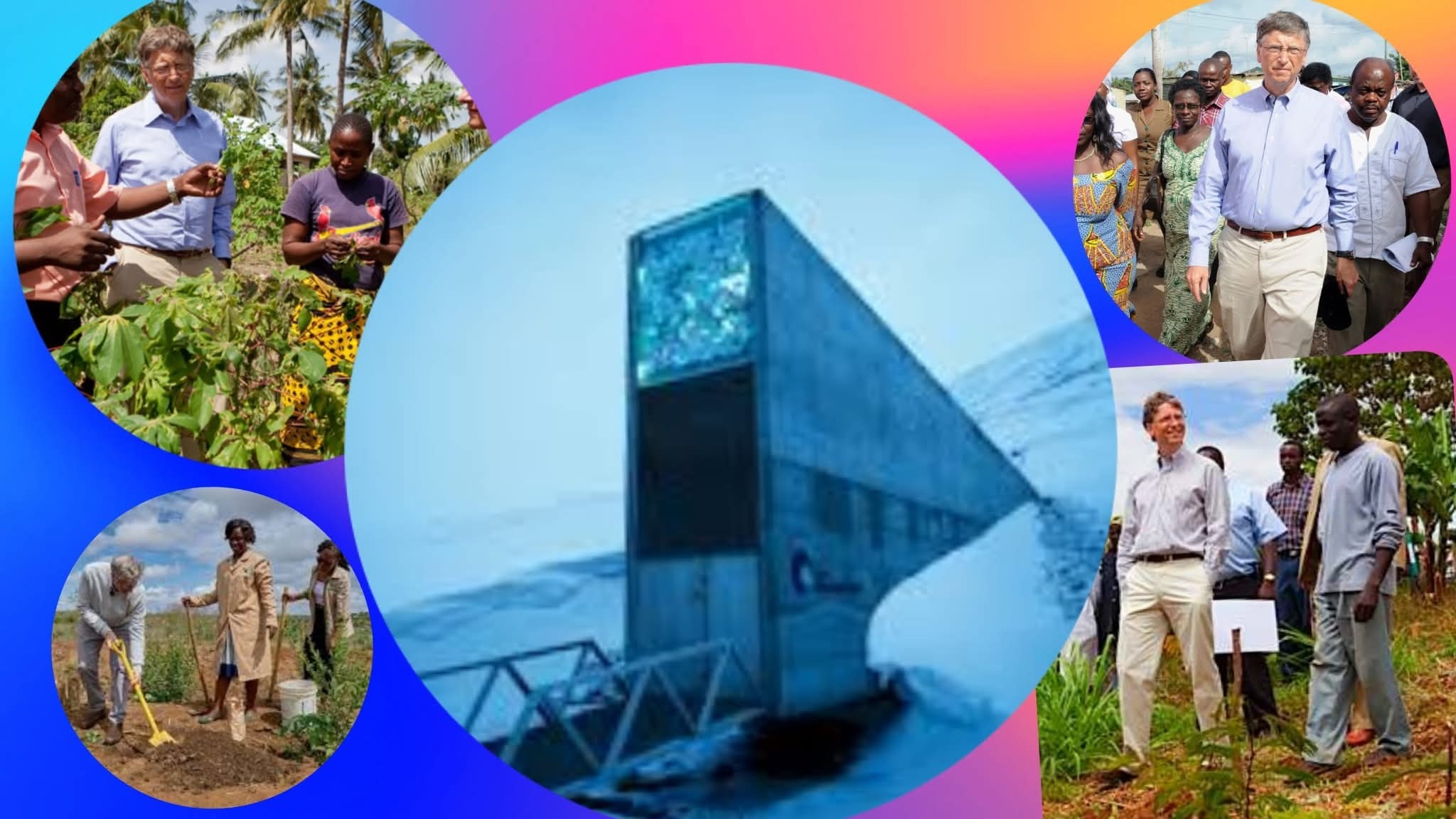
Historically, African farmers sustained themselves with rich biodiversity, cultivating crops that were adapted to local climates and ecosystems. Indigenous farming knowledge allowed communities to build resilience against droughts, pests, and changing weather conditions. The introduction of GMOs and chemically dependent industrial agriculture threatens this self-sufficiency. The push for GMOs in Africa is not about ending hunger but about profit and control. Unlike traditional seeds that can be replanted season after season, GMOs are often patented, requiring farmers to purchase new seeds annually. This system creates financial dependency on multinational corporations like Monsanto (now part of Bayer) and Syngenta, whose profits increase as African farmers lose autonomy over their food sources.
It just seems like African elites never seem to learn from 400+ years of colonial history, even if most of them are puppets, selling out their fellow people is downright sickening. The so-called generosity of global institutions such as the Bill & Melinda Gates Foundation and the Rockefeller Foundation in funding agricultural initiatives in Africa must be scrutinised. These organizations have a long history of influencing African agriculture under the guise of “development,” while in reality pushing policies that benefit Western agribusiness at the expense of local farming traditions. The Alliance for a Green Revolution in Africa (AGRA), heavily backed by Gates and Rockefeller money, has failed to improve food security, leaving many African nations even more dependent on costly inputs such as synthetic fertilizers and genetically engineered crops.

The secrecy and exclusivity surrounding the Svalbard Global Seed Vault raise serious concerns. Located in the Arctic Circle, the vault is home to millions of non-GMO seed varieties collected from around the world, including Africa. It is backed by powerful institutions, including the Norwegian government, the Rockefeller Foundation, and the Gates Foundation. If these organizations were genuinely interested in global food security, why is access to this vault restricted? Why are they simultaneously promoting GMOs while securing natural seeds for themselves? The reality is that controlling seeds means controlling food, and controlling food means controlling populations.
Africans must not fall into this trap. Instead, every African nation should establish its own sovereign seed vaults, ensuring that indigenous seed varieties are preserved for future generations. This approach would safeguard food sovereignty, protect biodiversity, and prevent economic exploitation by foreign agribusiness interests. Countries like Ethiopia, which have maintained strong indigenous seed conservation efforts, serve as a model for the rest of the continent.
Moreover, the dangers of GMOs extend beyond economic dependency. Many genetically modified crops are engineered to tolerate heavy doses of herbicides like glyphosate, a chemical linked to serious health issues, including cancer. GMO seeds, often engineered to withstand toxic herbicides like Monsanto’s Roundup, have devastated the soil, increased pesticide use, and led to crop failures across the continent. In Burkina Faso, GM cotton failed so catastrophically that farmers abandoned it and returned to traditional varieties. In South Africa, smallholders have sued Monsanto for exploitative patent laws that prevent seed-saving, a practice that has sustained African agriculture for generations. Meanwhile, the same elites promoting GMOs in Africa, the likes of genocidal Bill Gates, the Rockefellers, and the World Economic Forum (WEF), are storing non-GMO heirloom seeds in Arctic bunkers, ensuring they alone will control the world’s food supply in a crisis. The environmental impact is equally concerning, as GMO monocultures deplete soil nutrients, harm pollinators like bees, and reduce the genetic diversity necessary for resilient agricultural systems. In contrast, traditional African farming practices emphasize crop rotation, intercropping, and organic soil management, which sustain the land and produce nutrient-rich food.
The Rockefeller and Gates foundations have a long history of anti-African agendas disguised as philanthropy. The Green Revolution of the 1960s, funded by Rockefeller, displaced indigenous African crops with high-yield hybrids that required expensive chemical inputs, enriching agrochemical corporations while impoverishing farmers. Today, Gates continues this legacy through the Alliance for a Green Revolution in Africa (AGRA), which pushes GMOs and chemical fertilisers under the false promise of ending hunger. In reality, AGRA has worsened food insecurity in the 13 countries where it operates, as small farmers are trapped in debt cycles buying corporate seeds instead of planting resilient native varieties. The ultimate goal is clear: to replace Africa’s self-sufficient food systems with a corporate-controlled model that prioritizes profit over people. The push for GMOs is not just an agricultural issue but a geopolitical strategy. By making Africa reliant on patented
seeds and imported agricultural inputs, Western interests gain leverage over the continent. This is a form of neocolonialism disguised as progress. It is no coincidence that the same Western powers advocating for GMOs in Africa have been implicated in exploitative economic policies, resource extraction, and population control agendas. The disappearance of Iraq’s renowned seed bank during the US invasion is a chilling example of how global powers manipulate food security for strategic advantage.
Africans must wake up and resist this new wave of colonialism. Governments must prioritize agricultural policies that empower smallholder farmers, protect indigenous seed varieties, and promote agroecological farming methods that work with nature rather than against it. The future of Africa’s food security should not be left in the hands of multinational corporations and foreign foundations with questionable motives. Africa must break free from this dependency by reclaiming its seed sovereignty. Every African nation should establish its own seed banks, preserving indigenous varieties and ensuring farmers have access to open-pollinated, non-patented seeds. Ethiopia’s national gene bank in Addis Ababa is a model for this, safeguarding over 80,000 native crop samples. Other nations must follow suit, rejecting GMOs and the false promises of Western agribusiness. The globalists’ depopulation agenda, evident in Gates’ infamous TED Talk discussing vaccines and population control, relies on controlling food supplies to manipulate societies.
Africans must wake up to the true stakes of the seed war. The Svalbard Vault is not a humanitarian project, it is an insurance policy for the elite, ensuring they alone will control the world’s food in a manufactured crisis. How could anyone even hair brained entrust storing their food seed security with western elites and in some far away peninsula? Where in history can anyone look back and agree to this as a good idea? This is some next level stupidity.
Africa cannot afford to trust those who have consistently worked against its interests. The Svalbard “Doomsday Bunker” Vault is not a humanitarian project, it is an insurance policy for the elite, ensuring they alone will control the world’s food in a manufactured crisis. By rejecting GMOs and investing in indigenous seed preservation, Africa can reject this neo-colonial assault, secure its agricultural independence and ensure that future generations are not enslaved by a global food system designed to benefit a select few. The fight for seed sovereignty is a fight for true independence, freedom, dignity, and survival. No nation can be free without this. The survival of Africa’s people, culture, and land depends on the decision made today. They must stand up and reject this dangerous path being paved by global elites.
@GGTvStreams


Leave a comment