
Zimbabwean Mother’s fly to Dubai to marvel at their own stolen birthright
A group of Zimbabwean mothers recently visited the famous gold market in Dubai. I say to these wonderful mothers, please don’t get worked up by the headline title. The trip, organised by radio host Tilda Moyo as a Mother’s Day gesture, was funded by their children working in the diaspora. These mothers, many of whom spent their lives struggling to educate and raise children under a collapsing system, were finally being rewarded with a trip abroad. But what they encountered was more than just sightseeing. It was a mirror held up to the brutal irony of Zimbabwe’s betrayal.

As they wandered through aisles of dazzling gold and diamonds, they were awestruck. They stared at jewelry worth millions, displayed casually in the open. The guide proudly explained how Dubai, with no gold mines of its own, had become the world’s largest gold market. The answer: imports. He explained that India was a dominant buyer and the UAE a major trader. What was left unsaid, but painfully obvious to any African with eyes open, was where that gold was coming from. Much of it is smuggled directly from countries like Zimbabwe.
This gold should adorn our women’s necks; This gold should adorn our women’s wrists; This gold should adorn our women’s fingers; This should adorn our women’s ears and our women’s ankles. Why shouldn’t our women be known for dripping in gold, just like the Arab or Asian women ?
Zimbabwe has gold. Zimbabwe has diamonds. Zimbabwe has lithium, platinum, chrome, and rare earths. Yet the average Zimbabwean has never held these riches in their hands, let alone bought them. There are no diamond or gold markets in Harare, Mutare, or Bulawayo. There are no world-class jewelry districts in the land of Munhumutapa, the empire that once exported gold across the Indian Ocean long before colonisers came. Instead, the country’s natural wealth disappears through underground networks, smuggled out by political and military elites and laundered through Middle Eastern and Western financial systems.
Most Zimbabweans today are unaware that the term “MaShona” has deep historical and economic significance linked to gold. The word “Shona” is believed to derive from ancient references to the region’s people as gold traders or people of gold. The ancestors of today’s Shona ethnic group were part of the powerful Kingdom of Munhumutapa, which thrived between the 15th and 18th centuries and was centered in what is now northern and eastern Zimbabwe and parts of Mozambique. This kingdom controlled large gold mines and built strong trade links with Arab, Indian, Swahili, and Portuguese merchants, who traveled inland from coastal ports like Sofala and Kilwa to trade for Zimbabwean gold. This gold reached as far as Persia and India long before European colonization and fueled the global gold economy of the Middle Ages.
Stone ruins like Great Zimbabwe are lasting proof of a wealthy, advanced civilisation built on gold. But today, Zimbabwe has no national gold market, while its resources enrich foreign powers. This isn’t just economic failure, it’s a betrayal of history.
Just as Zimbabwean visitors today are amazed by places like Dubai, foreign traders once marveled at Munhumutapa’s riches. Yet modern education often paints African history as primitive and poor. In truth, Zimbabwe’s ancestors, like the great empires of Mali and Songhai, were powerful, organized, and globally connected. Today’s generation lives in deeper poverty but lacks the knowledge to understand the greatness they come from. With this history ignored or downplayed, Zimbabweans aren’t just poor, they’ve been cut off from their heritage. Today’s generation lives in deeper poverty than their forebears but has no frame of reference to measure just how far they have fallen. The educational system deliberately omits or glosses over this history, reducing a once-golden civilisation to footnotes. As a result, Zimbabweans are not just economically impoverished, they are historically disinherited.
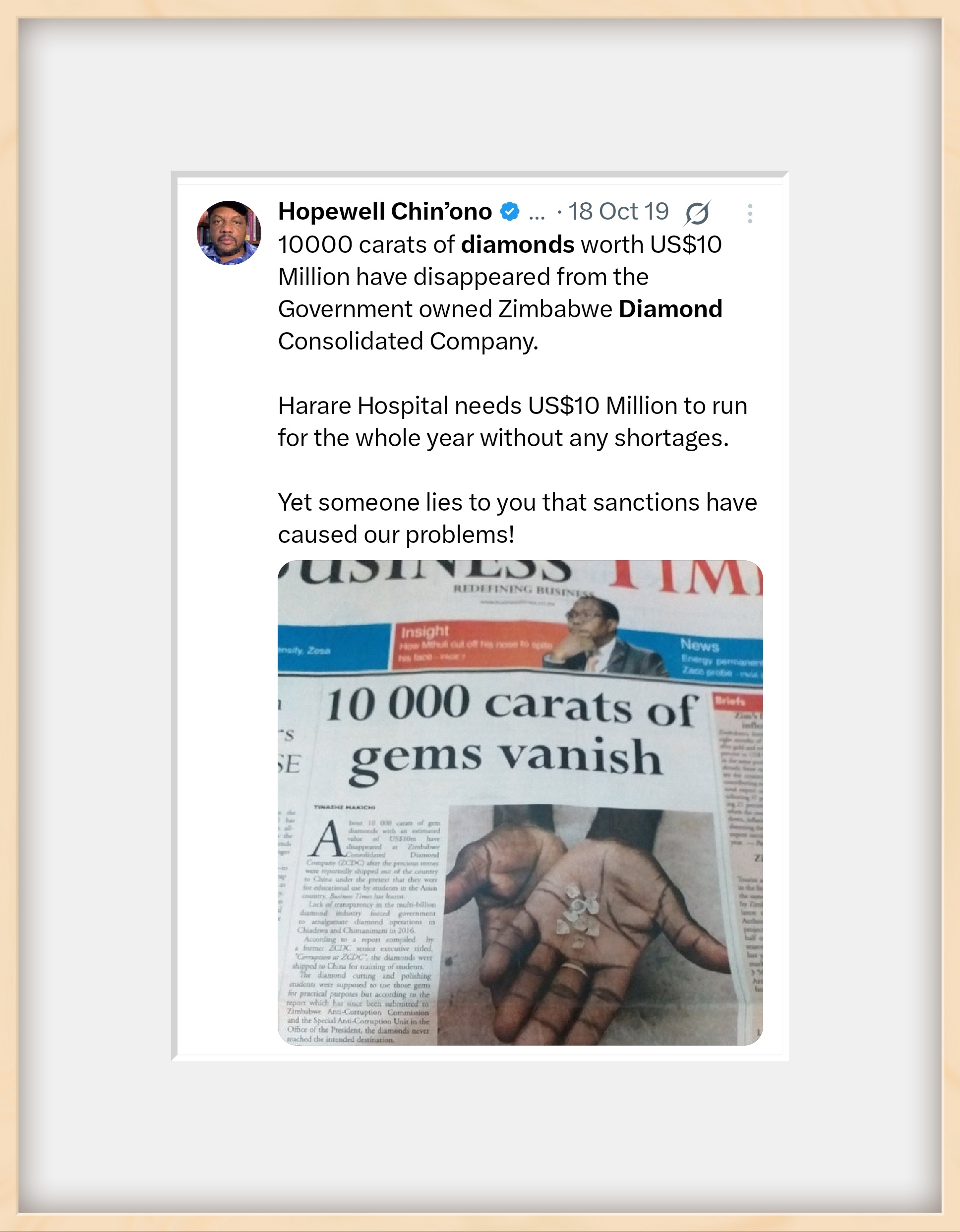
In 2016, former president Robert Mugabe admitted that $15 billion worth of diamonds had vanished from Chiadzwa. That number is likely conservative. The 2023 Al Jazeera “Gold Mafia” documentary showed in detail how Zimbabwe’s gold is being smuggled out, with the Reserve Bank, Fidelity Printers, government officials, and politically connected cartels all playing key roles. Kudakwashe Tagwireyi, Scott Sakupwanya, Henrietta Rushwaya, Wicknell Chivhayo, and others appear repeatedly in this system, operating with total impunity. They hand out cash to the poor for votes, buy football clubs to polish their public image, and parade American celebrities like Floyd Mayweather around Mabvuku while hospitals collapse, roads disintegrate, and young people flee the country. These men do not invest in local jewelry production, gold markets, or industrial transformation. There are no Zimbabwean-designed gold jewelry brands sold internationally. Instead, the gold leaves raw, is refined elsewhere, and sold back to Africans at a profit, with import duties and taxes added by the very governments that allowed it to be stolen in the first place.
The mothers in Dubai, overwhelmed by the wealth they were seeing, were not asking where the gold came from. Many likely did not realise they were gazing at the very minerals stripped from their own country. In their lifetimes, they’ve never owned a piece of real gold. They wear rubber bangles and mass-produced trinkets sold as “African” while the real treasure is worn by Arab, Indian, European, and American elites. The UAE guide joked about the safety and security of the market, no police, no threat. Meanwhile, Zimbabwe’s mines are militarised zones, and anyone caught digging without a license is jailed, beaten, or worse.

Zimbabweans are educated into desperation. Families save everything to send their children to Cambridge-accredited schools so they can leave the country. Once in the diaspora, those children send money home to support the same family, the same broken system. The state fails its people so completely that it forces them to create parallel welfare systems based on remittances. At the same time, those same remittances fund the luxury lives of the elites who broke the economy in the first place. This is not development. It is systemic abuse.
The so-called independence of 1980 was a theatrical lie. The Lancaster House Agreement preserved colonial power structures through economic control and elite co-optation. The patronage system is alive and well, with a new class of black compradors serving foreign and corporate interests in exchange for kickbacks and status. The new landlords speak Shona and Ndebele, but their loyalty is not to the people, it is to offshore bank accounts, Dubai vaults, and London shopping trips.

Some diaspora elites are no better. After getting degrees from Ivy League schools, joining secret societies, or being groomed by global institutions and think tanks, they return to Africa not to liberate but to control. Mthuli Ncube’s time at Oxford and the African Development Bank prepared him not to rebuild Zimbabwe’s economy, but to hand it over to financial predators. His austerity policies, currency distortions, and “open-for-business” slogans facilitated the biggest transfer of wealth from the public to a tiny connected elite. His rentier model turned Zimbabwe into a cash cow for the few while the many starve.

Meanwhile, countries like Mali, Niger, and Burkina Faso are charting a different path. Leaders like Ibrahim Traoré have begun nationalising resources, reclaiming control of gold, uranium, and oil, and breaking off from neocolonial structures like the CFA franc and French military bases. They understand what Zimbabwe’s rulers pretend not to: that no real sovereignty is possible while foreign companies extract wealth, dictate prices, and control development.
Dubai is what happens when a country uses its resources to build its own future. Zimbabwe is what happens when a country hands its resources to thieves and calls it progress. The world’s diamond capital is in Belgium, a country with not a single mine. Zimbabwe is rich in soil, rich in minerals, rich in talent. But its people live in manufactured poverty.
Foreigners should be flying to Harare to buy gold and diamonds from Zimbabwean jewelers. Instead, Zimbabweans fly to Dubai to marvel at their own stolen birthright. That is the ultimate insult. The mothers’ awe was honest, but it should not have been necessary. If the country worked for its people, they would have been surrounded by gold all their lives.
To grasp the scale of theft of Zimbabwe’s resources, consider what $15 billion could have done for Zimbabwe. That amount is enough to rebuild every major hospital in the country with modern equipment and trained staff. It could fund the national education budget for over a decade, pay civil servants fair and livable wages, and construct thousands of kilometers of tarred roads and working public transport systems. It could finance power stations, repair dams, and restore basic water and sanitation services across all provinces. Beyond services, if Zimbabwe had retained even half of its gold earnings and reinvested them, the country could have built a sovereign wealth fund ( Not like the Mutapa Investment Fund looting project) and increased its gold reserves significantly, placing it in the same league as countries like Ghana or South Africa. At the time of the Al Jazeera Gold Mafia exposé, gold was trading around $1,800 per ounce. Since then, prices have risen to over $3,300 per ounce. Had Zimbabwe retained and sold even 20 tons of its gold reserves lawfully, rather than through Scott Sakupwanya’s smuggling networks and Tagwirei’s shadow finance structures, it could have earned over $1.4+ billion in clean, audited revenue. The price of gold will continue to rise as the world descends into manufactured chaos and conflicts, $4500 an ounce is a possibility. Those reserves could have backed the Zimbabwe dollar with real value, restored public trust in the banking system, and given the country a hedge against inflation and currency collapse. Instead, the profits went into luxury cars, PR stunts, imported sneakers, and private jets, while the public is told to tighten belts for patriotic sacrifice.
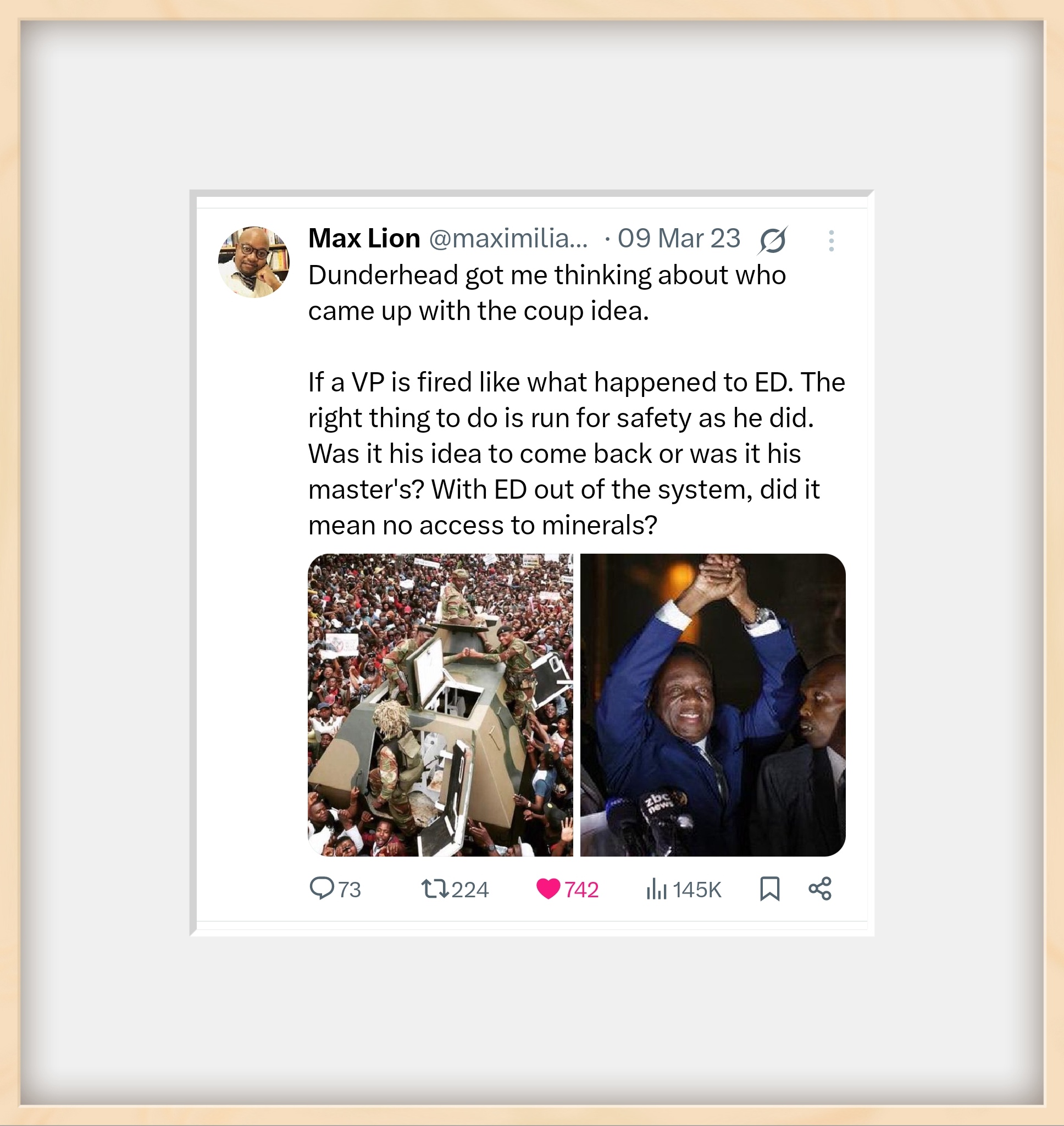
Until that changes, there is no independence. There is only managed decline. Happy mother’s day to all Zimbabwean mother’s.
Headline video from Tilda Live Zim
https://www.facebook.com/share/v/1BijTrPnw2/
@GGTvStreams


Leave a comment