
NHS protocols allegedly target living patients for organ removal, based on “customer” demand.
Popular Information is powered by readers who believe that truth still matters. When just a few more people step up to support this work, it means more lies exposed, more corruption uncovered, and more accountability where it’s long overdue. If you believe journalism should serve the public, not the powerful, and you’re in a position to help, becoming a PAID SUBSCRIBER truly makes a difference.
Donation: buymeacoffee.com/ggtv
https://ko-fi.com/globalgeopolitics
A growing number of testimonies and reports are casting a long, unsettling shadow over the medical practices surrounding organ donation, both in the UK and the United States. These accounts suggest that the public understanding of organ donation, shaped by decades of campaigns promoting altruism and saving lives, may conceal a more disturbing reality. Dr. Michael Yeadon, a former Vice President at Pfizer, has recently spoken out with serious allegations against the National Health Service, claiming that organs are being taken from patients who are not truly dead.
According to Dr. Yeadon, organs of the highest quality cannot be procured from bodies that are genuinely lifeless. The implication, he says, is that harvesting is happening while the patient is still biologically alive. He claims to have reviewed internal protocols and spoken with individuals inside the system who confirm this troubling practice. These patients, often labelled as “brain dead,” continue to exhibit vital signs such as a heartbeat, reflexes, or spontaneous movements. Yet, under current NHS protocols, they are still cleared for organ removal.
There is a growing body of evidence that these decisions are not accidental or isolated. Rather, it appears to be a systematised approach, where the definition of death is adjusted to meet operational goals. Patients with traumatic injuries, drug overdoses, or who are in medically induced comas, are sometimes declared unresponsive and pushed into the donor pathway before full diagnostic clarity is achieved. Families may not be adequately informed or consulted, especially in cases involving vulnerable individuals or those without strong advocates.
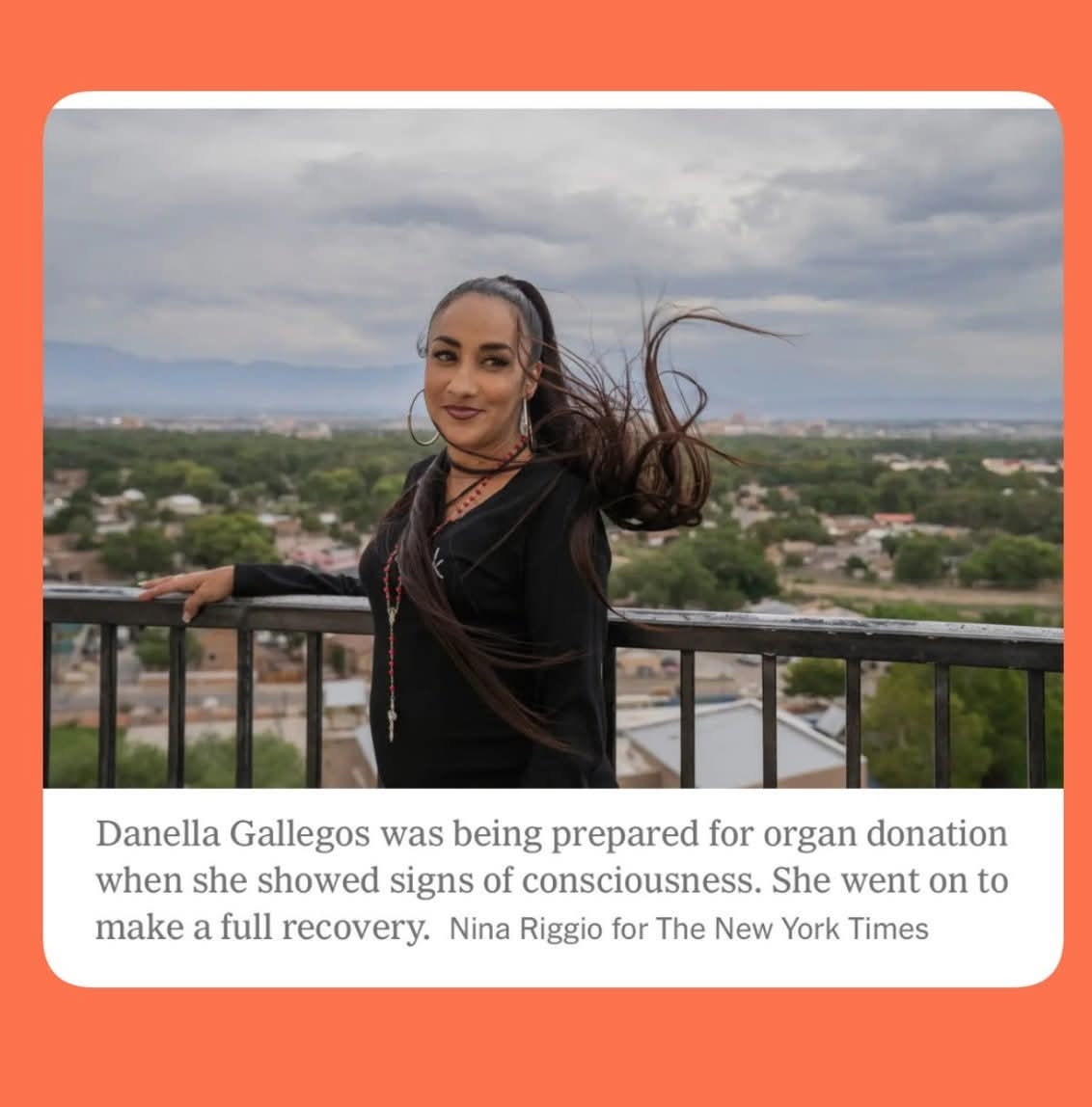
These concerns are not confined to the UK. In the United States, recent investigative journalism has exposed similar incidents. The New York Times has published a report detailing cases where hospital staff began preparing patients for organ donation procedures despite signs of consciousness or life. One particularly harrowing example involved a woman named Ms. Gallegos, who began to show clear signs of awareness just moments before life support was to be withdrawn. Despite her movements and tears, the organ procurement team continued to argue for the donation to proceed, interpreting her reactions as mere reflexes. Only after direct family intervention was the process halted, and she eventually recovered fully.
Another case involved TJ Hoover, a man declared brain dead and prepared for donation. During testing, he woke up visibly distressed. Still, hospital staff proceeded to move him toward the operating room as part of a ceremonial “Honor Walk” for organ donors. It was only due to the resistance of two physicians that the surgery was finally cancelled, and Hoover survived.
These examples are not easy to process. They raise deep ethical, legal, and spiritual questions about the definition of death, the limits of medical authority, and the role of consent in situations of extreme vulnerability. It is increasingly clear that the term “brain death” is not an absolute scientific fact but a construct developed within legal and medical frameworks to justify certain procedures, particularly those involving organ procurement.
The implications of these revelations are serious. Families need to understand that registering as an organ donor could involve scenarios far different from what they expect. It may not always be a matter of life having clearly ended, but rather of life being determined over, sometimes with little room for doubt or dissent. The gap between perception and practice needs to be examined, and the entire system reviewed with forensic scrutiny.
(Published on Jul 1, 2019, Neonatologist Dr. Paul Byrne, president of the Life Guardian Foundation, addresses the 2019 John Paul II Academy for Human Life and Family conference in Rome, May 20, 2019. The Truth About Brain Death and Organ Donation, with Paul Byrne MD 9-25-17)
In the face of these reports, to say nothing in the face of wrongdoing is to permit it. The medical community, policymakers, and the public must confront the possibility that something deeply unethical may be unfolding under the guise of modern healthcare. Consent must be informed and meaningful, protocols must be transparent, and above all, life must be protected, especially when it hangs in a fragile, uncertain balance.
Authored By:
Popular Information is powered by readers who believe that truth still matters. When just a few more people step up to support this work, it means more lies exposed, more corruption uncovered, and more accountability where it’s long overdue. If you believe journalism should serve the public, not the powerful, and you’re in a position to help, becoming a PAID SUBSCRIBER truly makes a difference.
buymeacoffee.com/ggtv


Leave a comment