
The contradiction between what we were told and what is now visible, North Korea resisted sanctions, built strength, and exposed decades of misinformation
Popular Information is powered by readers who believe that truth still matters. When just a few more people step up to support this work, it means more lies exposed, more corruption uncovered, and more accountability where it’s long overdue. If you believe journalism should serve the public, not the powerful, and you’re in a position to help, becoming a PAID SUBSCRIBER truly makes a difference.
Donate: buymeacoffee.com/ggtv
https://ko-fi.com/globalgeopolitics
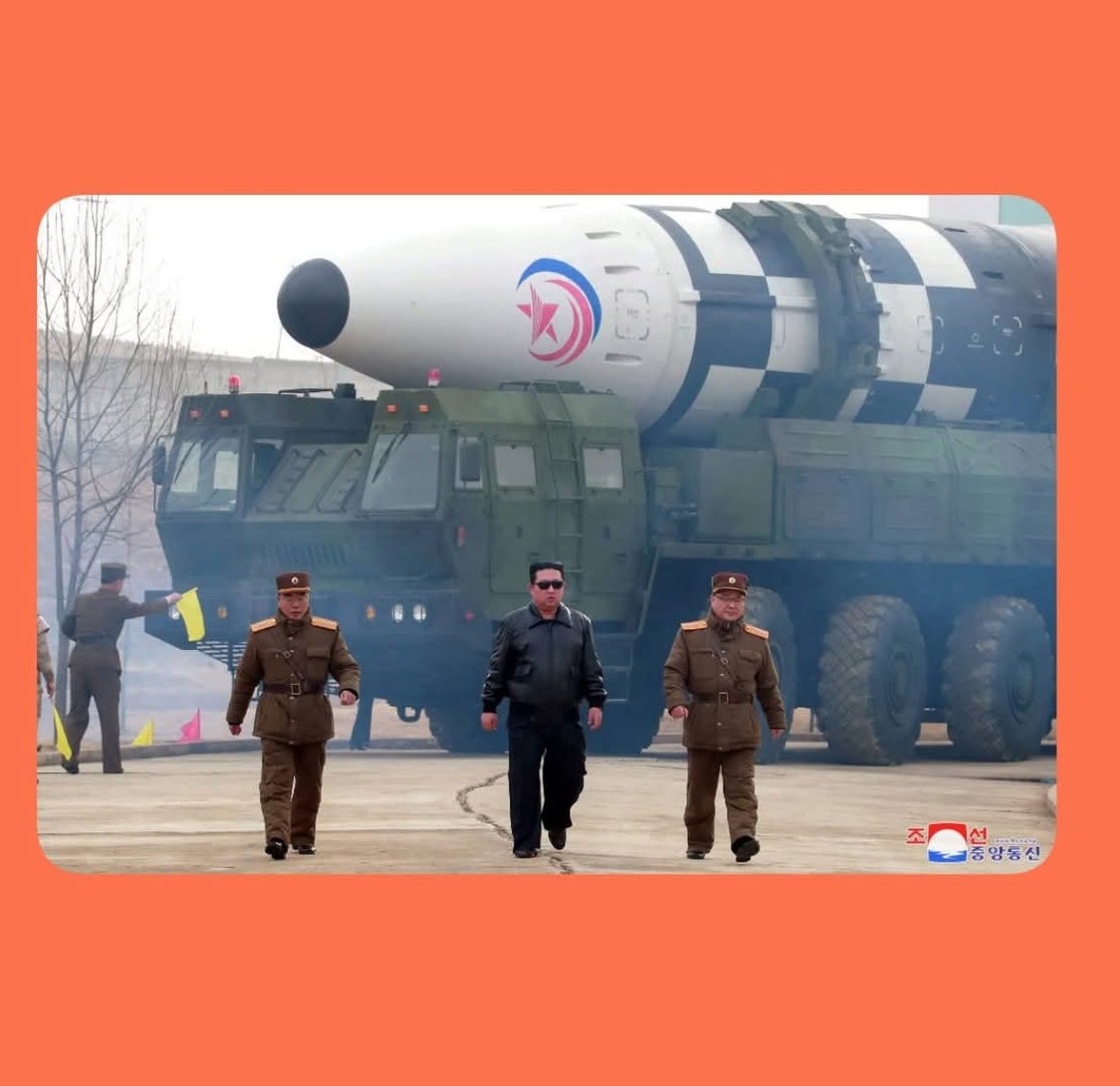
(Who is joking about the ‘Rocket Man’ now?)
Footage of Pyongyang released across international social media platforms has unsettled audiences because it undermines decades of consistent reporting that presented the Democratic People’s Republic of Korea as a failed state. Wide boulevards, large residential blocks, illuminated towers and clean transport infrastructure stand in stark contrast to the narrative of collapse and starvation promoted since the end of the Cold War. The strength of the reaction is linked to the recognition that information controllers created a sustained image of North Korea that was not aligned with material evidence. The persistence of the narrative over decades raises questions not only about North Korea but about the credibility of the information structures that shaped the public understanding of much of the world.
North Korea has been subjected to a system of sanctions and restrictions that go beyond almost every other country in the international system. The United States first imposed restrictions during the Korean War, then reinforced them following the Cold War and after each nuclear test. United Nations Security Council sanctions since 2006 targeted its energy imports, banking networks and trade partners. The stated aim was to halt nuclear development, but the broader effect was to isolate the state from the global economy and from international finance. North Korea refused to submit to international financial institutions, rejecting both World Bank and International Monetary Fund frameworks. This policy cut it off from access to capital markets and created an environment where internal development became the only option. Analysts at the Stockholm International Peace Research Institute have noted that sanctions created “an incentive structure that rewarded national innovation” by blocking external sourcing of advanced components.
The nuclear and missile programme has been at the centre of the confrontation. Intelligence assessments by the US Defence Intelligence Agency in 2017 admitted that Pyongyang possessed operational nuclear warheads and delivery systems with growing range. North Korea tested intercontinental ballistic missiles that demonstrated capacity to reach North America. Despite sanctions, it acquired sophistication in cyber operations, launching attacks documented by RAND Corporation as some of the most advanced state-sponsored cyber campaigns. This capability surprised observers who accepted the picture of a collapsing economy with no functional technological base. Independent experts, including John Delury of Yonsei University, argued that “policy makers underestimated the resilience of the North Korean system by assuming it would mirror the failures of other centrally planned economies.” The persistence of the programme over decades without collapse shows that the system adapted to external pressure.
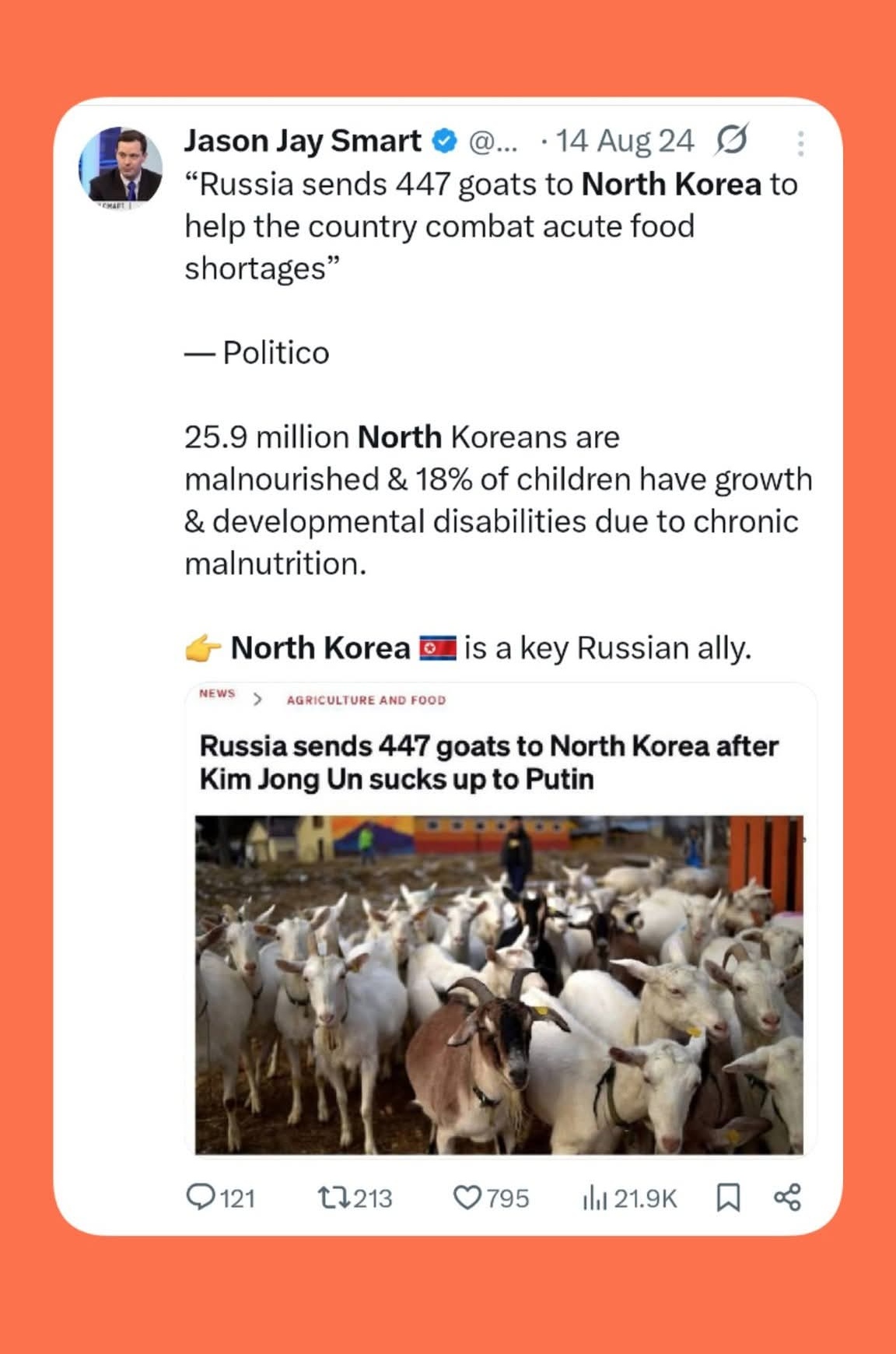
The media presentation of North Korea consistently stressed famine and desperation. Reports from the 1990s famine were amplified to present the state as permanently on the edge of collapse. Stories of defectors and prison camps dominated coverage in western outlets. Yet the scale of infrastructure now visible in Pyongyang, from high-rise housing to electrified public transport, demonstrates that development continued under isolation. Satellite imagery analysed by 38 North, a research project at the Stimson Center, confirmed new construction and improved energy distribution in the capital during the 2010s. Reports from humanitarian agencies such as the UN Food and Agriculture Organisation have confirmed food shortages and malnutrition, but they also noted that agricultural production has improved in certain sectors due to state investment in seed varieties and irrigation. The contradiction lies in the sustained framing of the entire country as a collapsed entity when evidence showed functioning systems, to the contrary.
(Secretly filmed by a tourist)
North Korea’s leadership pursued strict control over its information space and internal policy. Foreign non-governmental organisations were excluded from most areas of society, and foreign businesses were not permitted to operate beyond a handful of tightly controlled joint ventures. International pharmaceutical corporations never established themselves inside the country, and agricultural policy remained under state ownership and direction. Health interventions remained internal, with the World Health Organisation noting that vaccination campaigns were implemented nationally through government distribution rather than through foreign NGO channels. By maintaining this structure, North Korea avoided the influence of external agencies that shaped policy in many other developing countries. Analysts at Chatham House have observed that such exclusion creates resilience against external leverage but also reduces exposure to outside innovation. In practice, this policy ensured that core decision-making remained internal.
Comparisons with Iran highlight the consequences of different approaches. Iran pursued partial integration with international markets, accepting foreign businesses in energy and technology sectors. It permitted international NGOs to operate and maintained broader educational exchanges. This openness made it more vulnerable to infiltration, sanctions pressure and covert operations. North Korea avoided these vulnerabilities by refusing such exchanges. Its citizens rarely travel abroad, and foreign travel inside the country is restricted to guided tours with no free movement. The education system is entirely national, with teaching and curricula produced domestically. Foreign language education is limited and oriented toward strategic rather than cultural exchange. This insulation preserved ideological stability and prevented the penetration that external actors achieved elsewhere. It also reduced the ability of foreign intelligence services to recruit assets inside the country, a fact noted in South Korean National Intelligence Service reports that admitted difficulties in collecting reliable information on internal North Korean politics.
Security has been maintained by strict border control and surveillance. The demilitarised zone with South Korea is one of the most heavily fortified borders in the world. Movement across the Chinese border has been reduced by tighter controls since the pandemic. Foreign intelligence operations face significant obstacles because there are few expatriate communities and limited contact points. Assassination campaigns seen in other regions, such as the killing of Yemeni leaders or Iranian scientists, have not been replicated inside North Korea. The case of Kim Jong-nam, assassinated in Malaysia in 2017, demonstrated that operations could only be conducted outside the country. The security system prevented internal infiltration and kept leadership insulated. Experts at the International Institute for Strategic Studies concluded that “North Korea maintains an unusually impermeable security environment compared to states with similar resources.”
Observers now comparing Pyongyang’s development with African cities note a sharp contrast. Many African countries accepted structural adjustment programmes in the 1980s and 1990s, binding them to international lenders and foreign contractors. This led to infrastructure projects driven by external priorities and dependent on external financing. Corruption and political instability undermined the outcomes. Nigeria, for example, receives extensive international investment but suffers from electricity shortages, poor transport infrastructure and widespread insecurity. Burkina Faso prior to arrival of Captain Ibrahim Traore, has been reported in BBC Africa coverage as unstable and underdeveloped, while foreign military bases remained on its soil at the time. North Korea, despite sanctions, built a capital with more coherent infrastructure than the majority of African capitals. Analysts at the African Development Bank admit that external financing created dependency rather than independence, while North Korea’s rejection of such financing preserved sovereignty at the cost of isolation.
The ideology of Juche, centred on self-reliance, underpinned this policy. Introduced by Kim Il-sung in the 1950s, it rejected dependence on foreign powers and prioritised internal mobilisation. Critics dismissed it as propaganda, but its practical outcome has been a society less penetrated by external influence than most. North Korea developed heavy industry, arms production and an independent energy sector. Its agriculture remained collectivised, resisting the dismantling seen in other socialist states. While inefficiency and shortages have been recorded, the persistence of the system without collapse is itself evidence of adaptation. Political scientists such as Bruce Cumings have argued that western analysts misread North Korea by assuming it would follow the trajectory of Eastern European socialist states, failing to account for its nationalism and security culture.
( Vladimir Putin’s visit last year)
Information management played a central role in sustaining the contrasting narratives. Western outlets amplified stories that confirmed the image of collapse and ignored evidence of functioning systems. For example, when Pyongyang opened new housing estates in 2012, coverage in international media focused on leadership displays rather than the construction itself. The same approach characterised reporting on military parades, where the emphasis was on spectacle rather than the capabilities of the systems displayed. Audiences who consumed this coverage were not exposed to a balanced picture. The surprise now visible in reactions to footage of Pyongyang is the consequence of this selective reporting. Experts in media studies, such as Mark Crispin Miller, describe this as a form of information management where audiences are directed toward predetermined conclusions rather than raw evidence.
The strategic purpose of this narrative was to sustain pressure on North Korea by delegitimising it as a political system. Presenting it as a failed state justified sanctions, military exercises and missile defence systems in the region. The United States stationed advanced missile interceptors in South Korea and Japan, citing the threat from North Korea. The narrative of collapse reduced domestic questioning of these measures. However, the evidence of functioning infrastructure and technological capacity now undermines that justification. The contradiction between long-standing claims and present images weakens confidence in the information systems that promoted them.
The emergence of a multilateral order, with China and Russia increasing cooperation through organisations such as the Shanghai Cooperation Organisation, changes the strategic context. North Korea has aligned with these powers, participating in military parades and leadership meetings. The image of Kim Jong-un alongside Vladimir Putin and Xi Jinping reinforces the perception of integration into an alternative bloc. Sanctions have not collapsed the system, and its integration with China in particular has provided economic lifelines. The Bank of Korea in Seoul estimated that North Korea’s economy shrank by 4.5 per cent in 2020 due to pandemic restrictions but stabilised afterwards, showing resilience under pressure. Such resilience positions it differently from countries dependent on global finance structures, where downturns lead to immediate external intervention.
The lesson from North Korea’s trajectory is that a closed but sovereign system can endure under extreme pressure if it maintains internal discipline and strategic alliances. This outcome contrasts with the experience of states that pursued partial sovereignty while remaining within the orbit of international financial institutions. The contradiction between the image of collapse and the evidence of functioning infrastructure reveals the degree of bias in global information systems. The fact that audiences are shocked by images of Pyongyang after decades of coverage demonstrates the success of that information control but also its fragility once evidence leaks through uncontrolled platforms.
(China Victory Day military parade attended by Putin and Kim)
North Korea’s case raises broader questions about how narratives are constructed about states outside the western sphere. The same outlets that misrepresented Pyongyang’s development also shape understanding of other contested states. The credibility of such outlets is now undermined by the visible evidence of contradiction. For African audiences, the comparison is direct. North Korea, sanctioned and isolated, produced infrastructure and maintained sovereignty, while African states, open to international financing and intervention, remain dependent and unstable. This contrast generates debate about the cost of sovereignty versus the cost of integration. The failure of western outlets to present an accurate picture of North Korea leaves audiences questioning their reporting on other regions.
The scale of information control extends beyond North Korea and shapes public understanding of ourselves and the world we inhabit. Audiences in western states are presented with fragmentary accounts of their own history, their economies and their institutions. Few are taught that economic growth in modern decades has been tied to cycles of war, military spending and healthcare systems that profit from chronic illness rather than cures. Research on eugenics programmes shows they remained active under new language after the Second World War, influencing policy on population control and reproductive rights. Public surprise at Russia’s military and technological capabilities, or at Iran’s capacity to endure sanctions, reflects a deficit of accurate knowledge about those societies. The lack of information is not accidental but structured to maintain dependence on established narratives. Israel’s conduct in Gaza relies on the same information chains, using influence over western media and politics to sustain support while carrying out military actions described by UN officials as collective punishment. The pattern demonstrates that knowledge control is central to the management of global power, and that the shock provoked by images from Pyongyang is part of a wider realisation that much of what has been accepted as fact has been constructed for strategic purposes.
(China Victory Day military parade Xi with Putin and Kim)
The evidence now visible demands reassessment of decades of policy and reporting. North Korea endured isolation, rejected foreign control and built internal systems. The narrative of collapse, starvation and desperation concealed the scale of development. The revelation is not only about Pyongyang but about the credibility of the information structures that created the earlier image. The contradiction between image and reality is now unavoidable, and it alters the strategic and political debate surrounding North Korea and beyond.
Authored By:
Popular Information is powered by readers who believe that truth still matters. When just a few more people step up to support this work, it means more lies exposed, more corruption uncovered, and more accountability where it’s long overdue. If you believe journalism should serve the public, not the powerful, and you’re in a position to help, becoming a PAID SUBSCRIBER truly makes a difference.
Donate: buymeacoffee.com/ggtv


Leave a comment