
Why the world sees Charlie Kirk’s assassination as proof of Western hypocrisy
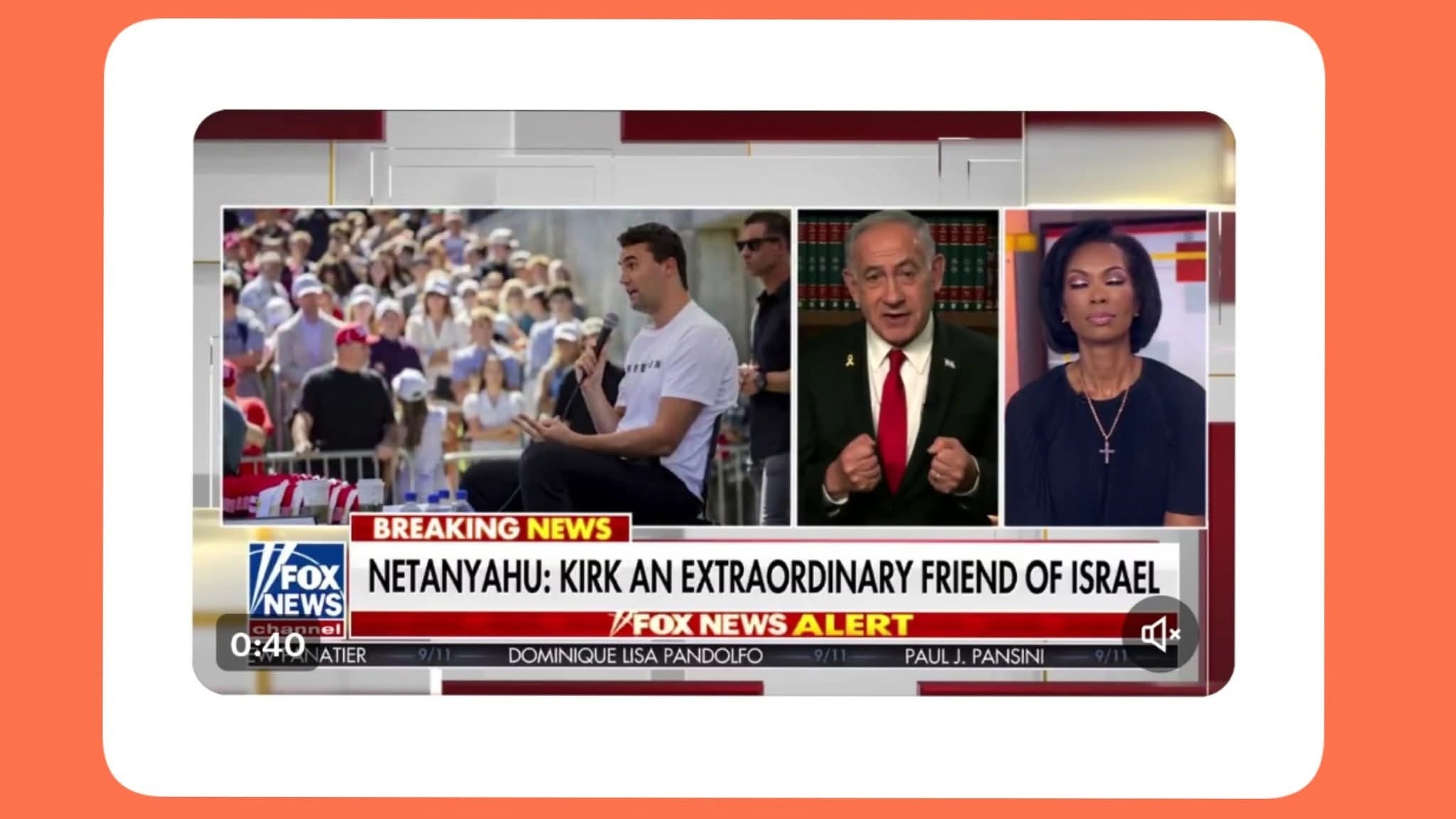
The “assassination” of Charlie Kirk occurred in a moment of deep fracture within the American polity and at a time when the wider Western order was already beset by visible weakness. The killing cannot be treated as an isolated act of political violence, nor can it be understood within the narrow framework of lone extremism that official agencies immediately promoted. The timing, method, and context suggest the operation was calculated rather than spontaneous, and the event should be read as part of a longer trajectory of structural enforcement by a state struggling to contain its internal contradictions. Official voices in the United States presented it as the work of a disturbed individual, drawing upon the same language used after the attempt on Donald Trump earlier in the year. That rapid framing steered public attention away from structural causes and international implications, encouraging citizens to treat the murder as senseless violence rather than a calculated disruption. Yet the speed of political appropriation, the selective amplification compared with other killings, and the remarkable timing within both electoral cycles and commemorative calendars show that the assassination was more than a criminal episode. It was an instrument of political management in a fragile state and a marker of shifting power relations across the Western world.
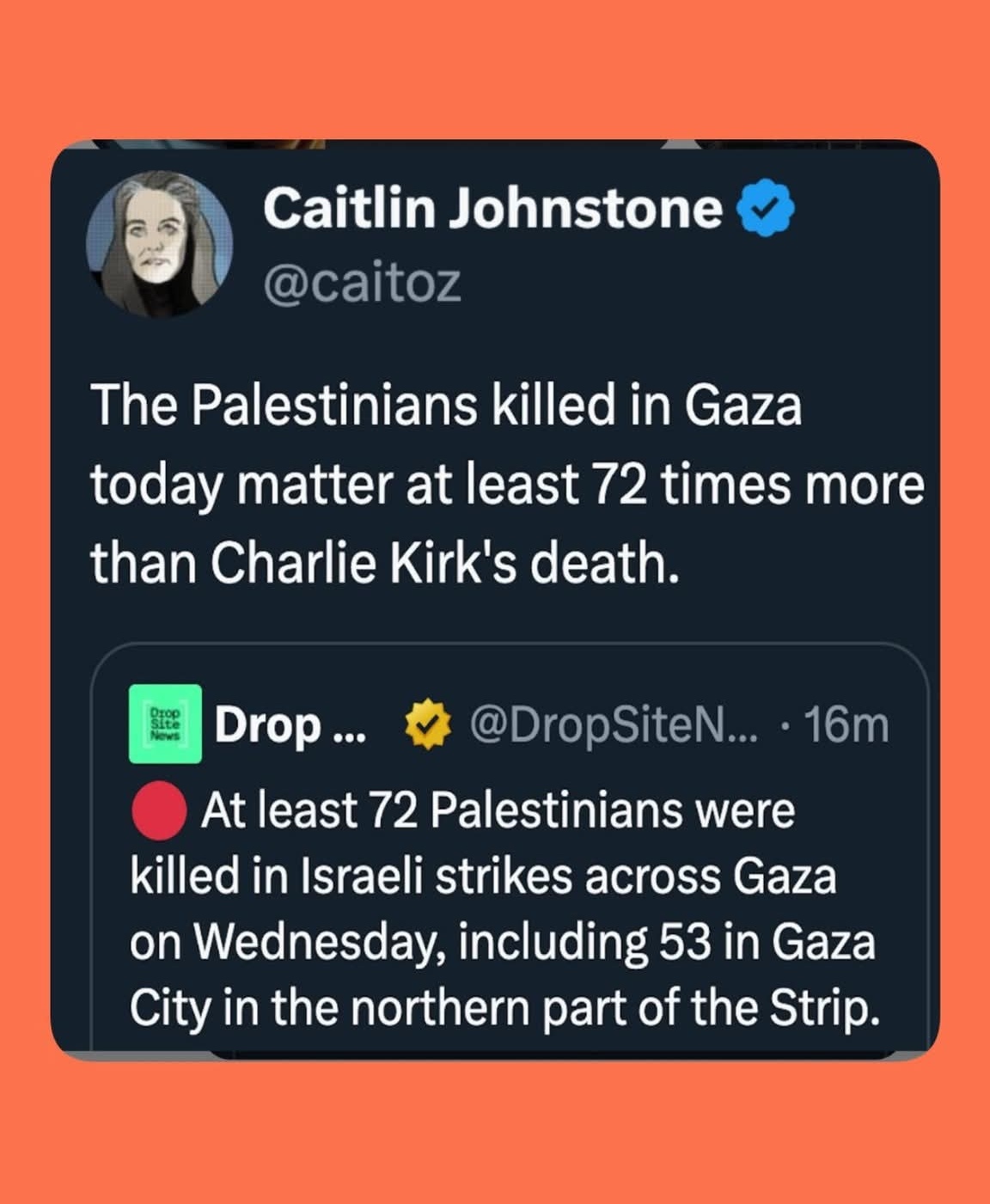
Straight from bombing 7 countries and killing more than 72 Palestinians, Benjamin (Mileikowsky) Netanyahu’s rapid appearance on Fox News, in which he memorialised Kirk as a defender of “civilisation,” demonstrates how leaders and media can immediately recast a domestic killing as part of an external civilisational conflict. This rhetorical pivot, familiar from the post-9/11 era, externalizes danger by naming Islamist extremism (or other foreign enemies) as the culprits before investigators have finished basic inquiries, thereby redirecting public scrutiny away from internal political fractures, security lapses, or the instrumental uses of violence. The effect is political as it legitimizes expanded security powers, narrows acceptable discourse, and offers a convenient enemy that unites disparate domestic and international constituencies. For non-Western publics, the repetition of this script confirms a long-held suspicion that Western democracies will habitually convert internal crises into stories about foreign threats, using those narratives to justify coercion and to shore up alliances. Far from being a neutral accounting of facts, then, such early framing is itself an act of political management, one that recycles the post-9/11 playbook and forecloses more searching explanations of who benefits from the killing and why.
The killing took place during a public event in Utah, witnessed by a large audience and captured on video. The images circulated within minutes and became the primary representation of the act. That instantaneous transmission meant the assassination was not confined to a courtroom or an investigative file but entered the bloodstream of global media at once. Within hours, domestic political figures framed it as evidence of rising extremism, demanding stronger security powers and renewed public vigilance. The narrative was set before investigators had even catalogued the weapon. The first utility of the killing was therefore rhetorical: it provided an occasion to demand greater obedience, to narrow discourse, and to elevate state authority in the name of protecting public figures.

The positioning of Kirk as a martyr before the anniversaries of the September attacks was deliberate and effective. His death was folded into a calendar of remembrance that already carried political weight, allowing officials to fuse commemoration with fresh outrage. This technique is well established, governments have long used anniversaries of trauma to reset loyalty and channel mourning into obedience. In this case, the new assassination gave commemorative rituals a living example, ensuring that the language of unity and sacrifice would dominate. The process diverted attention from institutional failures and economic malaise, and presented the state as both victim and guardian. By placing Kirk within that liturgy, his polarising politics were transmuted into a unifying symbol.
Charlie Kirk was more than a partisan operator within the conservative movement. He had developed a platform that combined conventional political activism with more disruptive strands of critique against the pharmaceutical industry, intelligence networks, and transnational governance. His willingness to give visibility to dissenting analysts who challenged the narrative of the pandemic years distinguished him from many of his contemporaries. By placing those arguments before a young and restless audience, he opened a channel through which suspicion of institutions could congeal into political organisation. That role alone placed him in conflict with entrenched interests whose authority depends upon silence or managed dissent.
The decision to eliminate a figure such as Kirk cannot be read apart from the atmosphere of manufactured threats and managed crises that has become a constant feature of American politics. Earlier in the year, the supposed attempt on Donald Trump’s life was presented as the work of a disturbed individual, with every sign of narrative scripting visible in the aftermath. The Kirk assassination was framed in almost identical fashion, suggesting not coincidence but continuity of method. The language deployed by officials was uniform, the emphasis on lone violence was immediate, and the possibility of wider networks was dismissed without investigation. This mirrored pattern indicates that the killings are understood within the state as instruments of control, rather than accidents or aberrations.

The West has a long record of using political violence in moments of instability to discipline its population and to reset its image. In the Cold War period, European states colluded in clandestine networks that carried out bombings later blamed on extremists, while in truth serving the strategic purpose of binding populations closer to the Atlantic alliance. The United States has repeatedly used assassinations abroad to silence disruptive figures, and there is no structural reason to suppose that domestic figures are exempt from such practice once their role threatens consensus. The notion of liberal immunity to such measures was always rhetorical cover, not grounded in reality.
Kirk’s elimination must also be situated in the context of collapsing institutional legitimacy. American society is experiencing the consequences of years of economic mismanagement, vast debt expansion, and social division. The political system is locked in cycles of electoral theatre without substantive policy correction, while public trust in institutions has been eroded by pandemic management, overseas failures, and surveillance excess. In such an environment, voices that amplify mistrust while mobilising the young constitute direct risks to stability. A state under pressure does not tolerate such voices indefinitely. Removal, whether through imprisonment, discrediting, or assassination, is the predictable outcome.
The official narrative that his death was the act of an isolated extremist collapses under scrutiny. The planning, timing, and precision indicate operational support beyond the capacity of a single agitated individual. The fact that the killing occurred in the middle of an election cycle when discourse control is paramount should dispel notions of coincidence. Political systems under stress have often turned to violent spectacle to reimpose discipline upon both elites and masses. In Italy during the Years of Lead, assassinations were used to disorient and redirect political currents. In Latin America, targeted killings prepared the ground for stabilising regimes aligned with American interests. Kirk’s assassination sits in that lineage of using violence as a corrective when the narrative machine alone proves insufficient.
The decision to strike at this time must also be read against the background of Western insecurity on the international stage. The conflicts in Eastern Europe and the Middle East have revealed the limits of American power. Washington is unable to secure decisive outcomes despite vast spending, while its allies quietly hedge by increasing engagement with rival blocs. The expansion of BRICS and the steady erosion of dollar primacy reflect a global order shifting away from American dominance. The image of control, so central to Western projection, is therefore fragile. Assassinations of domestic figures play a dual role in this setting: they suppress internal dissidence and they demonstrate to external audiences that the state remains ruthless enough to enforce order at home. The message is one of control, even if the reality is decline.

Kirk had accumulated enemies across several sectors. Progressive activists regarded him as an obstacle to cultural change, yet more importantly, sections of the conservative establishment also viewed him as a liability. He was not controllable, and he was willing to associate with figures beyond the permissible spectrum. Establishment conservatism thrives upon managed opposition, not genuine challenge, and Kirk’s unpredictability posed a threat to that balance. The convergence of interest between establishment and state in removing him is not difficult to see. In British history similar dynamics were evident when disruptive parliamentarians who questioned the Cold War consensus were marginalised or silenced. The boundaries of acceptable dissent are strictly policed, and Kirk had crossed them.

Non-Western observers interpret the assassination through a different lens than American commentators. Chinese analysts have described the event as evidence of America’s inability to tolerate internal divergence, contrasting it with their own controlled but visible nationalist critics who remain untouched so long as they do not destabilise the system. Russian voices interpret the killing as a symptom of decay, linking it to the broader trajectory of American decline where violence becomes both a manifestation of weakness and a tool of short-term stabilisation. In the Middle East, the killing is read as proof that the rhetoric of democracy is hollow, since dissent within America itself is silenced with methods little different from authoritarian regimes it criticises abroad. These perspectives matter because they shape global perceptions of legitimacy, and each assassination accelerates the erosion of Western credibility.

The broader context of manufactured crises is vital. The pandemic years demonstrated how fear could be weaponised to enforce compliance, and how narratives of emergency could override ordinary political debate. The exposure of the long historical manipulation of pathogens, the premeditated nature of vaccine development, and the collusion of corporations with state actors became more visible after 2020. Kirk’s willingness to place these issues into the mainstream threatened the carefully maintained line between fringe conspiracy and acceptable criticism. His removal, therefore, preserved the credibility of the structures that profit from perpetual crisis. The killing was not only political but also economic, ensuring that industries dependent on fear and control remained unchallenged.
The function of such an assassination extends beyond silencing one voice. It conditions the public into passive acceptance of narrowing boundaries. By presenting each killing as an isolated aberration, the state trains its population to normalise violence against dissenters. Each shrug of indifference deepens compliance, until the removal of prominent figures is accepted as natural. The technique has been observed before in other societies, where repetition of controlled shocks renders populations docile. The Kirk assassination is therefore both a specific removal and part of a wider architecture of governance through fear.
European intellectuals have long warned that the West sustains itself through managed instability, where controlled doses of chaos serve to reinforce authority. The assassination fits this pattern precisely. The act removes a disruptive individual, provides justification for expanded surveillance, and generates a climate of caution among potential imitators. Simultaneously it diverts public attention from systemic failures, focusing outrage upon an apparent lone assailant rather than institutions. The spectacle of violence becomes another tool of narrative management, a means of resetting the discourse while avoiding structural reform.
The death of Charlie Kirk must also be considered in generational terms. He spoke most directly to younger audiences, many already alienated from traditional politics. By eliminating him, the state sends a message to that generation: enthusiasm channelled into approved movements will be tolerated, but enthusiasm that challenges institutional legitimacy will be crushed. The calculation is that fear will dissuade others from taking similar risks. History suggests that such measures often succeed in the short term, though they also deepen cynicism and feed underground currents that later resurface with greater force.
From a non-American perspective, the killing represents another step in the West’s long decline. It shows that liberal forms are preserved only so long as they do not threaten entrenched interests. When challenged, the mask is dropped and coercion resumes its central place. The difference between liberal and authoritarian systems becomes one of presentation rather than substance. For external audiences, the event confirms what many already suspected: American democracy is theatre, and behind it stands a machinery of enforcement as ruthless as any it condemns abroad.
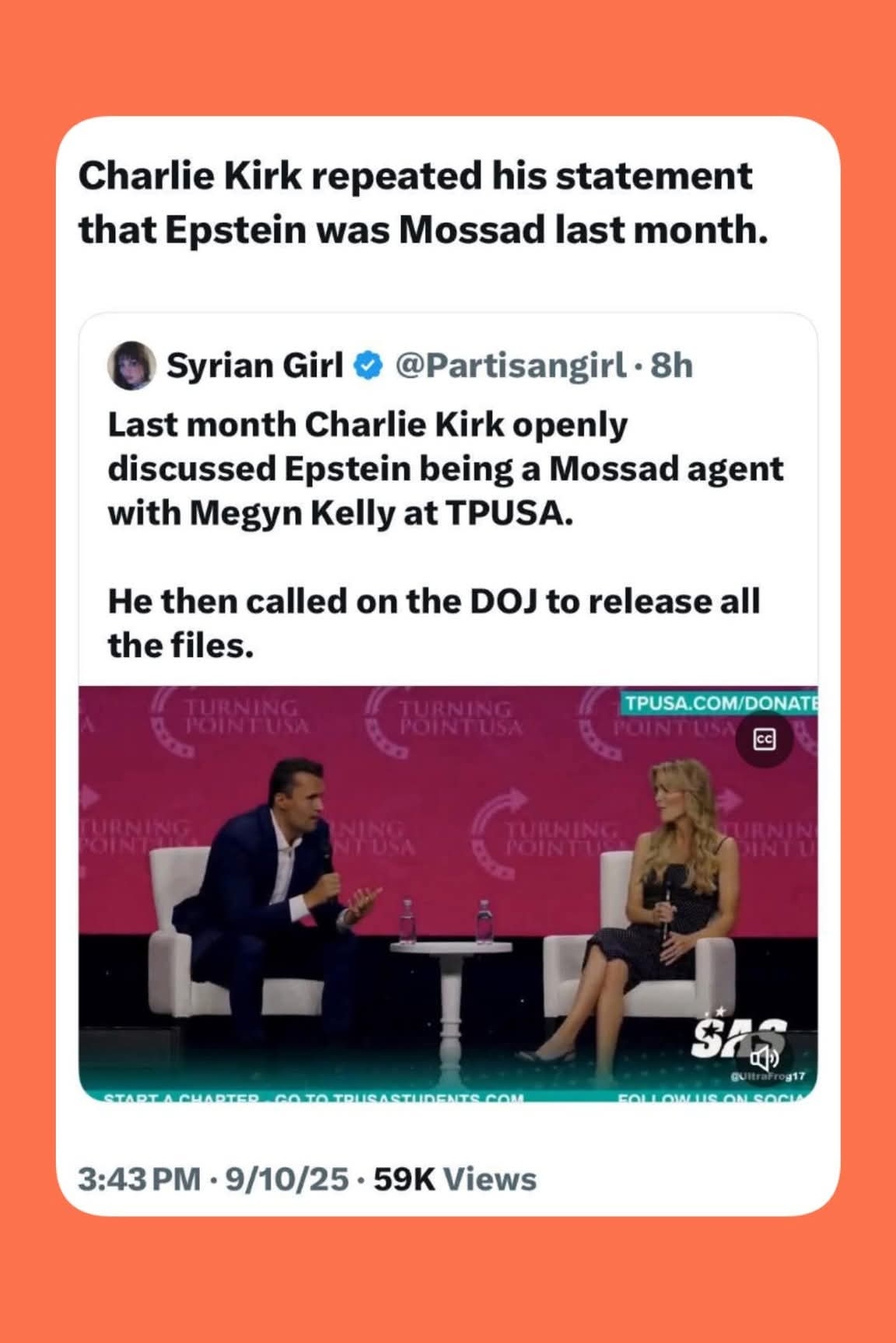
The significance of the assassination lies not only in Kirk’s death but in what it reveals about Western governance at this juncture. It demonstrates that the structures which profited from pandemic management, endless wars, and financial manipulation will not allow their legitimacy to be questioned by popular figures. It shows that assassination remains a tool of domestic policy, not a relic of Cold War intrigue. It proves that the state prefers removal over debate when the risk of exposure becomes too great.
Those who insist upon treating the event as isolated violence ignore the historical record. Western governments have colluded in clandestine operations for decades, shaping events through covert violence while denying responsibility. The American record abroad is long and bloody, and domestic exemption is an illusion. The assassination of Charlie Kirk belongs within that history, another chapter in the story of a system sustained not by consent but by a mixture of deception, conditioning, and violence.
For scholars and observers outside the West, the lesson demonstrates that the American state is entering a phase where legitimacy cannot be maintained by narrative alone, and so it resorts increasingly to direct elimination of disruptive voices. Each act of suppression confirms its weakness, not its strength, for a confident order would have no need of such measures. Yet for the moment the strategy may succeed, silencing dissent long enough to carry the system through its next election and its next crisis.
The future will determine whether such acts accumulate into paralysis, as fear erodes initiative and society withdraws into apathy, or whether suppressed currents re-emerge with greater force. What is certain is that the assassination of Charlie Kirk is not an aberration but a window into the present condition of the West: fragile, fearful, and ruthless in its defence of power. It tells us that the boundary of permissible dissent has narrowed further, that crisis is now the normal condition of governance, and that violence has been restored to its traditional place within the repertoire of statecraft.
In sum, the killing was not random, not merely personal, and not to be understood through the official story presented. What happened was a structural act within a faltering system, designed to suppress, to condition, and to project control. From outside the American bubble the meaning of this tragic event is that the West silences those who threaten its fragile consensus, and it will continue to do so until its decline renders such acts ineffective. The assassination of Charlie Kirk therefore stands as both a symptom of weakness and a method of temporary control, a demonstration that the institutions of the West survive not through openness or debate but through managed crisis and calculated violence.
Just so happens that Hitler is said to spent his last days in Argentina, Jeffrey Epstein is said ( won’t use runour”) to be alive, so knowing that the world map we are given is fake, being disappearing from public life is not that difficult by these elites. But for now we take what’s pushed down our throats.
Authored By:
Popular Information is powered by readers who believe that truth still matters. When just a few more people step up to support this work, it means more lies exposed, more corruption uncovered, and more accountability where it’s long overdue. If you believe journalism should serve the public, not the powerful, and you’re in a position to help, becoming a PAID SUBSCRIBER truly makes a difference.
buymeacoffee.com/ggtv
https://ko-fi.com/globalgeopolitics


Leave a comment