
How Media, Algorithms & Global Agendas Turn Citizens Into Enemies
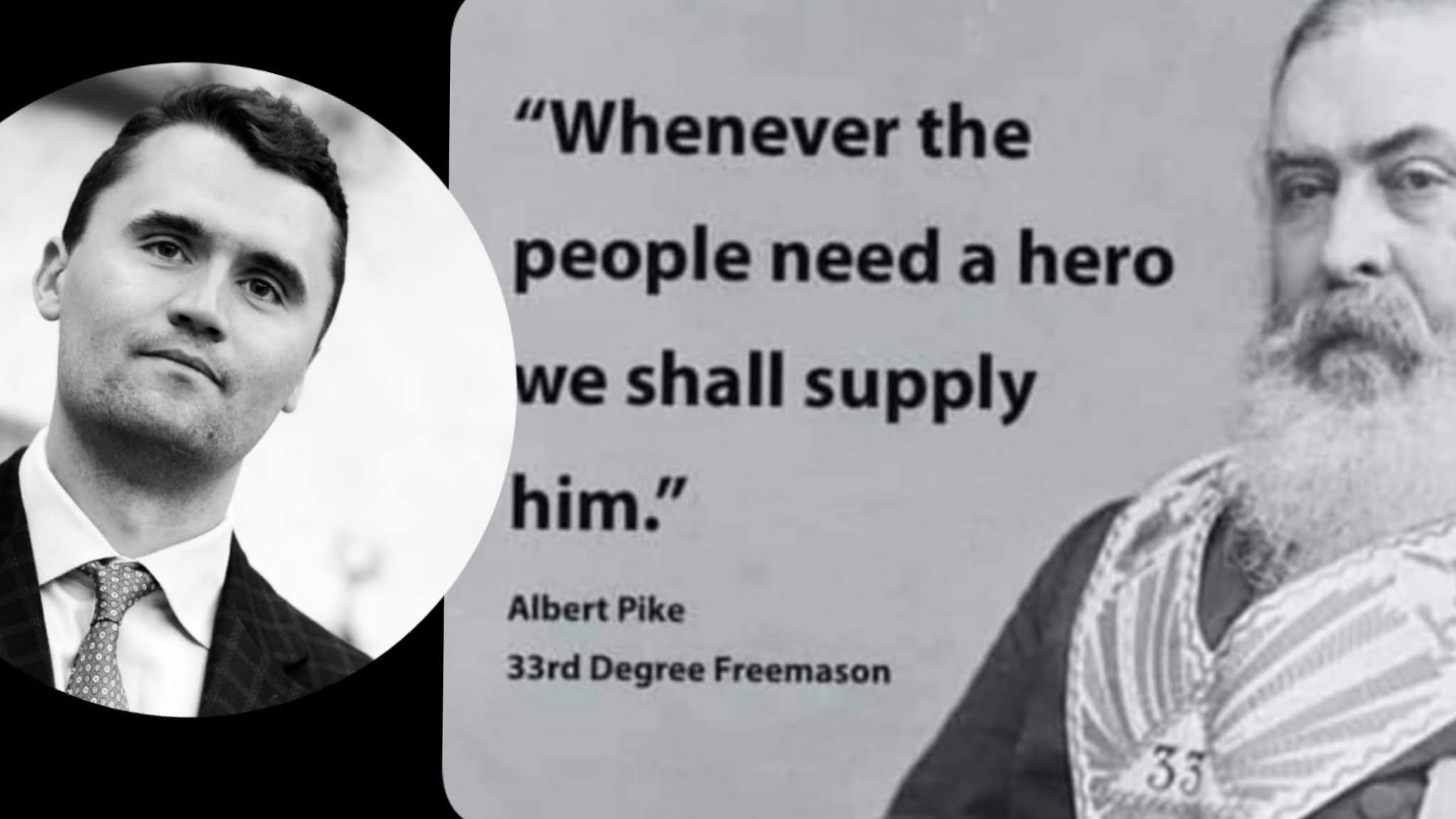
Charlie Kirk’s murder and the online response to it revealed a darker shift in political culture. This article is not an endorsement of him or his views. But, a political assassination that once would have provoked universal condemnation instead generated memes, laughter and cheering. The fact of a killing being celebrated because the victim held different political views indicates a deep fracture. Analysts have noted that this pattern reflects a society conditioned to treat political opponents as enemies rather than neighbours. This descent into anarchy is a warning that the normalisation of political violence is the sign of a collapsed debate and a poisoned public sphere. When acts of political violence are met with cheers and excitement, it mirrors the fervor of sports crowds celebrating a goal. This response transforms murder from a tragedy into a spectacle, consumed with the same emotional intensity as entertainment. Such reactions reveal a societal shift where civic values have eroded, and large segments of the population experience killing not as a crime, but as a form of victory or triumph. The elevation of violence to spectacle signals a profound moral and cultural decay.
When killings are cheered, the barrier between debate and violence has already been erased. Historians of authoritarianism stress that every tyrannical system begins at the point when ideas cannot be defended by persuasion but only by force. Once violence becomes acceptable currency, society is moved towards collapse. The distraction of left versus right is a magician’s trick concealing the real contest, the people against entrenched power. This aligns with political science research describing how division is used as a strategy of elite management. The RAND Corporation has written extensively on perception management operations, showing how adversaries are portrayed as existential threats to justify repression or war. The same tools are visible in domestic media, where selected extreme clips dominate news cycles, pushing the perception that one’s neighbour is insane or dangerous.
Television networks and online platforms do not show ordinary voters or the quiet majority. Instead they elevate cartoonish extremists, curated to inflame anger, which is the textbook psychological operation. NATO psyops manuals explicitly describe isolating audiences, saturating them with outrage, and then fostering tribal identity. Once a population accepts a division into opposing camps, it becomes easier to manipulate. The divisions are manufactured, yet they are experienced as real by those inside the echo chambers. The Cambridge Analytica scandal exposed how voter behaviour could be influenced through microtargeted outrage campaigns. Algorithms amplified emotional triggers, producing loyalty to tribe and hostility to outsiders. The transcript is correct to describe this as cult programming: isolation, echo chambers, and us-versus-them narratives are the three steps repeatedly observed in the manufacture of extremism.
This process did not begin in 2020. During the COVID-19 pandemic, isolation was enforced physically through lockdowns, restrictions on gatherings, and curbs on normal community life. Researchers at Johns Hopkins noted that enforced isolation damaged civic trust and deepened dependence on mediated information. Simultaneously, echo chambers flourished online as algorithms served citizens with content reinforcing their prior beliefs. Official discourse portrayed dissent as dangerous and linked non-compliance with threats to public health. The combination of enforced physical separation and media-driven echo chambers followed the same pattern described in the transcript. Social bonds were cut, people were categorised as compliant or dangerous, and a constant stream of anger polarised public debate. The result was further radicalisation under the banner of public safety.
These trends cannot be separated from broader agendas of global governance. The World Economic Forum’s promotion of the “Great Reset” called for an accelerated digital transition, embedding surveillance and biometric systems within everyday life. Agenda 2030 of the United Nations advances similar integration under the rubric of sustainable development. Both frameworks prioritise centralised data management, digital identification, and behavioural monitoring. The transcript points to the battlefield shifting from foreign countries to citizens’ living rooms. That shift is consistent with the move towards surveillance societies, where social media feeds, television narratives, and algorithmic nudges serve as the operational terrain. Analysts at the Cato Institute and scholars of surveillance capitalism such as Shoshana Zuboff have warned that data-driven manipulation constitutes a form of psychological governance.

Citizens are managed using engineered fear and outrage rather than direct coercion. The link between media manipulation and elite interest is well documented. Edward Herman and Noam Chomsky’s propaganda model described how media filter reality to protect ownership interests and advertisers. In the current era, pharmaceutical corporations, defence contractors, and technology monopolies dominate advertising revenue and campaign finance. The standard modus operandi is billionaires donate to both parties, ensuring outcomes protect entrenched power regardless of election results. This reflects research by political scientists Martin Gilens and Benjamin Page, who found that policy outcomes in the United States overwhelmingly reflect elite preferences rather than public opinion. Media circus distractions serve to prevent citizens from recognising shared material interests. Instead, populations are locked in perpetual tribal struggle while the central structures of wealth and control remain untouched.
The celebration of political murder demonstrates how far this programming has penetrated. Violence against opponents is framed as morally justified. We can recall that Martin Luther King Jr. and John F. Kennedy were assassinated not because they were irrelevant but because their ideas threatened entrenched systems. This analysis corresponds with historical cases where leaders who challenged structures of secrecy, war or economic exploitation were eliminated. These killings show that dissent threatening those in power is suppressed and not debated. The public celebration of violence marks the acceptance of this logic by ordinary people, who have been radicalised to identify not with shared humanity but with artificial tribes.
The assassination is identifiable as a tool to silence ideas rather than individuals. That principle is visible in contemporary censorship regimes. Governments and platforms cooperate to remove dissenting content under the label of misinformation. During COVID, critical voices questioning lockdown policy, vaccine efficacy, or mandates were censored across digital platforms. Independent journalists were deplatformed. Critics like Dr. Robert Malone and Dr. Peter McCullough saw interviews deleted despite their professional credentials. This censorship mirrors the dynamic described: ideas suppressed not because they are wrong, but because they resonate. Violence and censorship are two faces of the same logic. Both demonstrate that arguments cannot be countered on merit, only suppressed.
The parallel with cult psychology is again is at play here. A cult must isolate its members, forbid outside communication, feed them a closed script, and portray outsiders as evil. Governments and media, through the pandemic and beyond, adopted identical techniques. Citizens were told not to associate with the unvaccinated, social media created echo chambers, and narratives of good versus evil were applied to ordinary policy disputes. The effect was radicalisation of the public mind. The evidence shows that this radicalisation is deliberately engineered rather than accidental. Think tanks including the Atlantic Council have openly described narrative management as a key tool of modern governance. The World Economic Forum promotes “cognitive resilience” programmes designed to harden populations against “misinformation.” Such efforts are presented as protective but in practice function as control of acceptable opinion.
You and your neighbours share more in common with each other than with media executives or billionaire donors. This is borne out by surveys showing that Americans across party lines prioritise economic security, healthcare access, affordable housing, and education. Yet these issues receive less coverage than cultural battles, identity politics, and inflammatory soundbites. The same pattern appears in Europe, where the European Union pursues climate and digital identity agendas under Agenda 2030 while national debates are dominated by polarising issues. The mismatch between public priorities and elite focus reflects the manipulation at work. The ordinary citizen’s concern with food, shelter, and honest governance is eclipsed by tribal distractions designed to preserve the machinery of control.
To those with eyes to see, ears to hear, sanity is the only form of rebellion left. Sanity in this context means refusing to participate in dehumanisation, refusing to accept violence as politics, and refusing to let algorithms dictate enemies. This diagnosis aligns with scholarly work on de-escalation and civic repair. However, sanity requires awareness of the structures behind the manipulation. Citizens must understand that digital systems are not neutral but designed as instruments of behavioural governance. The COVID-era introduction of vaccine passports, digital health IDs, and contact tracing apps created infrastructure for ongoing digital surveillance. Analysts from civil liberties groups such as Privacy International warned that these tools, once normalised, would expand beyond health. The transition towards central bank digital currencies now under discussion at the IMF and BIS indicates the next phase. Monetary control merged with digital identity would enable unprecedented monitoring of behaviour. This constitutes the digital prison foreseen by critics of Agenda 2030 and the Great Reset.
The political murder of Charlie Kirk is a signal, but the deeper issue is the architecture of managed division. Political assassinations and celebrations of them are symptoms of a system where psyops govern perception. The enemy is not the neighbour but the entrenched structures benefiting from chaos. This aligns with historical precedent. In the Roman Empire, bread and circuses distracted the population while elites consolidated wealth. Today, outrage media and algorithmic manipulation perform the same role. Both function to prevent recognition of shared interests and to maintain compliance within a system designed to centralise control.
The question then becomes how citizens respond. Let us stand up to this manipulation and pledge sanity, unity, and refusal to be dehumanised. But the deeper resistance must involve structural awareness. Citizens must reject false divisions and recognise manipulation as social engineering. Every time a clip provokes outrage, every time algorithms push enemies onto the screen, the viewer is inside a psyop. Recognising that fact is the first step. Scholars of information warfare confirm that awareness is the foundation of resilience. If citizens refuse to feed the machine with clicks, outrage, and tribal hatred, the model of control falters. The system runs on compliance, and withdrawal of participation is its weakness.
The implications extend beyond the United States. The digital transition promoted by WEF and UN agencies is global. Vaccine passports were trialled worldwide. Digital IDs are being introduced across Africa, Asia, and Europe. The European Union’s Digital Services Act mandates monitoring of online speech. China’s social credit system demonstrates the ultimate integration of surveillance, finance, and behaviour control. Western elites claim their systems will be softer, but the trajectory points in the same direction, totalitarianism.
Evidence indicates that the battlefield has shifted to the living room, with phones, televisions, and laptops serving as the main tools of managed control. Once combined with digital ID, central bank digital currencies, and biometric monitoring, the possibility of dissent shrinks further. This is the infrastructure of a one world governance system built on surveillance. The pandemic was the accelerant, the justification for rapid deployment. Now the narrative of climate emergency and security threats provides ongoing fuel for the flames.
Political violence, whether assassination or celebration of it, serves to reinforce this control. When citizens accept violence against opponents, they accept the erosion of debate. When debate collapses, only force remains, and force is always monopolised by the state and its aligned institutions. This is a recognisable pattern and the solution lies in sanity and unity prevailing, but the challenge is immense. Citizens face not just propaganda but a comprehensive system of digital surveillance aligned with global governance agendas. Breaking that system requires not only rejecting dehumanisation but also resisting the infrastructure of digital control. Refusing centralised digital identity, rejecting central bank digital currencies, and demanding decentralisation of information are necessary steps. Without such measures, the machinery of managed division will deepen, and the cheering of assassinations will become only one sign of a broader descent into authoritarian governance.
This article serves as a mirror reflecting the extent of social decline already experienced across political and cultural life. The open celebration of murder, the systematic censorship of dissent, the engineered radicalisation through digital algorithms, and the manipulation by entrenched elites are all clearly visible and well documented. At the same time, the evidence also indicates that withdrawal from these engineered structures remains a possibility available to ordinary citizens. The mechanisms of control only continue functioning when populations supply them with constant attention, emotional outrage, and uncritical compliance with manufactured narratives. When these essential inputs are denied collectively by citizens, the entire system begins to weaken and eventually falter under its own dependence. Analysts across disciplines confirm that authoritarian systems rely on consent.
The central lesson is that unity among ordinary citizens, grounded in recognition of shared needs rather than elite directives, poses the greatest threat to entrenched systems of power. For this reason psychological operations are deliberately deployed, divisions are actively fostered, and violence is increasingly presented as a normal and acceptable feature of political life. The fundamental struggle is not one of left against right, because that framing serves only to distract the population from the real contest. The real conflict is between people and entrenched power, between freedom and managed control, and between lived reality and perceptions engineered through manipulation.
Authored By:
Popular Information is powered by readers who believe that truth still matters. When just a few more people step up to support this work, it means more lies exposed, more corruption uncovered, and more accountability where it’s long overdue. If you believe journalism should serve the public, not the powerful, and you’re in a position to help, becoming a PAID SUBSCRIBER truly makes a difference.
buymeacoffee.com/ggtv


Leave a comment