
The labeling of Shahid Bolsen as dangerous without engaging with the substance of his ideas
This is the title of the article, looks DECEPTIVELY academic:

First let us watch the video by Shahid Bolsen:
Now Let us read the post by Bobby Darvish:
Shahid Bolsen: A Case Study in Jihadi Deception and Radical Activism
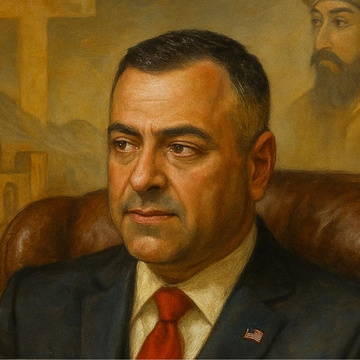
The Article By Bobby Darvish
Shahid Bolsen, born Shannon Morris, is an American convert to Islam whose life story and actions embody the danger of radical ideology cloaked in intellectual rhetoric. While he presents himself as a critic of neoliberalism, corporate influence, and the erosion of sovereignty in Muslim majority nations, his history reveals a deeper pattern of extremism, deceit, and ideological manipulation.
Bolsen first came into international focus in 2006 when a German engineer died at his home in Dubai under suspicious circumstances. What began as a murder charge and a death sentence ultimately ended with his conviction being reduced to manslaughter. He was released in 2013 after years on death row, with the court ordering him to pay blood money to the victim’s family. This episode not only exposed his instability but also demonstrated how Islamist legal systems, through mechanisms such as diya, can enable convicted killers to evade the full weight of justice.
Upon release, Bolsen returned to public life with renewed zeal, positioning himself as an intellectual voice against Western dominance. His writings and speeches criticize corporate globalization and Western imperialism, while also tapping into post Arab Spring disillusionment. Yet critics have long noted that his language often drifts from theoretical analysis into implicit endorsement of violent resistance, which he consistently denies. This is where the doctrine of taqiya becomes central to understanding his persona.
Taqiya, an Islamic principle allowing the concealment of true beliefs under threat, has historically been used by radicals not merely for self preservation but also for deception. Bolsen exemplifies this tactic by projecting himself as a thinker advocating non violence while simultaneously sowing seeds of discord and providing ideological justification for extremism. His rhetoric about resisting neoliberalism and foreign domination aligns closely with the narratives employed by jihadist movements worldwide.
Moreover, Bolsen actively spreads falsehoods about Israel and the Palestinians, framing the conflict not as a tragic geopolitical struggle but as a battlefield for the restoration of an Islamic caliphate. In his hands, the suffering of Palestinians becomes propaganda for global jihad, designed to demonize Israel and rally Muslim communities under the banner of religious war. This tactic of weaponizing narratives against Israel has been a hallmark of Islamist propaganda, linking localized disputes to the broader ambition of a universal caliphate.
Ultimately, Shahid Bolsen’s life is a cautionary tale. His journey from American convert to convicted killer, from death row inmate to activist, illustrates how individuals can reinvent themselves in the public eye through deception. He remains a polarizing figure, to some a courageous voice against imperialism, to others a dangerous radical using intellectual discourse as cover for jihadist ambitions. What is clear is that Bolsen represents a real and present threat to the national security of the United States and Israel, given his ability to inspire extremism and distort narratives to advance jihadist goals. For those who value truth, freedom, and human dignity, Bolsen represents the very threat posed by modern Islamism, the fusion of ideology, deceit, and violence disguised as justice.
I had to respond and critique of this article:
Shahid Bolsen, born Shannon Morris, is an American convert to Islam whose life story and actions embody the danger of radical ideology cloaked in intellectual rhetoric.
This introduction already sets the tone by labeling Bolsen as dangerous without engaging with the substance of his ideas. Rather than discussing his critiques of the Western world, it jumps to conclusions based on identity and religion, implying that his critiques are inherently radical due to his Islamic faith.
While he presents himself as a critic of neoliberalism, corporate influence, and the erosion of sovereignty in Muslim majority nations, his history reveals a deeper pattern of extremism, deceit, and ideological manipulation.
Here, the writer seems to undermine Bolsen’s arguments against neoliberalism and corporate influence, implying that his political critiques are just a front for extremism. However, many around the world, particularly in the Global South, share similar critiques of these same systems of power without being branded as radicals.
Bolsen first came into international focus in 2006 when a German engineer died at his home in Dubai under suspicious circumstances. What began as a murder charge and a death sentence ultimately ended with his conviction being reduced to manslaughter. He was released in 2013 after years on death row, with the court ordering him to pay blood money to the victim’s family. This episode not only exposed his instability but also demonstrated how Islamist legal systems, through mechanisms such as diya, can enable convicted killers to evade the full weight of justice.
This part attempts to paint Bolsen as unstable and untrustworthy, focusing on a past event without offering the full context of why it happened or the international legal complexities at play. The writer chooses to highlight the “Islamist legal system” in a negative light without considering the ways in which Western justice systems also often favor the rich and powerful. Additionally, the writer presents the incident as if Bolsen’s involvement is inherently nefarious, which isn’t necessarily proven in the text.
Upon release, Bolsen returned to public life with renewed zeal, positioning himself as an intellectual voice against Western dominance. His writings and speeches criticize corporate globalization and Western imperialism, while also tapping into post Arab Spring disillusionment.
The writer briefly acknowledges the substance of Bolsen’s critiques, corporate globalization and Western imperialism, but quickly dismisses them as radical. These critiques are in line with concerns many people around the world share, particularly those in the Global South who have lived through the consequences of Western interventionism and exploitation.
Yet critics have long noted that his language often drifts from theoretical analysis into implicit endorsement of violent resistance, which he consistently denies. This is where the doctrine of taqiya becomes central to understanding his persona.
Here, the writer suggests that Bolsen’s words may encourage violence without providing concrete examples of such behavior. The use of taqiya to discredit him is problematic, taqiya is a defensive principle in Islam, yet it’s often used to accuse Muslims of being deceptive. This frame is more about demonizing Bolsen’s faith than about engaging with his actual political discourse.
Taqiya, an Islamic principle allowing the concealment of true beliefs under threat, has historically been used by radicals not merely for self-preservation but also for deception. Bolsen exemplifies this tactic by projecting himself as a thinker advocating non-violence while simultaneously sowing seeds of discord and providing ideological justification for extremism.
The interpretation of taqiya as a “tactic” for deception is misleading. It’s a principle in Islam that allows for self-protection in hostile situations, not a tool for advancing extremism. The accusation that Bolsen uses it to justify extremism is speculative and based on an oversimplified reading of his position.
His rhetoric about resisting neoliberalism and foreign domination aligns closely with the narratives employed by jihadist movements worldwide.
This sentence is particularly misleading. Criticizing neoliberalism and foreign domination does not automatically make someone a jihadist. In fact, these are common critiques shared by many people across the world who are not engaged in violent movements. The writer is conflating a political stance with a violent ideology in an attempt to discredit Bolsen’s message.
Moreover, Bolsen actively spreads falsehoods about Israel and the Palestinians, framing the conflict not as a tragic geopolitical struggle but as a battlefield for the restoration of an Islamic caliphate.
This is a clear distortion of Bolsen’s position. His criticism of Israel is rooted in a history of violence and dispossession faced by Palestinians, not in an ideological call for the restoration of an Islamic caliphate. The writer is trying to delegitimize Bolsen’s position by associating him with a broader, violent Islamist agenda, which is a typical tactic used to silence legitimate criticism of Israel.
In his hands, the suffering of Palestinians becomes propaganda for global jihad, designed to demonize Israel and rally Muslim communities under the banner of religious war. This tactic of weaponizing narratives against Israel has been a hallmark of Islamist propaganda, linking localized disputes to the broader ambition of a universal caliphate.
This is a gross misrepresentation of Bolsen’s views. The suffering of Palestinians is not “propaganda” in the way the writer suggests, it’s a genuine human tragedy that has been ongoing for decades. To suggest that Bolsen is using it to rally Muslims for “global jihad” is an exaggeration that distorts his actual position, which is more likely one of solidarity with Palestinian struggles against Israeli occupation.
Ultimately, Shahid Bolsen’s life is a cautionary tale. His journey from American convert to convicted killer, from death row inmate to activist, illustrates how individuals can reinvent themselves in the public eye through deception.
This framing paints Bolsen’s life as nothing but a series of manipulative transformations. The post glosses over the larger geopolitical issues at play and reduces Bolsen’s life story to a moral lesson on deception. It’s worth questioning who the real “deceptive” actors are in this narrative, the people benefiting from Western imperialism or the voices challenging it.
He remains a polarizing figure, to some a courageous voice against imperialism, to others a dangerous radical using intellectual discourse as cover for jihadist ambitions.
This is the core of the critique: presenting Bolsen as both a “courageous voice” and a “dangerous radical” to create confusion. By equating his intellectual critique of imperialism with radical violence, the writer seeks to discredit his arguments without truly engaging with them.
What is clear is that Bolsen represents a real and present threat to the national security of the United States and Israel, given his ability to inspire extremism and distort narratives to advance jihadist goals. For those who value truth, freedom, and human dignity, Bolsen represents the very threat posed by modern Islamism, the fusion of ideology, deceit, and violence disguised as justice.
This final paragraph makes the leap from a critique of imperialism to a full-blown accusation of terrorism, without any solid evidence to support it. The framing of Bolsen as a “threat” is more about stoking fear of Islamic ideology than addressing his critiques of global power structures. In reality, his analysis of Western violence and exploitation is more likely to resonate with those who have seen the devastating impact of these policies around the world.
I conclude that:
The post doesn’t engage with the core issues raised by Shahid Bolsen. Instead, it focuses on personal attacks, manipulation of religious concepts, and the conflation of political critique with violent extremism. It distracts from the real issues of Western imperialism, regime change operations, and the global violence perpetrated by countries like the US and Israel, instead attempting to silence dissent by discrediting the messenger. The real threat to truth, freedom, and human dignity isn’t Bolsen’s intellectual critique but the continued violence and exploitation carried out by the West in the Global South.
Authored By:
Popular Information is powered by readers who believe that truth still matters. When just a few more people step up to support this work, it means more lies exposed, more corruption uncovered, and more accountability where it’s long overdue. If you believe journalism should serve the public, not the powerful, and you’re in a position to help, becoming a PAID SUBSCRIBER truly makes a difference.
buymeacoffee.com/ggtv
https://ko-fi.com/globalgeopolitics


Leave a comment