
Trump’s Coercive Strategy to Relocate European and Asian Industry to America
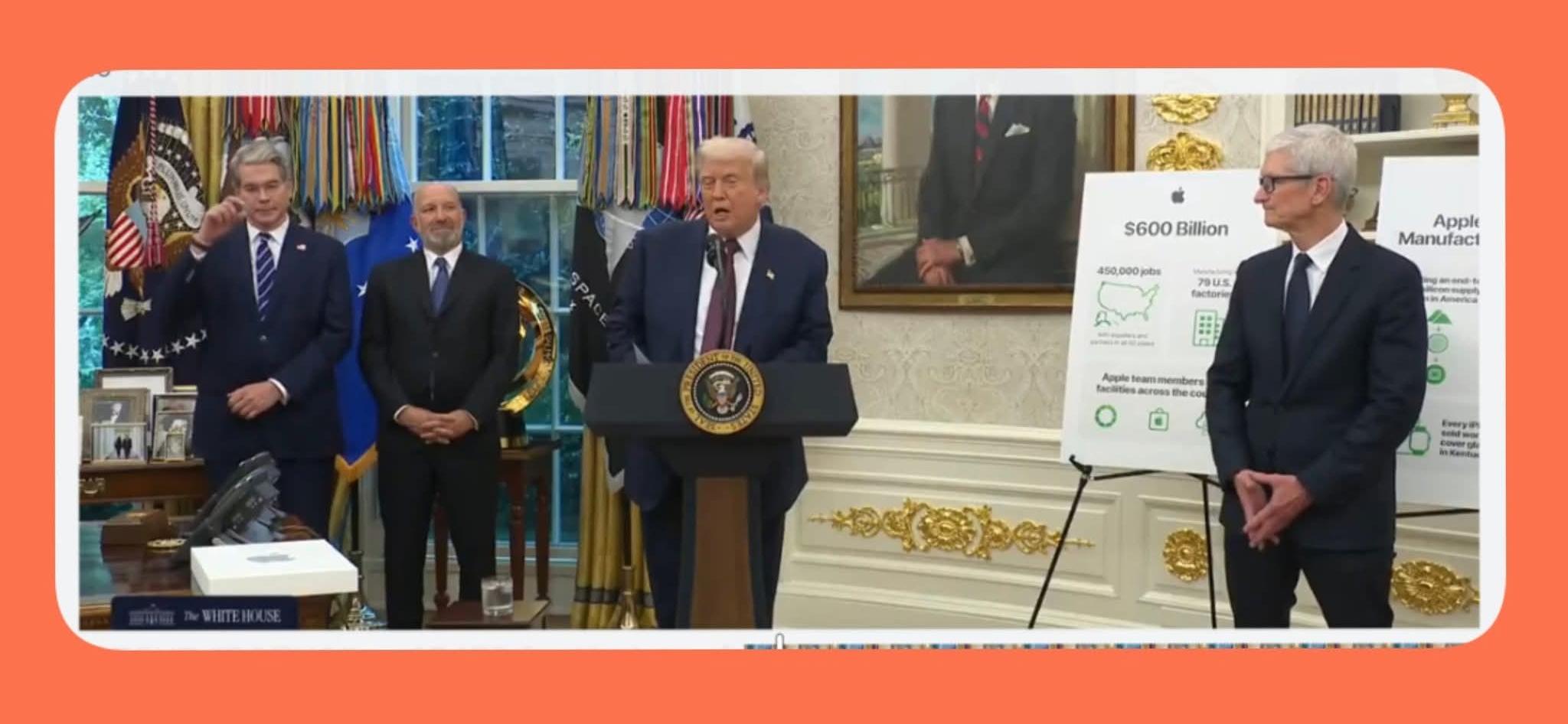
Michael Hudson observes that Donald Trump has pursued policies targeting Europe, South Korea, and Japan, compelling these allied nations to subsidize and relocate their industrial production to the United States. The overarching aim is to reverse U.S. de-industrialization by turning longstanding allies into effective sources of industrial investment and economic support. These measures represent a shift in strategy for Washington, moving from attempts to control non-Western powers such as Russia, China, and Iran, toward exerting coercive influence over nations that remain politically aligned but economically independent.
The failure of U.S. strategists to prevent members of the Shanghai Cooperation Organization (SCO) and BRICS from achieving economic autonomy has prompted a recalibration of American policy. These Eurasian powers retain control over the fruits of their economic growth, resisting the extraction of wealth through traditional mechanisms of U.S. influence such as the monetary dollar standard. Unable to assert dominance over these nations, Washington has focused on allies who are still integrated into its geopolitical orbit. Trump’s strategy emphasizes the relocation of key industries from Europe, South Korea, and Japan to the United States, effectively de-industrializing these allied economies to rebuild American industrial capacity and secure domestic employment.
European governments, particularly Germany, have been placed under pressure to comply with U.S. demands. Trump’s administration has raised tariffs on steel and aluminium imports, surpassing the initial promise of 15 percent and applying rates as high as 50 percent on key industrial goods. Bertram Kawlath, head of Germany’s Mechanical Engineering Industry Association, warned that nearly thirty percent of U.S. machinery imports from the European Union were now subject to these tariffs, creating what he described as an existential crisis for industrialists. Companies such as the Krone Group have responded by laying off employees and redirecting exports already scheduled for the United States, while German affiliates of firms like John Deere face similar disruptions.
The imposition of these tariffs and the accompanying threat of economic disruption illustrate a broader strategy of coercion. European leaders, including EU Commission President Ursula von der Leyen, have publicly framed compliance as a means of achieving certainty, yet these assurances are undermined by the unpredictability of American trade policy. The combination of high tariffs and forced industrial relocation imposes significant costs on allied economies, weakening their capacity to maintain independent industrial and trade policies. These pressures have also catalyzed the rise of nationalist political movements within Europe, which criticize pro-U.S. parties for acquiescing to American demands and bearing the financial and social costs associated with support for U.S.-led conflicts.
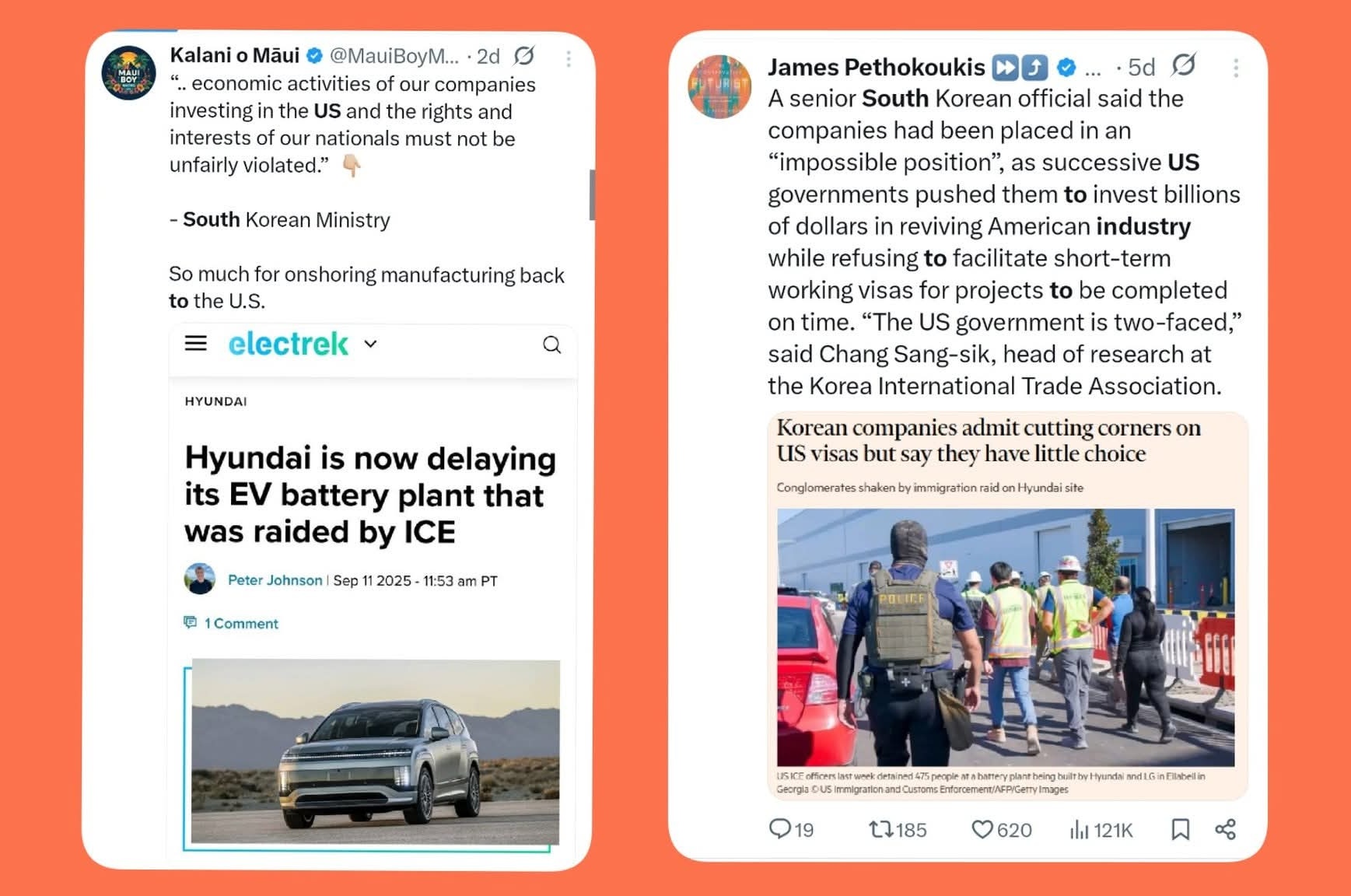
South Korea has faced similar pressures. The U.S. demanded that Hyundai relocate production to Georgia, a project already valued at twenty billion U.S. dollars, with additional investments planned through 2028. LG Energy Solution, Hyundai’s battery manufacturer, had invested twelve point six billion dollars in production facilities. Despite these substantial commitments, the U.S. imposed twenty-five percent tariffs on Korean auto exports, resulting in losses of approximately six hundred million dollars in the second quarter of 2025. The U.S. Immigration and Customs Enforcement (ICE) agency deported hundreds of workers hired to provide skilled labor for the construction of the factory, complicating project completion and raising operational costs. South Korean officials described the situation as placing companies in an impossible position, forced to comply with policies that conflicted with economic planning and workforce requirements.
The coercive nature of these policies is further demonstrated by the conditions imposed on Japanese investment. The U.S. threatened to impose steep tariffs if Japan did not invest five hundred and fifty billion dollars into U.S.-controlled projects. Following these negotiations, Japan was required to accept arrangements under which it would receive only ten percent of the profits from these projects after recovering its initial investment, leaving ninety percent of the returns under U.S. control. This applied to specific transactions, such as Nippon Steel’s fifteen billion dollar purchase of U.S. Steel, which included the allocation of a golden share to the U.S. government to maintain operational authority. Japanese authorities retained limited consultative input, but ultimate decision-making rested with the U.S. administration. Independent analysis has characterized these arrangements as coercive, effectively forcing a sovereign nation to subsidize American industrial capacity.

Trump’s strategy mirrors historical patterns of economic imperialism. Michael Hudson has compared the approach to nineteenth-century British and French imperial practices, which extracted resources from colonies while directing industrial and financial benefits to the metropole. The contemporary U.S. strategy involves isolating allies from trade with non-Western powers, portraying SCO and BRICS nations as military threats, and compelling European, South Korean, and Japanese governments to shoulder the costs of defense and industrial relocation. By enforcing these policies, Washington prioritizes industrial self-sufficiency and balance of payments stabilization over the economic interests of its allies.
The impact of these measures on allied nations is significant. European populations have increasingly expressed dissatisfaction with leaders perceived as subordinating national economic interests to U.S. demands. South Korea and Japan face political and social strain as economic pressures increase, highlighting the potential for domestic backlash against pro-U.S. parties. Analysts have noted that while coercive policies may achieve immediate strategic objectives, they carry the risk of long-term destabilization and the emergence of nationalist reactions that could prompt reconsideration of traditional alliances.
Trump’s approach represents a shift in U.S. policy from attempting to control declared adversaries toward exploiting the economic dependency of allies. The imposition of high tariffs, the forced relocation of industrial production, and the coercive conditions placed on foreign investment exemplify this strategy. By prioritizing short-term industrial and political gains, the administration introduces unpredictability into international trade relations and places allied nations under financial and operational strain. These pressures have prompted discussions within allied governments regarding the sustainability of current alignment with U.S. strategic objectives.
Historical parallels reinforce the significance of these actions. By compelling allied nations to invest in U.S. industrial capacity and bear the costs of defense and economic adjustment, Washington has adopted practices reminiscent of colonial extraction and forced economic dependency. The comparison underscores the extent to which these policies depart from conventional international trade norms and impose extraordinary burdens on allied economies.

The U.S. strategy also demonstrates a broader ideological pattern. Alastair Crooke has observed that Western powers are culturally predisposed to assert hegemony, a mindset shaped by centuries of colonial dominance. The rise of independent Eurasian powers and alternative multilateral institutions challenges this assumption, compelling the United States to consolidate control over its existing allies rather than accept a reduced role in global governance. The coercive economic measures implemented under Trump exemplify this effort to maintain dominance within the Western sphere, while non-Western powers develop independent economic strategies.
The consequences of these policies extend beyond immediate industrial relocation. Allied nations face increased costs, operational disruption, and the potential for domestic political upheaval. European industrialists confront tariff-induced crises, South Korean firms navigate workforce constraints and financial penalties, and Japanese authorities manage arrangements that significantly limit profit retention. Collectively, these pressures weaken allied economic resilience and reinforce U.S. strategic objectives at the expense of partner nations’ autonomy.
The broader context includes attempts to isolate allies from SCO and BRICS trade, emphasizing the strategic prioritization of economic and industrial alignment within the Western sphere. Trump’s policies demonstrate the use of economic coercion as a tool to enforce political and industrial compliance. By dictating terms of investment and trade, the United States exerts leverage over nations that remain integrated into its geopolitical orbit, compelling them to contribute to domestic industrial expansion and defense expenditures.
The implications for future international relations are considerable. Coercive policies may prompt nationalist responses within Europe, South Korea, and Japan, potentially undermining long-term alliance stability. The economic strain associated with forced industrial relocation and tariff impositions may incentivize these nations to pursue alternative trade and investment arrangements, challenging U.S. influence. The balance between achieving immediate industrial objectives and maintaining durable alliances presents a critical strategic tension for the United States.
In conclusion, Trump’s economic policies toward Europe, South Korea, and Japan reflect a deliberate strategy of coercion designed to reverse U.S. de-industrialization. By compelling allied nations to subsidise and relocate industry to the United States, these measures prioritize domestic industrial expansion and balance of payments stabilization over the economic interests of partner countries. The strategy draws on historical patterns of economic imperialism and leverages the dependence of allies to achieve strategic objectives. The long-term consequences include political strain, potential nationalist backlash, and the risk of destabilizing alliances, highlighting the complex interplay between economic coercion and international relations in the current geopolitical landscape.
Authored By:
Popular Information is powered by readers who believe that truth still matters. When just a few more people step up to support this work, it means more lies exposed, more corruption uncovered, and more accountability where it’s long overdue. If you believe journalism should serve the public, not the powerful, and you’re in a position to help, becoming a PAID SUBSCRIBER truly makes a difference.
buymeacoffee.com/ggtv


Leave a comment