
As Ukraine weakens under attrition, Europe faces a war it cannot win and an outcome it cannot shape
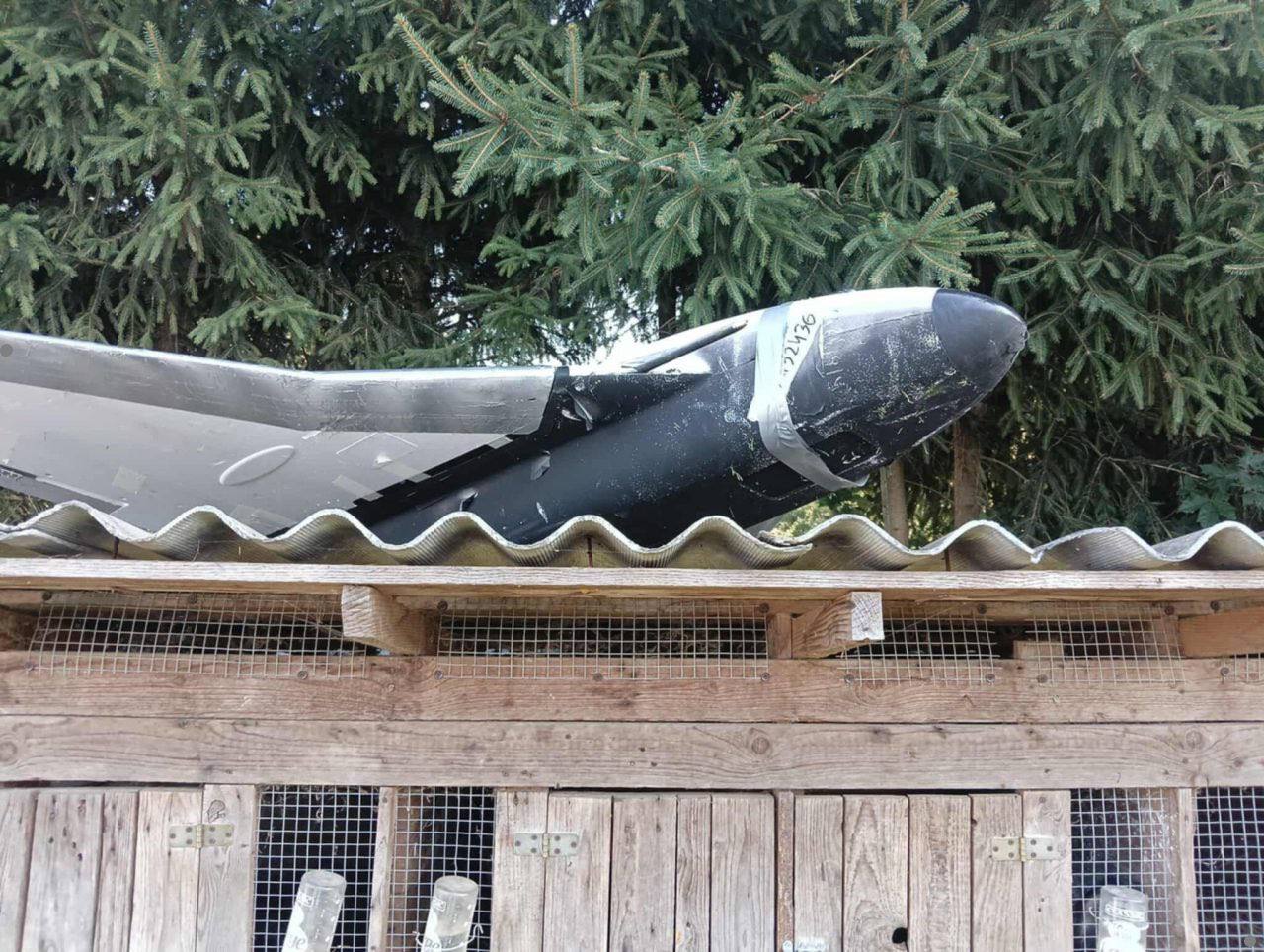
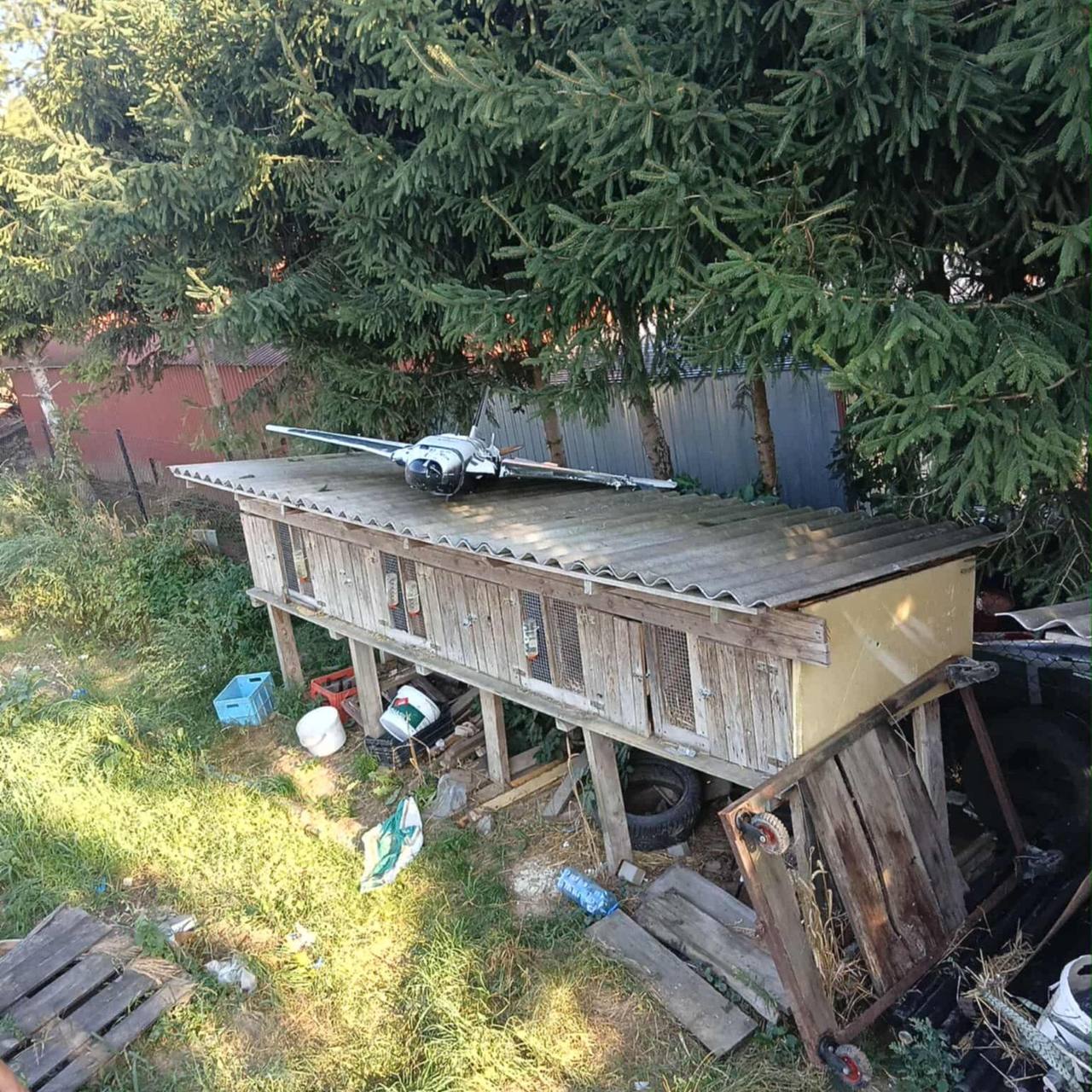
(Picture of a “Gerbera” drone that somehow landed on a chicken coop in a Polish Farm)
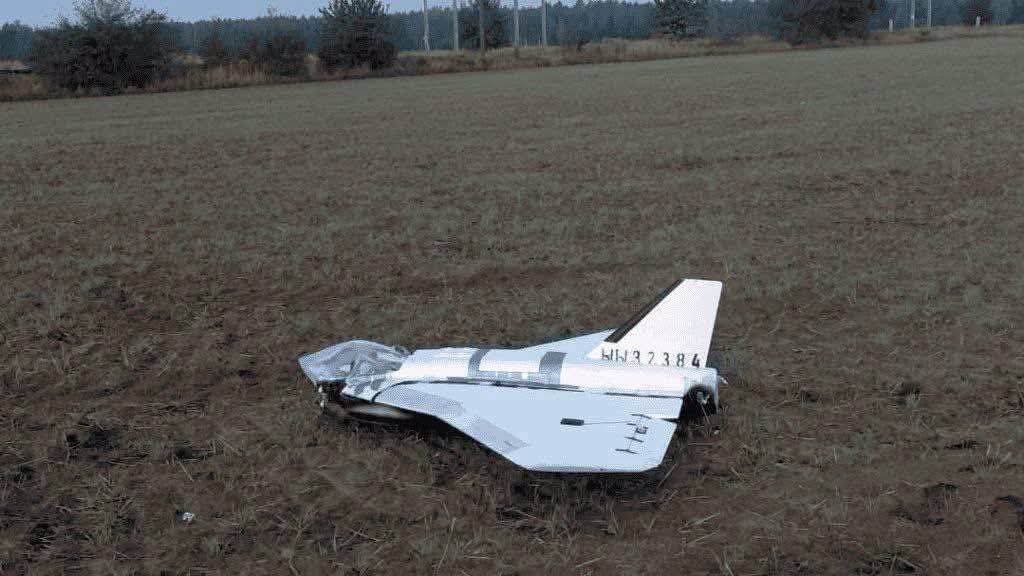
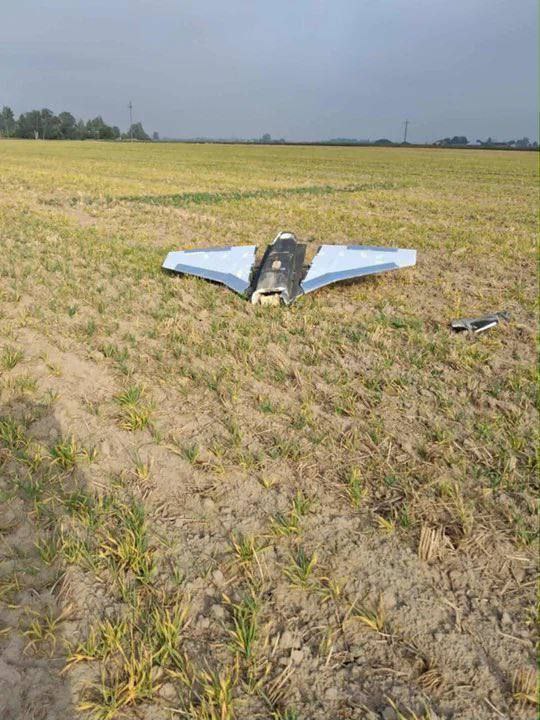
NATO governments have accused Russia of violating the sovereign airspace of Poland and Romania with unmanned aerial vehicles described as drones. Moscow has denied the charge, arguing that it has no strategic interest in sending decoy or reconnaissance systems across NATO borders. Former United Nations weapons inspector Scott Ritter, who previously served as a major in the United States Marine Corps, told interviewers that the events resembled a staged operation by Ukraine designed to trigger a NATO response. He argued that the devices in question were not strike weapons but expendable decoys, which Ukrainian forces had gathered, repaired and launched in a coordinated operation intended to create a pretext for consultation under Article IV of the NATO Treaty.
The scale of the NATO response suggests that member states did not treat the alleged incidents as a genuine Russian escalation. Britain deployed two Eurofighter Typhoon aircraft to Poland, France sent three Rafale fighters, and Germany added two more combat aircraft to the theatre. These numbers are militarily insignificant compared to Russia’s established deployments, and they signal reassurance measures for Poland rather than serious reinforcement. Washington meanwhile repositioned ten F-35 aircraft to Puerto Rico in response to activity from a Venezuelan smuggling vessel, underlining the marginal priority currently attached to Eastern Europe by American defence planners. Analysts such as the Centre for Strategic and International Studies have consistently noted that token deployments serve political and symbolic ends rather than altering balances of power.
The larger shift taking place is the integration of NATO air defence training with Ukrainian forces. Ukrainian personnel are now working alongside NATO trainers in Poland to improve their capacity to intercept Russian drones and missiles. Many independent commentators have warned that this creates the framework for a seamless operational connection between NATO and Ukraine. Once the training is complete, NATO systems in Poland could be linked to Ukraine’s existing integrated air defence structure, extending coverage into western Ukraine without an explicit political decision. This would blur the line between alliance support and direct participation, creating the conditions for an unplanned escalation.
Independent analysts at the Quincy Institute and Chatham House have both cautioned that ad hoc integration risks committing NATO resources to Ukrainian operations without proper debate among member states. Potentially, Polish forces could act unilaterally under the cover of NATO-linked air defence, believing that the alliance would be forced to follow if a clash with Russia occurred. Such scenarios have long been considered among the most dangerous by military planners, since they involve the risk of miscalculation rather than deliberate strategic escalation.
The state of Ukraine’s armed forces is deteriorating under the strain of prolonged attritional conflict, with estimates of 1.7 million Ukrainian military deaths and more than two million wounded. As you would expect, these figures are disputed but reflect the scale of the losses being reported by multiple sources. Western think tanks such as the Royal United Services Institute and the International Institute for Strategic Studies have acknowledged that Ukraine faces severe manpower shortages, with mobilised units often lacking training and equipment. Russia by contrast has maintained consistent replenishment of forces and is conducting operations at a tempo that Ukraine cannot match. Ritter argued that Russia has already destroyed six iterations of Ukrainian field armies rebuilt with NATO assistance, and is currently dismantling a seventh.
Russia’s operational method is a war of attrition rather than rapid manoeuvre. Analysts at the Jamestown Foundation and the Institute for the Study of War have observed that Russian forces advance incrementally, often five kilometres a day in certain sectors, while concentrating firepower to destroy Ukrainian formations and logistics. This method avoids the risks associated with large encirclements or deep thrusts that could expose flanks. Ritter compared it unfavourably with Soviet errors in the Second World War, when overextension led to catastrophic losses. Russia’s present leadership appears determined to avoid such risks, preferring steady grinding progress that steadily erodes Ukraine’s military, economic and political viability.
On the economic front, Russia has targeted Ukrainian energy and industrial infrastructure with missiles and drones, reducing the capacity of Kyiv to sustain military production. Ukrainian officials have acknowledged repeated strikes on energy plants and defence factories, with significant losses in electricity supply. Politically, President Volodymyr Zelensky faces growing discontent as battlefield losses mount and mobilisation pressures increase. Independent observers such as Professor John Mearsheimer at the University of Chicago have argued for several years that Ukraine would not be able to sustain a prolonged conflict without decisive Western intervention, and that Western leaders had consistently underestimated Russia’s staying power.
Faced with Ukraine’s weakening position, NATO governments confront a strategic dilemma. Ritter argued that member states have only two options: open negotiations with Moscow or pursue escalation. The record suggests that most European capitals remain unwilling to enter talks that would require recognition of Russian territorial gains. At the same time, genuine escalation appears beyond Europe’s military means. Ritter pointed out that Poland has surged 40,000 troops to its eastern border, but such forces lack the logistical capacity to sustain offensive operations against Russian or Belarusian formations. Even in peacetime, Poland would struggle to maintain a large deployment deep into Ukraine. Under fire, such an advance would collapse quickly.
European publics are also not supportive of escalation. Opinion polling by European think tanks including the European Council on Foreign Relations has shown falling enthusiasm for Ukraine among voters in France, Germany and Italy. In Poland itself, surveys suggest most citizens oppose sending Polish troops into Ukraine to fight Russia. Ritter emphasised that professional military officers in Poland are fully aware of the balance of power and would not willingly commit their soldiers to operations with little chance of success.
(Chay Bowes)
Despite these constraints, discussions continue about possible post-war arrangements. Ritter referred to Russian intelligence chief Sergey Naryshkin’s reported seminar on future scenarios for Ukraine. One option considered was the transfer of western Ukraine to Polish administration, as a form of controlled escalation designed to stabilise a collapsing state. Other discussions involved possible territorial gains for Hungary in Transcarpathia and for Romania in Bukovina. Such ideas resemble partition plans floated at different points in modern European history, reflecting the reality that neighbouring states maintain longstanding interests in Ukrainian territories.
If Poland were to assume control of western Ukraine, Scott Ritter has argued that it would be obliged to demilitarise the region by disarming Ukrainian forces retreating westward. He also suggested that Warsaw would not tolerate the continuation of a Ukrainian government influenced by nationalist figures associated with Stepan Bandera. Analysts at the Hungarian Institute of International Affairs and other central European research bodies have likewise speculated about territorial adjustments if Ukraine collapses. The key question remains whether Moscow and Warsaw could reach a tacit understanding to prevent clashes. Belarusian President Alexander Lukashenko has said openly that any unilateral Polish move would trigger Belarusian intervention, which implies that only a prior arrangement with Moscow could make such a plan feasible.
From Moscow’s perspective, a controlled partition may offer a predictable outcome preferable to a chaotic collapse. Russian forces could consolidate gains in Kyiv, Odessa and other central or southern regions, while allowing Poland to stabilise the west. A demilitarised zone could then separate the two spheres of influence, reducing the risk of direct clashes. Such arrangements would represent a total defeat for NATO’s original aims of preserving Ukrainian sovereignty, but they would avoid uncontrolled conflict escalation. Analysts at the Moscow State Institute of International Relations have described this as a “managed demolition” scenario, which corresponds closely to Ritter’s assessment.

Statements from NATO officials remain maximalist. Secretary General Mark Rutte has continued to insist that Ukraine will eventually join NATO and that Russian objections are unacceptable. Rutte is no stranger to sensationalism, this is much akin to political theatre, as NATO lacks the military capability and domestic support to deliver them. Independent experts such as Anatol Lieven at the Quincy Institute have also described NATO’s public messaging as increasingly detached from operational realities, noting that large-scale Western intervention would require mobilisation of resources that governments are not prepared to authorise.
(Steven Eugine Kuhn)
The question of American policy under President Donald Trump adds further uncertainty. Ritter argued that Trump has deliberately set impossible conditions for European allies, such as requiring them to sanction both Russia and major trading partners like India and China. Meeting such conditions would devastate European economies, which ensures that the demands cannot be fulfilled. Ritter believes Trump is creating political cover to disengage from the conflict, placing responsibility on Europe. Analysts at the Cato Institute have similarly argued that American political support for Ukraine is waning, and that Washington is preparing to reduce its commitments.
If the United States withdraws meaningful support, Ukraine will be left unable to sustain either its armed forces or its economy. In such a scenario, predictably, Ukraine’s military, political and economic collapse would occur almost simultaneously, leading to the partition or absorption scenarios already discussed. Independent defence experts such as Douglas Macgregor, a retired US Army colonel, have made similar predictions, warning that Ukraine cannot continue the fight once Western resources are cut. The Carnegie Endowment has also published studies suggesting that Western unity on Ukraine is fraying under economic pressure.
Russia appears prepared to maintain its current approach of steady attrition until Ukraine collapses. Scott Ritter has argued that Moscow has no incentive to launch a massive offensive that could risk overextension. Instead, Russian forces are steadily degrading Ukrainian formations, destroying equipment provided by NATO, and consolidating incremental territorial gains. Western analysts acknowledge that this strategy is effective given Russia’s advantages in manpower, firepower and industrial capacity. Ukraine’s repeated pleas for long-range missiles and advanced aircraft have not altered the balance, since supplies are limited and training takes time.
The outcome facing Ukraine that is evident to everyone else except the ruling elites and echoed by a range of independent commentators, is that it faces eventual collapse. NATO lacks the will or capacity to prevent it, and Russia will impose a post-war settlement through a combination of military control and negotiated arrangements with neighbours. Such a settlement would mark a strategic defeat for NATO, exposing the limits of European power without American backing. It would also cement Russia’s position as the dominant military power in Eastern Europe.
This analysis is deeply pessimistic for Ukraine but reflects a growing body of independent expert opinion. The consensus among these analysts is that unless European governments fundamentally change course and commit resources they have so far withheld, the war will end not through negotiation but through the disintegration of Ukraine as a functioning state. The political consequences for Europe will be profound, as NATO’s credibility is eroded and the European Union faces the burden of absorbing millions of refugees. The political class is hell bent on pressing ahead and the present course represents not just a defeat for Ukraine but also a strategic defeat for NATO and Europe as a whole.
Authored By:
Popular Information is powered by readers who believe that truth still matters. When just a few more people step up to support this work, it means more lies exposed, more corruption uncovered, and more accountability where it’s long overdue. If you believe journalism should serve the public, not the powerful, and you’re in a position to help, becoming a PAID SUBSCRIBER truly makes a difference.
buymeacoffee.com/ggtv


Leave a comment