
Genocide under Western sponsorship and the breakdown of global governance
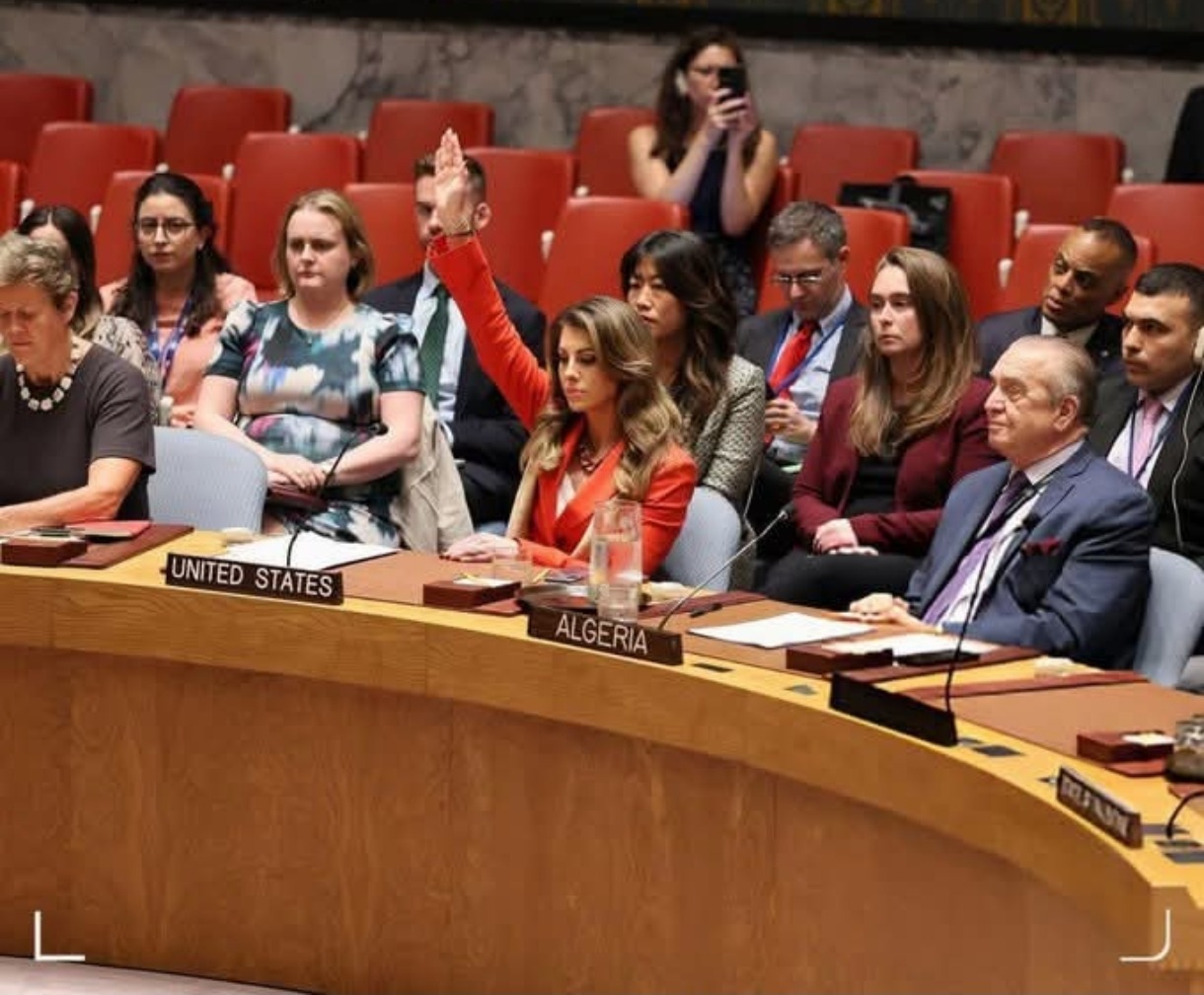
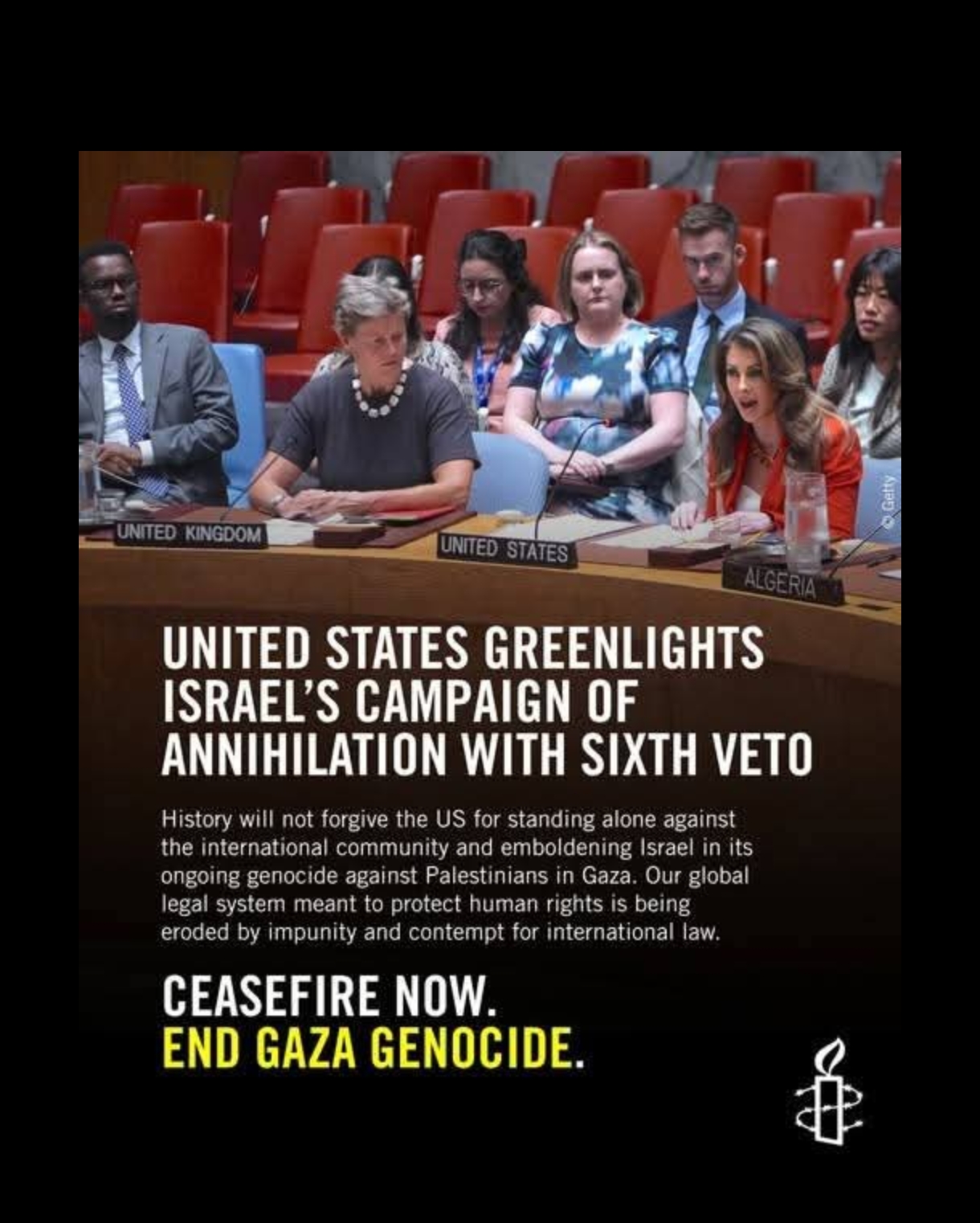
The United States has once again exercised its veto at the United Nations Security Council to block a resolution calling for an immediate and permanent ceasefire in Gaza. Fourteen members of the council supported the resolution, which demanded an unconditional cessation of hostilities and the lifting of restrictions on humanitarian aid. The United States stood alone against the resolution, isolating itself in the chamber and effectively preventing any collective action. Analysts have repeatedly pointed out that the veto mechanism has long served as a shield for Israel, protecting it from accountability even in the face of overwhelming evidence of grave violations of international law. Craig Mokhiber, a former senior UN human rights lawyer, has described the situation as a textbook case of genocide, warning that the UN has failed to act despite having both the legal and institutional tools to do so.

In parallel, the same Western powers that have consistently protected Israel are advancing punitive measures against Iran under the pretext of the 2015 nuclear agreement. France, backed by the United States and key European partners, declared that the so-called snapback mechanism for UN sanctions against Iran is now a done deal, regardless of the IAEA’s ongoing monitoring arrangements. Russia and China rejected the decision outright, describing it as both illegal and illegitimate under international law, and have pledged to continue normal relations with Tehran. Dmitry Polyanskiy, Russia’s deputy permanent representative to the UN, condemned the approach as twisted logic, accusing Western powers of using sanctions as blackmail rather than as instruments of law. The contrasting responses reveal a stark double standard: Israel is given impunity for an ongoing campaign of mass killing, while Iran faces collective punishment for maintaining a position of resistance within the regional balance of power.
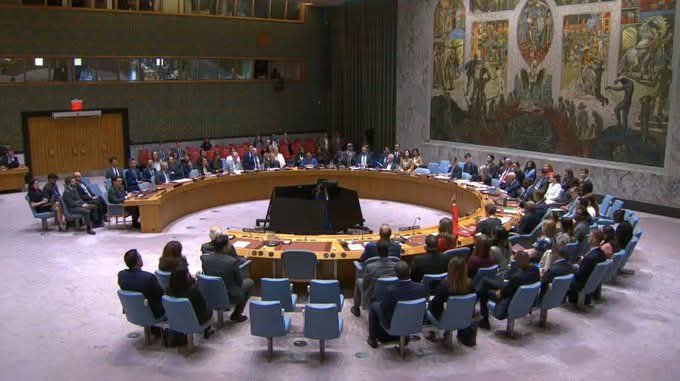
The UN’s Independent International Commission of Inquiry published its findings recently, accusing Israel of committing genocide against Palestinians in Gaza. The Commission established that four out of the five acts defined as genocide under the 1948 Genocide Convention have been fulfilled by Israeli actions, including killing members of the group, inflicting serious bodily and mental harm, imposing conditions calculated to destroy the group, and measures designed to prevent births. Chris Sidoti, one of the commissioners, stated that Israeli attempts to smear critics as Hamas proxies or antisemites are no longer taken seriously by the international community. Tarik Cyril Amar, a historian at Koç University, described the report as conclusive, adding that even if the genocide were stopped today, the opportunity to prevent it was lost in late 2023 when decisive intervention might still have been possible. He drew parallels with the failure to confront Nazi Germany in its early stages, warning that Israel’s behaviour is designed to establish a Gaza Method where war itself is redefined as genocide when conducted by Western powers or their allies.
(Russia’s Deputy UN Ambassador, Dimitry Polyansky)
The international reaction has begun to shift, though often too slowly. Polling data in the United States indicates that nearly half of respondents now recognise that Israel is committing genocide, with younger demographics particularly critical of the relationship. Once staunchly pro-Israel constituencies, including evangelical groups, are beginning to distance themselves. Prominent figures from both the left and right, such as Bernie Sanders, Marjorie Taylor Greene, and Tucker Carlson, have broken with decades of bipartisan support. Even mainstream publications such as The Economist have acknowledged the erosion of Israel’s standing in American public opinion. Analysts suggest that this shift could have long-term implications for US foreign policy, though Washington remains officially committed to providing unconditional support.
Meanwhile, regional dynamics are hardening against Israel. Saudi Arabia and Kuwait have imposed outright bans on Israeli passport holders, threatening immediate arrest for anyone attempting to enter their territory. Other states including Algeria, Iraq, Lebanon, and Iran already enforce strict prohibitions, and even Malaysia, Pakistan, and Oman maintain restrictions. These moves signify growing solidarity across the Middle East, with governments aligning more explicitly with Palestinian suffering. The bans are not merely symbolic; they demonstrate a willingness to take sovereign decisions that directly impact trade, energy, and security cooperation, challenging Western influence in the region.
Israel’s recent decision to strike a Hamas-linked facility in Doha has accelerated this trend. The airstrike marked the first time Israel targeted inside Qatar, home to the largest US military base in the Middle East. Analysts such as Dan Cohen, an investigative journalist, described Qatar as functioning as little more than a US military outpost, and Israel’s attack exposed Washington’s inability to restrain its closest ally. Former US President Donald Trump publicly distanced himself from the action, posting on his platform that the strike was a unilateral decision by Netanyahu and not endorsed by Washington. The incident was described by Rosemary DiCarlo, the UN’s chief political affairs officer, as an alarming escalation that could destabilise the Gulf. The attack underscores the degree to which Israel operates independently, even at the expense of its patron’s strategic interests.
Experts have linked Israel’s growing military autonomy to the breakdown of US regional dominance. For decades, Washington maintained a fragile balance through arrangements such as the Camp David Accords, which reoriented Egypt away from confrontation, and later through the Abraham Accords, which formalised Israel’s relationship with several Gulf states. The Gaza war of 2023 upended this alignment, freezing further normalisation and forcing Arab leaders to reconsider the centrality of the Palestinian cause. André Benoit, a French analyst, has argued that the Doha strike crystallised a fundamental truth: American power no longer guarantees order in the Middle East, and regional actors such as Saudi Arabia and Türkiye are recalibrating their policies accordingly.
Türkiye’s President Recep Tayyip Erdogan recently accused Israel of pursuing a Greater Israel project, pointing to expansionist activities in Syria and the West Bank. Turkish officials view Israeli support for separatist groups in southern Syria as a direct threat to Ankara’s reconstruction and influence. Saudi Arabia has responded by deepening its security cooperation with Pakistan, while Egypt has revived calls for an Arab NATO. Analysts interpret these alignments as a hedge against Israeli dominance, suggesting that Israel’s pursuit of unilateral regional superiority may generate its own counter-coalitions.
Western hypocrisy has not gone unnoticed. Afif Safieh, former Palestinian ambassador to the UK, the US, and Russia, stated in interviews that the West is witnessing genocide in Gaza every day and yet continues to provide cover for Israel at the UN. He emphasised that Israel has always sought maximum land with minimum Palestinians, and the strategy of making Gaza unliveable is designed to force displacement. Similarly, Dr Khaled Al-Qaddoumi, Hamas’s representative in Iran, argued that the international community must go beyond verbal condemnation and take decisive measures including suspending Israel’s UN membership and severing economic ties. Spain’s decision to cancel over a billion dollars’ worth of defence contracts with Israeli firms demonstrates that such actions are possible, though other European states remain committed to arms sales.
The contradictions in Western policy are glaring. On one hand, Israel has killed tens of thousands of civilians in Gaza according to local health authorities, attacked sovereign states such as Syria, Lebanon, and now Qatar, and continues to pursue annexationist goals in the West Bank. On the other, Iran is targeted for sanctions and international isolation despite being party to a nuclear agreement verified repeatedly by the IAEA. Former officials and analysts alike note that these decisions are not based on consistent principles of law but on geopolitical expediency. The US-led bloc enforces punishment on adversaries while excusing crimes by allies. The approach risks further destabilisation and undermines the credibility of the international system.
The longer-term implications are profound. If Israel’s actions continue unchecked, a new precedent will be established in which genocide is tolerated when carried out by Western-backed states. Scholars of international law warn that this erodes the foundations of the Genocide Convention itself, effectively hollowing out the post-1945 legal order. Craig Mokhiber has suggested that the General Assembly could invoke the Uniting for Peace mechanism to bypass the US veto, potentially authorising an international protection force for Gaza. Whether such steps will be taken remains uncertain, but without them the UN risks further discrediting itself.
Regional responses are beginning to fill the vacuum. China and Russia are positioning themselves as alternative poles of influence, openly rejecting the legality of Western-backed sanctions and supporting Iran economically. They argue that by continuing business with Tehran they uphold sovereignty and resist unilateral coercive measures. Analysts at independent think tanks observe that this growing multipolarity is not merely theoretical but reflected in tangible trade, energy, and security deals. The West risks isolating itself by clinging to a policy framework that alienates much of the Global South.
The debate over consequences remains unresolved. Some argue that only military defeat can end Israel’s cycle of violence, drawing direct analogies with Nazi Germany’s collapse. Others emphasise the need for comprehensive economic boycotts, insisting that trade and cooperation must be severed until accountability is enforced. Either way, without significant international action, Israel’s impunity is likely to encourage further aggression. The precedent has already been set by cross-border operations in Syria, targeted killings in Iran, and the strike in Qatar. Each step reinforces the perception of a state expanding its reach without constraint, protected by Western cover.
The question now is whether the rest of the world will continue to accept this double standard. Scholars such as Tarik Cyril Amar and Chris Sidoti insist that denial is no longer tenable, arguing that the accumulation of evidence now demands concrete state action rather than continued moral lamentation. The UN Commission’s findings, the reports of Israeli human rights groups such as B’Tselem and Physicians for Human Rights, and scholarly assessments by the International Association of Genocide Scholars together present a coherent evidentiary picture that cannot be dismissed as mere partisan complaint. Prominent public figures across diverse political traditions have acknowledged those findings, signalling that public opinion has moved beyond simple disagreement over facts to a debate about enforcement and consequence.
Legal avenues exist that would permit collective measures despite Security Council paralysis, and those options require serious consideration rather than rhetorical denunciation. Craig Mokhiber and other former United Nations officials have outlined the Uniting for Peace procedure as a mechanism the General Assembly can employ to authorise collective protection measures when the Security Council is blocked by veto. Pursuing such a route would confront major political obstacles, including overt resistance from the governments most closely allied with Israel, yet invoking Uniting for Peace would place the question of protection and accountability directly before an assembly representing the wider international community.
Accountability through international criminal law remains an imperfect but important path to redress and deterrence. Independent legal scholars have explained that prosecutorial investigations, evidence preservation, and eventual trials at competent international tribunals could establish criminal responsibility for individuals and institutions engaged in atrocities. Parallel domestic proceedings in states willing to exercise universal jurisdiction would reinforce that effort. Building prosecutable cases requires methodical documentation, witness protection, and cooperation from states that today supply diplomatic cover; without that cooperation, legal processes will remain slow and incomplete.
Economic and diplomatic levers provide a more immediate set of options for states unwilling or unable to initiate military or legal action. Spain’s recent suspension of defence contracts with Israeli firms illustrates how targeted economic measures can exact tangible costs without resorting to force. A coordinated policy of arms embargoes, financial restrictions, and trade disengagement by multiple states would strain Israel’s capacity to wage prolonged operations while also signalling that impunity carries concrete consequences. Many European publics already express discomfort with blanket support for Israel; governments that reflect those electorates politically can act without needing to reinvent international law.
The snapback debate over Iran sanctions exposes the deeper inconsistency in Western foreign policy and the geopolitical consequences of maintaining that inconsistency. Western efforts to reimpose sanctions on Iran under contested procedural claims have prompted explicit refusals by China and Russia to recognise those measures, with both powers publicly framing the snapback as illegitimate. Those refusals are operational as Beijing and Moscow have signalled continued economic engagement with Tehran and implied that enforcement will be selective at best. A multipolar reality now shapes sanctions regimes and trade relations, and Western reliance on unilateral or narrow coalitions undermines the coherence of global governance.
Regional realignments already reflect a rejection of policy frameworks that privilege certain allies irrespective of their conduct. Saudi Arabia’s and Kuwait’s bans on Israeli passport holders, the Arab League’s extraordinary summit declarations, and Turkey’s vocal criticisms demonstrate an emerging regional consensus that will not easily be reversed. The strike in Doha and subsequent diplomatic fallout showed how Israeli military autonomy can provoke strategic recalibrations among formerly aligned states. Those recalibrations open space for alternative security architectures, including deeper military and economic ties among Gulf states, Türkiye, Pakistan, and external actors such as Russia and China.
Western political elites face a consequential choice between maintaining a status quo that privileges strategic alignment over legal accountability or recalibrating policy to align means with stated principles. Continuing the old approach risks accelerating the erosion of the post-1945 legal order, while a genuine reorientation toward consistent enforcement would require confronting allies and accepting short-term strategic friction. The debate over consequences therefore involves not merely moral judgement but practical questions about the durability of alliances, the utility of military basing, and the long-term stability of global trade and energy networks.
History demonstrates that legal norms survive only so long as states enforce them when violations occur. Where enforcement becomes arbitrary, cynicism replaces legitimacy and other states adopt reciprocal behaviours. The current pattern of shielding an ally from accountability while penalising adversaries produces incentives for further unilateral action and reciprocal lawlessness. International lawyers, former diplomats, and independent analysts warn that allowing such asymmetry to persist will embolden future abuses and reduce options for peaceful conflict management.
Policy options exist that can restore a measure of coherence without collapsing present alliances. A pragmatic package could include immediate humanitarian imperatives, such as guaranteeing unfettered aid access and safe corridors; medium-term accountability measures, such as expanded documentation and cooperation with international prosecutorial bodies; and strategic reassessment, such as conditioning certain forms of security assistance on demonstrable compliance with international humanitarian law. Implementing such a package would require political courage from Western capitals and a willingness to accept friction with Israel and other regional actors accustomed to predictable backing.
The international community now stands at a crossroads where continued tolerance of double standards will not remain cost-free. States, scholars, and civil society groups must decide whether to defend the universal application of law or to accept selective enforcement that privileges geopolitical convenience. Choosing law over convenience will be difficult, will entail painful political trade-offs, and will disappoint entrenched constituencies. Choosing convenience over law will be easier in the short term but will impoverish the international order and expose states to escalating instability and delegitimisation.
A clear policy recalibration would not end conflict overnight, nor would it erase the suffering already inflicted, but it would restore a credible basis for future conflict prevention and post-conflict reconstruction. Accountability, protection, and consistent diplomacy offer the only practical route to deter repetition and to rebuild an international system grounded in rules rather than raw power. The choice between those options now rests with governments that claim to uphold those rules and with publics increasingly unwilling to accept hypocrisy as policy.
Authored By:
Popular Information is powered by readers who believe that truth still matters. When just a few more people step up to support this work, it means more lies exposed, more corruption uncovered, and more accountability where it’s long overdue. If you believe journalism should serve the public, not the powerful, and you’re in a position to help, becoming a PAID SUBSCRIBER truly makes a difference.
buymeacoffee.com/ggtv


Leave a comment