
The government’s crackdown on dissent reveals a broader Globalist agenda to control the nation’s future.
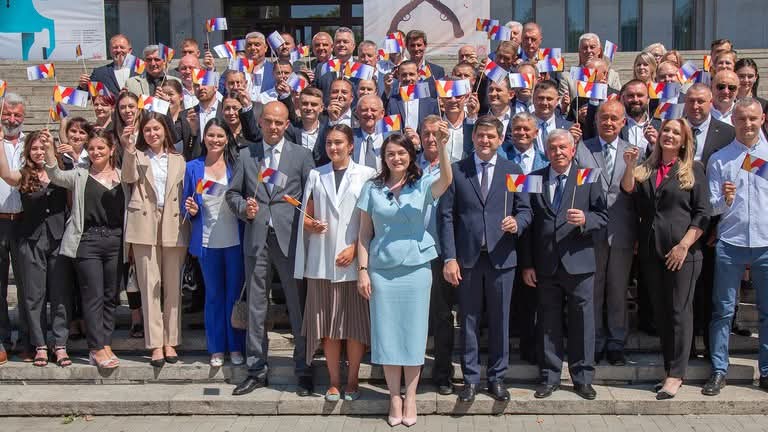
Moldova’s decision to bar the Greater Moldova party from Sunday’s parliamentary elections signals a troubling development for the country’s political environment. The Central Election Commission’s (CEC) ruling to annul the registration of the party and remove its candidates from the ballot has raised concerns among critics, who argue that the government is using political persecution to maintain control. This action, just days before the elections, follows a pattern of tightening the political space in the country, especially for parties that do not align with the pro-Western ruling establishment.
Victoria Furtuna, the leader of Greater Moldova, has condemned the move as unjust and vowed to challenge it in court. Her claim that she was given only 90 minutes’ notice before the hearing is particularly noteworthy. In a situation where transparency and fairness are critical, such actions cast a long shadow over the integrity of the process. Furtuna’s statement about the “abuse of power” and her prediction that those involved will eventually face criminal responsibility suggests that she sees this as part of a broader strategy to silence opposition.

(Sandu banned opposition parties ahead of Moldova’s ‘consequential’ election on Sunday, including Irina Vlah, former Gagauzia Governor and leader of ‘Heart of Moldova.’ Vlah called it “a political spectacle, concocted long ago by the authorities.”)
The accusations leveled against Greater Moldova include illegal foreign funding and failure to declare campaign finances. The CEC also claimed that the party had formed a covert electoral bloc with other banned opposition groups. In another move, the Heart of Moldova party, part of the Patriotic Bloc, was excluded from the elections under similar allegations. Its leader, Irina Vlah, has also condemned the decision, calling it an example of “lawfare”, the use of legal processes to undermine political opponents.
Moldova’s ruling Action and Solidarity Party (PAS) has repeatedly justified its actions by citing the need to combat Russian influence. President Maia Sandu, who was reelected last year in a controversial vote, has claimed that Russia is waging a “hybrid war” to destabilize Moldova. This narrative, however, has been met with skepticism. Critics argue that the Moldovan government is using the Russian threat as a pretext to suppress any opposition that advocates for neutrality or closer relations with Russia. Over the past two years, multiple opposition parties have been sidelined or banned under similar pretexts. The SOR Party, led by the exiled Ilan Shor, was declared unconstitutional and banned in June 2023. Other opposition movements, including the Victory Bloc, have faced similar fates.
The suppression of opposition extends beyond party bans. The government has also restricted the media, citing the need to combat Russian disinformation. The Security and Intelligence Service (SIS), which reports directly to the president, has revoked the licenses of several TV channels critical of the government. Broadcasts from Russian networks have been suspended, and numerous opposition-linked websites and Telegram channels have been blocked. These actions represent a wider effort to control the flow of information, restricting public access to viewpoints that challenge the government’s narrative.
The political landscape in Moldova has been shifting in ways that many find concerning. The ruling party’s efforts to undermine opposition voices have become more pronounced as the election approaches. The Greater Moldova party is not the first to face exclusion, and it likely won’t be the last if the current trend continues. As in other countries where democratic norms have been eroded, such tactics suggest that the authorities are less interested in fostering genuine political competition than in consolidating their hold on power.
The situation in Moldova bears some resemblance to the events that took place in Romania in the late 1980s and early 1990s. During that period, Romania was under the oppressive rule of Nicolae Ceaușescu, whose government used a combination of political repression and propaganda to maintain control. In those years, dissent was met with harsh crackdowns, and opposition parties were systematically dismantled. Ceaușescu’s regime controlled the media, manipulated elections, and purged any group or individual that posed a threat to its power.
Though Moldova’s political situation is far different from Romania’s under Ceaușescu, the underlying dynamics of political suppression are eerily similar. Both countries have witnessed the ruling government consolidating its power at the expense of democratic institutions. In both cases, the justification for this consolidation has been the need to combat external threats, whether it was Ceaușescu’s anti-Western stance or Moldova’s current claims about Russian interference. In both cases, opposition movements have been marginalized or outright banned, and the media has been placed under tight control to limit dissent.

(Moldova, through French intelligence services, reportedly asked Durov to delete unfavorable Telegram channels in exchange for assistance with his arrest. This request came right before the 2024 presidential elections. Telegram refused to comply)
Romania eventually transitioned away from authoritarian rule in 1989, but not without a long and painful struggle. Ceaușescu was overthrown in a violent uprising, and the country went through a difficult process of political reform. The political landscape was redefined, but the scars of that era remained for many years. Moldova may face a different set of circumstances, but the risks of squashing political diversity and weakening democratic institutions are clear. The consequences of such actions are not immediate, but they can be profound and long-lasting.

(Zakharova told RIA that France’s request for Durov to censor Telegram channels for Moldova reflects how “the West acts without conscience on all fronts.”)
As Moldova headed into its parliamentary elections this weekend, the exclusion of opposition parties raises serious questions about the country’s future political trajectory. If the current government continues to stifle dissent and tighten its grip on power, it could find itself on a similar path to that of other countries that once enjoyed democratic freedoms but saw those freedoms eroded through a steady, systematic campaign of suppression. The international community would do well to pay close attention to what is happening in Moldova. The fate of opposition parties and the integrity of the upcoming election are crucial indicators of the country’s political health. Moldova’s story is more than just about the political situation today but about the long-term trajectory of democracy in the region. If the country continues down the path of authoritarianism, it could face a future where free elections, independent media, and political opposition are little more than distant memories.
(Former President Igor Dodon)
In addition to the mounting concerns about Moldova’s political environment, former President Igor Dodon has issued a stark warning, claiming that President Maia Sandu is prepared to annul the election results if she does not secure a victory. Dodon, a prominent opposition leader, emphasized that the victory of opposition parties was already “obvious” given the widespread dissatisfaction with the government’s actions. He accused Sandu and her administration of rigging the electoral process and attempting to silence opposition voices to ensure their grip on power. In response to these perceived injustices, Dodon has called for a peaceful protest tomorrow outside the Parliament building, urging Moldovans to stand up for their democratic rights and demand free and fair elections. His remarks reflect the growing tension and sense of distrust toward the ruling government, with many fearing that the upcoming elections may not reflect the true will of the people. The call for protest underscores the increasingly volatile political climate in Moldova, as the battle between government supporters and opposition forces reaches a boiling point.
(Opposition leader Artem Guryev)
An update from opposition leader Artem Guryev paints a troubling picture of the election process, which has been marred by chaos and accusations of irregularities. Guryev highlighted that bridges between Moldova and the breakaway region of Transnistria were virtually on lockdown, signaling heightened tensions and possible efforts to manipulate the flow of people and votes. In addition, reports of ballot stuffing have surfaced across multiple polling stations in Europe, raising questions about the integrity of the voting process. Even more concerning are allegations of coordinated voter busing in countries like Austria and Romania, with claims that voters were being transported to sway the outcome. These developments suggest that the government is willing to go to extreme lengths to secure victory, adding to the growing sense of distrust surrounding the election.
Authored By:
Popular Information is powered by readers who believe that truth still matters. When just a few more people step up to support this work, it means more lies exposed, more corruption uncovered, and more accountability where it’s long overdue. If you believe journalism should serve the public, not the powerful, and you’re in a position to help, becoming a PAID SUBSCRIBER truly makes a difference.
buymeacoffee.com/ggtv


Leave a comment