
Nathi Mthethwa dies in Paris under suspicious circumstances after being named in explosive police corruption inquiry
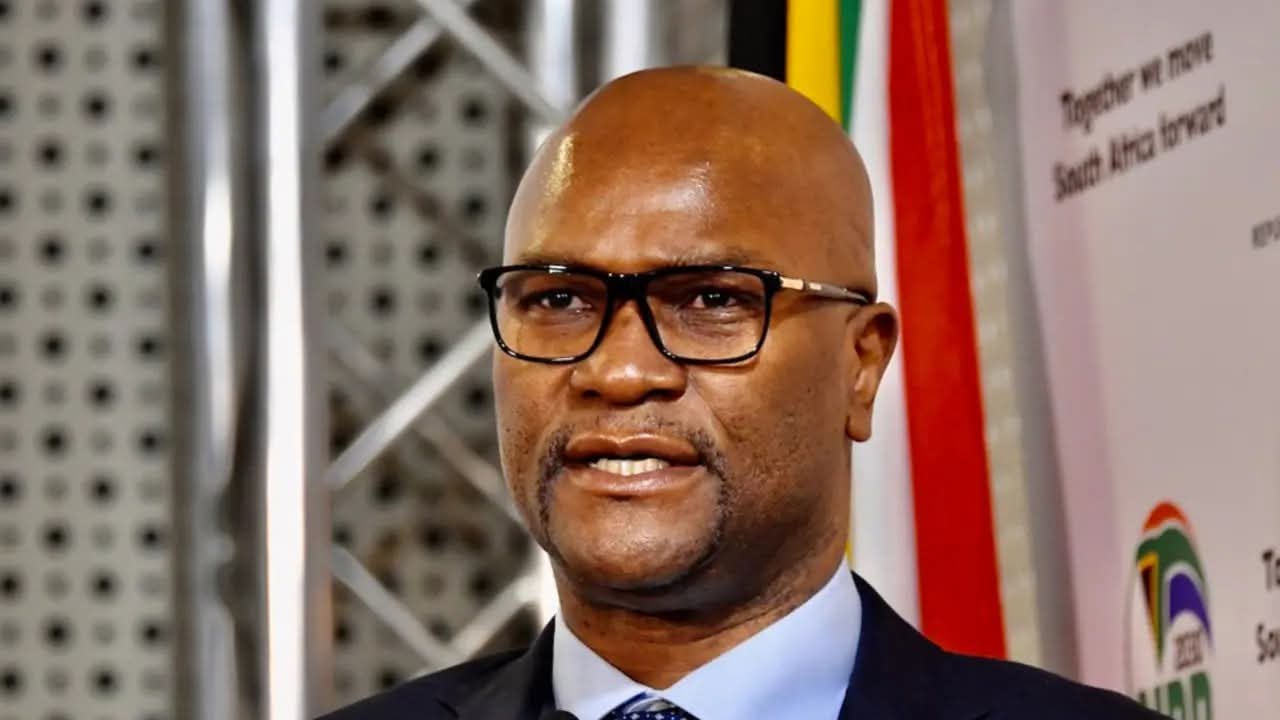
Nkosinathi Emmanuel Mthethwa, known to most South Africans simply as Nathi Mthethwa, was a long-serving figure in the African National Congress, holding senior positions in government from the late 2000s until his death in 2025. His sudden and suspicious death in Paris, France, where he was serving as South Africa’s ambassador, has sent shockwaves through political circles both domestically and internationally. It comes at a moment of intense scrutiny of state institutions, with Mthethwa’s past under renewed focus due to allegations of corruption and political interference during his tenure as Minister of Police.
Born in January 1967 in KwaZulu-Natal, Mthethwa came up through the ANC youth structures and trade unions, having been a member of the Food and Allied Workers Union. His political involvement dates back to the struggle against apartheid, where he was reportedly detained under emergency regulations. After 1994, he became part of the governing elite, rising steadily through Parliament. By the early 2000s, he was chairing parliamentary committees and in 2008 was appointed Chief Whip of the ANC in the National Assembly. That appointment laid the ground for his entry into the Cabinet.
In September 2008, during Kgalema Motlanthe’s interim presidency, Mthethwa was appointed Minister of Safety and Security. When Jacob Zuma became president in 2009, the portfolio was renamed and he became Minister of Police, a position he held until 2014. His time in this office was marked by deep controversy, most notably the Marikana massacre in 2012, when police killed 34 striking mineworkers during a standoff in the North West province. Mthethwa later told the Farlam Commission of Inquiry that he accepted political responsibility for the killings, but critics noted he had made no serious move to reform the structures of force or hold senior police accountable. The event permanently stained his reputation and would come to define much of his time in office.
Even more damaging were later revelations regarding the abuse of state security funds. Testimony during related inquiries and commissions alleged that Mthethwa had directly benefited from secret Crime Intelligence slush funds. It was claimed that he had received a luxury Mercedes-Benz E-Class paid for out of covert police accounts, and that security upgrades to his private residence had been funded using taxpayer money meant for intelligence operations. Though Mthethwa denied knowledge of these payments and no court ever convicted him, the perception of corruption remained. These claims were tied to the controversial figure of Richard Mdluli, the then-head of Crime Intelligence, who himself was later dismissed and charged in unrelated cases. Investigators claimed that Mthethwa acted to protect Mdluli and maintain political control over the intelligence branch, which was widely believed to have operated as a parallel political structure during the Zuma years.
His final years in Cabinet were spent away from the security cluster. In 2014 he was moved to the Ministry of Arts and Culture, a less politically charged portfolio. He later became Minister of Sports, Arts and Culture until he was removed from the executive in 2023 under President Cyril Ramaphosa’s reshuffle. That move was seen as a quiet exit for a politically bruised veteran. However, he remained a key figure in the ANC’s National Executive Committee and was subsequently appointed ambassador to France and South Africa’s permanent delegate to UNESCO in 2024.
Despite this diplomatic posting, controversy followed him. In 2025, Parliament began proceedings through an Ad Hoc Committee to investigate widespread allegations of political interference in the police. The trigger was explosive testimony from KwaZulu-Natal Police Commissioner Lieutenant General Nhlanhla Mkhwanazi, who stated under oath that Mthethwa had interfered with internal police matters. Specifically, Mkhwanazi claimed that Mthethwa had pressured the Inspector-General of Intelligence to drop criminal proceedings against Richard Mdluli during his tenure as Minister. As a result of this and other testimony, Mthethwa was listed as a potential witness to be summoned before the committee.
Just days later, on 30 September 2025, Mthethwa’s body was found outside the Hyatt Regency Hotel in Paris. French police confirmed that he had died from a fall, reportedly from the twenty-second floor of the building. His wife had reportedly raised alarm the day before after receiving a troubling message. His phone had last pinged near the Bois de Boulogne park area that afternoon. According to French media, the window from which he fell appeared to have been forced open, which raises questions about whether this was suicide, an accident or something more sinister. A judicial investigation has been opened in France, but no conclusive report has yet been made public.
The timing of his death cannot be ignored. He was due to face questioning over serious accusations involving the misuse of state resources, interference in police operations and the protection of political allies from criminal prosecution. His testimony could have implicated a broader network of officials and revived questions about ANC-era state capture that had begun to fade from the headlines. Whether his death was related to this coming testimony is, at this stage, speculative. But in the absence of transparency and with a long history of unresolved political violence and cover-ups in South Africa’s post-apartheid era, it is hardly surprising that many are asking difficult questions.
What is certain is that Mthethwa’s career was shaped by the ANC’s transformation from liberation movement to governing party, and by the deeply embedded networks of loyalty and secrecy that defined the Zuma administration. His death, under mysterious circumstances in a foreign country, while under diplomatic protection, adds a final layer of suspicion to a life already marked by controversy, political power and unaccounted authority. Until the French investigation provides answers, the cloud surrounding his final hours will only grow darker.
Authored By:
Popular Information is powered by readers who believe that truth still matters. When just a few more people step up to support this work, it means more lies exposed, more corruption uncovered, and more accountability where it’s long overdue. If you believe journalism should serve the public, not the powerful, and you’re in a position to help, becoming a PAID SUBSCRIBER truly makes a difference.
buymeacoffee.com/ggtv
https://ko-fi.com/globalgeopolitics


Leave a comment