
To ensure peace, we must prepare for war
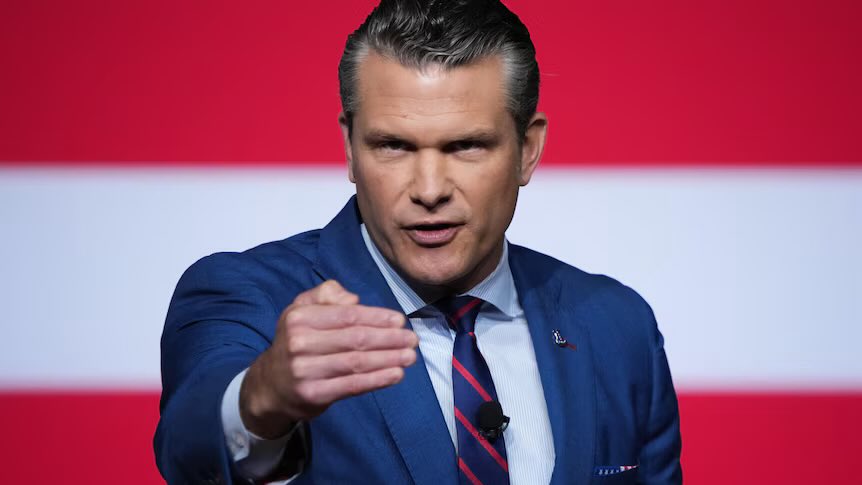
Sec. Hegseth: “To ensure peace, we must prepare for war.”
“Either you protect your people and your sovereignty, or you will be subservient to something or someone.”
The United States must now prepare itself for the possibility of war, according to Secretary of Defense Pete Hegseth. Speaking before a gathering of senior military leaders at a Marine Corps base in Quantico, Virginia, he described the situation as one of growing urgency. While he did not name any specific country as an imminent threat, his remarks strongly suggested that the U.S. faces increasing dangers in the global arena.
Secretary Hegseth stressed that the ability to maintain peace depends on the nation’s readiness for conflict. He warned that pacifism, while well-meaning, is both naive and hazardous in a world shaped by rising geopolitical tensions. To counter these threats, he argued, the U.S. must increase the size of its armed forces and expand its stockpiles of weapons and ammunition.
The Pentagon has just completed two significant policy reviews, one of which introduced a new National Defense Strategy. This document marked a shift in focus away from China and toward securing the American homeland and the broader Western Hemisphere. Nonetheless, Hegseth mentioned China in the context of deterrence, though he refrained from labeling it as the only or most immediate concern.
In a striking policy change, the Secretary also announced that the rules of engagement would be revised to allow American forces greater flexibility. According to him, U.S. troops should be able to operate in a way that demoralizes and eliminates enemies more effectively. These remarks appeared to signal a more aggressive military posture than in previous years.
General Dan Caine, the chairman of the Joint Chiefs of Staff, supported Hegseth’s message and reiterated the need for readiness. He pointed to a variety of rising global risks without naming specific regions or actors. His comments were in line with the broader message that the United States must not be caught unprepared.
Just weeks earlier, President Donald Trump officially renamed the Department of Defense as the Department of War, declaring that its only mission moving forward would be the conduct of military conflict. On the same day as Hegseth’s speech, the Pentagon awarded a five billion dollar contract to the arms manufacturer Raytheon for its Coyote missile system. This came amid a dramatic expansion of the defense budget.
The White House has requested a defense budget of over one trillion dollars for the 2026 fiscal year, representing a 13.4 percent increase from the previous year. Reports from the Wall Street Journal suggest that the Pentagon is considering a significant increase in missile production, potentially doubling or even quadrupling current output. Analysts have connected this move to concerns over weapons stockpiles and the growing possibility of a future war, possibly involving China.
But for now this is what is trending:
– No More identity (Pride) Months
– No more DEI offices
– No more Dudes in dresses
– No more Climate Change Worship
– No more division or Distraction
– No more Gender Delusions
He literally said this:
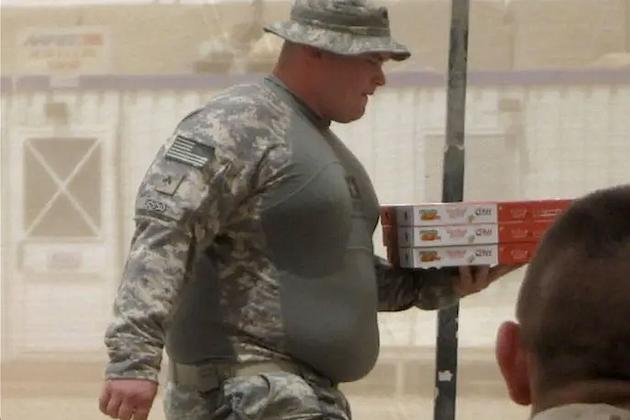
“It’s unacceptable to see fat generals and admirals in the halls of the Pentagon, and leading all around the world. It’s a BAD LOOK, and it’s not who we are!”
“You need to meet the height and weight standards.”
“Today, at my direction, every member of the Joint Force at every rank is required to take the PT test twice a year, as well as meet height and weight requirements twice a year. EVERY year of service.”
A recent report by the RAND Corporation has delivered a blunt assessment of the U.S. Army’s ability to wage a high-intensity war in the Asia-Pacific. According to the findings, the American military is simply not ready. The primary weakness lies not in combat capability, but in logistics, the ability to move, supply, and sustain troops and equipment in a prolonged conflict far from home. This critical vulnerability explains Washington’s renewed push to establish a military foothold in key locations throughout the region, most notably the Philippines.
Subic Bay, once home to the largest U.S. naval base in Asia, is being eyed once again for military use. Although officially designated a special economic zone, it is now set to host a major U.S. military storage facility. This development follows Manila’s approval of a new munitions plant that is being marketed as the world’s largest hub for weapons manufacturing, a clear signal of the Philippines’ willingness to support American strategic interests in the face of rising regional tensions.
RAND’s report makes it clear that the existing network of military agreements in the Asia-Pacific region is inadequate for wartime needs. Arrangements such as basing rights, supply-sharing mechanisms, and joint sustainment operations remain fragmented and poorly coordinated. Treaties like the U.S.-Japan Mutual Defense Treaty, as well as various bilateral status-of-forces agreements (SOFAs), are largely designed for peacetime cooperation. When it comes to war, these agreements reveal major gaps.
Legal and political obstacles make rapid military resupply a logistical nightmare. Sovereignty concerns, strict export controls on advanced weaponry, and liability issues surrounding foreign troop presence all slow down or block the kind of high-speed coordination a major war would require. In the case of the Philippines, its constitution forbids permanent foreign military bases unless specifically approved by the Senate. Despite this, the U.S. currently maintains rotational access to nine Philippine military sites.
This rotational model allows American forces to pre-position supplies, run joint training exercises, and plan operations on Philippine soil, all without technically owning or permanently occupying the land. It is a workaround, not a solution. What it reveals is the desperate need for more concrete, war-ready logistics infrastructure across the region. The Pentagon knows it cannot fight a major war in the Pacific without it, and it is now racing against time to close that gap.
Authored By:
Popular Information is powered by readers who believe that truth still matters. When just a few more people step up to support this work, it means more lies exposed, more corruption uncovered, and more accountability where it’s long overdue. If you believe journalism should serve the public, not the powerful, and you’re in a position to help, becoming a PAID SUBSCRIBER truly makes a difference.
buymeacoffee.com/ggtv
https://ko-fi.com/globalgeopolitics


Leave a comment