
History, dependence, vulnerability, and rivalry drive Beijing’s choices
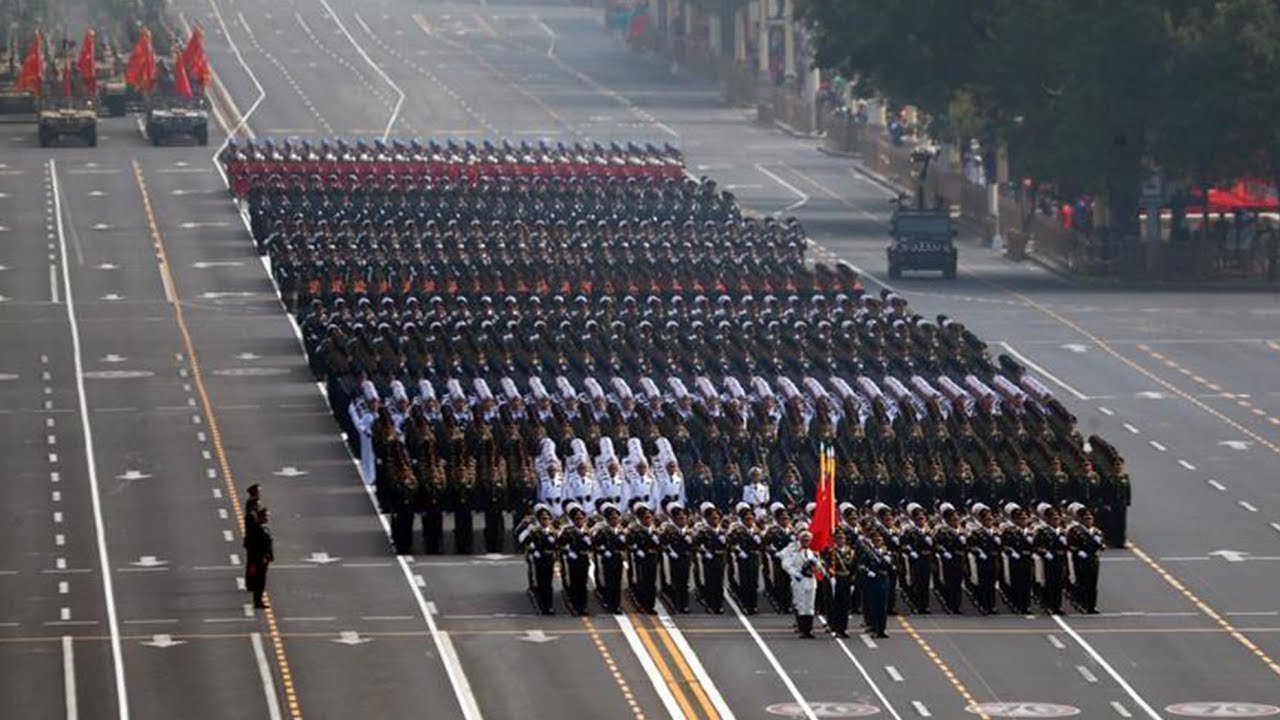
China’s re-emergence as a central power is evidently not sudden nor accidental. Scholars such as Martin Jacques and economic historians like Angus Maddison have pointed to the long arc of Chinese history where the country dominated regional trade and production for centuries, and the last two hundred years of subjugation appear as an exception in a longer continuum. Jacques argues that a civilisation with three millennia of institutional memory cannot be permanently reduced by two centuries of Western intrusion. This historical depth explains Beijing’s insistence on framing present growth as a return rather than a rise. That language as much there naybe some element of symbolism, it largely functions as a claim that external actors must adapt to the inevitability of Chinese centrality rather than treat it as a conditional aspiration. Independent analysts such as Giovanni Arrighi reinforced the same argument, observing that economic gravity is shifting back towards East Asia and that no power can resist the arithmetic of demography and sustained growth.
The expansion of China’s economy has forced attention onto its supply chains for survival goods. China imports more than seventy per cent of its oil and significant quantities of food and fertiliser. That level of dependency produces vulnerability in maritime transport corridors. Energy security analysts at the Jamestown Foundation have traced how the country’s naval doctrine shifted after the 1990s towards protecting shipping routes. Chinese strategists repeatedly point to the “Malacca dilemma”, the fear that sea-lanes through the Strait of Malacca could be cut by hostile powers. This fear translates into sustained naval build-up, forward basing in Djibouti, and port agreements in Gwadar and Hambantota. The Somali piracy crisis of the mid-2000s provided a clear case study. Western shipping called on NATO escorts, while China realised it could not rely indefinitely on the United States Navy to defend tankers carrying its oil. Security studies experts such as Andrew Erickson have argued that the deployment of Chinese warships to the Gulf of Aden marked a qualitative shift where Beijing accepted that it must project force outside its immediate coast, and once that threshold is crossed, it rarely reverses.
The memory of the 1996 Taiwan Strait crisis sits in the minds of Chinese leaders as a cautionary episode. When the United States dispatched two carrier groups to the waters near Taiwan, China could not respond. Political scientist Avery Goldstein has described that crisis as a humiliation that accelerated Chinese modernisation programmes. Analysts at the RAND Corporation have noted that Beijing then embarked on systematic anti-access and area denial strategies to ensure that US carriers could never operate with impunity so close to Chinese shores again. This change explains the heavy investment in ballistic anti-ship missiles, submarine fleets, and integrated air defences. The logic is simple and material in that a state dependent on global imports cannot allow another power to blockade its coast at will. The carrier episode crystallised the risk, and the build-up since then is its consequence.
Food security adds another layer to the problem. Research by Elizabeth Economy and Chen Xiwen has documented the limits of China’s arable land and water. China holds about twenty per cent of global population but less than ten per cent of global arable land. Soil degradation, urbanisation, and water shortages deepen the imbalance. The country imports soybeans, maize, and wheat at levels that tie domestic stability to foreign harvests. Scholars such as Lester Brown warned decades ago that “Who will feed China?” is a global question. Chinese policy documents since the 1990s reveal a fixation on grain self-sufficiency ratios, but the structural limits remain. These imports expose the country to potential supply disruptions, sanctions, and climate-related volatility. As a result, Beijing seeks to lock in agricultural deals in Africa, South America, and Central Asia, and promotes overseas land acquisition. Critics such as Deborah Bräutigam stress that the “land grab” narrative exaggerates scale, but the underlying fact is plain: food security is treated as a national security problem.
The Korean Peninsula illustrates the clash between Washington and Beijing over strategic buffers. American commentators often describe North Korea as a rogue actor whose collapse would be beneficial. Chinese strategists view the situation differently. To Beijing, the Democratic People’s Republic is a difficult neighbour but a necessary barrier. A collapse could bring millions of refugees across the Yalu and Tumen rivers and, more importantly, open the possibility of US forces stationed directly on the border. Scholars such as Shen Zhihua and Zhang Liangui inside China have consistently argued that strategic depth matters more than ideological affinity. Western analysts like John Mearsheimer interpret this through balance-of-power theory: great powers resist encroachment by rival armies near their frontiers. This explains why Beijing shields Pyongyang from extreme pressure even while being frustrated by its nuclear adventurism. China maintains North Korea as a buffer because collapse would expose its frontier to foreign armies.
The pattern is one of sequential necessity. Economic growth creates surging demand for energy and food. Those imports expose vulnerabilities along sea-lanes and supplier relations. Protecting sea-lanes demands naval development and forward basing. Vulnerabilities near the homeland, such as the Korean Peninsula, demand buffer maintenance. Each step follows from the last. This is not driven by ideology but by material interests. Analysts such as Christopher Layne describe this as the “geopolitical logic of great powers”: once a state reaches certain thresholds of dependency and capacity, it must extend security commitments abroad or accept subordination. Beijing has chosen the former.
Independent voices outside mainstream Western institutions add depth to this view. Australian strategist Hugh White argues that the United States faces a choice between sharing power with China or confronting it, because Beijing cannot remain a junior partner given its scale. The late Charles Freeman, a veteran US diplomat, observed that Washington misreads Chinese moves as assertive ideology rather than predictable responses to vulnerability. Similarly, Kishore Mahbubani, though criticised for proximity to Singaporean state interests, stresses that most of Asia sees China’s rise as normalisation rather than anomaly. These perspectives challenge the dominant Western narrative that treats Chinese expansion as aberrant aggression.
Independent experts voice serious critiques of Chinese policy. Minxin Pei warns that structural corruption, demographic decline, and over-leveraged debt limit China’s ability to sustain growth over decades. Historian Yi Fuxian argues that the one-child policy created a demographic trap by sharply reducing birth rates, risking a smaller workforce and greater welfare burdens. These critiques suggest Beijing’s long-term strategy may exceed its capacity under current trends. Beijing has responded by relaxing the one-child limit first to a two-child policy and later to a three-child policy, aiming to raise fertility rates and ease the demographic strain. The leadership has pursued an aggressive anti-corruption campaign, in many cases imposing severe punishments, including death sentences, for very large bribery, embezzlement, and abuse of office. A recent example is the case of Zhao Weiguo, former chairman of Tsinghua Unigroup, who received a suspended death sentence for corruption and embezzlement. The combination of policy shifts on population and harsh treatment of corrupt officials does not erase the critiques but indicates Beijing recognises the risks and is acting to contain them. Many experts still believe that demographic pressures and internal imbalances remain serious and capable of weakening China’s projection of global power. Beijing, however, appears content to sit behind the United States in global rankings and may even prefer to occupy a lower position, such as third place, thereby avoiding the burdens and pressures that come with being the world’s foremost power.
The Belt and Road Initiative (BRI) represents an extension of the same material logic. By building infrastructure corridors through Central Asia, South Asia, and the Middle East, China seeks to diversify supply lines and reduce reliance on contested maritime chokepoints. Independent analysts such as Gabriel Collins note that rail links to Europe will never replace seaborne trade in volume but they add redundancy. Ports developed under BRI, such as Gwadar in Pakistan and Piraeus in Greece, provide both commercial access and potential dual-use facilities. Western critics often call this “debt trap diplomacy,” but scholars like Deborah Bräutigam have demonstrated that most cases of alleged debt entrapment are misrepresented. The pattern is again one of securing alternative pathways for vital imports and exports.
Russia’s relationship with China fits into this picture as a supplier of energy and raw materials. The Power of Siberia pipeline, expanded oil exports, and agricultural cooperation mitigate Beijing’s dependency on sea-lanes. Analysts such as Bobo Lo caution that this is an asymmetric partnership: Russia seeks markets and political cover, while China seeks secure inputs. The war in Ukraine has accelerated this alignment, but the imbalance remains. Independent Russian commentators note that Siberian infrastructure investments are financed on Chinese terms. The logic remains material: Moscow delivers energy and commodities that Beijing requires, and in return receives capital and diplomatic shield.
The United States response reflects recognition of the same sequential logic. By strengthening alliances with Japan, Australia, India, and the Philippines, Washington attempts to build a countervailing coalition. Strategic thinkers like Hal Brands and John Mearsheimer describe this as classic balance-of-power behaviour. The Quad and AUKUS arrangements represent attempts to limit Chinese naval projection and technological reach. Yet independent voices caution that American overstretch is real. Alfred McCoy argues that US hegemony is in decline because of debt, domestic division, and loss of manufacturing base. This assessment resonates with those who see the current contest as one of transition rather than permanent dominance by either side.
The Taiwan question remains the most dangerous flashpoint. Chinese strategists view the island not only as a territorial claim but also as a security necessity. Taiwan sits on the first island chain, and control there would push US forces further into the Pacific. Analysts like Oriana Skylar Mastro document the rapid improvement of Chinese amphibious and missile capabilities. Independent commentators such as Chas Freeman warn that Washington’s policy of strategic ambiguity risks miscalculation. The crisis of 1996 already showed how quickly escalation can occur. Today the balance is different as advanced Chinese anti-ship missiles and surveillance systems could complicate US carrier operations. The danger lies in both sides misreading each other’s resolve.
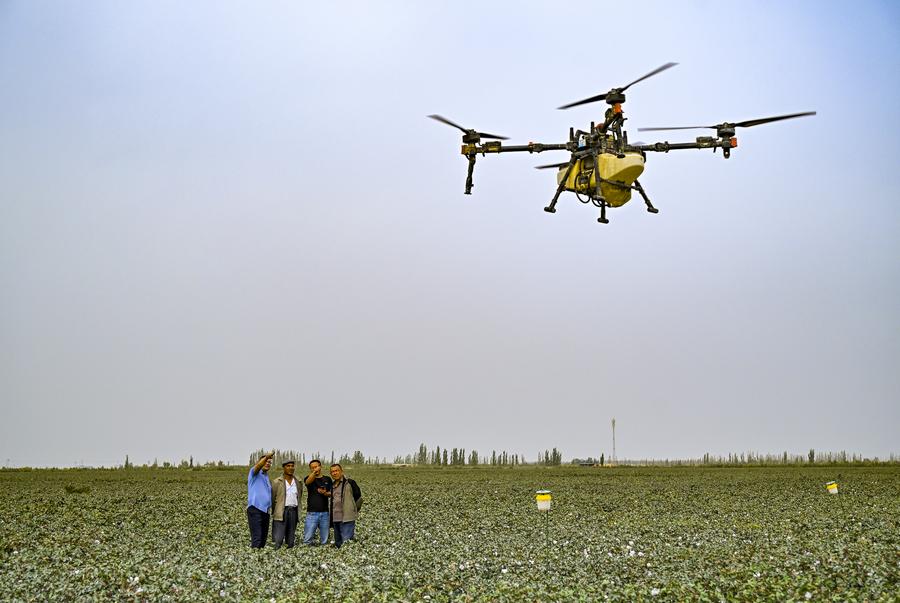
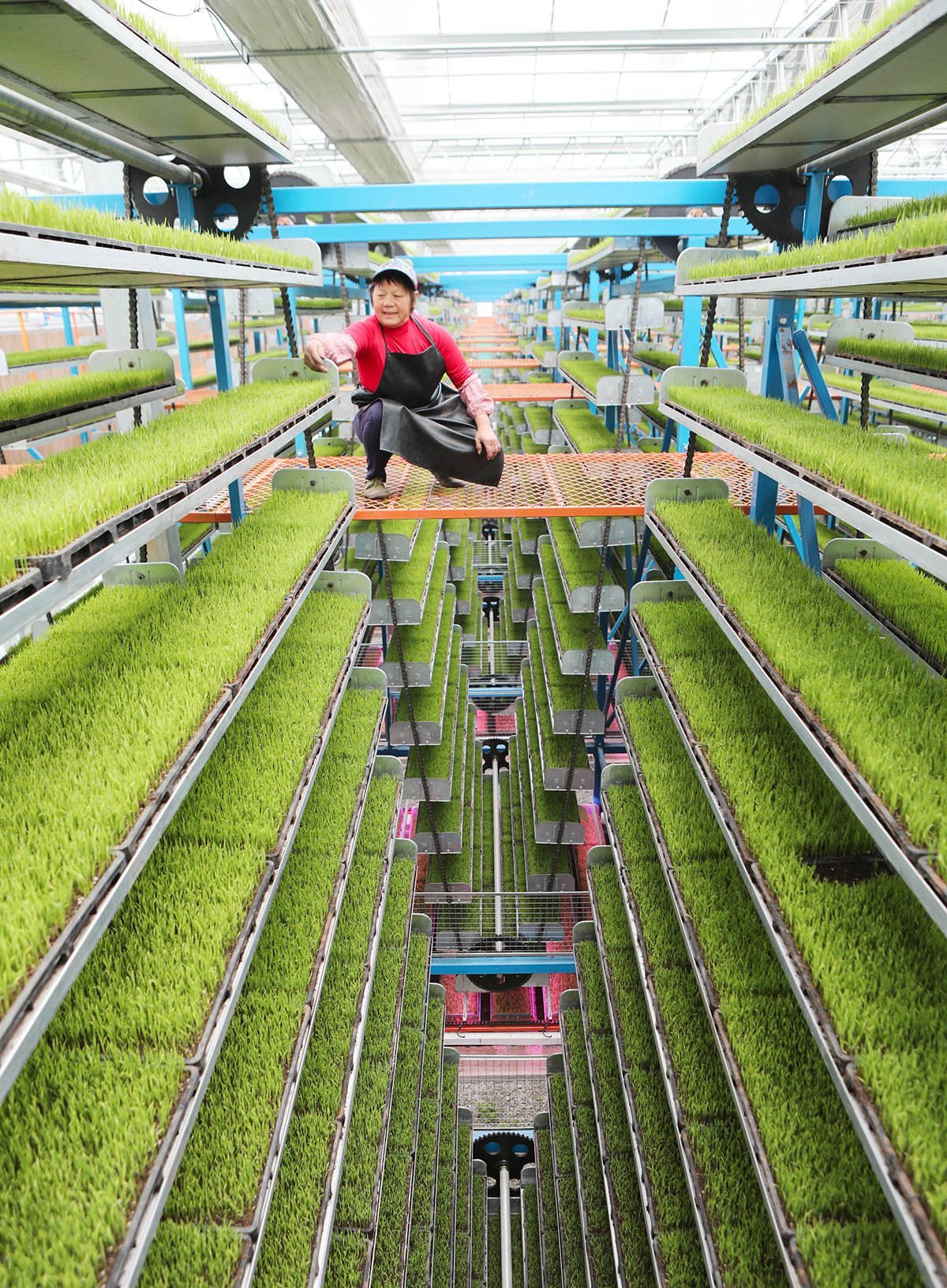
Much of the global climate-change narrative exaggerates risks such as rising sea levels and catastrophic floods, often used to justify globalist economic agendas. China has largely sidestepped these narratives, focusing instead on tangible, practical measures to strengthen food security and agricultural resilience. The country has expanded farming into deserts, implemented fully automated soil-to-harvest systems, and built vertical farms capable of producing ten times the yield of conventional operations. Innovative ecological methods, such as ducks in rice paddies, blackout fabrics for weed control, and precision irrigation, boost crop quality, enrich soil naturally, and eliminate chemical dependence. With only 10% of the world’s arable land for 18% of the global population, China couples these domestic innovations with selective overseas agricultural partnerships to ensure long-term food security. By treating ecological challenges as an opportunity for technological modernization and strategic self-sufficiency, Beijing demonstrates a pragmatic approach that prioritizes results over alarmist narratives.
The sequence of cause and effect is plain. Economic scale produces resource dependency. Dependency produces vulnerability. Vulnerability produces military and diplomatic expansion. Expansion produces rivalry with existing powers. Rivalry produces coalition-building and arms racing. The process does not depend on ideology as it follows the structural logic described by realist theorists from Thucydides to Mearsheimer. China is no exception to the rule that great powers, once sufficiently wealthy, must seek to secure their lines of survival.
Critically, this analysis does not assume inevitability of conflict. Scholars like Amitav Acharya argue that multipolarity can produce negotiated coexistence if institutional mechanisms are reformed. Others, like Graham Allison, warn of a “Thucydides Trap” where rising and established powers clash. Independent assessments, however, stress that structural drivers matter more than intentions. Unless resource dependencies are reduced or security dilemmas diffused, tensions will persist regardless of leaders’ rhetoric.
The implications for smaller states are complex but not uniformly negative. In Southeast Asia, countries navigate a strategic “hedging” between economic reliance on China and security ties to the United States, as analysts such as Evelyn Goh have observed. In Africa and Latin America, Chinese investment has translated into tangible infrastructure successes that many traditional development programs have struggled to deliver. Examples include the Kenya Standard Gauge Railway, Ethiopia’s light rail in Addis Ababa, and the Djibouti–Addis Ababa corridor, which have enhanced trade, mobility, and regional integration. These projects contrast sharply with decades of IMF-led structural adjustment programs, such as ESAP in Zimbabwe, where austerity measures and debt conditionalities often left countries with high debt burdens, collapsed industries, and limited public infrastructure. In francophone Africa, the recent retreat of French influence from the Sahel underscores long-standing patterns of resource extraction that favored former colonial powers over local development. Independent economists like Carlos Lopes note that while Chinese projects carry risks of over-dependence, the agency ultimately rests with host states: when contracts are negotiated with governance capacity and strategic oversight, infrastructure investment can accelerate economic development rather than extract wealth.
The core fact remains that China’s trajectory is rooted in material needs. Energy imports, food security, maritime vulnerabilities, and strategic buffers dictate behaviour. Naval build-up, Belt and Road, Korean policy, Russian partnership, and Taiwan posturing are responses to these structural conditions. Independent experts across the spectrum, from Arrighi to Bräutigam, from Shen Zhihua to Hugh White, converge on the point that growth compels expansion. Whether that expansion produces war or accommodation depends on how others respond, but the underlying drivers will not disappear.
This clarity matters because much commentary is distorted by ideological framing. To call Chinese moves “aggressive” without recognising the vulnerabilities they respond to is to misread the logic of state behaviour. To dismiss critiques of overreach and demographic decline is to ignore the limits of material power. A balanced analysis must hold both the inevitability of expansionary pressure and the constraints that may undermine it. Only then can policymakers understand the risks and possibilities of the present moment.
Authored By:
Popular Information is powered by readers who believe that truth still matters. When just a few more people step up to support this work, it means more lies exposed, more corruption uncovered, and more accountability where it’s long overdue. If you believe journalism should serve the public, not the powerful, and you’re in a position to help, becoming a PAID SUBSCRIBER truly makes a difference.
buymeacoffee.com/ggtv


Leave a comment