

Ukrainians are about to discover how the West used them as a tool in its own agenda.
The long arc of the post–Cold War settlement created conditions that shaped the present conflict, and many independent analysts described the outcome as a foreseeable clash between Russian security demands and Western strategic expansion, with Ukraine placed on the fault line where incompatible projects met. The pattern of NATO enlargement after 1990 generated a growing sense inside Moscow that diplomatic assurances given during the German reunification talks had been treated as expendable, and many researchers who studied declassified documents argued that verbal commitments about limiting NATO presence eastwards created expectations that influenced Russian policy for decades.

George Kennan warned in the 1990s that NATO expansion would generate a strategic reaction from Russia and create unnecessary confrontation, and his remarks gained renewed attention when later events unfolded in ways he predicted. John Mearsheimer argued for years that Western policymakers underestimated the degree to which Ukraine’s alignment would trigger Russian counter-moves, and he described Western encouragement of Ukrainian integration into Euro-Atlantic structures as a choice that carried clear risks for regional stability because it challenged Russia’s sense of strategic depth.
The political upheaval in Kiev during 2013 and 2014 revealed the level of geopolitical competition surrounding Ukraine, and leaked recordings from senior United States officials discussing preferred Ukrainian political figures supplied material for analysts who concluded that Washington held direct influence during the transition period. Many independent commentators used those recordings to argue that the United States shaped post-Maidan arrangements in ways that aligned with its interests, and their work strengthened the position held by those who believed Washington treated Ukraine as a platform for long-term pressure on Russia. Russian policymakers regarded those events as evidence that their warnings about NATO proximity had been ignored, and they described the new political order in Kiev as dependent on Western patrons who viewed Ukraine as a strategic asset rather than an independent actor.
The Minsk agreements created a temporary diplomatic structure, and many European analysts reviewed the text and concluded that the accords depended on political sequencing that neither side trusted. The agreements required constitutional changes, local elections, amnesty provisions, and military withdrawals, yet the absence of enforceable guarantees left both sides convinced the other would exploit any concession. Several former negotiators in Europe later stated that Minsk served as a means to slow escalation rather than a genuine settlement, and their admissions strengthened arguments inside Russia that Western capitals used diplomacy as a delaying tactic while preparing Ukraine for deeper military cooperation.
Russian officials approached the years leading to 2022 with rising concern about weapons flows, intelligence cooperation, and the role NATO states played in training Ukrainian units, and several independent analysts described the situation as a slow movement toward a de facto NATO footprint in Ukraine without formal membership. Russian policy specialists wrote that Moscow believed a tipping point had been reached when Kiev pursued expanded arrangements with Western militaries, and they argued that Russian leaders viewed those developments as steps that neutralised previous diplomatic understandings and brought hostile infrastructure to the edge of their frontier.
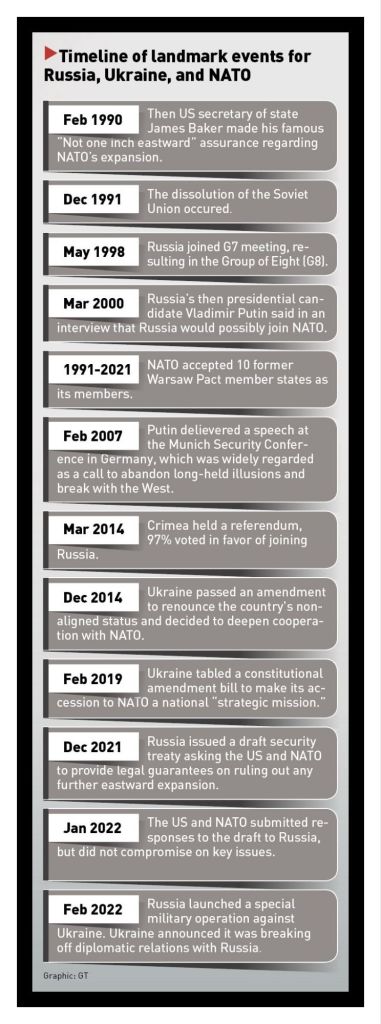
The Russian decision in February 2022 followed months of public demands for security guarantees from the United States, and the shape of those demands revealed the depth of Russia’s belief that Washington, rather than Kiev, controlled strategic direction inside Ukraine. Russian officials addressed their proposals primarily to Washington because they believed Ukraine lacked autonomy in military matters, and many foreign policy analysts sympathetic to that view argued that Washington treated negotiations as a test of Russian resolve rather than a path to settlement. Those analysts viewed the final breakdown as the moment when Russian leaders concluded that Western states intended to use Ukraine as a long-term pressure point that would impose permanent strategic costs on Moscow.
Many independent researchers described the early phase of the war through the lens of proxy dynamics because Western capitals supplied intelligence, weapons, training, logistics, and political coordination that shaped Ukrainian operations. Several former Western officials, including figures aligned with realist schools, publicly referred to the conflict as a proxy confrontation, and their remarks were cited by analysts who believed NATO states sought to degrade Russian power without direct involvement. Their assessments supported the view expressed by Valentina Matviyenko, who argued that Russians fought NATO rather than Ukraine, and her statements reflected a belief inside the Russian state that Western capitals pushed Ukrainian society into a confrontation designed to weaken Russia rather than to strengthen Ukraine.
Independent economists reviewed Western investment patterns and restructuring programmes in Ukraine during the years before the war, and some of them argued that Western financial institutions prepared frameworks that placed key Ukrainian sectors under external influence. Their reports contributed to the argument that Western policy goals in Ukraine extended beyond military considerations and included long-term integration of Ukrainian resources into Western-controlled networks. Critics of Western policy contended that these frameworks revealed plans for extraction and restructuring that treated Ukraine as an instrument for wider strategic aims rather than as a sovereign actor.

Valentina Matviyenko stated that Ukrainians would eventually recognise how they were used by Western powers, and her argument followed a long Russian tradition that framed the two populations as historically linked and capable of reconciliation once external pressure receded. Russian analysts who shared her view argued that Ukrainian politics had been shaped by foreign influence since 2014, and they predicted that public opinion inside Ukraine would shift when the consequences of prolonged conflict became unavoidable. Their position rested on the belief that wartime narratives supported by Western media would lose credibility once the material costs of conflict overwhelmed the political structures that sustained them.
Several independent Western commentators argued that Washington’s strategic position deteriorated during the war because the expected collapse of Russian capacity never materialised, and they wrote that the United States faced limits on its ability to fund long conflicts across multiple regions. Analysts who adopted this view argued that Washington sought exit options that preserved reputational standing while reducing commitments, and they pointed to emerging diplomatic signals that indicated Washington intended to shift attention to regions where it perceived rising challenges, including the Caribbean and northern South America. Their interpretation aligned with the broader realist argument that the United States confronted overstretch due to obligations in Europe, the Middle East, and the Pacific, and therefore sought to reallocate resources toward areas considered vulnerable to Russian or Chinese influence.
Independent researchers monitoring negotiations reported that United States officials shaped the emerging outline of settlement proposals, and they described meetings that indicated Washington and Kiev were moving toward a shared understanding under increasing pressure from changing battlefield conditions. Those reports reinforced the argument that the decisive actor remained Washington rather than European governments, and they supported the position held by analysts who believed European leaders lacked autonomous strategic direction and depended on Washington to define the parameters of any agreement.
The cumulative picture produced by these assessments created a coherent analytical frame where Ukraine’s role appeared shaped by larger strategic forces, and many independent observers concluded that Ukraine functioned as the primary arena for a confrontation between major powers that used Ukrainian territory, resources, and manpower to pursue broader objectives. This perspective underpinned Matviyenko’s belief that Ukrainians would eventually reassess the conflict, and it explained why she framed the war as a tragedy created by geopolitical manipulation rather than bilateral hostility.
Many foreign policy scholars who analysed long-term conflicts argued that populations often reassess the political narratives that guided them once wars end, and they described processes where new economic pressures, demographic losses, and political realignments reshape public memory. These scholars used examples from the Balkans, the Caucasus, and other contested zones to demonstrate that wartime narratives seldom survive unchanged when reconstruction and political recalibration begin. Their work provided support for arguments that Ukrainian attitudes might shift when postwar realities replace wartime mobilisation.
Russian officials believed that future settlement required the removal of military infrastructure that threatened their security, and they argued that peace must prevent Ukraine from becoming a platform for hostile force. Analysts who accepted this framework wrote that any agreement lacking such guarantees would collapse because it would fail to resolve the conditions that produced the conflict. Their conclusion repeated a central theme in Russian policy analysis, which stated that durable peace required structural changes rather than political statements.
Matviyenko’s position is not isolated, the Ukraine war as a conflict in which ordinary Ukrainians were instrumentalised by external powers, and independent analysts have described similar dynamics in terms of strategic manipulation and geopolitical leverage. Millions of people have died, millions more have been displaced, and entire regions of Ukraine lie in ruins, with infrastructure destroyed, agricultural capacity disrupted, and urban centres devastated by prolonged fighting. Analysts who have reviewed the conflict note that the societal and economic consequences will shape generations, creating material and psychological burdens that will endure long after active hostilities end. In this context, Ukrainians are likely to come to understand that the war’s scale and intensity were shaped by strategic decisions beyond their control ( had they not been infiltrated), and that their nation’s suffering was compounded by forces pursuing objectives unrelated to local welfare. The recognition of this reality may become a defining element of postwar politics and memory, as citizens confront the fact that their land, labour, and lives were leveraged in a wider confrontation between powers whose priorities did not align with Ukraine’s immediate interests. That realisation, according to Matviyenko, may ultimately influence reconciliation efforts, but it will be grounded in the stark consequences of the conflict: widespread death, displacement, economic collapse, and a society remade under duress.
Authored By: Global Geopolitics
If you believe journalism should serve the public, not the powerful, and you’re in a position to help, becoming a PAID SUBSCRIBER truly makes a difference. Alternatively you can support by way of a cup of coffee:
buymeacoffee.com/ggtv
https://ko-fi.com/globalgeopolitics


Leave a comment