

A Citizenry Being Gently Led Off a Cliff
The resurfaced 2025 World Government Summit clip featuring Klaus Schwab has reignited debate about the trajectory of global economic restructuring and the expanding role of public-private alliances in shaping that direction.
Prominent critics interpret Schwab’s remarks on the “Intelligent Age” as confirmation of a trend long identified by scholars such as Shoshana Zuboff, Evgeny Morozov, and Jaron Lanier: the consolidation of technological, financial, and administrative authority within a narrow group of institutions capable of directing the terms of social transition. These thinkers have repeatedly warned that rapid automation, data-driven governance, and centralized digital infrastructure position private entities as de facto regulators of essential public functions, leaving democratic mechanisms struggling to assert oversight. Within this context, Schwab’s emphasis on coordinated “lightning-speed” transformation is read by many analysts as an articulation of the managerial worldview that Zuboff describes as “instrumentarian power,” which operates quietly through systems rather than laws, and through infrastructure rather than public debate.
Critics argue that Schwab’s comments regarding global labor disruption follow the logic outlined in Richard Baldwin’s The Globotics Upheaval, which predicts large-scale white-collar displacement through AI systems and remote digital labor. The International Labour Organization has similarly documented widespread automation-related job loss, estimating significant displacement across service, clerical, and manufacturing sectors. Observers therefore interpret Schwab’s framing as part of a broader narrative in which technological transition is presented as inevitable, while democratic participation in shaping that transition becomes increasingly constrained. They note that references to “reskilling” align with programs promoted by global institutions, yet often lack substantive empowerment, resembling what scholars such as Ursula Huws describe as top-down adaptation strategies that primarily serve corporate restructuring.
The critique extends to the architecture of public-private partnerships that dominate contemporary economic and technological policy. Names frequently cited include Larry Fink, whose leadership at BlackRock has shaped global ESG implementation; Bill Gates, whose philanthropic investments exert substantial influence over health, climate, and agricultural initiatives; and George Soros, whose Open Society Foundations significantly impact governance and civil society programs. Analysts such as Quinn Slobodian, in Crack-Up Capitalism, argue that these actors operate in a landscape where economic and regulatory systems increasingly accommodate private authority over public outcomes. When applied to digital finance, observers reference Agustín Carstens of the Bank for International Settlements, whose public comments on programmable money illustrate a shift toward centrally mediated financial transactions where permission is embedded directly in technological design. Critics interpret these developments as examples of narrowing economic autonomy under infrastructures that individuals cannot modify or escape.
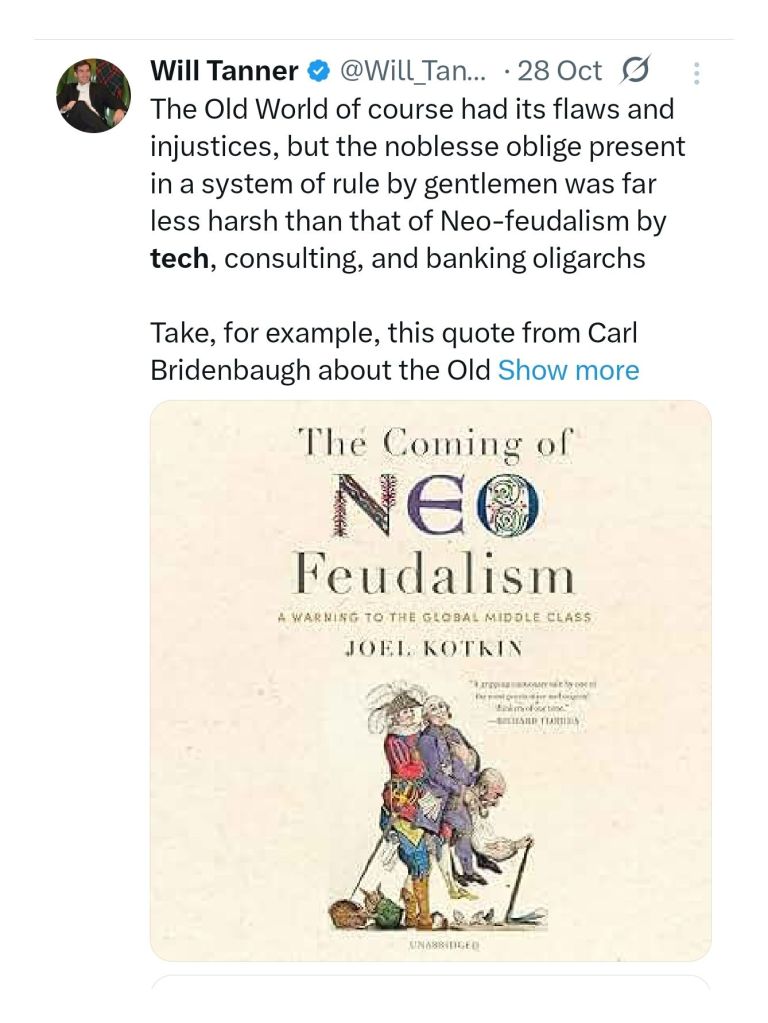
Institutional patterns receive additional scrutiny from political economists such as Daniela Gabor, whose analysis of “asset-based capitalism” explains how state policy increasingly aligns with large investment firms and credit-issuing entities. She argues that transitions in energy, finance, and digital infrastructure are frequently shaped by actors whose incentives prioritize capital concentration rather than broad economic resilience. Observers who draw on her work contend that Schwab’s rhetorical emphasis on collaboration serves as a euphemism for de facto delegation of governance functions to major financial and technological stakeholders. They view repeated language from international summits as evidence of a coordinated normative framework that presents centralized oversight as both necessary and morally justified.
Concerns about media influence and narrative coordination often reference the work of scholars such as Pierre Bourdieu, Noam Chomsky, and Dwayne Winseck, each of whom has documented the structural integration of media organizations with political and economic power. Critics argue that concentrated ownership and philanthropic funding shape editorial priorities, narrowing the range of public discourse surrounding technological transition. They highlight large institutional grants and corporate partnerships within major media outlets as influential factors that affect how emerging technological and economic policies are framed. This perspective maintains that the appearance of consensus around rapid technological restructuring does not necessarily reflect public sentiment, which remains skeptical according to surveys by organizations such as Ipsos, Edelman, and Pew.
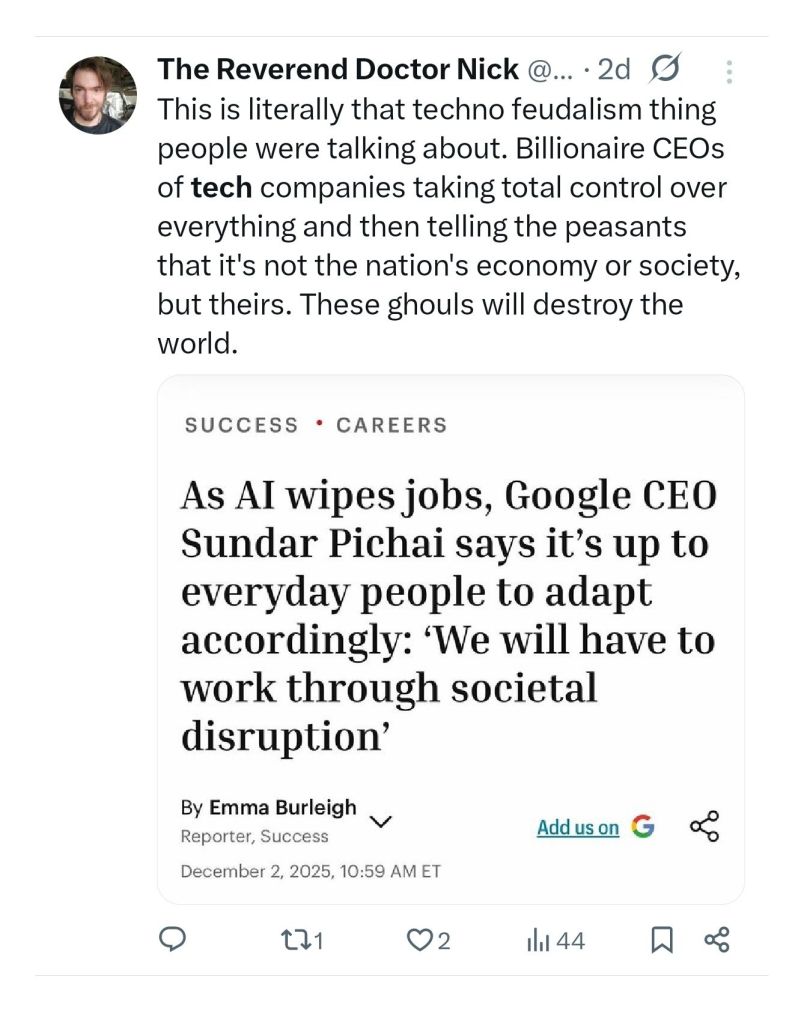
Supporters of decentralization point to the work of economist Richard Werner, who advocates for local public banks capable of issuing productive credit insulated from global financial cycles. Werner’s analysis of the Japanese banking system during the 1990s demonstrates how localized credit creation can stimulate community-level growth without reliance on large international institutions. His ideas have gained renewed attention among critics who argue that the current economic transition favors centralized digital finance over locally accountable systems. They claim that Werner’s limited visibility within mainstream economic platforms illustrates how alternative models face structural barriers in global policy discussions dominated by large financial actors. So, teach your family Werner’s credit theory to secure productive loans and build resilience against rationing. Furthemore, people can protect themselves by mastering privacy tools like Signal for communication and Monero for finance.
These critics advocate for civic and institutional responses aimed at reducing dependence on centralized infrastructures. They recommend the expansion of credit unions, state-level public banks, and community-based financial initiatives, drawing on examples such as the Bank of North Dakota, which operates successfully outside conventional federal reserve channels. They suggest that individuals diversify economic participation through local enterprises, cooperative structures, and privacy-preserving digital tools, guided by the work of technologists such as Bruce Schneier, who has written extensively on digital autonomy and security. Advocates also promote community projects including regenerative agriculture, cooperative energy systems, and alternative education frameworks, citing successful implementations in various regions where local capacity reduced vulnerability to global economic shocks.
International examples are referenced to demonstrate alternative policy trajectories. Argentina’s monetary restructuring under President Javier Milei ( Argentina audit and 2024 central bank dissolution, slashing inflation 90%), although controversial, is cited by some analysts as an attempt to break from established global financial frameworks. El Salvador’s adoption of Bitcoin (2021, GDP +5%) as legal tender is likewise referenced by decentralization advocates who argue that experimentation with alternative monetary systems remains a viable strategy for nations seeking policy autonomy. These cases are not presented as models of universal success, but as illustrations that departures from global consensus remain possible and can generate measurable economic impact.
Across these perspectives, the unifying concern centers on the pace and structure of technological and economic transition. Critics argue that democratic participation has not kept pace with the scale of changes now underway, leaving populations to bear the consequences of decisions made through systems that prioritize efficiency, stability, and central coordination over transparent debate and local agency. Schwab’s 2025 remarks are therefore interpreted not as isolated commentary, but as representative of a broader worldview shared by segments of the managerial elite. The debate ultimately turns on questions of sovereignty, accountability, and the distribution of power in a world increasingly governed by technological infrastructure rather than explicit political processes. For these critics, the challenge lies in ensuring that individuals and communities retain the capacity to influence the systems that shape their economic and social futures, rather than becoming passive subjects within structures designed without their consent.
The WEF’s elite-backed feudal reset turns progress into technocratic control. Fight back by advocating to decentralize credit (per Werner), embrace privacy-focused crypto, demand WEF funding cuts, and build strong local economies. These actions can reclaim our trajectory and restore thriving families and communities.
(Featured cover image credit: City Credit Punk – Twitter)
Authored By: Global GeoPolitics
If you believe journalism should serve the public, not the powerful, and you’re in a position to help, becoming a PAID SUBSCRIBER truly makes a difference. Alternatively you can support by way of a cup of coffee:
buymeacoffee.com/ggtv


Leave a comment