

Occupation Through Air, Sea, and Administrative Control
The claim that Israel left Gaza in 2005 rests on a narrow reading of physical troop redeployment while ignoring the broader legal, military, and administrative structures that continued without interruption. Removal of permanent ground forces and settlements did not alter effective control over Gaza’s borders, airspace, sea access, population registry, economy, and movement of people and goods. International law defines occupation through control rather than presence, a standard articulated by the International Committee of the Red Cross and reaffirmed by multiple United Nations special rapporteurs assessing Gaza after 2005. Control persisted through mechanisms designed to manage Gaza without direct exposure of Israeli forces to daily resistance.
Airspace control remained absolute following the 2005 redeployment. Israeli fighter aircraft, drones, and surveillance platforms continued to operate continuously above Gaza, enforcing a unilateral no-fly regime. No civilian airport operated, and no aircraft entered or exited without Israeli approval. Human Rights Watch documented repeated airstrikes and constant aerial surveillance throughout the post-2005 period, noting that airspace control alone constitutes a decisive element of occupation. Legal scholars including Professor John Dugard, former UN Special Rapporteur on human rights in the occupied Palestinian territories, described Gaza as occupied due to Israel’s exclusive authority over aerial access and military dominance from above.
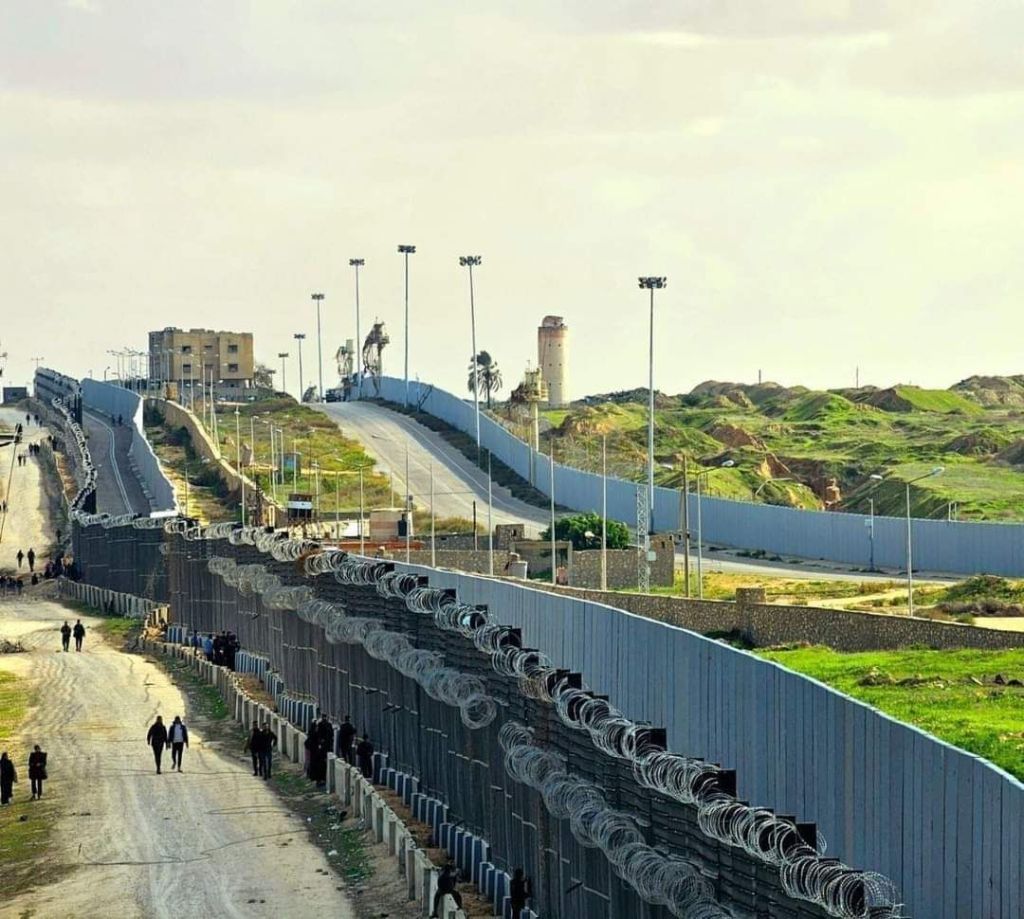
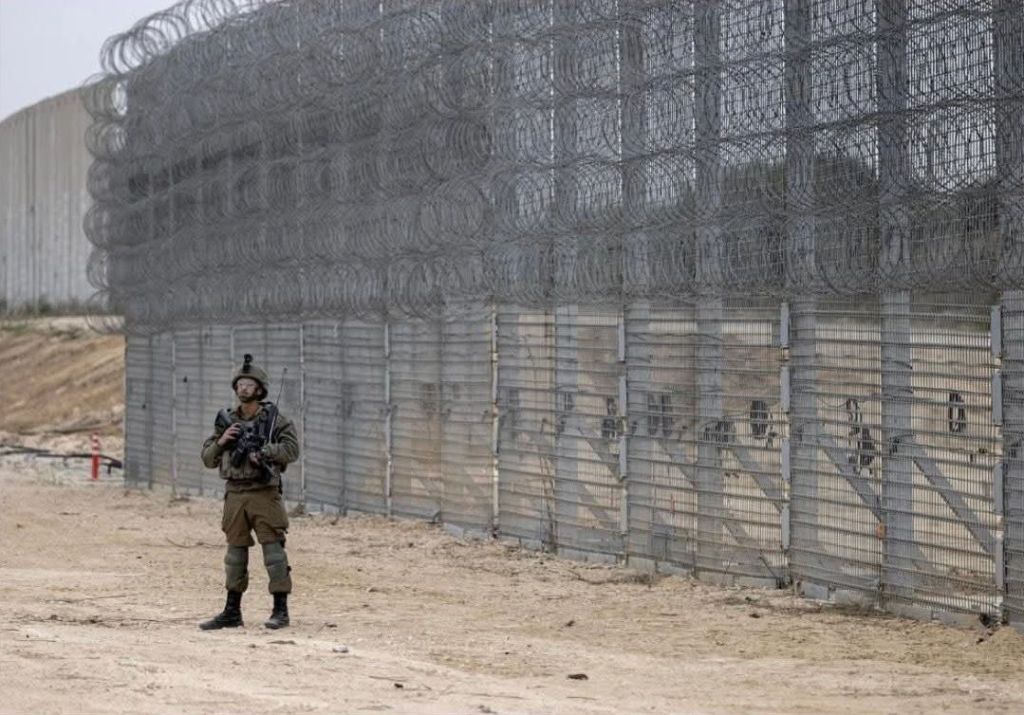
Land borders remained under Israeli authority despite the formal withdrawal of settlements. Israel controlled all crossings except Rafah, which itself functioned under agreements granting Israel decisive influence over its operation, including veto power over travel lists and cargo categories. Israeli military buffer zones along the perimeter fence expanded over time, cutting Palestinians off from agricultural land and subjecting civilians to lethal force for approaching unmarked boundaries. B’Tselem, the Israeli human rights organisation, documented repeated cases of farmers shot near the fence and land rendered inaccessible by unilateral Israeli designation. Border control included regulation of imports and exports, extending to detailed restrictions on food, construction materials, and medical supplies.
Israeli officials acknowledged the deliberate calibration of Gaza’s economy. In 2006, Dov Weisglass, senior adviser to Prime Minister Ehud Olmert, described the policy as placing Palestinians “on a diet, but not to make them die of hunger,” a statement reported widely and never repudiated. Israeli government documents disclosed during litigation confirmed that caloric calculations guided import approvals, a method described by legal analysts as collective punishment. Such control over sustenance reflects governance rather than disengagement, since a population unable to regulate its food supply lacks any meaningful autonomy.
Maritime control reinforced the enclosure. Gaza’s fishermen faced naval enforcement of shifting maritime limits imposed by Israel, often reduced to six nautical miles or less. The United Nations Office for the Coordination of Humanitarian Affairs recorded frequent incidents involving live fire, vessel confiscation, and arrests at sea. Fishermen operated under threat while lacking access to waters guaranteed under earlier agreements. Sovereignty over territorial waters never transferred to Gaza authorities, leaving the coastline under effective Israeli command.
Intelligence penetration deepened rather than receded after 2005. Unit 8200, Israel’s signals intelligence branch, expanded surveillance over Gaza’s telecommunications infrastructure. Former intelligence officers who later spoke publicly, including members of the group known as “8200 Refuseniks,” described mass data collection used to map social networks, personal vulnerabilities, and movement patterns. Such practices indicate sustained administrative interest incompatible with claims of withdrawal. The existence of constant targeting intelligence further demonstrates ongoing control exercised without permanent ground presence.
The 2005 redeployment followed strategic reassessment rather than reconciliation. Ariel Sharon, the architect of the disengagement, stated publicly that withdrawal aimed to reduce Israeli casualties and consolidate control over larger settlement blocs elsewhere. Israeli military analysts writing in publications such as Strategic Assessment, produced by the Institute for National Security Studies, framed the move as cost management rather than peace building. Settlers were removed because permanent protection within Gaza proved unsustainable, not because sovereignty was transferred to Palestinians.
Events following the 2006 Palestinian legislative elections exposed the conditional nature of international support for Palestinian self-rule. Elections judged free and fair by international observers resulted in a Hamas victory. Israel, the United States, and the European Union responded with comprehensive sanctions and a blockade that isolated Gaza economically and physically. Former US President Jimmy Carter, who monitored the elections, described the response as rejection of democratic choice. From that point, Gaza experienced near total closure, with movement of people reduced to a trickle governed by Israeli permits.
The blockade shaped every aspect of life inside Gaza for nearly two decades. The World Bank, UN agencies, and independent economists documented economic collapse, infrastructure decay, and dependence on humanitarian aid. Restrictions on exit prevented residents from traveling for education, medical care, or family reunification without Israeli approval. Control over the population registry meant that Israel determined who legally existed as a Gazan resident, affecting marriage, inheritance, and movement rights. Such authority exceeds any definition of disengagement.
Historical context clarifies why Gaza became the focal point of containment. During the 1948 war, more than 800,000 Palestinians were expelled or fled from their homes, an event documented extensively by historians including Ilan Pappé and Walid Khalidi. Over 530 villages were destroyed, and dozens of massacres occurred, resulting in the deaths of thousands of civilians. Large numbers of refugees from coastal towns such as Isdud, Majdal, Yibna, Bayt Daras, and Jaffa were driven into Gaza, transforming a small coastal strip into one of the most densely populated areas on earth. Israeli cities later built on these lands retained no Palestinian return, while Gaza absorbed the displaced permanently.
Urban centres such as Ashkelon, Ashdod, Rishon LeZion, and Tel Aviv rose on or adjacent to depopulated Palestinian towns, a process documented in British Mandate records and post-war Israeli archives. Jaffa, a major Arab port city, lost most of its Palestinian population, while Tel Aviv expanded over its lands. These transformations established the refugee character of Gaza long before 2005, embedding dispossession into the territory’s social fabric.
Violence preceding October 2023 further undermines claims of a sudden conflict. United Nations data recorded over one thousand Palestinian deaths in Gaza and the West Bank during the year preceding October 7, resulting from military raids, airstrikes, and settler violence. Analysts from organisations such as Al-Haq and Defence for Children International documented patterns of lethal force and impunity. Framing the conflict as beginning on a single date obscures the continuous nature of coercion and resistance under blockade.
Reduction of the Gaza situation to terrorism discourse erases structural conditions that produced armed resistance. Scholars of colonial conflict, including Professor Rashid Khalidi of Columbia University, situate Palestinian resistance within a longer history of anti-colonial struggle shaped by dispossession and enclosure. International law recognises the right of occupied peoples to resist domination, a principle affirmed in multiple UN General Assembly resolutions. Debate over tactics does not negate the underlying reality of prolonged control.
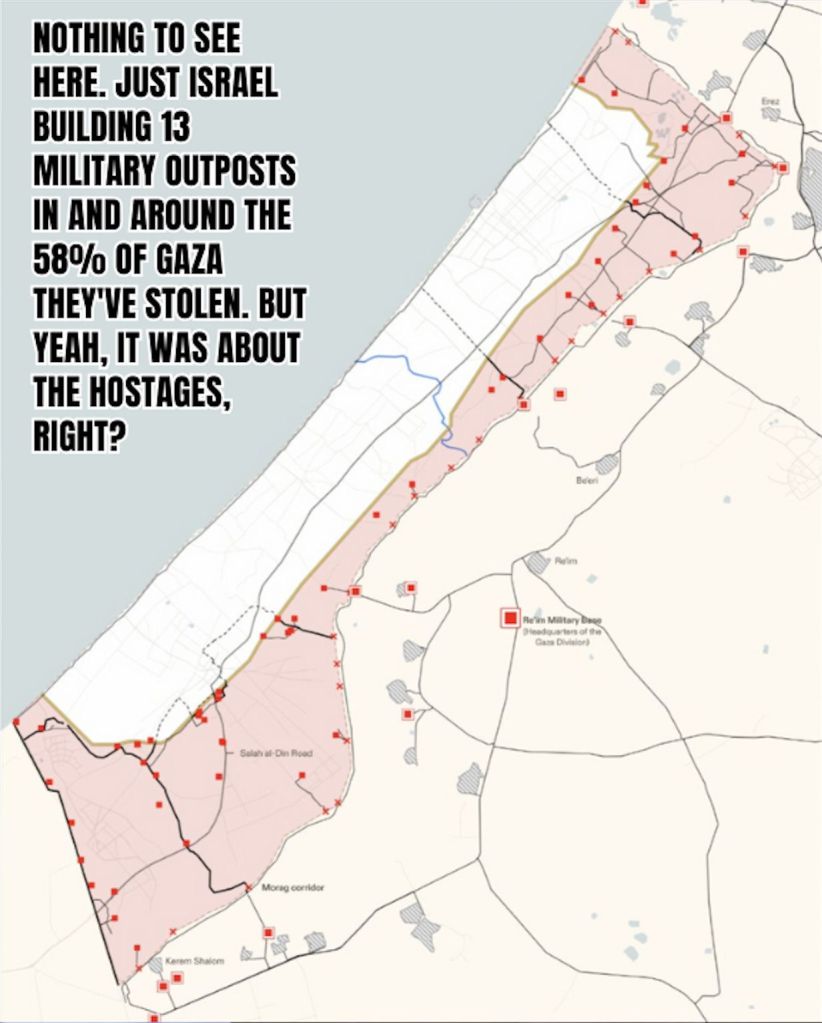
Control exercised remotely through technology, permits, and siege represents an evolution rather than an end of occupation. Military theorists describe such arrangements as post-modern occupation, where sovereignty is denied without daily troop presence. Gaza exemplifies this model, combining enclosure with periodic military incursions and constant surveillance. Claims of withdrawal rely on optics while ignoring substance, a distinction emphasised by legal experts assessing responsibility for civilian welfare under international humanitarian law.

Recognition of these facts carries implications beyond Gaza. Acceptance of the withdrawal narrative enables avoidance of legal obligations and accountability. Accurate description of control clarifies responsibility for humanitarian conditions and civilian protection. Policy discussions grounded in reality rather than slogans offer the only path toward durable resolution, since misrepresentation sustains cycles of violence rather than addressing causes.
Authored By: Global GeoPolitics
If you believe journalism should serve the public, not the powerful, and you’re in a position to help, becoming a PAID SUBSCRIBER truly makes a difference. Alternatively you can support by way of a cup of coffee:
buymeacoffee.com/ggtv


Leave a comment