
Military Expansion, Regional Escalation, Ceasefire Breakdown, and International Recognition of Palestine
By the beginning of 2025, the Gaza–Israel conflict had entered its second year without a political settlement or meaningful reduction in violence. Israeli military operations in Gaza continued at scale, civilian casualties and displacement increased, and humanitarian access remained severely restricted. In March, United Nations agencies warned that large areas of the Strip had become uninhabitable, with famine conditions spreading and medical systems no longer functioning. In June, the conflict expanded beyond Gaza through direct military confrontation between Israel and Iran. By September, a United Nations commission of inquiry concluded that acts meeting the legal threshold of genocide were occurring in Gaza, while a US-brokered ceasefire agreement signed later that month failed to halt ongoing casualties. In parallel, international recognition of Palestinian statehood accelerated at the United Nations. Taken together, these developments defined 2025 as a year in which military, legal, and diplomatic trajectories converged, clarifying the direction of the conflict without resolving it.
Nearly two years after the war began, conditions inside Gaza deteriorated beyond earlier descriptions of siege or containment. Urban space ceased to function as civilian habitat and instead took on the characteristics of mass ruin. Civilian casualties mounted, displacement reached levels without precedent in the territory’s history, and basic systems of survival collapsed. United Nations agencies issued repeated warnings describing famine conditions, the destruction of medical capacity, and the effective uninhabitability of large areas. Language used by UN bodies shifted from caution to legal characterisation, culminating in findings by an independent commission that acts meeting the threshold of genocide were occurring.
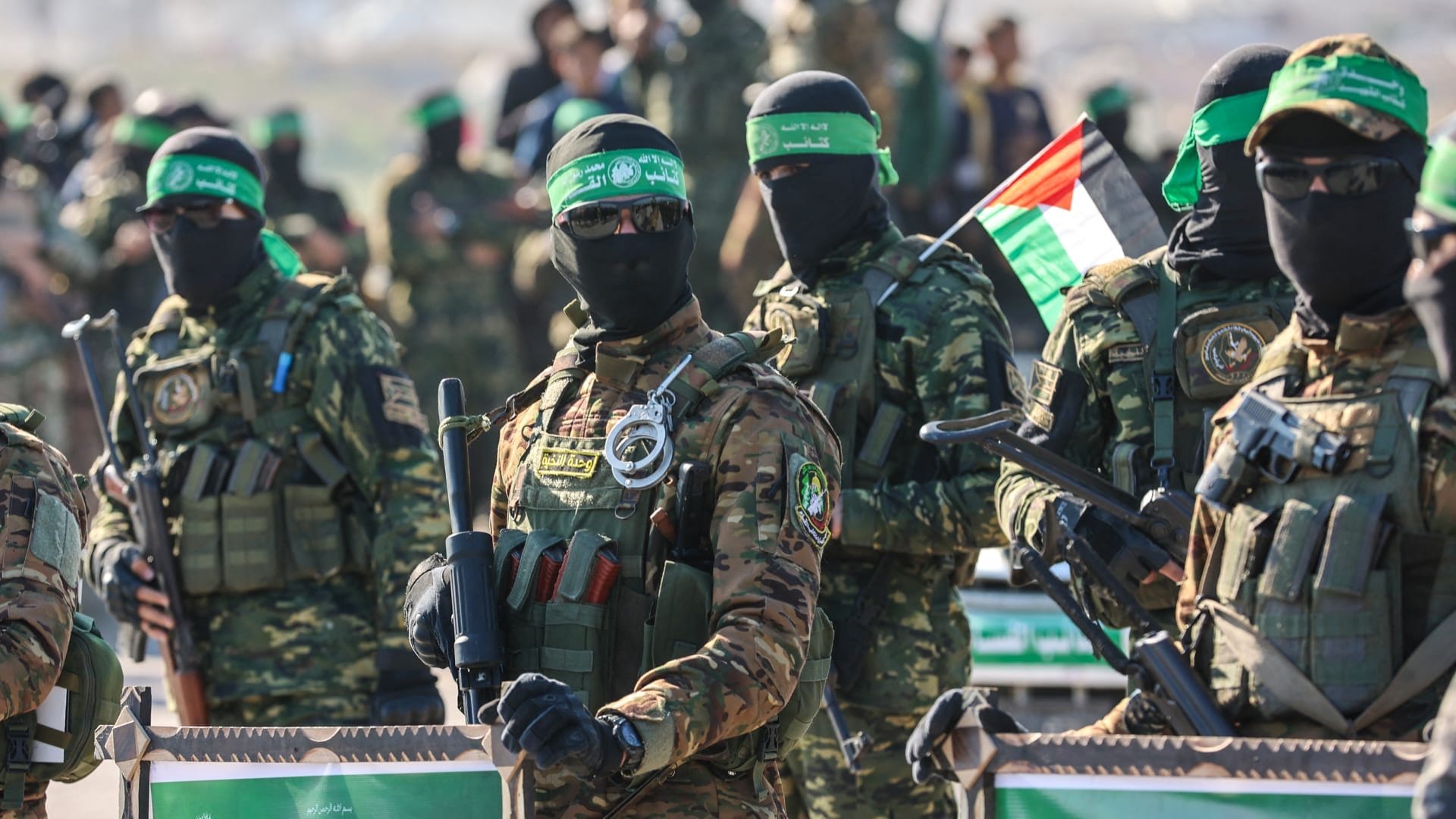
Israel framed its campaign as a response to the October 7, 2023 Hamas attack, which killed 1,200 people and resulted in the capture of 250 hostages. That framing remained constant throughout 2025 despite the expanding scope of operations and the scale of Palestinian civilian deaths, which exceeded 71,000 according to health authorities in Gaza. Military objectives became increasingly difficult to distinguish from collective punishment, particularly as residential districts, hospitals, schools, refugee shelters were repeatedly struck and leveled. Senior Israeli officials continued to reject allegations of genocidal intent, while public statements cited by UN investigators suggested otherwise.
Regional escalation reached a decisive point in June during the twelve-day direct confrontation between Israel and Iran. Israel initiated large-scale air operations against Iranian military and nuclear-related facilities, deploying more than two hundred aircraft and conducting targeted assassinations of senior Iranian commanders and nuclear scientists. Iran’s response relied on sustained, cost-effective ballistic missile and drone strikes directed at Israeli military installations and urban centres, overwhelming air defence systems and causing widespread infrastructure damage. Civilian disruption inside Israel was extensive, with prolonged nationwide alerts, economic paralysis, and visible psychological impact on the population. Israeli authorities subsequently sought de-escalation as defensive capacity and strategic depth proved insufficient to absorb continued strikes. United States intervention followed, including attacks ordered by President Donald Trump against Iranian nuclear facilities at Fordow, Natanz, and Isfahan. Those strikes failed to alter Iran’s operational capability or negotiating position and did not prevent Israel from pursuing a ceasefire. The episode demonstrated limits of Western military intervention and marked the first instance in which Israel faced sustained direct retaliation it could neither decisively counter nor contain.
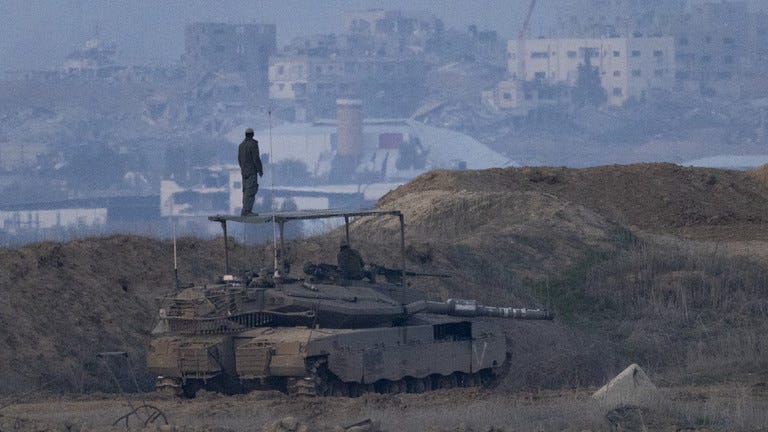
Casualty figures from the twelve-day confrontation reflected asymmetry in exposure rather than strategic outcome. Iranian authorities reported more than six hundred deaths and several thousand wounded following Israeli air strikes, while Israeli fatalities remained below thirty. These figures did not translate into strategic balance or deterrence restoration. Iran absorbed losses while retaining offensive capacity, whereas Israel sustained critical infrastructure damage and widespread civilian disruption disproportionate to its casualty count. Public claims of success by all parties masked a more consequential shift: direct state-to-state confrontation replaced decades of proxy conflict. Regional security analysts characterised the episode as a structural break, after which escalation risk rested on demonstrated retaliatory capability rather than managed signalling through intermediaries.
Against this backdrop, the United Nations commission of inquiry delivered its most severe assessment of Israel’s conduct in Gaza. Findings cited systematic destruction of civilian infrastructure, deliberate deprivation of food and water, mass displacement, and public statements by political leaders suggesting intent to destroy a population in part. Legal analysis focused on intent rather than casualty numbers alone, a standard grounded in the Genocide Convention. Israel dismissed the report as politically motivated, yet the findings intensified pressure on governments previously aligned with Israeli policy.
Diplomatic movement followed, though without resolution. September brought the first long-term ceasefire agreement since the war began, signed in Sharm el-Sheikh with mediation by Egypt, Qatar, and Türkiye, and public endorsement by the United States president. The agreement provided for phased Israeli withdrawals from parts of Gaza and reciprocal releases of hostages and prisoners. Implementation proved unstable. Both sides accused the other of violations, while United Nations monitoring recorded hundreds of Palestinian casualties after the truce took effect. The ceasefire functioned more as managed reduction in intensity than cessation of hostilities.
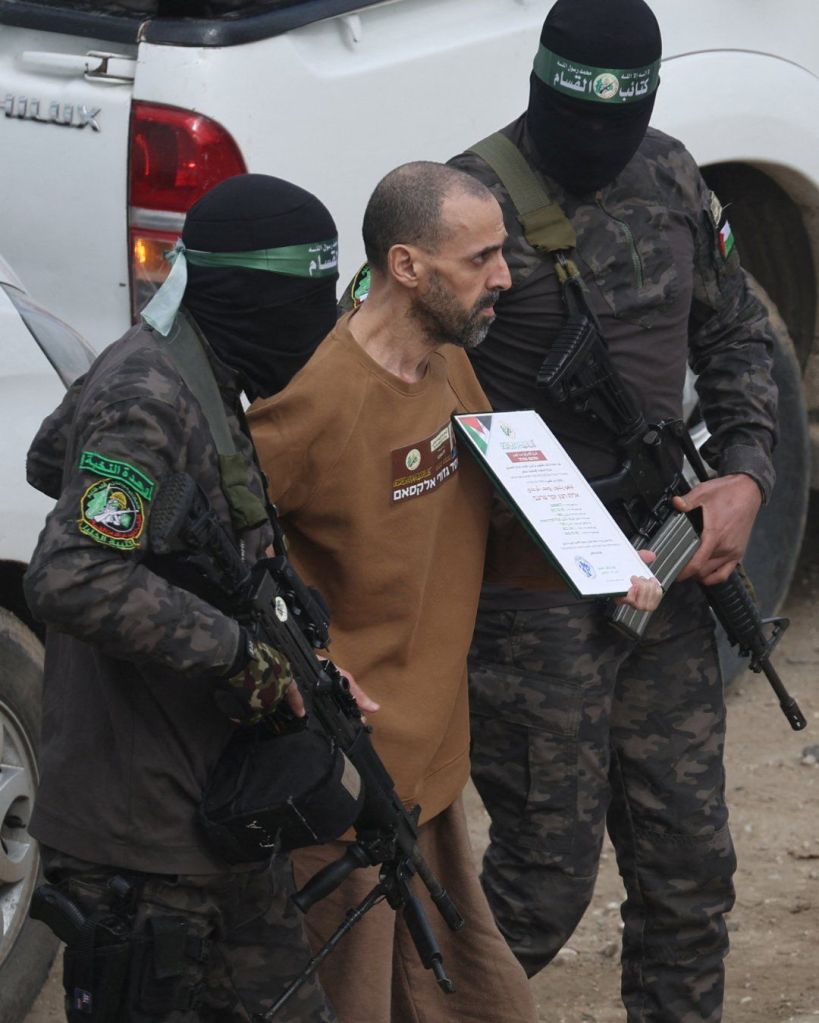
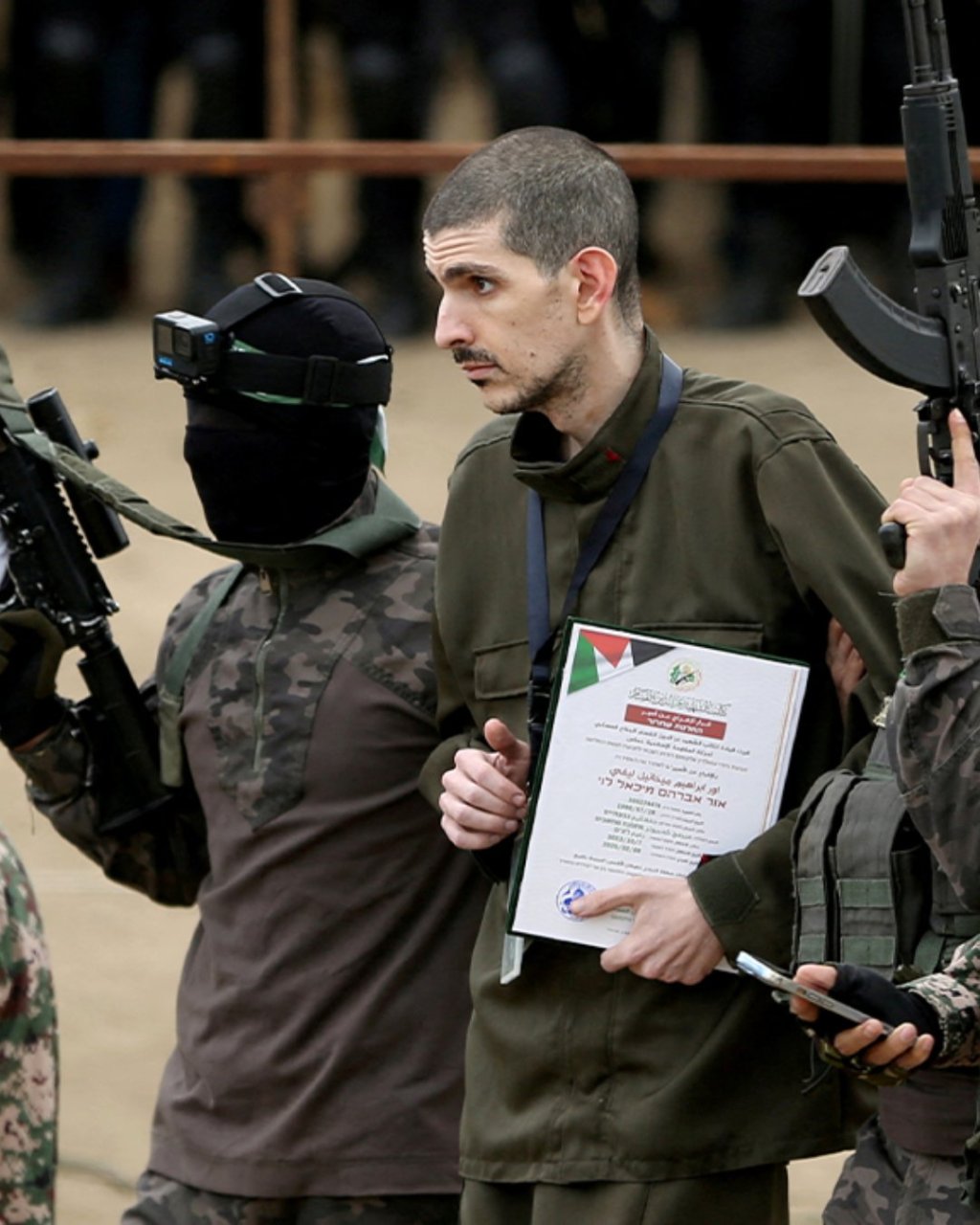
Hostage and prisoner exchanges emerged as the most visible outcome of the ceasefire framework, though their scope reflected political obstruction rather than diplomatic exhaustion. Hamas released the remaining living Israeli captives held in Gaza, together with the bodies of those who had died during captivity, completing a process that began with earlier exchanges in November 2023 and January 2025, which together accounted for 114 hostages. Israeli authorities confirmed that one captive’s body remained unrecovered. In return, Israel released Palestinian detainees, including political prisoners and individuals detained during the war without charge or trial under administrative detention procedures. Subsequent disclosures by Israeli officials complicated the prevailing narrative surrounding the hostage crisis.
Lead Israeli negotiator Haim Rubinstein later acknowledged that Hamas had offered, on October 9 or 10, to release all civilian hostages in exchange for the Israeli army not entering Gaza, an offer rejected by the government. That refusal framed the subsequent military campaign and prolonged captivity, shaping both the scale and duration of civilian suffering. Public scenes of reunion in Israel contrasted sharply with continued displacement, destruction, and insecurity in Gaza, underscoring the asymmetry between symbolic resolution and material conditions. The unresolved captive case and the record of rejected early proposals highlighted the fragility of the arrangement and the political limits placed on negotiated outcomes.
International political alignment shifted more visibly during 2025 than at any point since the conflict began. Recognition of Palestinian statehood gained momentum at the United Nations, with several Western states joining a majority of the General Assembly in formal recognition. France, the United Kingdom, Canada, and Australia altered longstanding positions, citing humanitarian catastrophe and legal findings. The New York Declaration, adopted with overwhelming support, outlined a renewed pathway toward a two-state framework, though practical enforcement mechanisms remained absent.
Israel and the United States opposed these moves, arguing that recognition undermined negotiations and rewarded armed groups. Voting patterns suggested diminishing tolerance for indefinite military management of the Palestinian question. By the end of the year, 157 UN member states recognised Palestine as a sovereign state, a figure reflecting diplomatic isolation for Israel despite continued military backing from Washington.
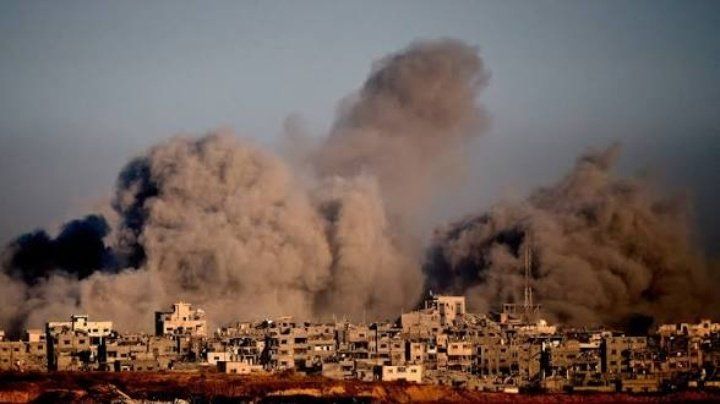
Taken together, developments in 2025 demonstrated convergence rather than contradiction. Military escalation, humanitarian collapse, legal condemnation, and diplomatic realignment proceeded in parallel. None produced immediate resolution, yet each narrowed future options. Direct war with Iran eroded regional deterrence norms. Genocide findings constrained political language. Recognition of Palestine reframed diplomatic baselines. The ceasefire exposed limits of coercion without addressing underlying control.
The year ended without closure for Gaza, but with reduced space for denial. Structures sustaining the conflict became more visible, and the cost of maintaining them increased across military, legal, and diplomatic domains. Future trajectories depend less on declarations than on whether power holders respond to these shifts or attempt to outlast them.
Authored By: Global GeoPolitics
If you believe journalism should serve the public, not the powerful, and you’re in a position to help, becoming a PAID SUBSCRIBER truly makes a difference. Alternatively you can support by way of a cup of coffee:
buymeacoffee.com/ggtv


Leave a comment