
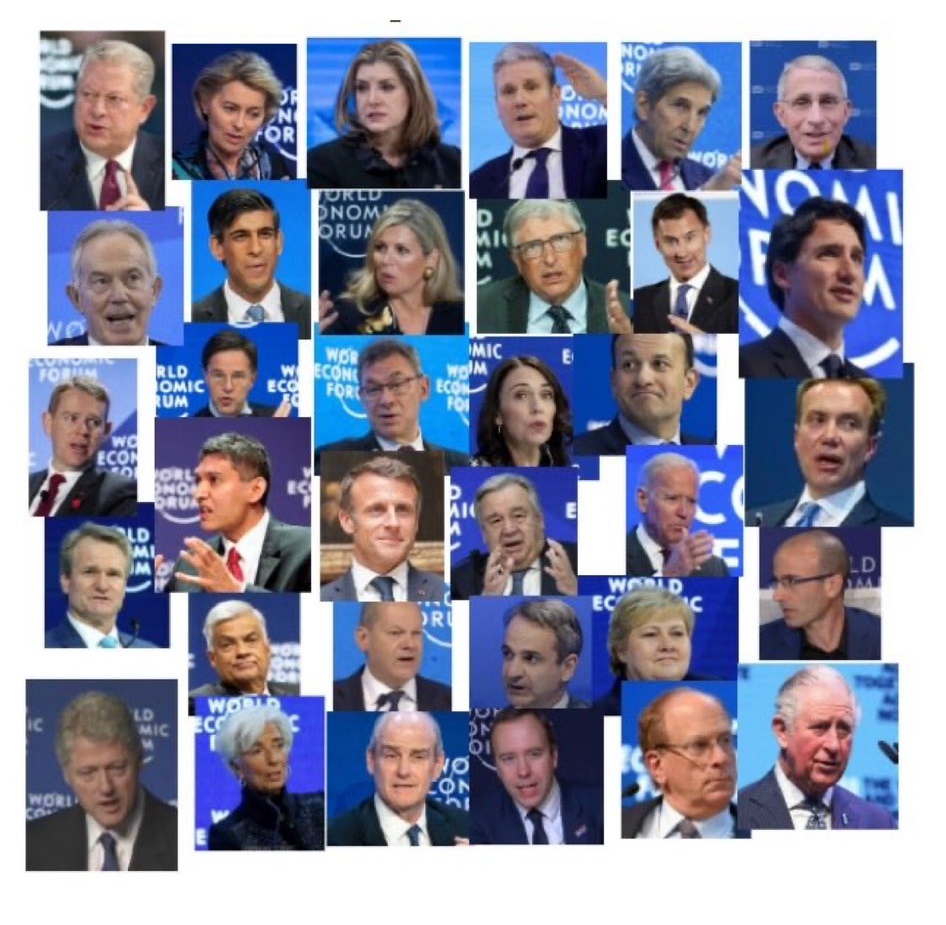
How global elites reacted once public awareness broke containment and shifted from persuasion to enforcement in Western governance
The current phase of global governance reflects a deliberate tightening of control by interconnected elites responding to widespread public recognition of long-running power consolidation. Awareness has grown through lived experience rather than persuasion, producing resistance that elites now treat as a threat requiring containment rather than accommodation. Political authority increasingly operates through transnational coordination, bypassing national consent while preserving democratic form.
Neil Oliver has described this moment as one where the mask has slipped, because the programme no longer depends on concealment. His commentary consistently identifies a shift from persuasion toward compulsion once public trust collapsed. That observation aligns with political economy research showing that legitimacy crises often precede authoritarian consolidation rather than reform. Power reacts defensively when obedience weakens.
The idea that power shields itself from scrutiny has long been articulated by intellectual authorities; Voltaire warned that “it is dangerous to be right in matters on which the established authorities are wrong,” highlighting how control defines the boundaries of permissible critique. Political philosopher George Orwell described moral and linguistic inversion as a hallmark of modern power, writing that political language is designed “to make lies sound truthful and murder respectable,” a phenomenon later examined by sociologist Zygmunt Bauman, who argued that modern systems enable harm to be carried out through bureaucratic and technical rationality rather than overt violence. Matt Ehret has published a series examining what he describes as the occult and philosophical influences behind Fabian Socialism, while UK Column reports that 141 members of the UK government are affiliated with the Fabian Society. Historically, the Fabian Society is documented as an elite policy organization founded in the late nineteenth century that advocates gradualism, the strategy of achieving systemic political and social change incrementally through policy reform, administrative influence, and cultural institutions rather than through revolution or mass democratic upheaval. This method of change through expert-led institutions aligns with the concerns raised by sociologist Robert Michels in his formulation of the Iron Law of Oligarchy, in which he argued that “who says organization, says oligarchy,” meaning that complex political organizations, regardless of stated ideals, tend to consolidate decision-making power within a small, self-perpetuating leadership class. In the technological domain, Harvard scholar Shoshana Zuboff warns that digital systems create “instrumentarian power” capable of shaping human behavior at scale while presenting themselves as benign or progressive. Together, these authorities describe a structural condition in which control is normalized, moral language is inverted, and governance is increasingly exercised through opaque technological systems rather than democratic consent.
The architecture of elite coordination is neither novel nor accidental, having developed through twentieth-century institutions designed to harmonise policy across borders. The Fabian Society provided an early model, advocating gradual administrative capture in place of overt revolution. Fabian thinkers rejected mass democracy as inefficient, favouring rule by experts shielded from popular pressure. Their influence remains visible in contemporary bureaucratic governance.
International coordination expanded through bodies such as the Council on Foreign Relations, the Trilateral Commission, and the Bilderberg Group, which facilitate consensus among political, financial, and corporate leaders. These forums operate outside electoral accountability while shaping strategic direction. Membership overlap reinforces shared assumptions rather than plural debate.
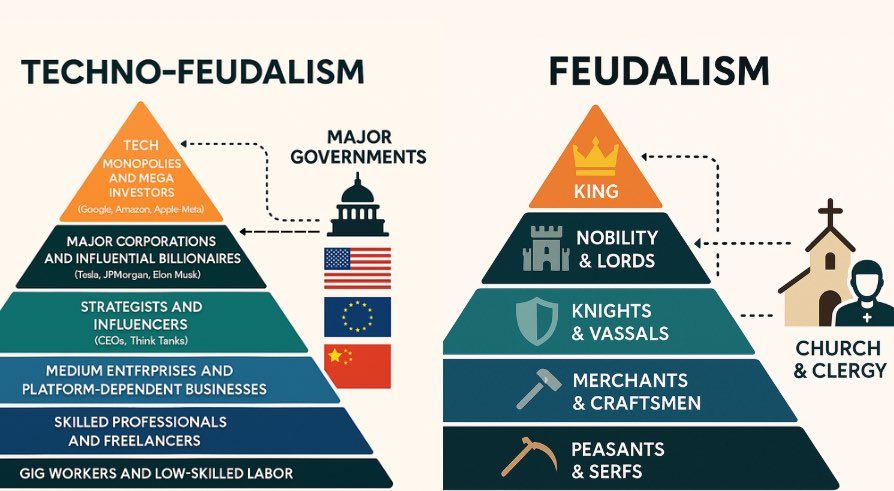
The United Nations framework provides ideological justification for this consolidation. Agenda 2030 presents itself as a sustainability programme while embedding governance targets that require centralised monitoring, behavioural management, and data integration. Policy documents emphasise compliance metrics and outcome enforcement rather than democratic deliberation. National sovereignty becomes secondary to global benchmarks.
Economic power reinforces political alignment. Large philanthropic and financial actors influence public policy through funding, partnerships, and advisory roles. Bill Gates exemplifies this dynamic through extensive involvement in global health, education, agriculture, and digital identity initiatives. These interventions shape public priorities without electoral mandate or meaningful oversight.
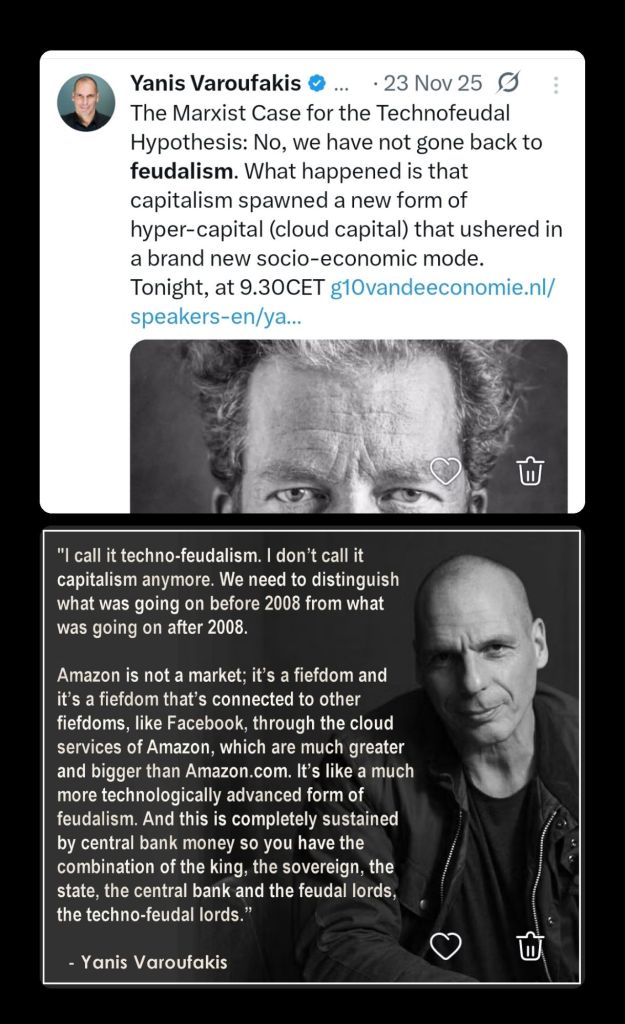
Technological capability has enabled enforcement at scale. Digital identity systems, biometric databases, predictive analytics, and artificial intelligence allow continuous population monitoring. Public private partnerships blur accountability, with governments outsourcing authority to corporations that operate beyond constitutional constraint. Infrastructure precedes consent, leaving debate irrelevant once systems embed.
Transhumanism provides ideological coherence to this expansion. Human beings are increasingly treated as modifiable systems rather than moral subjects. Yuval Noah Harari has publicly argued that humans are hackable organisms whose behaviour can be engineered through data and biotechnology. Such claims normalise intervention into cognition, biology, and autonomy.
Medical policy during the pandemic demonstrated this logic in practice. Emergency powers suspended basic liberties while concentrating authority within executive branches. Scientific debate narrowed through regulatory pressure rather than empirical refutation. Former pharmaceutical executive Mike Yeadon warned that emergency authorisations bypassed established safety standards. Institutional response focused on silencing rather than engagement.
The crisis accelerated systems already under development. Vaccine certification normalised conditional access to work, travel, and social participation. Data integration linked health status to employment and mobility. These mechanisms persisted beyond emergency justification, revealing permanent intent rather than temporary necessity.
Economic restructuring reinforced dependency. Lockdowns eliminated small enterprises while multinational corporations expanded market share. Central bank intervention inflated asset values, widening inequality and reducing economic independence. Debt reliance increased leverage over populations. These outcomes aligned with consolidation objectives long promoted within elite policy circles.
Media control supported enforcement. Ownership concentration narrowed permissible discourse, while digital platforms enforced alignment through algorithmic suppression. Independent investigative journalist Whitney Webb has documented interlocking relationships between intelligence agencies, financial institutions, technology firms, and media organisations. Narrative uniformity reflects structural alignment rather than coincidence.
Speech regulation advanced indirectly. Governments delegated censorship to platforms operating under regulatory threat, preserving plausible deniability. Public figures such as Tucker Carlson and Candace Owens reported systematic suppression when challenging dominant narratives. These measures operate without judicial process.
State leaders increasingly acknowledge the objective. Benjamin Netanyahu publicly argued that uncontrolled social media threatens state authority, calling for regulation to manage discourse. Similar statements across Western governments frame free speech as a security risk. Authority seeks control rather than persuasion.
Transhumanist ambition extends beyond surveillance into biological governance. Neural interfaces, genetic modification, and AI assisted decision making promise unprecedented intrusion into bodily autonomy. Defence research funding and patent filings confirm active development. Ethical frameworks lag intentionally, allowing deployment before resistance mobilises.
Independent researchers such as David Martin have traced long standing intellectual property claims related to coronavirus research, undermining claims of novelty. Institutional refusal to address these findings reinforces perceptions of deliberate obfuscation. Transparency erodes as authority hardens.
Public awakening now shapes elite behaviour. Lived contradictions between messaging and reality undermine compliance. Excess mortality, educational harm, and economic damage contradict assurances. Trust collapses when experience diverges from narrative.

Elite response intensifies accordingly. Financial exclusion, professional sanctions, legal intimidation, and reputational attacks target dissenters. Banking access and employment become contingent on ideological alignment. These tools enforce obedience without overt violence.
The trajectory reflects digital authoritarianism rather than liberal governance. Control operates through infrastructure, access, and data rather than force. Punishment occurs through exclusion rather than incarceration. Behaviour management replaces consent.
Historical precedent warns that technocratic efficiency often accompanies moral collapse. Fascism merged corporate and state power through administrative coordination rather than chaos. Contemporary forms replace uniforms with interfaces and commands with algorithms. The effect remains coercive.
Neil Oliver’s framing emphasises clarity rather than conspiracy. Power structures, ideology, and mechanisms align openly. Nothing remains hidden. Elites describe objectives plainly while accelerating implementation.
Awareness spreads despite suppression. Alternative media, independent research, and personal networks sustain resistance. Authority responds by embedding control deeper into daily life. Digital currency, identity integration, and automated enforcement represent next phases.
The outcome depends on whether awakening translates into organised refusal before systems become irreversible. Structural power favours elites, yet legitimacy cannot be programmed indefinitely. History shows that control without consent ultimately fractures.
Authored By: Global GeoPolitics
If you believe journalism should serve the public, not the powerful, and you’re in a position to help, becoming a PAID SUBSCRIBER truly makes a difference. Alternatively you can support by way of a cup of coffee:
buymeacoffee.com/ggtv


Leave a comment