
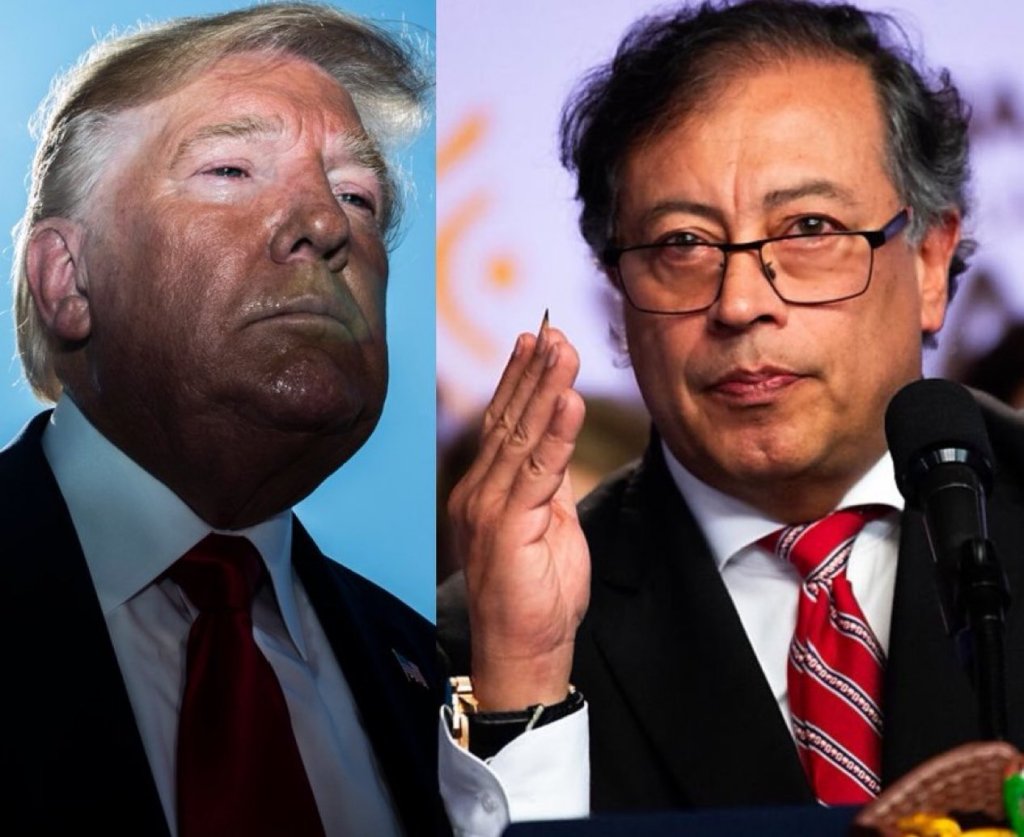
Colombia Accuses Trump of Murder and Sovereignty Violation
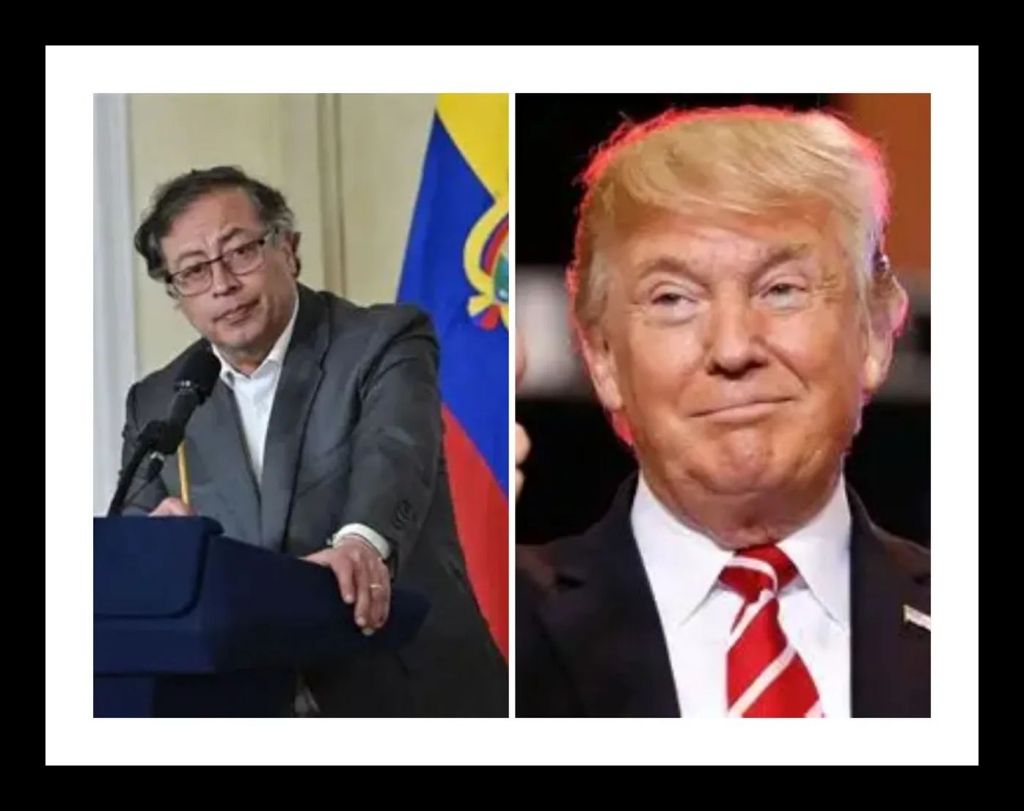
The President of Colombia, Gustavo Petro, has issued a grave and unambiguous denunciation of former United States President Donald Trump, following what he described as a deliberate and lethal military assault by American forces on a civilian Colombian fishing vessel. The incident, which occurred on the 16th of September, involved the targeting of a boat reportedly within Colombian territorial waters. On board was a fisherman named Alejandro Carranza, a man known in his community as a lifelong worker of the sea. According to President Petro, Mr Carranza has not returned to his home, and it is understood he perished as a result of the strike.
President Petro has directly accused Donald Trump of authorising a string of unlawful military actions in the Caribbean, framed publicly by Trump as anti-narcotics operations. However, no material evidence has been offered to justify these killings, and in the case of Mr Carranza, the Colombian government has stated unequivocally that he had no connection to any form of criminal enterprise. He was, by all accounts, an ordinary fisherman, attempting to earn an honest living when his boat suffered an engine failure and was left adrift, signalling distress. The suggestion that such a man posed any threat requiring lethal force is both absurd and appalling.
Petro’s remarks are not vague or diplomatic. He has demanded immediate action from Colombia’s Attorney General and called for the protection of victims’ families. He has encouraged those affected to pursue legal remedies both internationally and within the United States legal system. In doing so, he has drawn a stark and unavoidable comparison between the actions of the United States government and acts of unprovoked aggression.
The President’s statements paint a picture of a country wounded not only by the loss of a citizen but by what he sees as a violent violation of national sovereignty. In his words, the United States has committed murder in Colombian territorial waters and obliterated the life of a man whose only crime was his poverty. He expressed disbelief and disdain that no major media outlets in the United States have paid attention to the killing of a poor fisherman from Santa Marta. This silence, he implied, reflects the broader indifference of the political and media establishment to the lives of Latin Americans when they stand in the way of American military interests.
Petro did not limit his condemnation to the act itself but expanded it to question the moral sensibility of Donald Trump as a political figure. He stated clearly that his issue is not with the American people nor with their nation’s cultural and historical contributions. Rather, he accuses Trump personally of lacking even a basic understanding of human dignity and the concept of shared humanity. Drawing a contrast to the sacrifices of American soldiers during past wars, particularly the Second World War, Petro emphasised that these men knew they were fighting for a moral cause greater than themselves. In his view, Trump would be incapable of grasping such a notion.
Adding further weight to Petro’s claims, investigative journalist Seth Harp, known for his work exposing corruption within the United States military apparatus, has stated publicly that the current American strikes in Latin America represent a clear break with all notions of precision or justice. Harp asserts that the intelligence guiding these strikes is deeply flawed, if not entirely fictitious. He points out that in contrast to prior American military operations in regions like Iraq or Afghanistan, where language barriers and weak state institutions often concealed the true consequences of American action, Latin America will not provide the same cover. A significant portion of Americans, as he notes, can read the statements emerging from Colombia and judge the situation for themselves.
The moral gravity of the situation demands clarity. A man was killed by a foreign missile while adrift in his own country’s waters, seeking no confrontation and posing no threat. The supposed justification for this killing is both unverified and increasingly untenable. In the absence of any credible proof, the conclusion drawn by the Colombian President, that this was nothing less than state-sanctioned murder, is not only reasonable but perhaps unavoidable.
Trump’s long-standing disregard for truth, law, and human life is no longer a subject of debate but a matter of record. His pursuit of power, increasingly unrestrained by legal or ethical boundaries, has taken on a destructive momentum. These military strikes, far from serving any legitimate security purpose, appear tailored to feed the political image of strength he wishes to project to his domestic supporters. It is a theatre of cruelty, designed to demonstrate dominance at the expense of foreign lives, particularly those of the poor and powerless.
In this case, it was not a military outpost or a drug lord’s hideout that was destroyed, but the fragile hope of a Colombian family whose father, husband, and provider now lies at the bottom of the sea, slain without warning, without trial, and without reason.
The international community, and more urgently, the citizens of the United States, must reckon with what is being done in their name. To ignore such acts is to become complicit in them. President Petro has called for justice, not revenge, and for truth, not propaganda. It remains to be seen whether anyone in Washington will listen.
Authored By: Global Geopolitics
If you believe journalism should serve the public, not the powerful, and you’re in a position to help, becoming a PAID SUBSCRIBER truly makes a difference. Alternatively you can support by way of a cup of coffee:
buymeacoffee.com/ggtv
https://ko-fi.com/globalgeopolitics


Leave a reply to Steve Sither Cancel reply