
Lavrov says talks must reflect Russian security interests, not Western expectations.
In the interview with the Moscow-based Ultrahang YouTube channel on 26 October 2025, Russia’s Foreign Minister Sergey Lavrov laid out Moscow’s positions in sharp and direct terms, reflecting a policy of negotiation on Russia’s terms and rooted in long-standing grievances. The remarks provide insight into how Russia views its relationship with the United States, the conflict in Ukraine, its territorial claims and the broader diplomatic environment. They also allow a geopolitical analysis of how Moscow is seeking to shape the conditions of any peace process and how that interacts with Western policy, allied pressures and regional dynamics.
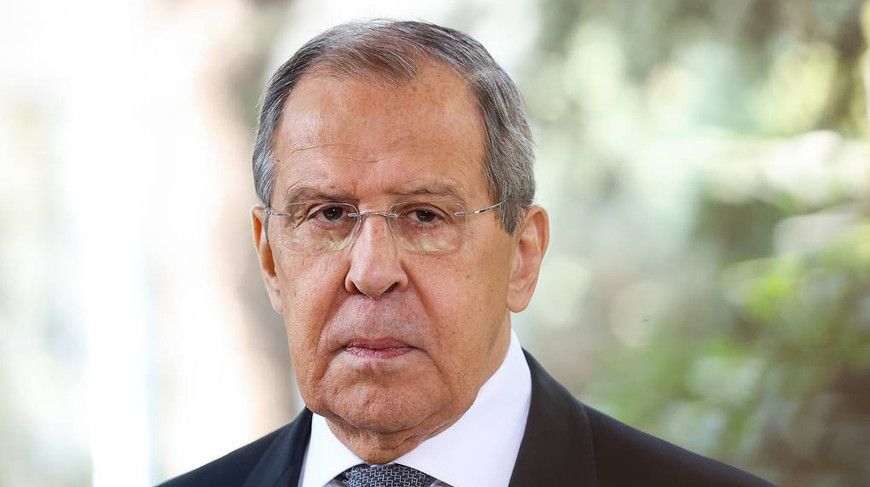
Lavrov began by addressing the question of why he did not accompany the U.S. Secretary of State and why a planned meeting in Budapest between President Vladimir Putin and President Donald Trump did not materialise. He said that after the October 16 conversation between the two presidents, a call was made on 19 October by U.S. Senator Marco Rubio to Lavrov, in which Russia reconfirmed its “full adherence” to the understanding reached in Alaska. He claimed that neither Rubio nor the United States proposed a further meeting, and that the Russian side did not push for one, because the Americans initiated the agenda and appear, in Moscow’s view, to be under pressure from “European hawks” and Ukrainian-allied states which oppose U.S.–Russia cooperation. Lavrov construed the State Department communique describing the dialogue as “productive” to mean Russia’s diplomatic posture was sound.
From the Russian viewpoint, Lavrov said, Washington has adopted an unusually open foreign-policy stance, meaning the U.S. leadership regularly states its position, which Moscow sees as a basis for negotiation. He adds that Russia is ready to act when the U.S. is comfortable, which implies a readiness to move ahead but only on Washington’s initiative.
When asked whether Russia was un-flexible and what about territory questions in Ukraine, Lavrov acknowledged discussions have taken place. He described the regions of Donetsk, Luhansk, Kherson and Zaporozhye (and Crimea) as historic Russian territories, formerly part of the Russian Empire and developed under Soviet rule, which now form part of the Russian Federation under its constitution. He emphasised that Russia recognises Ukraine’s independence, but says it cannot accept the current regime, which he labelled “nazist” in nature, accused of banning the Russian language and discriminating against Russian-speaking minorities. From Russia’s standpoint, the question is not about territory, he said, but about the people living in those regions who identify with Russian culture.
Lavrov also discussed why Russia rejects the deployment of European or NATO peacekeepers over regions controlled or claimed by Russia, arguing that such arrangements ignore the root causes of the conflict, NATO enlargement and minority-rights violations and that Russian-speaking populations cannot be left under a hostile Ukrainian state.
Finally, responding to the question of when Russia will say its goals are achieved and the war will end, Lavrov stated Russia’s goals have not changed. He tied settlement to the protection of Russian-speaking peoples and to preventing Ukraine’s accession to NATO or the establishment of NATO bases close to Russia’s borders. He said calling for an immediate ceasefire without addressing these root causes would simply result in a repeat of the problems seen after the Minsk Agreements. He argued a durable, long-term peace is required, not a short-term pause.
The interview thus frames Russia’s position as: Washington must drive the process; Russia is ready on the terms Moscow sets; the question is not simply territory but culture, identity and security; and any settlement must address Moscow’s “red lines” (NATO, minority rights, historical interpretation). It also underscores Moscow’s view of Western interference and internal pressures within Ukraine and Europe as obstacles to a real deal.
From a geopolitical analysis perspective several implications follow, drawing on independent or less-institutional commentary.
First, the negotiation dynamic described by Lavrov reveals a Russian strategy of maximalist positioning in which the offer effectively lies with Moscow but demands are set high. Scholars point out that such an approach limits Moscow’s flexibility in practice. The Institute for Security and International Studies at Stanford noted in February 2025 that by signalling readiness to engage but simultaneously holding firm on major demands, Russia risks locking the U.S. administration (and Ukraine) into a weaker negotiating position and alienating European partners. (cisac.fsi.stanford.edu)
Second, the focus on identity and culture as explained by Lavrov reflects Russia’s long-term narrative of protecting Russian-speaking minorities and redrawing post-Soviet borders to suit Moscow’s strategic view. Independent commentary suggests that by framing the territories as historic Russian, Moscow is rehabilitating imperial-style logic, which complicates any credible settlement. As the UK Foreign Secretary warned earlier this year, the logic is “imperialism dressed up as realpolitik”. (theguardian.com) By adopting such framing publicly, Russia signals to Western decision-makers that it expects recognition of the status quo ante (or ante-Russian re-integration) as a precondition.
Third, the insistence on addressing NATO enlargement and minority-rights issues as root causes points to a more structural vision of the conflict than simply territorial gain. The Polish think-tank Centre for Eastern Studies (OSW) has stressed that Russia’s campaign is not purely military but part of a broader strategy to revise the European security architecture. (consilium.europa.eu) The implication is that any settlement must involve guarantees regarding Ukraine’s alliances and security posture, something the West is not currently prepared to concede.
Fourth, the reference to U.S. domestic and allied pressures is significant. Lavrov suggests the American initiative is constrained by European “hawks” and by the Ukrainian regime and its allies. He frames the United States as under internal pressure, thereby offering Russia leverage: Moscow can hold off until it sees a weaker or more willing Washington. A recent commentary by analyst Pavel Baev notes that the abrupt cancellation of the Putin–Trump Budapest meeting may have reflected precisely this dynamic: Russia’s expectation of movement collided with American political and allied constraints. (prio.org)
Fifth, from a strategic timing perspective, Russia’s rejection of immediate ceasefires or partial settlements reflects its war-of-attrition mindset. The U.S. intelligence bureaucracies had earlier flagged that Russia lacks sufficient incentive to negotiate an early end to the conflict. (wsj.com) Lavrov’s emphasis on a lasting peace rather than a stop-gap pause aligns with that assessment: Moscow calculates that prolongation may improve its bargaining position, especially if Western support for Ukraine weakens.
What does this mean for Western policy and for Ukraine? Western policymakers must recognise that Moscow’s public position is not simply a bargaining posture but reflects genuine strategic aims: rewriting the security order in Europe; integrating adjacent territories; and institutionalising Russian-speaking minority rights under Moscow’s sphere. Therefore Western strategy must ask what it is willing to concede (for example, Ukraine’s delayed NATO accession, special security status for Russian-speaking regions) and what it will insist upon (territorial integrity, Ukrainian sovereignty, democratic minority-rights guarantees). The risk of a deal that simply freezes the conflict along current lines without addressing structural issues is something Lavrov explicitly rejects and which independent analysts regard as unstable. (cisac.fsi.stanford.edu)
In terms of negotiation leverage, the U.S. and its allies must see that Russia is in the stronger position of setting the agenda from this interview. Russia is not requesting a meeting but responding to one; it emphasises that the U.S. must act when ready. That means if Washington signals weakness, Russia can demand more; if Washington signals resolve, Russia may be forced to moderate. This places a premium on unity among U.S., European allies and Ukraine. Independent studies show that Russia’s ability to exploit allied divisions is one of its strategic advantages. The OSW report highlights that Moscow has invested in “divide and rule” tactics. (consilium.europa.eu)
Territorially, Lavrov’s insistence that regions now part of the Russian Federation cannot be returned and are historic Russian lands puts the onus on Ukraine and the West to accept that returning to 1991 borders is excluded. This conflicts directly with many Western public commitments. For example, Moscow argues that even if Ukraine were to regain territory, the populations there would reject Ukrainian sovereignty because of cultural alignment with Russia, as Lavrov states. If the West insists on Ukrainian sovereignty over those lands, a diplomatic settlement may be impossible without war continuing.
From a diplomatic optics perspective, the Hungarian dimension of the interview is notable. When asked about fears in Hungary of a Russian threat, Lavrov said that Russia and Hungary have dealt with their past honestly and are living “a new life”, emphasising mutual understanding with Prime Minister Viktor Orbán. The outreach to Hungary signals Russia seeking to bolster its European flank and to create fissures in EU/NATO unity. That plays into the broader strategic competition between Moscow and Brussels/Washington.
In summary, the interview offers a clear articulation of the Russian foreign-policy line: Russia is ready to negotiate but only on its terms; the major elements are identity, culture, historic precedent, security guarantees, and territorial status. Moscow sees Washington as initiator, Europe as potentially hostile flank, Ukraine as regime that must change or surrender key demands, and the conversion of conflict into negotiated outcomes is all about long-term settlement rather than a temporary truce.
The Western response must therefore be realistic: either accept that Russia’s terms will shape any deal, or prepare for a prolonged conflict without a negotiated exit. Any settlement which fails to address the root causes identified by Moscow—NATO expansion, minority-rights, historical interpretation—will likely collapse or revert to warfare. Independent commentary indicates that Russia is not in a hurry to make major concessions and has strategic advantage of time. The United States and its allies may need to recalibrate expectations and strategy accordingly. The absence of a credible Western counter-narrative to Moscow’s framing (identity, security, historic rights) constitutes a strategic vulnerability. Countries in Central and Eastern Europe, including Hungary, watch closely how the Russians present the narrative, which could affect alliance cohesion.
In conclusion, Lavrov’s interview should be read as a roadmap of Russian expectations. Moscow is not simply defending its actions but laying claim to a renegotiated European order. For Western policymakers and analysts, the question is whether they un
derstand that order on Russia’s terms or resist it at further cost. The balance of power, the unity of the West, and the resilience of Ukrainian defence and diplomatic posture will determine whether Moscow’s position remains a maximalist posture or becomes part of a settlement. The interview is thus less about an imminent deal than about who will shape the terms of the future.
Authored By: Global Geopolitics
If you believe journalism should serve the public, not the powerful, and you’re in a position to help, becoming a PAID SUBSCRIBER truly makes a difference. Alternatively you can support by way of a cup of coffee:
buymeacoffee.com/ggtv
https://ko-fi.com/globalgeopolitics


Leave a comment