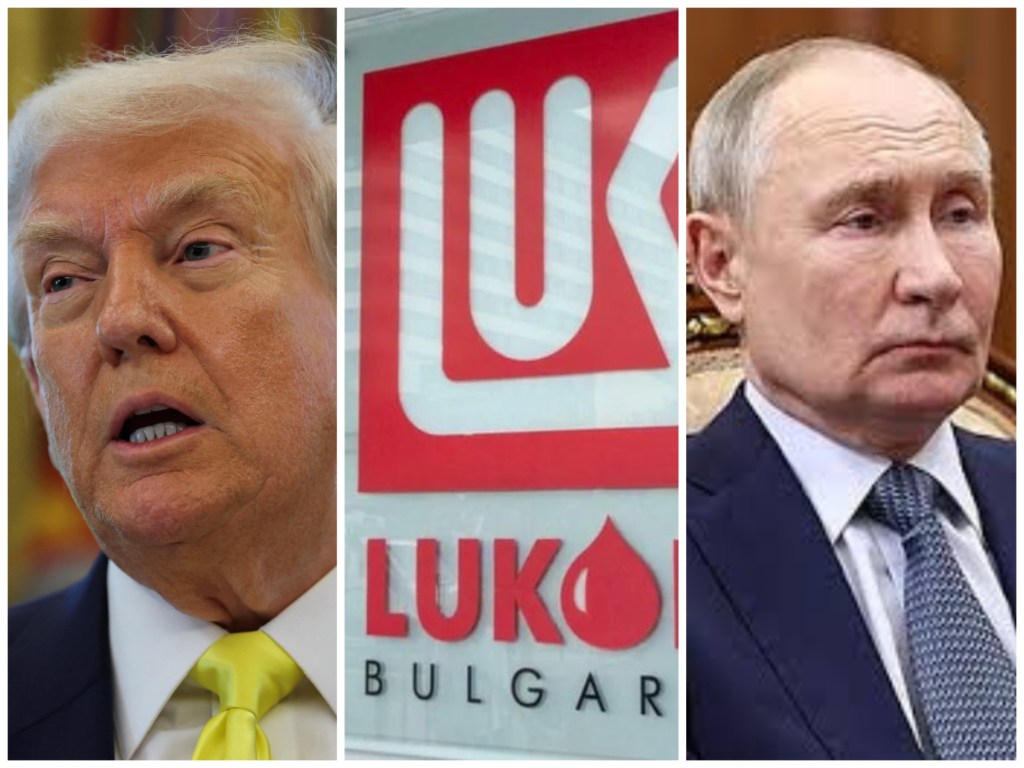
A sanctions regime engineered to force the transfer of strategic Russian energy infrastructure to US-aligned interests
The United States has long used economic instruments as instruments of statecraft, but recent actions around Russian energy firms show a pattern that extends beyond mere pressure to shape political outcomes. The sequence of measures taken against Lukoil and related Russian energy interests over recent weeks demonstrates a coordinated campaign that creates economic distress in order to transfer valuable assets and control into hands aligned with Washington’s strategic and commercial interests. Evidence from on-the-ground asset seizures, Treasury interventions, and public statements by independent economists and commentators supports a view of deliberate economic engineering rather than accident or incidental consequence. (bloomberg.com) Similarities to wild west gangsterism or cartels in the drugs business are not off the mark.
Regulatory pressure on Lukoil has produced immediate commercial disruption across several European states. In the Balkans one of the largest operations affected was the Burgas refinery in Bulgaria, an enterprise central to national fuel supplies and regional trade. Bulgarian authorities moved swiftly to assume commercial control of the refinery, appointing state managers to run operations and lawmaking bodies to clear legal pathways for state intervention, actions taken specifically to prevent a supply shock as U.S. sanctions loomed. The Romanian government likewise signalled readiness to take control of Petrotel and other local assets to preserve continuity of supply and employment. These national moves followed explicit sanctions deadlines from the United States that would sever Lukoil’s access to global finance and trade by 21 November. (AP News)(Reuters)

The operational logic behind these measures follows a clear playbook: induce commercial isolation, then force a distressed disposal or compelled transfer of assets. Market participants faced practical constraints that the sanctions regime engineered. Credit lines evaporated as banks withdrew support after regulatory pronouncements. Suppliers and buyers reduced or suspended trade to avoid secondary sanctions and reputational risk. A high-profile potential bidder, the commodity trader Gunvor, withdrew or was blocked following a Treasury determination that linked the trader too closely to Kremlin influence, a determination that removed a market-based rescue option and narrowed the pool of permissible purchasers. Under those conditions, assets either enter forced sales at depressed prices or fall to state seizure and subsequent resale under terms favouring political allies. (bloomberg.com)(wsj.com)
The historical precedent for this pattern is well documented in a number of independent critiques of sanction regimes and economic warfare. Economists and anti-imperialist analysts have long argued that sanctions function as instruments of economic coercion that frequently produce private gains for well-positioned actors in the sanctioning country. Michael Hudson, an economist noted for his critique of financialised statecraft, frames contemporary sanctioning practices as a form of “financial parasitism” that extracts economic rents from targeted economies and restructures ownership in favour of creditor classes. Hudson and similarly inclined commentators describe a mechanism by which sanctions weaponise the global financial system to transfer wealth and productive capacity from sanctioned entities to parties who can operate within or alongside Washington’s regulatory framework. Those interpretations correspond to the observable mechanics of the Lukoil episode, in which asset mobility, credit denial, and licensing decisions by U.S. authorities shape outcomes for global purchasers. (michael-hudson.com)
The United States has paired these market constraints with diplomatic levers designed to advantage preferred buyers and to pressure governments that resist alignment. A waiver system revealed in recent developments shows selective leniency linked to political compliance. Hungary secured a temporary exemption to continue taking Russian energy supplies while other European states faced stricter enforcement, a differential treatment that underlines the political nature of sanctions implementation. The reciprocal message embeds a practical incentive structure: co-operate with Washington’s policy aims and receive protections; resist or pursue independent arrangements and face tighter legal and financial constraints. Such selective exemptions alter bargaining positions inside Europe and create purchase opportunities for firms with policy connections or favourable relationships with U.S. regulators. (theguardian.com)

When one examines beneficiaries from past and present interventions, a clear pattern emerges in which large transnational oil firms and financial actors stand to gain market share and asset holdings. U.S. majors, previously constrained by partnership arrangements and existing market distribution, now face fewer rivals in sanctioned companies. Tradeable assets on sale or subject to state-directed disposal present opportunities for firms capable of navigating licensing pathways and of deploying capital quickly in jurisdictions spared from direct sanction action. Independent analysts who study the political economy of sanctions warn that such outcomes are predictable when a sanctions regime is administered by an actor with deep control over global finance and a willingness to use extraterritorial instruments. That critique frames recent U.S. decisions not as unintended effects but as foreseeable distributional consequences benefiting particular commercial interests. (bloomberg.com)
The political consequences for Europe are immediate and material. Disruption to refinery operations in Bulgaria and Romania threatens domestic fuel supply and employment, while the removal of Russian participation from companies reliant on integrated supply chains forces governments to choose between rapid nationalisation, precarious emergency licensing, or distress sales to third parties. Nationalisation carries fiscal burdens and legal exposure; forced sales carry fiscal and social pain for local economies when strategic facilities leave domestic control. The cumulative effect weakens industrial competitiveness for affected states and reinforces dependence on alternatives priced and supplied by markets increasingly aligned with U.S. corporate and strategic interests. Independent commentators have warned that sanctions wielded in this manner create long-term damage to European industrial bases while consolidating control of energy assets in fewer hands with greater geopolitical alignment to Washington. Reuters)(euronews)
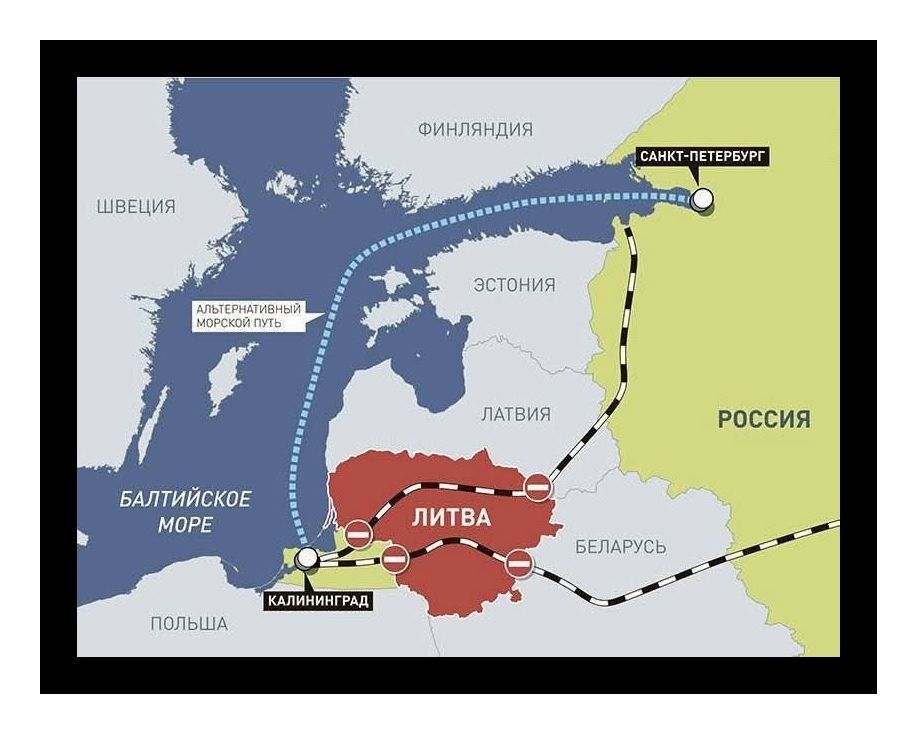
A wider pressure system is forming around Russian energy logistics as Lithuania has moved to halt all transit of Lukoil and Rosneft cargo to Kaliningrad, a decision that cuts a long-standing supply route and carries political weight because the region depends on that corridor for fuel and basic goods. Lithuanian Railways will allow a short transition to finish existing contracts and then stop all movement, even though the operator earned steady revenue from transporting more than three hundred thousand tonnes of Lukoil oil products to the enclave in the past year. The move coincides with growing distress across Lukoil operations worldwide: its foreign assets from Egypt to Kazakhstan are being chased by bidders rushing to close deals before the November deadline; its West Qurna-2 field in Iraq has declared force majeure while more than a thousand staff face unpaid salaries; its Teboil unit in Finland is close to collapse; and its Burgas refinery faces state takeover pressures. The same pressure ladder is visible everywhere: freeze cash flows, block banking, cut logistics, force defaults, and compel sales under Washington’s licence system, with figures like Geoffrey Pyatt openly taking credit for blocking buyers such as Gunvor through press outlets aligned with US policy messaging.
A further point concerns precedent. The Gazprom Neft episode in Serbia provides a comparable sequence of signals and outcomes. Pressure on Russian ownership stakes in Serbia’s oil sector transformed business negotiations into political bargaining over complete Russian divestment. The insistence on full withdrawal rather than partial reductions of influence indicates a policy preference for removal of Russian capital from strategically sensitive sectors, a preference that in practice privileges purchasers who meet Washington’s political criteria. Internationally, the use of secondary pressure to force ownership changes echoes earlier twentieth century instances in which belligerent powers leveraged wartime privations to restructure economic landscapes in their favour. Independent historical and political economy studies have highlighted the continuity of such tactics in modern forms, applying financial levers instead of direct military occupation to secure economic advantage. (Reuters)
Critics of sanctions policy emphasise the normative and legal pitfalls of this approach. Several independent institutes and critical economic thinkers argue that weaponising the international financial architecture erodes sovereign property norms and creates a transactional precedent that invites reciprocal action. If a great power conditions legal access and market functioning on political alignment, smaller states and corporations will face increasing vulnerability to expropriation by other great powers in future conflicts, accelerating fragmentation of global trade and investment frameworks. These scholars warn of a feedback loop by which sanctions designed as a tool for short-term political effect produce long-term structural damage to the rules that underwrite global commerce, thereby empowering rent-seeking actors within sanctioning states. (Tricontinental)
Legal and moral arguments aside, the sequence of events demonstrates a capability deployed with strategic intent. Treasury blocking of potential buyers, the orchestration of waivers for compliant partners, and accelerated national takeovers of targeted companies have combined to produce outcomes that align with broader U.S. strategic and commercial interests. Publicly available reporting shows a co-ordination of regulatory and diplomatic instruments that reshape ownership and market position at short notice. Independent economic critics characterise this approach as a modern variant of imperial economic strategy, leveraging financial and legal dominance rather than territorial conquest to effect large-scale transfers of wealth and productive capacity. (bloomberg.com)(Reuters)
Policy implications flow from this record. European governments must reconcile immediate energy security needs with the political costs of yielding strategic assets under externally imposed constraints. If European states acquiesce to forced disposals or accept buyouts shaped by third-party regulatory pressure, they will reduce their own strategic autonomy and deepen reliance on external actors for critical infrastructure and energy provision. Conversely, moves to nationalise or to form protective ownership vehicles require sustained fiscal commitment and legal defence against foreign claims. Independent specialists advise that any response should include transparent legal frameworks, parliamentary oversight, and regional co-ordination to prevent opportunistic acquisitions and to defend public interest in strategic industries. Those recommendations derive from decades of study on resource geopolitics and from practical experience in states that have faced asset seizures and rapid ownership transitions. (AP News)(Reuters)
The broader lesson is structural rather than episodic. A global order in which the leading financial power can condition market access on political conformity creates incentives for wealth transfer and structural realignment favouring actors inside that power’s orbit. Independent economic analysts describe this mechanism as a central feature of contemporary geopolitics, in which sanctions act as instruments of economic redistribution rather than solely as levers of coercion to change behaviour. The Lukoil episode represents a tangible instance of that mechanism at work, combining legal instruments, diplomatic pressure, and financial exclusion to produce outcomes that transfer control of strategic assets under the rubric of security policy. (michael-hudson.com)
Readers who evaluate these events should judge outcomes by structural changes rather than by declared intentions. Sanction regimes seldom operate in moral isolation; they always distribute gains and losses among competing actors. The recent moves against Russian energy firms show a distributional pattern consistent with a strategy that uses conflict as a pretext to reconfigure ownership and market control. Independent critics and scholars frame that pattern as an example of economic statecraft that privileges particular geopolitical and corporate interests, an interpretation supported by the convergent evidence of blocking decisions, selective waivers, and rapid national interventions across multiple European states. (bloomberg.com)
If policymakers wish to avoid repeating these outcomes, they must reconfigure sanction design to protect third-party economies, to insulate critical infrastructure from opportunistic transfers, and to provide transparent multilateral procedures for asset stewardship during geopolitical crises. Without such safeguards, the use of economic coercion will continue to produce concentrated benefits for actors positioned to exploit regulatory discretion, and small and medium states will bear disproportionate costs in supply disruptions and ownership losses. Independent economic voices recommend precisely these safeguards as necessary to prevent economic policy from becoming an instrument for private advantage under a public pretext. (Tricontinental)
The evidence and independent analysis examined here support a sober conclusion: the measures surrounding Lukoil and similar cases function as more than ad hoc responses to a geopolitical emergency. The available facts, when combined with critical economic scholarship, show a pattern of deliberate economic re-engineering that concentrates control and extracts value under the cover of sanction policy. That pattern merits sustained scrutiny by European publics and parliaments, who will carry the immediate burdens of disrupted energy systems and who must decide whether national interest requires defensive policy to protect strategic assets from being reshuffled by extraterritorial economic instruments. (theguardian.com)(michael-hudson.com)
Authored By: Global Geopolitics


Leave a comment