

The Epstein documents and the political destruction they set in motion
Donald Trump’s position now looks fragile because the release of the Epstein archive converted decades of private suspicion into public documents that impose moral and legal pressure on his whole circle. Rick Wilson, a writer and commentator has argued that the House vote forcing disclosure represented the sharpest political blow the former president has experienced in a decade, because lawmakers who had resisted for months abandoned prior loyalties when they recognised a moral boundary had been crossed. That observation explains why a technically procedural action produced consequences far beyond parliamentary theatre, as such the release removes plausible deniability in many quarters and makes secrecy politically toxic.
Evidence volume magnifies the problem. An independent commentator, George Galloway, pointed to the number of references to Donald Trump inside Epstein’s material and argued the sheer frequency turns private acquaintance into a public liability. He cited more than a thousand references in the tranche already examined and described the mass of mentions as an “avalanche” that will carry political consequences well beyond bluster. Many independent investigators confirm that the files are substantial and that earlier releases were only a fraction of the archive, which means reputational exposure will continue as more records see light. The scale is not academic: where repeated documentary ties exist, public perception hardens and partisan defences strain under cumulative detail. (archive.org)
The political mechanics of coalition fracture are already visible in Trump’s own camp. Prominent MAGA figures who once embodied unyielding loyalty have publicly broken with him over the files’ release. Marjorie Taylor Greene voted for the discharge petition and has defended survivors publicly, while emphasising she will not be intimidated by presidential attacks. (Fox News) Tucker Carlson, a central voice for a large segment of conservatism and a formative media figure for the movement, has also issued sharp criticism of Trump’s foreign-policy choices and his handling of the Epstein matter, arguing at points that the president’s actions have not served American interest as the movement defined it. Carlson’s critiques align with a pattern where influential commentators recalibrate allegiance when leadership appears to deviate from core commitments. (The Economic Times)
Those public ruptures matter because movements depend on permission structures; when leading lights withdraw support, rank-and-file behaviour follows. Empirical research on cascades and preference falsification demonstrates that once visible leaders signal dissent, others feel authorised to defect. The Epstein files created such a signalling event: survival testimony and documentary citations created a potent moral frame that eroded the protective norms around powerful people. Survivors’ persistence changed the calculus for representatives who previously relied on rhetorical loyalty and fear of reprisal.
The institutional questions are legal as well as political. Wilson warned that officials placed by the administration had the motive and opportunity to stymie investigations and could have altered or redacted records while files remained under executive control. He emphasised the existence of criminal penalties in the accountability legislation and argued those penalties would apply to anyone who illegally concealed material. That legal risk is not purely hypothetical as federal investigators previously created an internal index of Epstein-related material using an FBI SharePoint, which leaves digital trails that can be audited and that will complicate efforts to erase provenance.
Independent research into Epstein’s methods corroborates the political theory that elites use mutual exposure as a control mechanism. Whitney Webb’s multi-volume research traces how networks of influence, intelligence cutouts, and patronage enabled Epstein’s operations and created incentives for high-status figures to preserve confidentiality. Webb argues that those networks produced leverage that could be deployed politically, which explains why exposure of the files imposes risk both to named individuals and to broader institutional enablers. Webb’s work therefore reinforces the claim that the release of documentary material threatens entrenched protection. (archive.org)
Investigative reporting and survivor memoirs supply the human and evidentiary context that transforms abstract risk into palpable political peril. Virginia Giuffre’s memoir and the reporting of long-form investigators have highlighted the scale of abuse and the way institutions failed survivors for decades. That body of reporting underwrote public sympathy and created sustained pressure for disclosure; it explains why a bipartisan coalition coalesced even among representatives who otherwise would have resisted cross-party action. The moral clarity of survivor testimony made partisan spin harder to sustain. (theguardian.com)
The strategic consequences for the Republican coalition are immediate and prospective. Several variables will determine whether the rupture becomes permanent. First, further releases may reveal patterns and names that make continued association with Trump politically costly for officials and donors. Second, if independent prosecutors pursue obstruction or document tampering, criminal exposure will add to electoral liability. Third, if leading media influencers and funders recalibrate their calculus and abandon unconditional defence, institutional insulation will collapse. Evidence already points in that direction because senior movement media figures and key congressional actors have shifted tone or publicly rebuked the president’s handling of the files. (bloomberg.com)
Some commentators forecast systemic collapse of Trump’s dynastic ambitions. George Galloway predicted that the archive will deprive Trump of political preeminence, that his party may lose legislative control at the first opportunity, and that the idea of a Trump political dynasty has been effectively discredited. This prognosis rests on a realistic reading of how cumulative documentary exposure interacts with voter disgust and factional politics; where the moral burden exceeds perceived policy benefits, voters recalibrate. Other analysts caution that electorates weigh policy outcomes against personal morality, which means loss of momentum is likely but not inevitable. The difference depends on whether the files change voting calculus or merely produce ephemeral outrage. (The Independent)
A further structural risk concerns foreign-policy alignment and the perception of who benefits from elite discretion. Tucker Carlson’s criticisms that the president had deviated into actions favouring foreign clients, and related commentary accusing Trump of aligning with Israeli interests against the movement’s isolationist wing, matter because they signal ideological fractures that run deeper than personality. These strategic disagreements compound reputational harm from the files because they expose that the leader no longer serves the movement’s core constituencies. That combination of moral scandal and strategic divergence is rare but potent. (The Economic Times)
The final test is institutional will. The legislation that forced release includes penalties for illegal redaction, which means that the next phase will be forensic: subpoenas, depositions, and prosecutions may follow if investigators find evidence of document destruction or perjury. Wilson argued that many people who participated in obstruction would face charges that a presidential pardon could not immunise because some offences occur after a president leaves office and extend beyond pardonable conduct. The legal principle is straightforward: obstruction and conspiracy to suborn perjury carry individual liability, and political insulation breaks down when prosecutors pursue such cases diligently.
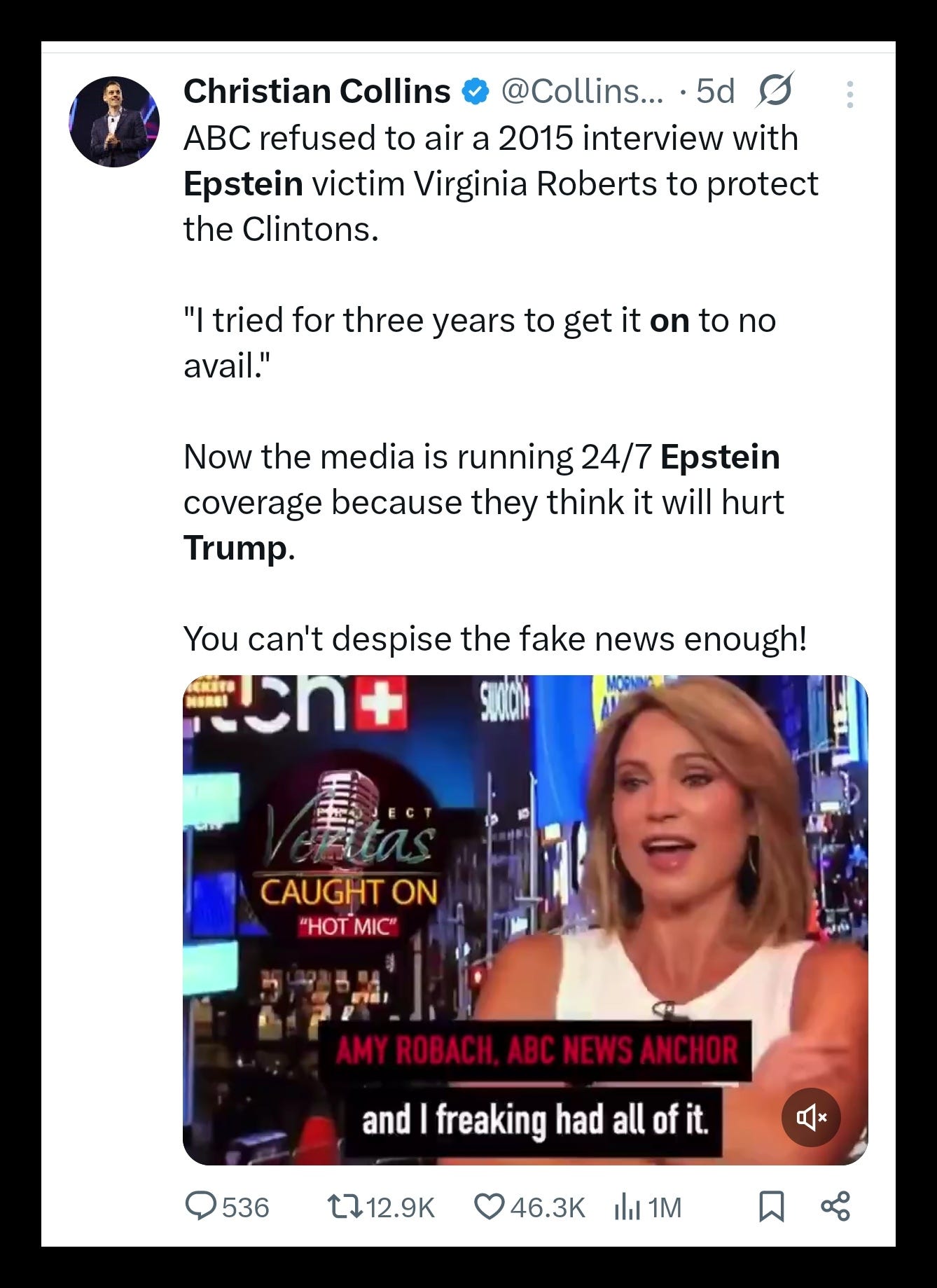
Overall, the mix of abundant documentary evidence, survivor testimony, bipartisan political action, and rupturing media permissions creates a high probability that Trump’s political authority will diminish materially. That outcome will not be instantaneous nor uniformly distributed across the electorate, but the combination of moral exposure and elite fragmentation alters the trajectory for a leader whose power depended on a tight, disciplined coalition. Independent investigators and commentators who traced Epstein’s networks predicted precisely this kind of downstream effect once sealed files entered the public domain. Whitney Webb, Julie K. Brown, and other reporters produced the factual scaffolding that turned survivor testimony into political action, and their work now amplifies the consequences of disclosure. (archive.org)
If the political system and the Department of Justice follow the evidence rather than shelter insiders, the legal and reputational erosion will extend beyond a single presidency. The files will expose patterns that implicate elites across sectors, and the electorate will face a choice between continuing tactical loyalty or demanding institutional accountability. The longer institutions delay or appear to protect implicated actors, the deeper the reputational damage to parties and the state apparatus that appeared to shield them.
For now, the most likely scenario is a protracted unravelling rather than sudden collapse. Electoral calendars, judicial processes, and partisan incentives will slow outcomes. Nevertheless, the Epstein archive has already performed one decisive function, that it removed plausible deniability and forced politicians and media figures to make visible choices that reveal where their loyalties lie. Once that choice rotates publicly, the permission structures that allowed powerful networks to persist will be much harder to reconstitute.
Authored By:
If you believe journalism should serve the public, not the powerful, and you’re in a position to help, becoming a PAID SUBSCRIBER truly makes a difference. Alternatively you can support by way of a cup of coffee:
buymeacoffee.com/ggtv


Leave a reply to Anne Cancel reply