
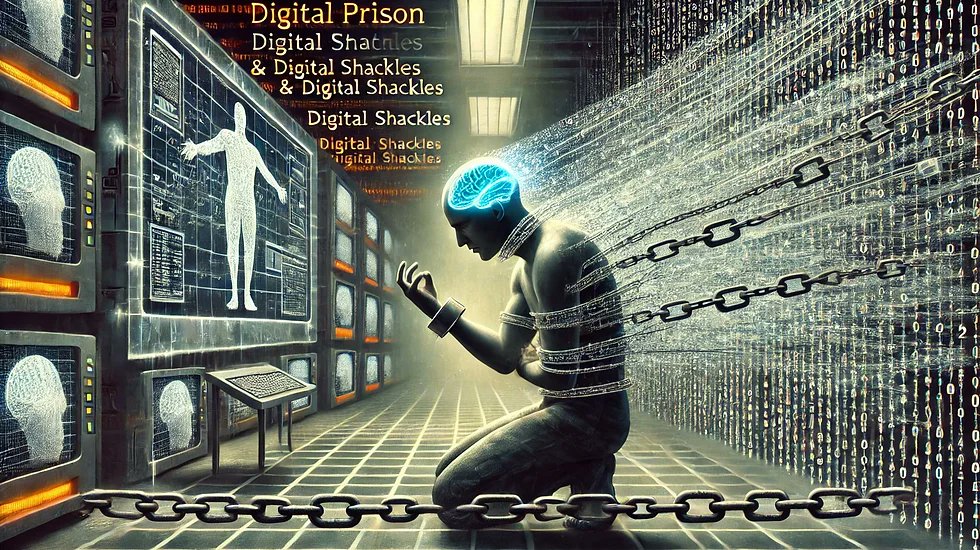
The rise of technocratic coordination, automation, centralisation, data, power, and the emergence of a digital rent society
There are moments in history when power does not merely accumulate, but consolidates into a singular, self-justifying caste, a managerial overclass of financiers, platform barons, technocrats, and ideological engineers who operate under the firm conviction that only they comprehend the trajectory of human society and therefore alone should dictate the future of all human affairs. Today, this caste has a name: the Nihilvultarch, an assemblage of authorities who increasingly coordinate their actions and unify their objectives under the guise of expertise, creating a system in which decisions are made above the level of public consent, while ordinary citizens are expected to acquiesce silently to the operational structures they impose. The public senses this concentration of authority even when mainstream discourse refuses to acknowledge it, perceiving an invisible architecture shaping their lives that is neither overtly coercive nor violently enforced, but that functions as a polite and bureaucratic enclosure, an operating system for society that was never voted into existence, yet demands universal compliance and conformity to its protocols.
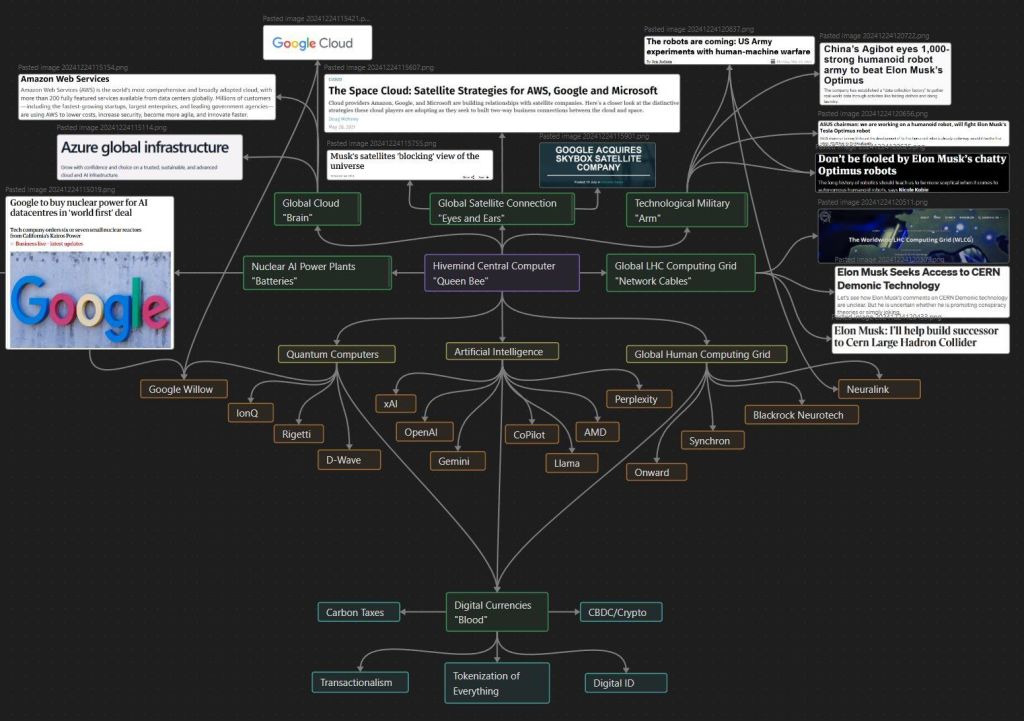
Confusion on the part of the public is not an accident, nor a reflection of ignorance, but a deliberate outcome of a system designed to obscure its true intentions through language, acronyms, frameworks, and initiatives that sound humanitarian but serve as instruments of enclosure and control. The Nihilvultarch communicates through phrases such as “stakeholder capitalism,” “energy transitions,” “digital identity,” and “global coordination,” all of which present themselves as benevolent necessities while the tangible effect of these programs is identical across borders: authority drifts upward, accountability flows downward, and individual freedom is steadily eroded in the space between, creating a society in which compliance is normalised, autonomy is conditional, and the perception of choice is meticulously managed by unseen actors whose power is unchallenged. This architecture of domination is revealed not in official statements, which are often designed to mislead, but in recurring patterns of control that manifest across information, mobility, energy, finance, and narrative, forming the skeletal framework of a society in which citizenship is replaced by permission and participation is replaced by access.
He states that the intention is to restrict human movement through smart cities, which he describes as an expanded form of the 15-minute city concept.)
Information, once a contested and decentralized resource, is now carefully curated by platforms, payment processors, and algorithmic authorities capable of amplifying or suppressing visibility with the flick of a digital switch, turning the public square into a moderated forum where the moderators remain invisible and unaccountable while consensus is manufactured rather than debated, and public opinion is shaped not by discourse but by controlled exposure to selective knowledge. Similarly, digital identity systems that were once voluntary conveniences now consolidate financial access, medical records, travel permissions, and online authentication into single infrastructure points, meaning that dissent becomes a problem of permissions rather than enforcement, and the denial of a QR code can substitute for traditional coercive instruments. Energy, too, has been centralized under the guise of ecological stewardship, with grids, regulations, and pricing structures designed to impose personal restrictions and rising costs on ordinary citizens while granting exceptions and privileges to the architects of these systems, ensuring that control over energy simultaneously becomes control over all other dependent societal functions. Financial systems are likewise evolving into instruments of administrative authority, as programmable money and the gradual elimination of cash create conditions in which those who design financial software acquire sovereignty over transactions, independence, and economic life itself, thereby consolidating power in a domain previously considered neutral. At the same time, narrative control is achieved through the mystique of technological complexity, where artificial intelligence, biotechnology, automation, and cybernetics are presented as domains too intricate, too essential, and too dangerous to be entrusted to democratic governance, thereby creating justification for oversight by expert councils, public-private partnerships, and global regulatory bodies whose true function is to centralize decision-making and diminish public agency.
The moral rationale offered by the Nihilvultarch is deceptively simple: the planet is fragile, the public is irrational, and the future is too complex to be navigated without centralized management, and therefore stewardship by a managerial class becomes not merely advisable, but necessary. This paternalistic logic is historically familiar, repeating the same pattern seen in empires from Rome to Britain to the Soviet Union, where obedience is justified by the promise of survival, protection, or progress, and every generation is told that freedom must be temporarily suspended for its own benefit. Yet the reality of this governance reveals the lie behind the rhetoric, as decisions are imposed without consent, policies are implemented without debate, and mandates are issued without limits, demonstrating a profound and consistent disdain for the very populations over which authority is exercised. The Nihilvultarch does not perceive itself as rulers but as custodians, a perception that confers upon them a false sense of indispensability and immunity from replacement, ensuring that centralized control becomes a self-perpetuating assumption rather than a subject of democratic contestation.
Unlike historical tyrannies, the modern overclass governs primarily through psychological influence rather than physical enforcement, shaping the public’s assumptions, anxieties, and expectations through a carefully curated architecture of perception. The system is designed to overwhelm citizens with simultaneous crises of health, climate, technology, and geopolitics, ensuring that attention is fragmented and scrutiny of individual policies becomes impossible. It intentionally fosters social fragmentation, dividing populations into micro-demographic factions whose energy is expended on internal conflict rather than noticing the gradual constriction of permissible social and political life. Finally, it infantilizes the public by portraying societal complexity as inaccessible, encouraging reliance on self-proclaimed experts while framing dissent as either heretical or irrational, creating a culture in which ordinary individuals become passive spectators in their own society rather than active participants, a dynamic that transforms soft influence into enduring control without overt coercion.
Despite the apparent omnipotence of this managerial overclass, it suffers from a fundamental structural vulnerability: the attempt to centralize authority in an era defined by distributed, networked, and rapid technological change is inherently unsustainable. The modern world is too complex, too interconnected, and too unpredictable for a small elite to control fully, and the centralization projects of the Nihilvultarch risk collapse under their own weight if the public does not adopt proactive measures to decentralize, diversify, and redistribute power at every level of society. An alternative approach, which can be termed Counter-Architecture, emphasises the deliberate creation of distributed power structures at local, civic, financial, technological, and social levels, enabling communities and individuals to maintain autonomy and resilience without relying on permission from distant authorities, while fostering capacities that cannot easily be captured, managed, or suppressed.
Economic decentralization becomes the cornerstone of resistance, as local public banks, credit unions, cooperative lending, and small and medium enterprises provide communities with resilience against global shocks and administrative control, ensuring that financial independence translates directly into political independence. Digital resistance and financial privacy are equally essential, requiring adoption of privacy-preserving technologies, decentralized communication tools, robust encryption, and opposition to programmable finance systems that grant third parties the ability to restrict transactions, because control over money is control over life itself. Political countermeasures demand transparency, enforceable sunset clauses on emergency powers, referendums for critical digital infrastructure, and vigorous anti-monopoly enforcement, recognising that democratic legitimacy is impossible when governance processes are opaque, unaccountable, and insulated from scrutiny. Communities must simultaneously invest in parallel institutions capable of maintaining essential functions, including local food systems, independent schools, alternative medical networks, energy cooperatives, and civic defense organisations, creating distributed capabilities that cannot be centrally enclosed. Independent media and narrative decentralization also form a critical component of resistance, through citizen journalism, local media alliances, algorithmic transparency, and civic media literacy, ensuring that narrative control is widely distributed rather than concentrated in the hands of the few. International solidarity among free nations that resist hyper-centralization enables the sharing of technologies, strategies, and legal frameworks, counteracting the administrative homogenization of global governance and preserving sovereignty as a form of structural resistance. Finally, personal autonomy is indispensable, encompassing digital hygiene, data minimization, diversified income streams, and the retention of analog skills, reinforcing individual independence as the building block of societal resilience.
The Nihilvultarch assumes that technological inevitability, public distraction, and societal fatigue will ensure acquiescence, yet these assumptions underestimate human resilience, ingenuity, and the innate desire for autonomy. Human beings are not designed to function as supervised subjects or input nodes for someone else’s grand design, and they retain the capacity to reclaim control over their own lives, communities, and futures without permission. Every administrative system, no matter how meticulously constructed, collapses once legitimacy is withdrawn and public consent ceases, and the blueprint of the Nihilvultarch, despite its apparent sophistication, is no exception. The task of the citizenry is to build parallel architectures, decentralize authority, preserve autonomy, and assert agency at every level, creating a society that cannot be enclosed, monitored, or fully managed by an external elite. History has repeatedly demonstrated that no centralized power withstands the cumulative determination of a population invested in the preservation of life, liberty, and human dignity, and the current era is no exception.
The future is not a predetermined outcome dictated by managerial elites but a contested space in which the public, if organized and deliberate, can determine its own trajectory. The existing administrative overclass has constructed its architecture, but it will inevitably face limits imposed by complexity, scale, and human agency. The public holds the tools to reclaim autonomy, restructure society, and create distributed, resilient, and autonomous institutions that preserve freedom without relying on permission from the self-appointed custodians of authority. History is observing, and the next chapter remains unwritten; it belongs to those who have the foresight, determination, and organizational capacity to resist enclosure and reconstruct social order from the ground up, ensuring that authority is accountable, liberty is preserved, and human dignity is no longer conditional upon compliance with systems designed to concentrate power in the hands of a few.
Choose more of this:
• Use cash
• Barter and trade
• Grow your own food
• Hold silver and gold
• Own your home when possible
• Meet people face-to-face
• Limit Zoom and online meetings
• Choose mechanical over fully digital tech
• Avoid digital-only currencies
• Use privacy-focused or simple phones
• Minimize apps
• Spend time in nature
• Say no to biometrics
• Protect your personal data
The less dependent we are on digital systems, the more power we keep.
We can push back together.)
Authored By: Global Geopolitics
If you believe journalism should serve the public, not the powerful, and you’re in a position to help, becoming a PAID SUBSCRIBER truly makes a difference. Alternatively you can support by way of a cup of coffee:
buymeacoffee.com/ggtv
https://ko-fi.com/globalgeopolitics


Leave a reply to swimming49175c102e Cancel reply