
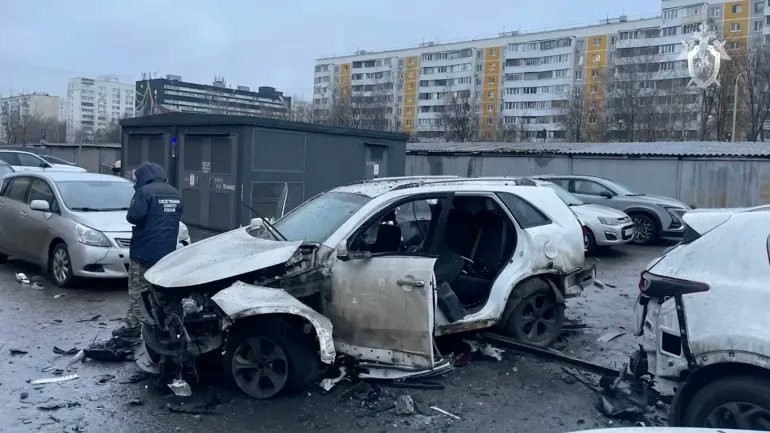
Russian officials say investigators are examining whether Ukrainian intelligence carried out the bombing, citing Kyiv’s past use of explosives in targeted killings of officials.
The war between Russia and Ukraine appears to have crossed a new threshold, with violence reaching into the Russian capital.
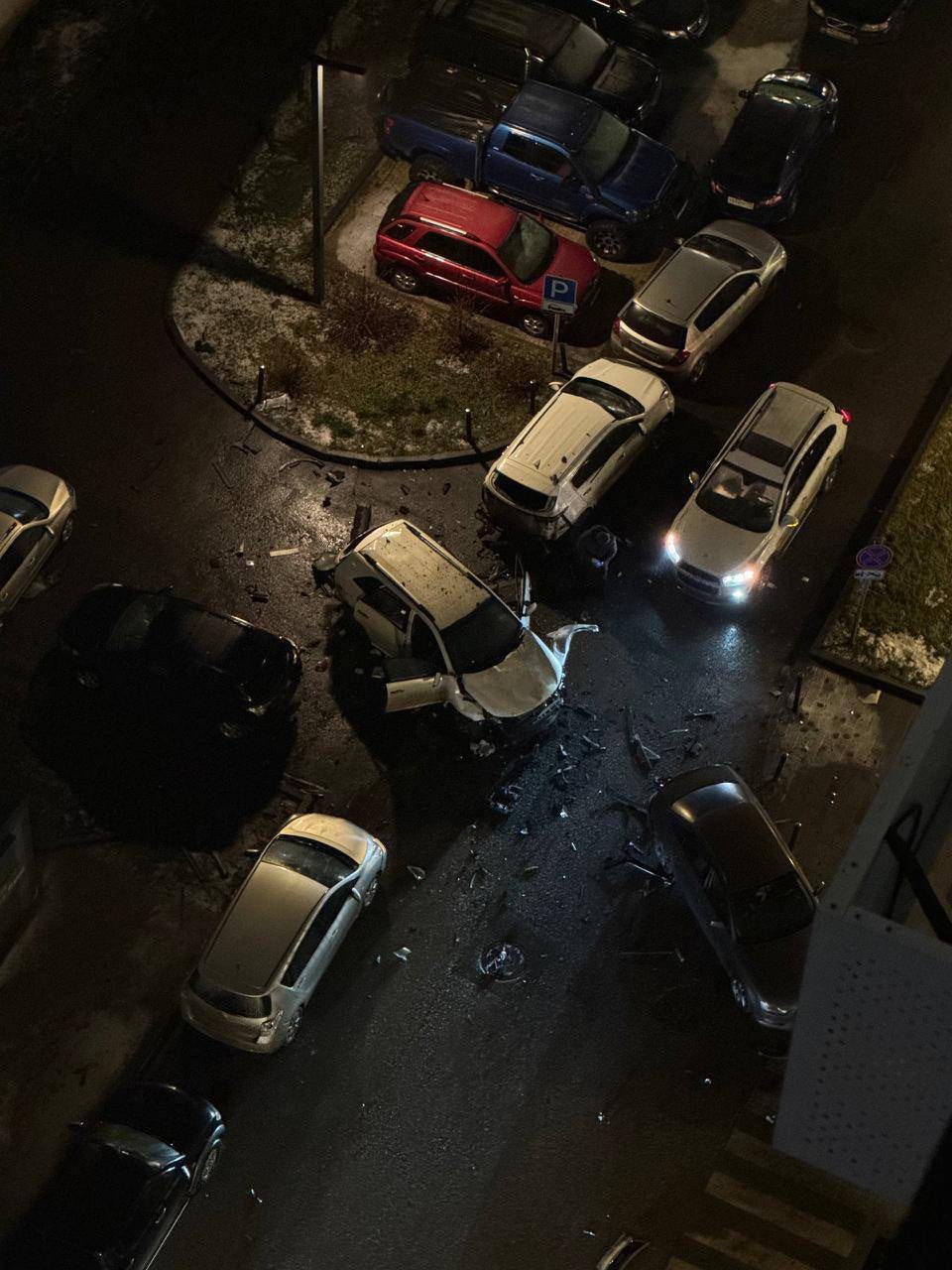
A car bomb exploded in southern Moscow, killing Fanil Sarvarov, a lieutenant general and head of the Russian General Staff’s Operational Training Directorate, according to Russian investigators. The device was planted beneath his vehicle in a residential parking area on Yaseneva Street and detonated while he was inside the car.
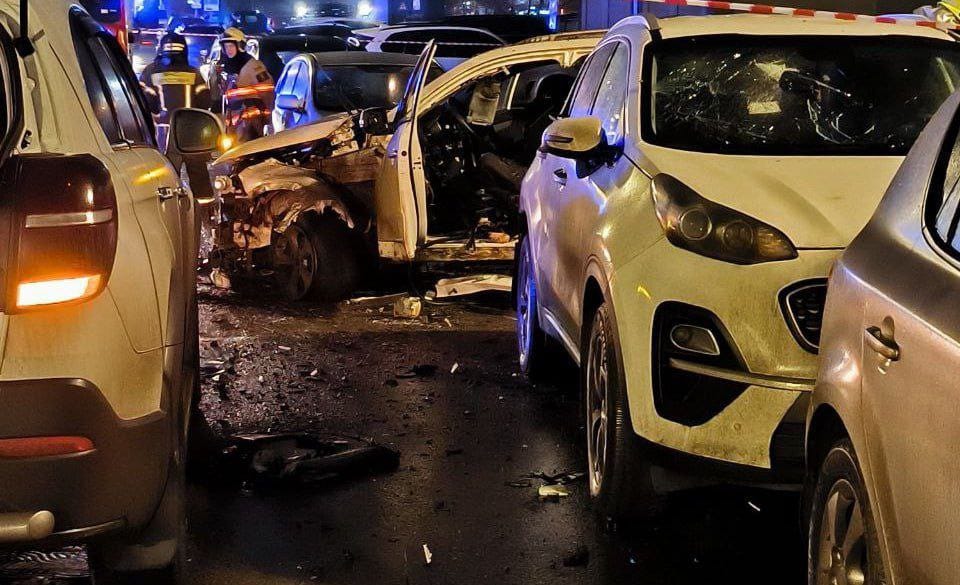
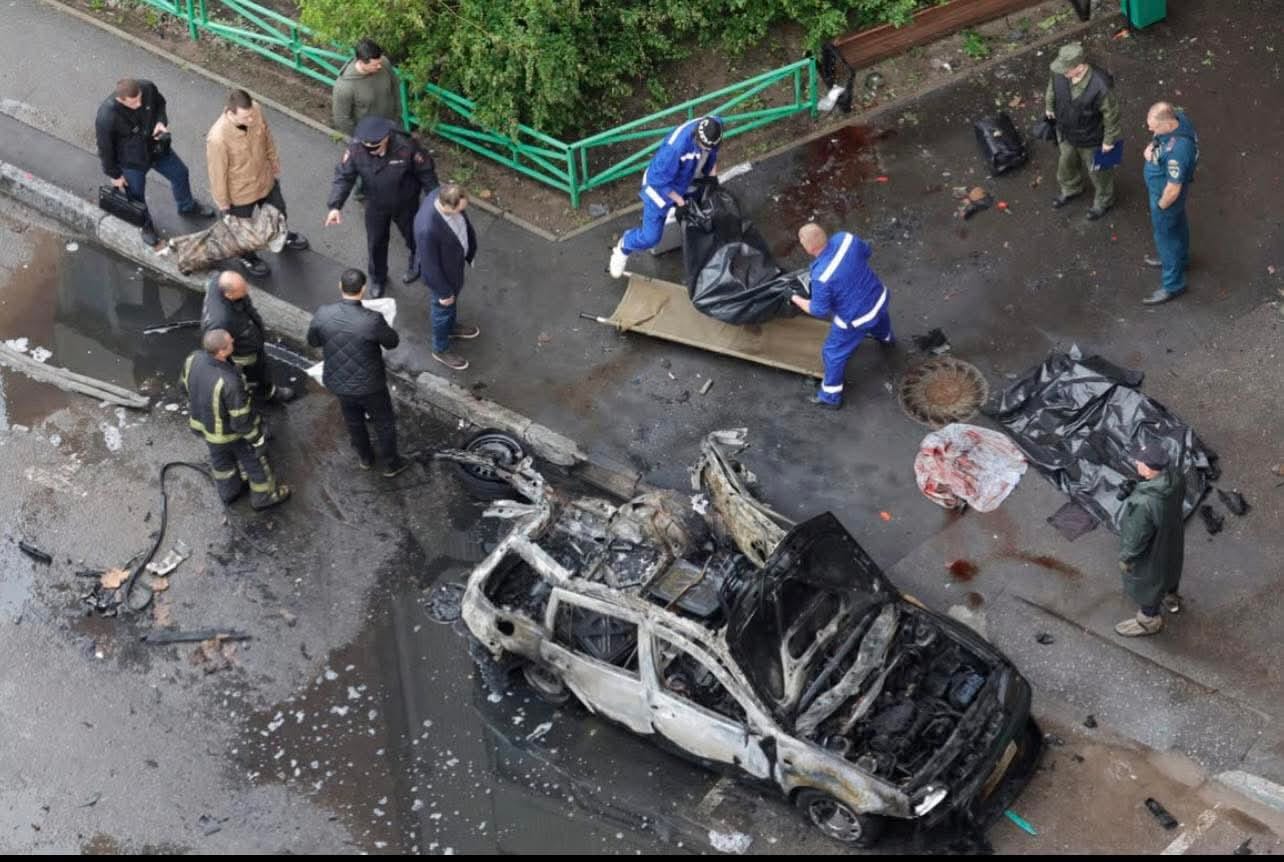
Authorities described the attack as a high-profile assassination and opened a criminal investigation into murder and illegal explosives trafficking. Officials have not publicly identified suspects, but investigators are examining several possible motives, including the involvement of Ukrainian-linked operatives.
If such involvement is confirmed, the attack would represent a significant escalation. Ukraine has previously carried out targeted operations in occupied territories and against Russian military-related figures, but a fatal attack on a senior officer inside Moscow would mark a sharp expansion of the conflict’s geographic and psychological boundaries.
The killing undermines the long-held assumption that Moscow remains insulated from the war. It raises questions about the security of senior military and political figures and suggests that the conflict is no longer confined to front lines or border regions.
For Russia, the incident challenges the image of control within the capital and is likely to prompt a reassessment of internal security. For Ukraine, the attack whether officially acknowledged or not would indicate a strategy focused on striking senior leadership rather than engaging solely in conventional battlefield confrontations.
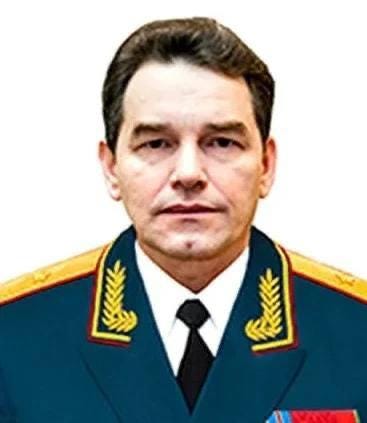
(Fanil Sarvarov, a lieutenant general and head of the Russian General Staff’s Operational Training Directorate)
Russian officials are expected to treat the incident as part of a broader pattern rather than an isolated act. How Moscow responds may shape the next phase of the war.
What is clear is that the conflict has moved closer to everyday life in Russia’s largest city, signaling a shift in how and where the war is being fought.
Authored By: Global GeoPolitics
If you believe journalism should serve the public, not the powerful, and you’re in a position to help, becoming a PAID SUBSCRIBER truly makes a difference. Alternatively you can support by way of a cup of coffee:
buymeacoffee.com/ggtv


Leave a comment