
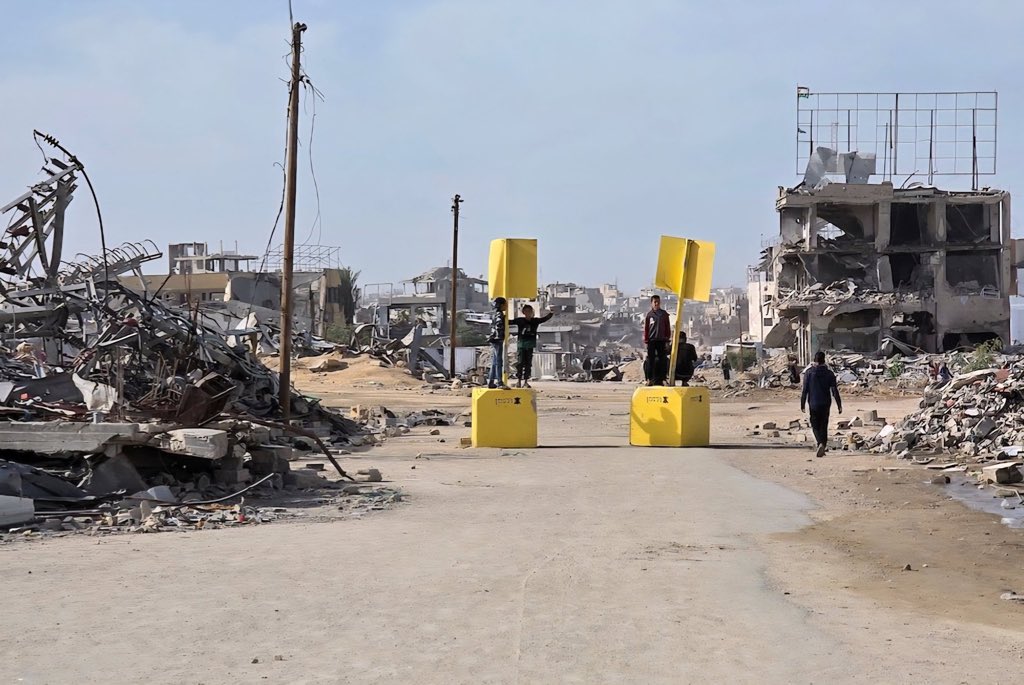
Israeli military construction inside Gaza during a US brokered ceasefire fuels accusations of de facto territorial takeover and exposes widening rifts over the future of the enclave
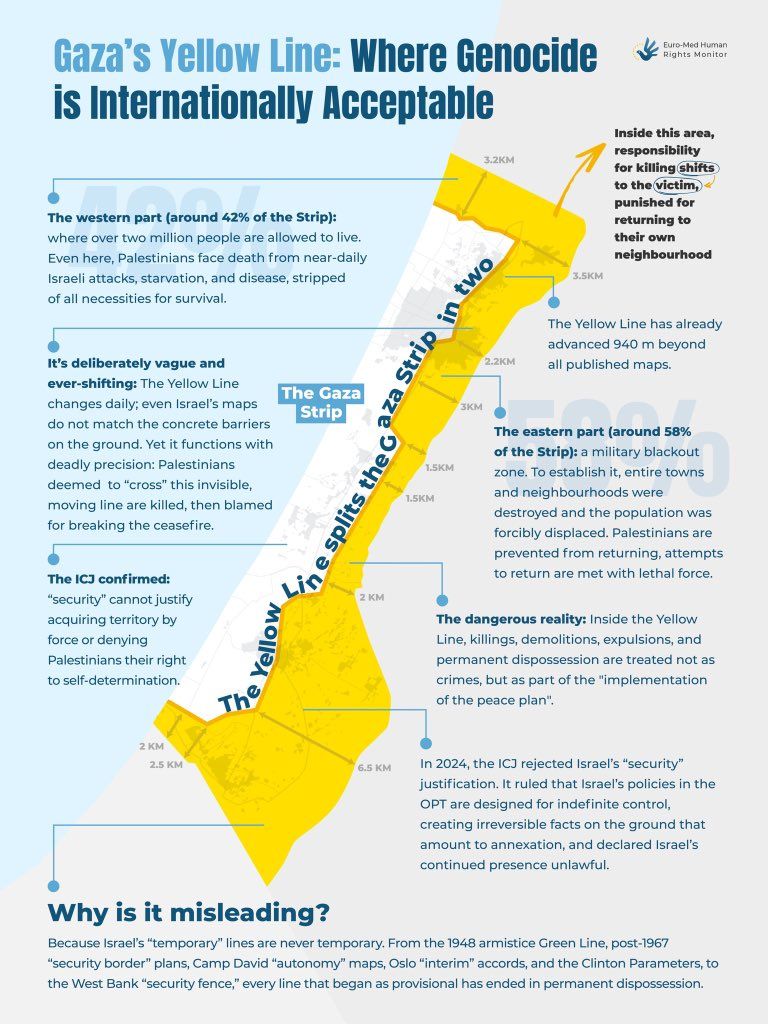
Recent satellite imagery and on-the-ground reporting indicate that Israel has maintained and expanded its military presence in the Gaza Strip following a ceasefire agreement reached in October. Under the terms of the US-brokered deal, Israeli forces were to withdraw to a demarcated boundary known as the “Yellow Line,” leaving more than half of Gaza’s territory under Israeli control while Hamas held the remainder. The line was intended as a temporary phase of a broader peace plan. (mint)
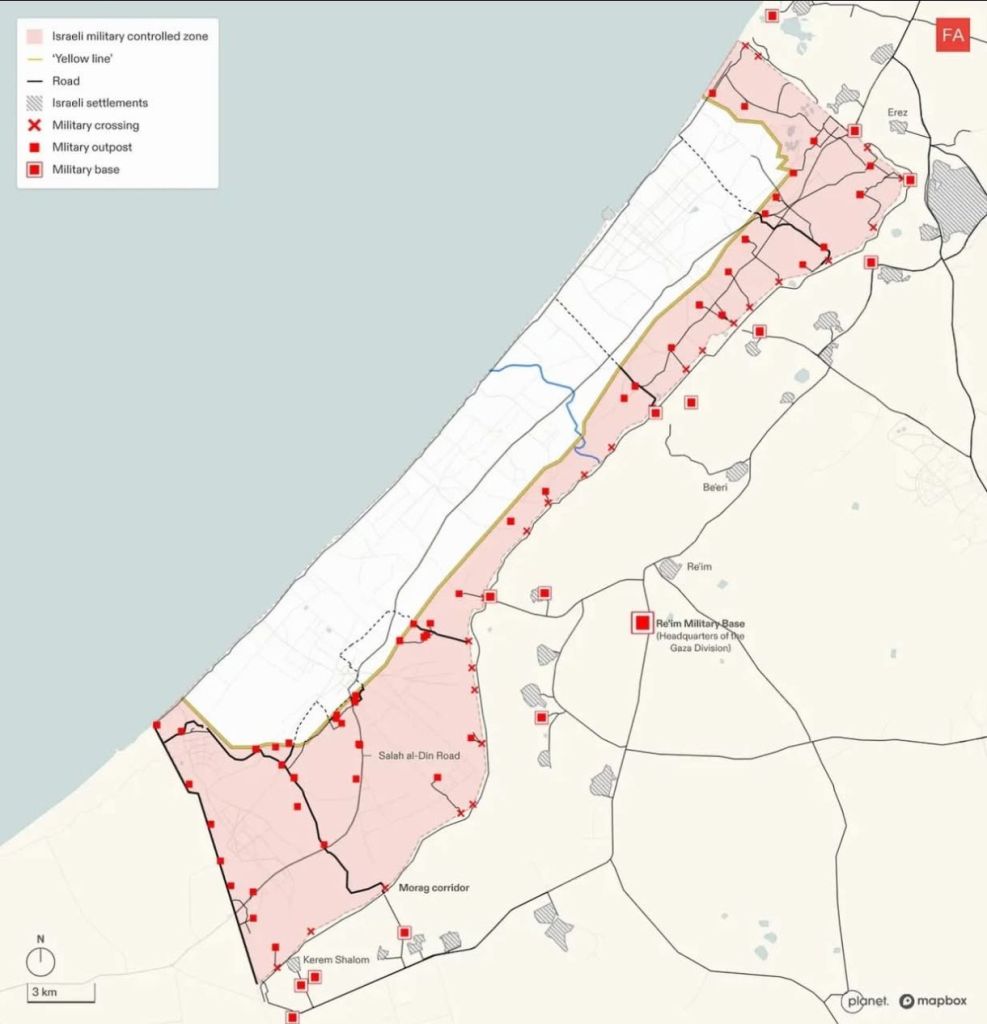
Analyses of satellite data and independent research show that Israeli forces have constructed multiple new military outposts inside areas east of the Yellow Line since the ceasefire took effect. At least 13 new positions have been established in strategic locations, and existing infrastructure has been expanded, according to imagery reviewed by Forensic Architecture and reported sources. Along with outposts, a network of roads linking these sites to Israeli bases and positions outside Gaza has been developed. (Harici)
The continued construction and reinforcement of military infrastructure have drawn concern from analysts and international observers, who describe the activity as preparing for a long-term or even permanent presence in Gaza rather than a phased withdrawal as outlined in the ceasefire plan. Satellite data also suggest ongoing demolition of civilian property in areas where new military points are being established. (Harici)
Israeli military leadership has publicly described the Yellow Line as a de facto forward defensive boundary, with senior officers saying the line will serve as a control perimeter for Israeli forces. This framing appears at odds with language in the ceasefire agreement that envisaged a progressive handover of territory to an international stabilisation force and eventual withdrawal. (mint)
The arrangement has prompted diplomatic friction. Reports suggest that Egypt has urged the United States to press Israel to adhere to agreed withdrawal terms, reflecting broader regional unease. (Middle East Monitor) Meanwhile, the White House has publicly opposed a permanent Israeli military footprint along the Yellow Line, reiterating that forces should withdraw in accordance with the ceasefire framework. (Middle East Monitor)
Critics of the current situation characterise the developments as a gradual reconfiguration of Gaza’s territorial and political landscape under the cover of ceasefire implementation. They argue that building new outposts and extending control beyond previously agreed lines uses periods of reduced hostilities to create “facts on the ground” that are difficult to reverse without significant political pressure. Proponents of Israel’s actions, by contrast, frame the presence of entrenched military positions as necessary for security, citing threats posed by militant groups and the need to protect border communities.
The situation highlights broader geopolitical tensions surrounding the Gaza ceasefire, including diverging objectives between Israeli leadership and international mediators, as well as the challenges of implementing complex post-conflict arrangements in a highly contested environment.
Authored By: Global GeoPolitics
If you believe journalism should serve the public, not the powerful, and you’re in a position to help, becoming a PAID SUBSCRIBER truly makes a difference. Alternatively you can support by way of a cup of coffee:
buymeacoffee.com/ggtv


Leave a reply to swimming49175c102e Cancel reply