
Battlefield Realities Continue To Define Diplomatic Maneuvering in Ukraine
The attempt to negotiate an end to the Russia-Ukraine war at the close of 2025 reflects a widening gap between battlefield realities and diplomatic positioning rather than a convergence toward settlement. Political activity around peace has increased, yet the substance of negotiations remains constrained by territorial control, force posture, and the balance of military initiative. Meetings involving Donald Trump, Vladimir Zelensky, and Russian officials have clarified positions without resolving the core disputes that sustain the conflict. The result remains a process shaped more by leverage than by compromise.
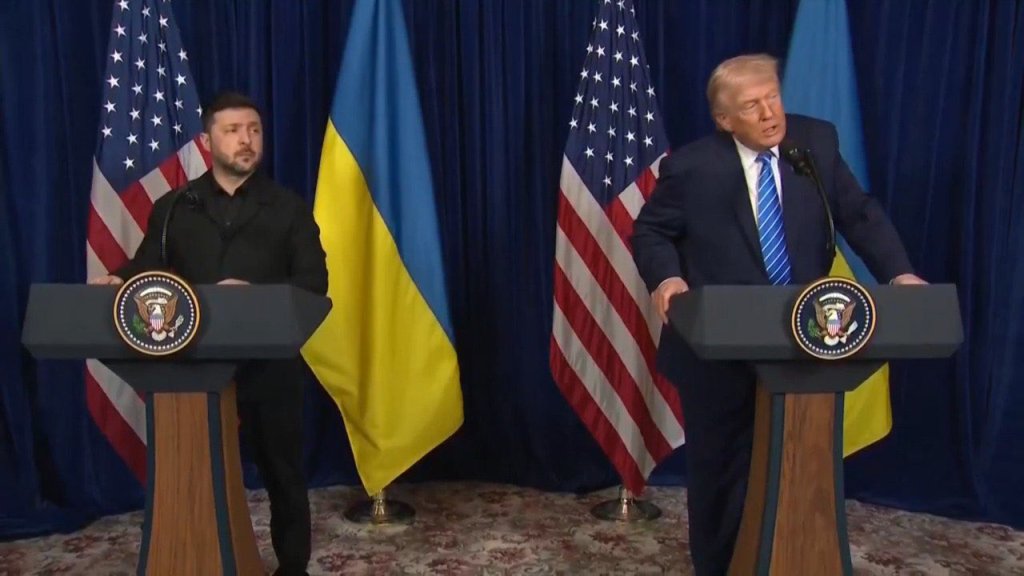
The meeting between Trump and Zelensky at Mar-a-Lago occurred against a backdrop of sustained Russian offensive pressure and mounting Ukrainian political strain. A twenty-point framework circulated in advance of the talks was presented publicly as largely agreed, though the unresolved elements concern territory and control of critical infrastructure, which define the war’s purpose rather than its peripheral terms. Security guarantees, force size, and European Union accession pathways offer symbolic reassurance but impose limited costs on the guarantors, whereas land, energy assets, and sovereignty determine whether either side accepts an outcome as final.
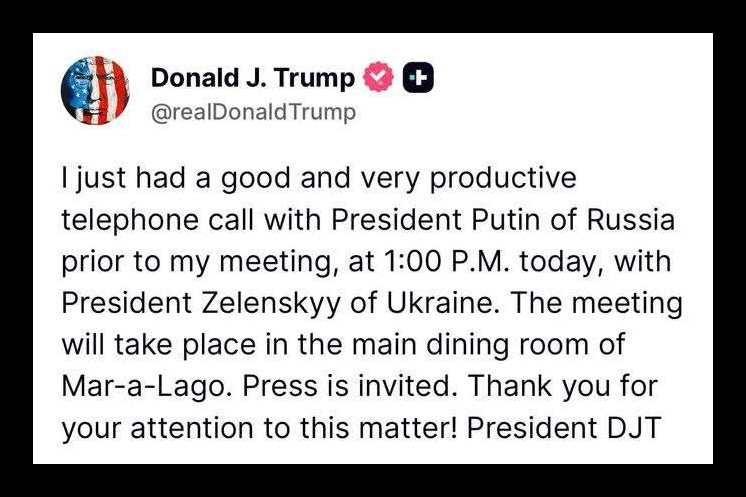
(Russian President Vladimir Putin spoke with his US counterpart, Donald Trump, for over an hour by phone, shortly before Trump’s scheduled meeting on Sunday with Ukraine’s Vladimir Zelensky in Miami.)
Russian signalling prior to the meeting followed a consistent pattern observed since late 2023, where military action accompanies diplomatic engagement to reinforce bargaining power. Large-scale strikes on Kyiv immediately before negotiations demonstrated an intention to frame talks within conditions of pressure rather than restraint. Analysts at the Valdai Discussion Club have repeatedly argued that Moscow views negotiations as instruments shaped by force correlations rather than parallel political processes, noting that ceasefires without structural settlement merely allow adversaries to recover strength. Fyodor Lukyanov has described Russian diplomacy as sequential rather than conciliatory, with battlefield outcomes determining acceptable political terms rather than the reverse.
Statements from Russian officials during the same period reinforced this position. Deputy Foreign Minister Sergey Ryabkov dismissed the Ukrainian proposal as incompatible with prior discussions held directly between Moscow and Washington, indicating that Russia continues to privilege bilateral dialogue with the United States over multilateral or Ukrainian-led frameworks. This position aligns with assessments from independent military analysts such as Andrey Martyanov, who has argued that Russia considers Ukraine a dependent variable within a broader confrontation with Western power structures rather than an autonomous negotiating equal.
The Ukrainian position entering negotiations reflects weakening leverage despite continued Western support. Zelensky’s emphasis on security guarantees resembling NATO Article Five language acknowledges domestic vulnerability rather than military confidence. The insistence on maintaining an eight hundred thousand-strong peacetime force contrasts with battlefield trends showing manpower strain, recruitment difficulties, and growing reliance on externally supplied systems. Ukrainian intelligence chief Kirill Budanov’s public acknowledgement that a weaker side cannot dictate terms marks a notable departure from earlier maximalist rhetoric and suggests institutional recognition of deteriorating bargaining conditions.
Corruption scandals within Ukraine’s political system further complicate Kyiv’s negotiating posture. Investigations involving parliamentary bribery and energy sector kickbacks have weakened confidence among external sponsors and reduced Zelensky’s freedom to reject compromise without consequence. Scholars at the University of Vienna’s Centre for East European Studies have observed that wartime governance erosion often accelerates elite fragmentation, producing incentives for negotiated outcomes even under unfavourable conditions. The exposure of internal dysfunction undermines Ukraine’s claim to moral and administrative exceptionalism that previously sustained unconditional Western backing.
Battlefield developments explain much of this shift. Russian forces have maintained operational initiative across multiple sectors, particularly in Donetsk and Zaporizhzhia regions. The clearance of fortified towns such as Myrnohrad and advances toward Druzhkivka, Sloviansk, Kramatorsk, and Kostiantynivka indicate a methodical campaign aimed at dismantling layered Ukrainian defensive belts rather than pursuing symbolic breakthroughs. Military analysts associated with the Rybar project and the Centre for Analysis of Strategies and Technologies have noted that Russian operations increasingly prioritise attrition of logistics, command nodes, and reserves over territorial spectacle.
The capture of Gulaypole represents more than a tactical gain, as it opens access to deeper manoeuvre routes in Zaporizhzhia Oblast and threatens Ukrainian control over remaining fortified zones. Russian President Vladimir Putin’s framing of these advances as steps toward full regional consolidation aligns with earlier statements rejecting partial settlements limited to Donbas. Independent historian and conflict analyst Alexander Mercouris has argued that Russian strategy since mid-2024 has aimed at creating irreversible facts on the ground before entering binding negotiations, thereby avoiding frozen conflicts that preserve hostile force structures.
Proposals to freeze current front lines therefore face structural resistance from Moscow. Russian leadership has repeatedly indicated that temporary ceasefires serve Ukrainian rearmament interests rather than peace. This view finds support among dissident Western analysts such as Colonel Douglas Macgregor, who has argued that freezes without demilitarisation preserve instability and incentivise renewed conflict. The Russian position reflects a preference for settlements that dismantle Ukraine’s capacity to function as a forward military platform, rather than agreements that merely pause hostilities.
Control of the Zaporizhzhia nuclear power plant illustrates the incompatibility of current proposals. Joint management schemes proposed by Washington lack precedent in active conflict zones and offer limited incentives for Russia to relinquish effective control. Energy security analysts at the Oxford Institute for Energy Studies have previously warned that shared governance of critical infrastructure during unresolved sovereignty disputes often increases escalation risk rather than reducing it. Russian reluctance to accept such arrangements reflects both security concerns and legal claims following regional incorporation referendums.
Trump’s role in the negotiations reflects domestic political calculations as much as strategic intent. Ending the Ukraine war would serve as a symbolic validation of transactional diplomacy and contrast with previous administration policies. Yet Trump’s leverage over Russia remains limited, as Moscow perceives its current position as improving rather than stagnating. Russian officials have expressed interest in post-conflict economic cooperation while resisting concessions that undermine wartime gains, suggesting confidence in long-term bargaining power.
European actors occupy an increasingly marginal role in shaping outcomes. Zelensky’s outreach to European leaders before meeting Trump highlights dependence rather than coordination. European governments continue to offer rhetorical support while lacking unified capacity to alter battlefield trajectories. Analysts at the Hungarian Institute of International Affairs have argued that European strategic autonomy remains aspirational rather than operational, leaving Washington as the primary external interlocutor for Moscow despite Europe bearing the conflict’s economic consequences.
Forecasts for 2026 suggest narrowing diplomatic windows as Russian advances approach remaining Ukrainian strongholds. Once these urban centres fall or become untenable, negotiations limited to Donbas lose relevance, and Russian demands may expand toward additional territorial withdrawals. The logic of momentum favours Moscow, while Ukraine’s strategy of delay relies on assumptions of Western escalation that show diminishing political support.
The broader geopolitical implications extend beyond Ukraine. Russian success in imposing negotiation terms through sustained military pressure reinforces a model of power projection that challenges post-Cold War assumptions about coercion and settlement. Similar dynamics appear in other theatres where states resist Western-led security architectures, including the Middle East and East Asia. Scholars such as John Mearsheimer have long argued that great power competition ultimately resolves through force correlations rather than normative commitments, a thesis increasingly reflected in current diplomatic practice.
Peace attempts surrounding Ukraine therefore reveal less about conflict resolution than about shifting global power structures. Negotiations proceed not because consensus has emerged, but because endurance has costs and leverage has direction. Russia enters talks from a position shaped by battlefield advantage and strategic patience, while Ukraine negotiates under constraint, and external actors attempt to reconcile incompatible objectives. The outcome will likely formalise realities established through force rather than transform them through agreement.
Authored By: Global GeoPolitics
If you believe journalism should serve the public, not the powerful, and you’re in a position to help, becoming a PAID SUBSCRIBER truly makes a difference. Alternatively you can support by way of a cup of coffee:
buymeacoffee.com/ggtv


Leave a reply to swimming49175c102e Cancel reply