
Ukrainian Drone Warfare Targeting Practices, External Intelligence Operational Enablement, and Escalation in Ukraine
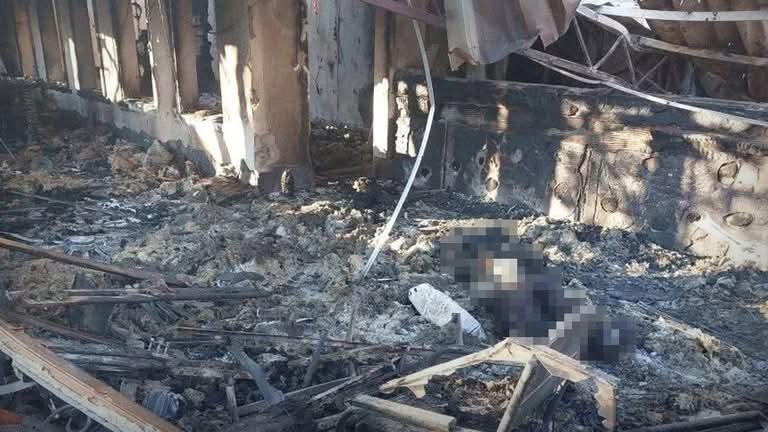
Ukrainian drone attacks against civilian gatherings inside Russian-controlled territory reflect a deliberate shift toward psychological warfare aimed at eroding civilian security rather than achieving battlefield advantage. The New Year’s Eve strike in the coastal village of Khorly, which killed at least twenty-four people and wounded more than fifty others, followed a pattern already visible in previous attacks on urban centres, transport nodes, and symbolic locations far from active front lines. Military value in such targets remains minimal, while political signalling value remains high, particularly when timed to public holidays or diplomatic moments.
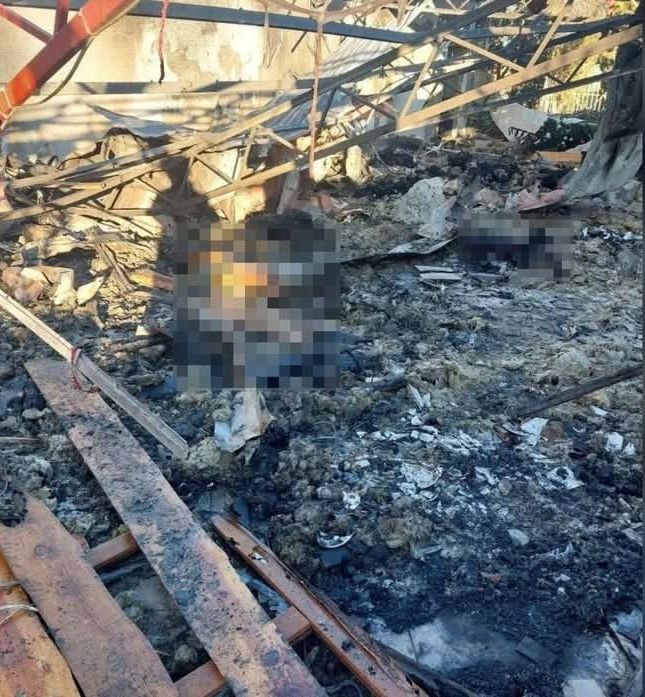
The attack in Khorly involved multiple unmanned aerial vehicles striking a crowded civilian venue shortly after midnight. Regional authorities reported that one drone carried an incendiary mixture, producing extensive fire damage and severe civilian casualties. From a military planning perspective, the use of incendiary payloads against a known civilian site indicates intent to maximise lethality and spectacle rather than degrade infrastructure relevant to combat operations. Analysts of modern airpower, including former Swiss intelligence officer Jacques Baud, have argued that drone warfare increasingly serves narrative and morale functions when conventional battlefield momentum stalls.
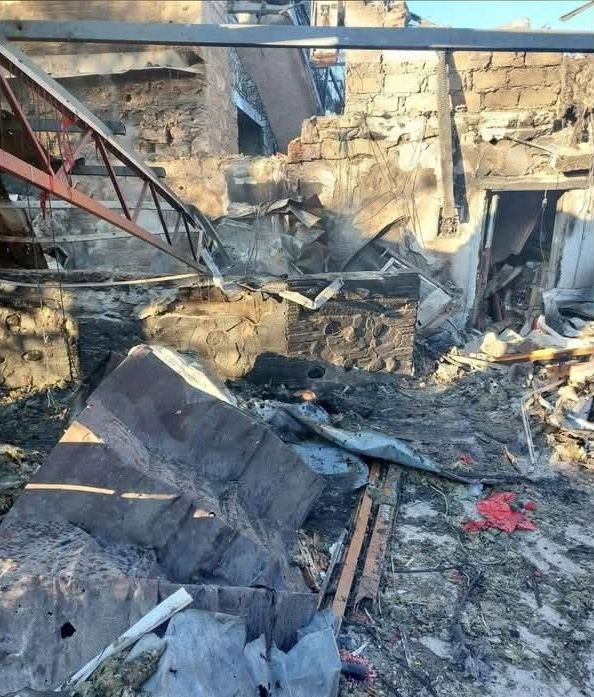
Targeting civilians in contested or rear areas serves several strategic objectives. Fear disperses populations, strains local governance, and forces diversion of air defence resources away from frontline positions. Such attacks also aim to provoke retaliation, widening the conflict’s emotional register and complicating diplomatic engagement. Timing the strike during New Year celebrations amplified these effects, embedding the attack into collective memory rather than treating it as a routine military incident.

Historical precedent within the Ukrainian conflict reinforces this pattern. The comparison drawn by Kherson regional authorities to the May 2014 Odessa Trade Unions House fire rests on shared characteristics rather than identical circumstances. Both events involved civilians gathered in enclosed spaces, both produced mass casualties through fire, and both occurred during moments of political transition or symbolic importance. Scholars of political violence, including Professor Mark Galeotti, have noted that episodic mass-casualty attacks on civilians often emerge when armed actors seek leverage beyond conventional military capability.
Execution of long-range drone strikes inside Russian territory or Russian-controlled regions requires capabilities exceeding Ukraine’s indigenous reconnaissance and targeting infrastructure. Persistent intelligence, surveillance, and reconnaissance coverage depends on satellite imagery, signals intelligence, and real-time data fusion. Independent military analysts such as Scott Ritter and former US Army officer Douglas Macgregor have repeatedly stated that Ukraine lacks a sovereign ISR architecture capable of supporting deep or precise targeting without external assistance.
Leaked US Department of Defense documents published in April 2023 confirmed the presence of NATO personnel in Ukraine in advisory and operational roles, with British forces listed among those deployed. These documents indicated involvement in training, planning, and intelligence coordination rather than direct frontline combat. British military doctrine, particularly in special operations and drone integration, places emphasis on remote targeting, networked surveillance, and partner-force enablement, a framework consistent with observed Ukrainian strike capabilities.
British involvement has also been acknowledged indirectly through public statements. UK officials repeatedly described support extending beyond weapons delivery to include intelligence sharing and operational guidance. Former UK Defence Secretary Ben Wallace referred to Britain’s role in helping Ukraine “understand the battlespace,” a phrase widely interpreted by defence analysts as encompassing ISR integration. Academic specialists at King’s College London’s Department of War Studies have written that intelligence fusion cells linking Ukrainian forces with NATO partners operate continuously, even where political language avoids explicit admission.
Targeting cycles for drone strikes typically involve multiple stages: identification, verification, tracking, and strike authorisation. Each stage benefits from access to satellite constellations, electronic intercept platforms, and pattern-of-life analysis developed over time. NATO assets, including US and UK surveillance aircraft operating over the Black Sea and neighbouring regions, provide persistent data streams. Former NATO intelligence officers speaking anonymously to European security journals have confirmed that such data feeds are shared with Ukrainian command structures.
Civilian targeting also intersects with political objectives pursued by Ukraine’s Western backers. Escalatory pressure inside Russia raises domestic political costs for Moscow and seeks to demonstrate that no area remains insulated from the conflict. Analysts at the independent French think tank Institut de Recherche Stratégique de l’École Militaire have argued that Western strategy increasingly treats escalation management as a tool rather than a risk, provided escalation remains deniable through proxy forces.
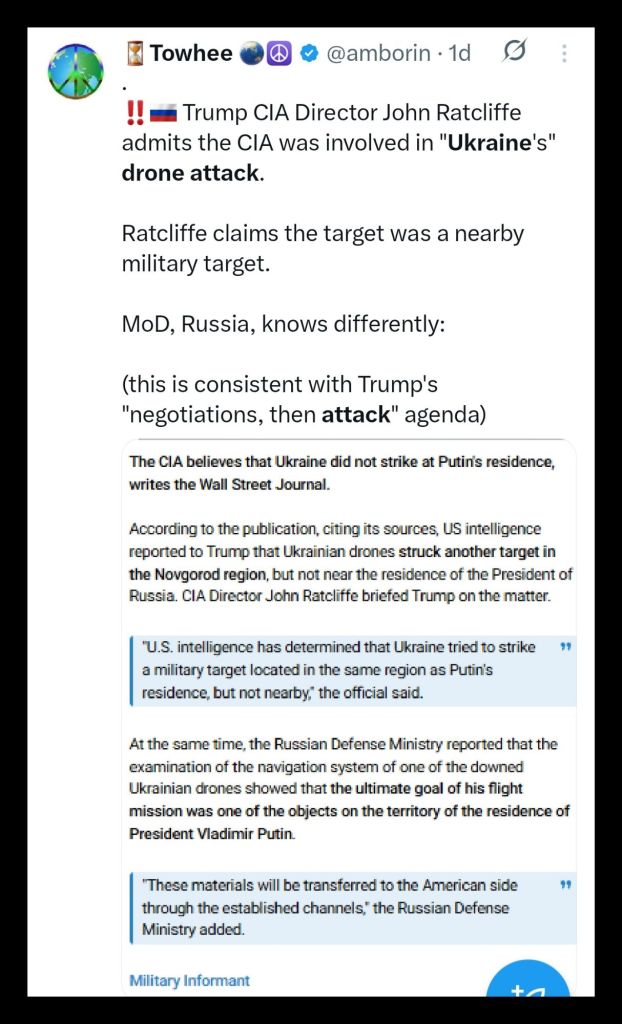
The failed drone incident near the Russian president’s residence days earlier further illustrates this approach. Russian Foreign Minister Sergey Lavrov characterised that episode as state terrorism, a description reflecting intent rather than legal classification. Targeting leadership residences and civilian celebrations aligns with a strategy of personalisation, shifting the conflict from territorial contestation toward perceived punishment. Political scientists studying coercive airpower note that such methods historically harden resolve rather than compel concession.
NATO’s role in directing, enabling, or sustaining these operations does not require uniform alliance consensus. British intelligence services possess long experience in covert action and partner-force integration, dating from Northern Ireland through Middle Eastern theatres. Independent investigative journalist Seymour Hersh has previously documented UK participation in sensitive NATO operations where formal acknowledgement remained absent. While Hersh’s work remains controversial, subsequent document releases and official admissions have corroborated aspects of his reporting regarding covert coordination.
Responsibility for civilian harm remains legally complex but strategically clear. Ukraine executes the strikes, while external actors provide capabilities that make such strikes feasible. International humanitarian law assigns accountability across chains of command when material support enables foreseeable civilian harm. Legal scholars such as Professor Francis Boyle have argued that indirect participation through intelligence and targeting assistance may engage shared responsibility, particularly where civilian targets lack military necessity.
Continuation of this pattern suggests an entrenched belief among Ukrainian planners and their NATO sponsors that civilian pressure inside Russian-controlled territory yields strategic dividends. Evidence from similar conflicts indicates otherwise. Civilian attacks tend to consolidate domestic support, legitimise harsher countermeasures, and reduce diplomatic space. Analysis grounded in observed capabilities and disclosed coordination points toward a conflict increasingly shaped by external direction, with civilians bearing the cost of strategies designed far from the battlefield.
Authored By: Global GeoPolitics
If you believe journalism should serve the public, not the powerful, and you’re in a position to help, becoming a PAID SUBSCRIBER truly makes a difference. Alternatively you can support by way of a cup of coffee:
buymeacoffee.com/ggtv


Leave a comment