

The Architecture of Digital Serfdom and the End of Economic Liberty
The global financial system is undergoing a coordinated seizure of economic sovereignty that follows a long-established pattern rooted in the central banking warfare model. This model rests on the fusion of monetary creation with coercive state power, enforced through military, intelligence, legal, and surveillance systems. The intended architecture of control shifts away from traditional conquest toward subtle economic levers: debt issuance, inflation engineering, regulatory compliance, and integrated digital enforcement that reach into daily economic life.
For more than five centuries, Western states have organised their political economies around centralised banking arrangements designed to fund war and consolidate authority. Early central banks emerged when private banking interests offered governments large loans to wage war, in exchange for guaranteed repayment streams backed by permanent taxation powers. This arrangement altered the relationship between citizens and the state, because taxation became a standing obligation to service debt rather than a temporary contribution for public needs. Richard Werner has stated plainly that “the primary reason for the creation of central banks was the financing of war, not the management of the economy,” reflecting documentary evidence from early European banking charters and parliamentary records.
In Britain, the creation of the Bank of England followed this logic directly, as war with France produced fiscal demands that exceeded existing revenue systems. In the United States, the Federal Reserve Act coincided with the introduction of federal income taxation, creating a closed loop where government borrowing, taxation, and monetary issuance became structurally interdependent. Werner has argued that income tax systems were institutionalised to guarantee repayment to banking interests, stating that “taxation was introduced not for public services, but to service government debt created by private money creation.”
Central banks do not just manage the money supply; they act as a monopoly that controls all currency and credit. Central banks create base money electronically and lend it into existence, primarily through government bond purchases and lending facilities that privilege financial institutions. Commercial banks then expand this base through credit creation, issuing loans that become deposits, multiplying money supply without corresponding increases in productive output. This mechanism means money enters the economy through financial channels first, inflating asset prices before wages or consumer incomes adjust.
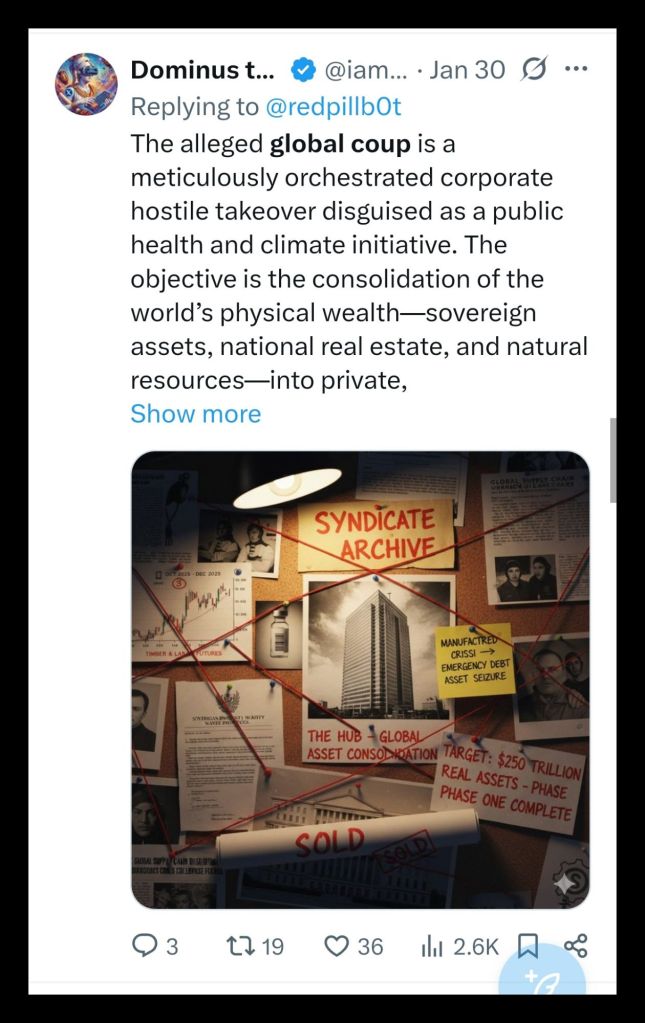
G. Edward Griffin described this arrangement with unusual clarity, writing that “the Federal Reserve is a cartel whose purpose is to protect its members from competition.” He further stated that “inflation is not an accident of the system, it is the system,” emphasising that purchasing power erosion is a predictable outcome of controlled credit expansion. This sequencing ensures that those closest to money creation acquire assets at lower real cost, while the broader population absorbs inflation through rising living expenses.
The enforcement dimension of this system is inseparable from monetary policy itself. Military power underwrites state currencies internationally, intelligence agencies protect financial infrastructure, and regulatory authorities suppress competing monetary systems. Catherine Austin Fitts has stated that “central banking works because the enforcement arm makes sure everyone uses the currency,” describing money creation and surveillance as components of a single control architecture. Financial systems now generate detailed behavioural data, allowing authorities to monitor compliance and economic activity at granular levels.
Central banks do not fund wars at a constant rate; instead, they follow a cycle. They provide massive amounts of credit and liquidity to support military efforts when needed, which is then followed by periods of economic correction, debt management, and austerity once the conflict ends. So, periods of credit expansion eventually produce instability, followed by crisis, restructuring, and consolidation. Historical analysis shows major monetary resets occurring roughly every eighty to one hundred and twenty years, often accompanied by currency changes and legal transformation. These resets are not random, they emerge when accumulated debt and institutional complexity exceed manageable limits within the existing system.
Public emergencies play a functional role in enabling these resets. Plague laws and emergency legislation allow governments to suspend normal economic and legal constraints, centralise authority, and suppress resistance. Catherine Austin Fitts has explained that “plagues and resets go together because plague laws allow you to do a lot of the things you need to do during a reset,” highlighting the structural role of emergency powers rather than their incidental use.
By 2018, senior monetary officials acknowledged privately that existing frameworks were unsustainable. That year saw agreement on accounting changes that reduced transparency around government liabilities, allowing expanded credit creation without public scrutiny. In 2019, central bankers met at Jackson Hole to review a coordinated response plan prepared by former central banking officials and large asset managers. The proposal, later described as “going direct,” advocated bypassing traditional banking channels and injecting money straight into financial markets and institutions.
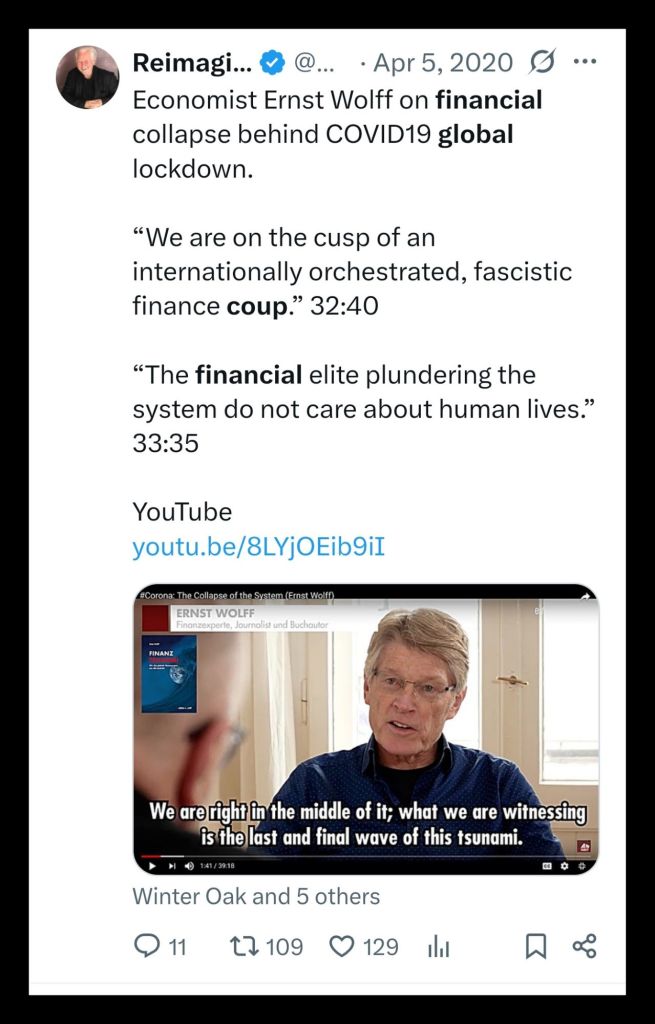
Implementation began before any declared crisis, with preparatory policy shifts underway by late 2019. When the pandemic emerged, it supplied the legal and psychological conditions required to execute the reset at scale. Trillions of dollars were created and channelled directly into financial markets, while small businesses and local economies were forcibly shut down through emergency orders.
This process produced a deliberate squeeze between large capital holders and the productive base of society. Publicly traded corporations increased market share while small enterprises lost revenue, liquidity, and solvency. Asset prices rose sharply during economic contraction, demonstrating that monetary expansion targeted consolidation rather than broad recovery. Catherine Austin Fitts described this plainly, stating that “this was a taking,” and explaining that monetary injection combined with shutdowns allowed large players to acquire assets from distressed owners.
Empirical outcomes confirm this consolidation effect. Hundreds of new billionaires emerged during the pandemic period, while a substantial proportion of small businesses permanently closed. Urban commercial districts experienced widespread destruction of independent retail, accelerating property acquisition by institutional investors. These outcomes were not accidental side effects, but consistent with the logic of directing liquidity toward asset markets while restricting real economic activity.
Understanding how banking mechanics function clarifies why these outcomes are predictable rather than anomalous. Central banks create reserves and purchase government debt, expanding their balance sheets. Governments spend this newly created money into the economy, while commercial banks expand lending against reserves. Credit growth inflates asset prices because financial assets are purchased with newly created money, while consumer prices rise later as increased money supply chases constrained goods and services. When crises occur, central banks intervene to stabilise asset markets, reinforcing expectations that losses will be socialised while gains remain private.
Digitalisation represents the next enforcement phase of this same structure. Central bank digital currencies enable programmable money, transaction monitoring, and conditional access to economic participation. Surveillance transforms monetary policy into behavioural governance, where financial inclusion depends on compliance with regulatory and political requirements. This replaces overt physical force with automated constraint, while preserving centralised authority over economic life.
The warfare model has therefore evolved from cannon and conscription toward debt, data, and dependency, without altering its underlying logic. Central banks create money, allied institutions enforce acceptance, crises justify expansion, and resets consolidate control. The current period reflects the unravelling of the previous monetary order and its replacement with a more restrictive, digitally enforced system.
Authored By: Global GeoPolitics
This is a reader-supported publication. I cannot do this without your support. If you believe journalism should serve the public, not the powerful, and you’re in a position to help, becoming a PAID SUBSCRIBER truly makes a difference. Alternatively you can support by way of a cup of coffee:
buymeacoffee.com/ggtv


Leave a comment