
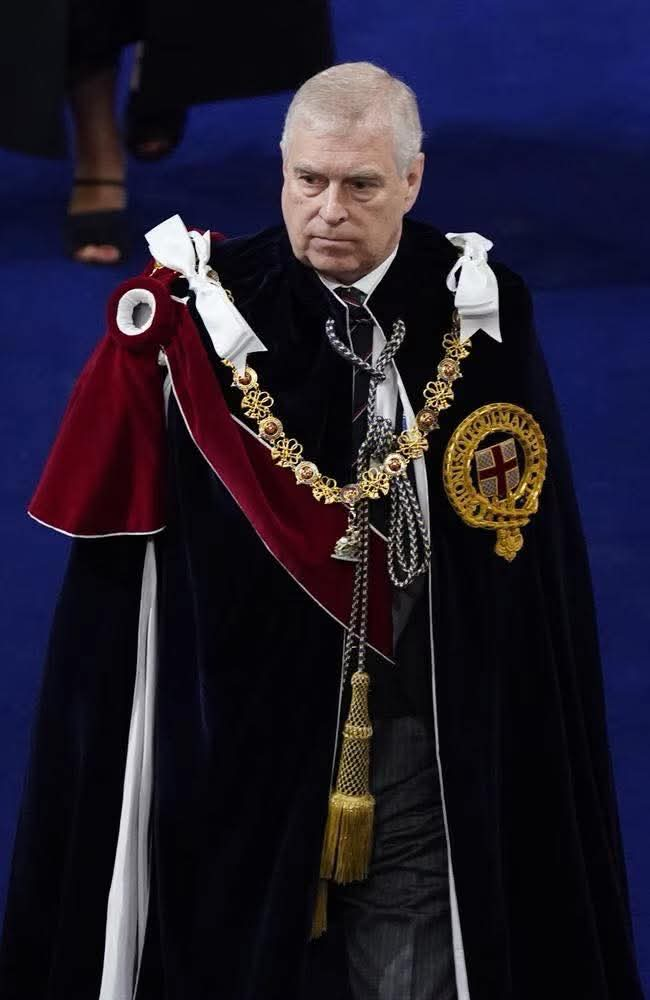
The Prince Andrew Arrest and the Unravelling of Western Moral Claims
Public trust in Western institutions has suffered grave damage following renewed scrutiny surrounding Prince Andrew and the late Jeffrey Epstein. Fresh disclosures released through United States government channels have revived allegations once treated as contained scandals. More than three million documents have entered the public domain, carrying claims that reach into politics, finance, royalty, academia, intelligence services, and transnational philanthropy.

Among those documents sits an anonymous Federal Bureau of Investigation witness statement alleging abuse during the mid-1990s. The witness claims they were a child between six and eight years of age when drugged and transported to gatherings described as organised sexual exploitation. The statement alleges the presence of the Duke of York at such events and describes violence, including being struck by a vehicle said to have been driven by him. The same account alleges that Ghislaine Maxwell restrained and tortured the child while adult men observed. Maxwell now serves a twenty-year federal sentence following conviction in the United States for trafficking offences connected to Epstein.

Police in Britain have confirmed that Andrew was briefly detained for alleged misconduct in public office after material suggested he may have shared sensitive information during his tenure as trade envoy from 2001 to 2011. Release followed on the same day pending further investigation, and no charge has been brought in relation to sexual abuse or trafficking. Andrew denies wrongdoing. Settlement with Virginia Giuffre in 2022 over civil claims connected to events in the early 2000s resulted in the removal of his honorary military roles and royal patronages. Giuffre’s later published memoir renewed public attention and intensified scrutiny of earlier institutional responses.
The monarchy, represented by King Charles III, has sought distance from the affair, yet reputational harm extends beyond a single individual. Public confidence rests upon the belief that rank confers responsibility rather than immunity from investigation. Allegations of such gravity erode that belief because perception of unequal accountability breeds structural distrust across generations. Political theorist Samuel Huntington argued that institutions decay when norms no longer restrain elite behaviour, and the present controversy reflects precisely such a legitimacy strain.

Political reaction abroad has compounded the problem for Western governments. Kirill Dmitriev, adviser to Vladimir Putin, described Andrew and his associates as satanic and framed the scandal as evidence of moral decay within liberal Western circles. Russian foreign ministry spokesperson Maria Zakharova accused Western authorities of shielding influential figures connected to Epstein. Moscow’s narrative strategy draws upon longstanding claims by Putin that Western elites preach virtue while practising corruption, a theme he articulated in speeches criticising what he called the erosion of traditional values and institutional integrity. Such statements serve geopolitical objectives, yet they gain traction when Western legal processes appear hesitant or opaque.
Western leaders have repeatedly claimed higher standards of governance and accountability. Military interventions and sanctions regimes have often been justified on grounds of human rights protection and anti-corruption enforcement. Political philosopher Edward Gibbon described imperial decline as a slow corrosion of civic virtue among ruling classes, and critics now invoke similar language when examining elite networks linked to Epstein. The network operated for years despite complaints, civil settlements, and a prior conviction secured in 2008 through a controversial plea arrangement. Prosecutorial discretion, intelligence connections, and financial leverage have attracted sustained scrutiny from legislators including Thomas Massie and Ro Khanna, who have argued that transparency remains incomplete.
Names appearing within released documents include prominent business and political figures who deny wrongdoing and face no charges. Among them are Donald Trump, Bill Gates, and Elon Musk. Inclusion within documentary records does not establish criminal liability, yet public association with a convicted trafficker carries unavoidable reputational consequence. Sociologist Vilfredo Pareto observed that elites often circulate but rarely surrender structural privilege voluntarily, and suspicion of protective solidarity intensifies when no senior figure faces indictment.

Domestic political effects have surfaced in Britain, where senior officials have resigned amid controversy linked to disclosures. Parliamentary questions continue regarding adequacy of earlier investigations and intelligence assessments. Officials emphasise due process, yet delay between allegation and resolution widens scepticism among citizens already distrustful of concentrated power. Historian Dan Snow warned that the royal family could face a “terminal crisis” if accountability proves partial or selective, adding that Andrew has “disgraced himself, he’s disgraced the Royal Family, and he’s disgraced our country.”

The Federal Bureau of Investigation, identified in documents as recipient of witness testimony, faces renewed inquiry regarding handling of early complaints. Congressional critics including Rand Paul and former congressman Ron Paul have questioned why extensive material has not yet produced wider criminal proceedings. The 2008 plea agreement that allowed Epstein to avoid federal prosecution remains a focal point of public anger. Patterns of deference toward wealthy or connected suspects undermine assertions that Western justice operates without fear or favour.

Psychological research on elite deviance suggests that prolonged insulation from consequence fosters moral disengagement and group rationalisation. Criminologist Edwin Sutherland’s theory of differential association proposed that criminal norms can develop within tightly bonded networks when reinforcement outweighs sanction. The Epstein affair reflects a social milieu in which wealth, access, and celebrity reduced barriers to scrutiny. When such dynamics intersect with state institutions, public perception shifts from isolated wrongdoing toward systemic moral failure.
Authoritarian governments have capitalised upon that perception. Russian commentary portrays the scandal as confirmation that Western democracies protect insiders while condemning rivals. Chinese state media has echoed similar themes, arguing that moral authority claimed by Atlantic institutions lacks credibility. Moral authority functions as strategic capital within international relations theory, and erosion of that capital weakens alliance cohesion and diplomatic leverage.

Social media has accelerated narrative formation. Dmitriev’s remarks circulated globally within minutes, shaping discourse before formal investigative updates could be issued. Digital platforms allow foreign officials to bypass traditional editorial filters and speak directly to Western audiences. Governments that once controlled reputational damage through managed press briefings now confront decentralised scrutiny moving faster than institutional response.
Legal standards require presumption of innocence until conviction. Public discourse, however, evaluates institutions through patterns rather than isolated verdicts. Allegations involving minors command exceptional gravity, and absence of visible accountability magnifies outrage. Reform Party figure Robert Jenrick described allegations against Andrew as “very, very serious” and urged focus upon victims rather than status of the accused.

Strategic consequences extend beyond immediate reputational harm. Alliances built upon shared democratic values depend upon trust in internal governance of each member state. When scandals suggest elite protection networks, partners question sincerity of reform commitments. Historian Niall Ferguson has written that great powers decline when ruling classes lose moral confidence and public consent simultaneously, and present conditions echo elements of that historical pattern.
Policy response therefore requires structural reform rather than rhetorical reassurance. Greater transparency in plea negotiations, statutory limits upon discretionary immunity, and independent oversight of intelligence relationships with private individuals would address structural vulnerabilities. Parliamentary and congressional committees possess authority to compel testimony and publish comprehensive findings, and such authority must be exercised without partisan shielding or institutional defensiveness.
Western governments have long presented themselves as models of lawful order grounded in constitutional restraint and equal justice. Sustaining that claim requires consistent enforcement against holders of high office as rigorously as against ordinary citizens without privilege or influence. History records repeated instances where empires weakened not primarily through foreign invasion but through internal decay of legitimacy and elite impunity. The later Roman Empire witnessed concentration of wealth, erosion of civic virtue, and widening distance between ruling classes and common citizens, conditions described by historians such as Edward Gibbon as precursors to imperial decline. The Bourbon monarchy in eighteenth-century France sustained fiscal crisis and public resentment partly because aristocratic privilege insulated elites from taxation and accountability, a structural imbalance that fuelled revolutionary collapse. The Russian Empire under Nicholas II suffered similar legitimacy erosion when court corruption, perceived moral decadence, and administrative incompetence undermined confidence in state authority, contributing to revolutionary upheaval in 1917. In each case, moral failure within governing strata corroded public trust long before formal collapse became visible, and reform arrived too late to restore confidence.
Contemporary critics argue that the United States exhibits parallel warning signs associated with imperial overstretch and elite insulation from consequence. Political scientist Chalmers Johnson warned that military expansion abroad combined with declining accountability at home generates what he termed imperial blowback, weakening republican foundations. Economic historian Paul Kennedy observed that great powers falter when internal governance fails to match external ambition, particularly when public faith in institutions diminishes. The Epstein affair has exposed vulnerabilities that adversaries exploit and citizens scrutinise, reinforcing perceptions of a two-tier system in which influence moderates consequence. Survey data from institutions such as Gallup and Pew Research Center show declining trust in Congress, courts, and executive leadership over successive decades, suggesting structural confidence erosion rather than episodic scandal fatigue. Restoration of moral standing therefore depends upon demonstrable accountability, equal application of law across wealth and status, and institutional willingness to confront misconduct without regard to political or financial power.
Authored By: Global GeoPolitics
Thank you for visiting. This is a reader-supported publication. I cannot do this without your support. If you believe journalism should serve the public, not the powerful, and you’re in a position to help, becoming a PAID SUBSCRIBER truly makes a difference. Alternatively you can support by way of a cup of coffee:
https://buymeacoffee.com/ggtv |


Leave a comment