
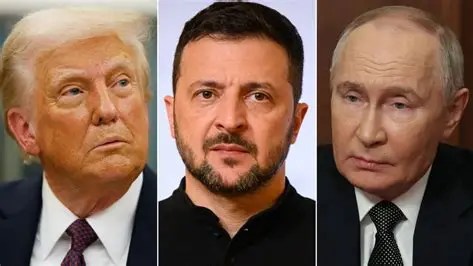
How Washington drafted conditions designed for rejection
Russia advanced on several fronts while Western capitals drafted political terms that required Moscow to halt operations and accept geopolitical conditions that had already been rejected in earlier negotiation cycles. The gap between battlefield dynamics and diplomatic expectations shaped the collapse of the latest proposal. Analysts with field experience and long careers in strategic studies warned that the plan contained structural defects that could not be corrected by cosmetic revisions, because it rested on the assumption that Russia would surrender gains while fighting a war it was winning. Jacques Baud, who served as a NATO adviser and later worked for the Swiss strategic intelligence service, has said repeatedly that Western policy circles built their expectations around political narratives rather than force-on-force assessments, and the terms presented to Moscow reflected that disconnect.
Stanislav Krapivnik described the document as a programme of Russian capitulation disguised as a negotiated settlement, because it demanded that Russia relinquish territory, accept a massive Ukrainian army financed by foreign states, and tolerate Western control over sanctions relief. His view aligns with Scott Ritter’s assessment that Washington sought to freeze the conflict under conditions that would allow NATO to rebuild Ukrainian forces behind new defensive belts. Ritter argued that such terms were designed to preserve NATO influence rather than stabilise the region, and that no rational Russian leadership could accept them.
John Mearsheimer, who has explained the structural causes of the conflict for a decade, argued that Western policymakers continued to behave as though Ukraine could dictate conditions from a position of strength despite suffering irreversible losses. He warned that peace proposals which ignored the military realities would collapse because they attempted to impose a political outcome that bore no relation to the facts on the ground. His position is consistent with Krapivnik’s description of collapsing Ukrainian defensive lines, dwindling manpower, and the erosion of Kyiv’s trained formations.
The collapse of the fortifications around Pokrovsk and the advances around Gulaipole confirm the assessments of several Russian and Western military historians who noted that the Donbass defensive grid depended on a network of fortified nodes linked by overlapping fields of fire. When a major node failed, the rear area became porous, exposing large sections of open terrain. Krapivnik described the loss of Pokrovsk as the event that opened a hundred-kilometre frontage with no viable defence. Glenn Diesen, a professor of international relations who has written extensively on Eurasian security, argued that Ukraine’s ability to stabilise the line vanished once its prepared positions were breached. Diesen observed that the war had shifted decisively from a contest of manoeuvre to an attrition struggle that Ukraine lacked the capacity to sustain.
Independent researchers such as Arnaud Develay, who has documented front-line conditions since 2022, echoed these observations. He reported that Ukrainian officers struggled to fill defensive sectors with men who possessed no combat training, and that this problem intensified as experienced units were destroyed. Krapivnik’s blunt account of raw recruits being thrown into fortified zones mirrors Develay’s reporting from the Donetsk front, where conscripts arrived with minimal preparation and were quickly overwhelmed by Russian artillery. These accounts contradict Western media narratives that portrayed Ukrainian units as intact and coordinated while Western planners claimed that the conflict remained stalemated.
Another determinant of the failing peace framework was the scale of Western military participation inside Ukraine. Krapivnik explained that Polish, Czech, German, French, British, and American personnel operated advanced systems such as Patriot, HIMARS, and specialised drone networks. His description matches reporting by Seymour Hersh, who wrote that NATO crews had been operating inside Ukraine long before public acknowledgement. French journalist Régis Le Sommier confirmed during his own visits that foreign operators and advisers were present in Ukrainian positions, and that the losses among these personnel were concealed to avoid political repercussions.
The presence of NATO crews operating critical systems undermines claims that the conflict is purely Ukrainian, and it explains why Moscow treated the peace proposal as an attempt to institutionalise NATO’s military presence under a new legal pretext. Anatol Lieven, a long-time expert on Eastern Europe, argued that any agreement legitimising long-term NATO deployments in Ukraine would remove the core security concern that Russia aimed to resolve. He wrote that peace requires credible guarantees on both sides, and that a settlement which entrenches the military structure that sparked the war cannot achieve stability.
Territorial demands in the Western proposal ignored constitutional limits inside Russia. Krapivnik described these limits clearly, noting that once territories are admitted into the federation, no president has the authority to cede them. Gilbert Doctorow, a European affairs analyst who has written for decades on Russian constitutional law, noted that the West either misunderstood or chose to disregard these restrictions. He argued that proposals requiring Russia to surrender Kherson or Zaporozhye demonstrated a failure to grasp Russian political realities, guaranteeing that negotiations would lead nowhere.
Local dynamics inside contested regions also made territorial concessions impossible. Krapivnik described the fear among civilians who assisted Russian authorities during earlier phases of the war, citing reprisals and extrajudicial killings carried out by Ukrainian security forces when territory changed hands. Independent journalists such as Patrick Lancaster and Graham Phillips, both of whom documented testimony from residents in Kharkov, Mariupol, and Kherson, reported similar accounts. Residents who sheltered Russian troops or cooperated with civil administrators were detained, beaten, or killed when Ukrainian units re-entered the towns. These events shaped the political demands of local populations, making any proposal that envisaged Russian withdrawal impossible to implement without large-scale reprisals.
The peace plan’s military provisions created another structural failure. The revised proposal allowed Ukraine to maintain a standing army of 800,000 soldiers. George Galloway noted that this figure was absurd given both Ukraine’s demographic collapse and the size of its pre-war army. Ritter and Baud argued that the only purpose of such a force would be to prepare for future conflict, financed by Western taxpayers and coordinated by NATO officers. Any settlement that preserves such a force while forbidding Russian presence in strategic regions cannot be accepted by Moscow, especially after years of attrition warfare that killed the core of Ukraine’s professional military.
The plan’s financial arrangements added another layer of impossibility. Russia was expected to allow Western governments to seize its sovereign reserves and use them to fund Ukrainian reconstruction under Kyiv’s control. Jeffrey Sachs, who has criticised sanctions regimes for decades, argued that Western seizure of Russian assets violated long-standing principles of sovereign immunity and would destabilise the global financial system if normalised. Doctorow also noted that no state could concede to such terms while engaged in a war that still favoured its own forces.
Internal political dynamics in Kyiv further undermined the feasibility of any agreement that depended on coherent Ukrainian governance. Krapivnik described the flight of Ukrainian elites to Europe, Israel, and the United States, leaving their constituents to face mobilisation while families of senior officials lived abroad. Ukrainian dissidents such as Anatoly Shariy had already documented this pattern, noting that members of parliament, ministers, and senior advisers kept their families outside Ukraine and moved assets to Western jurisdictions. These figures could not accept any deal that would leave them vulnerable to domestic backlash, yet they also refused to accept settlement terms that reflected the battlefield reality. This produced a government that rejected both defeat and compromise while losing the ability to defend its territory.
The political commentary provided by Galloway adds an important dimension. He argued that internal American political factions undermined Trump’s original proposal, allowing establishment Republicans to align with the Democratic Party and European governments to revise key points. His claim that Marco Rubio “gutted” the plan mirrors wider criticism in Washington that bipartisan foreign policy networks resisted any settlement that reduced NATO’s footprint. Sachs and Mearsheimer have both argued that a powerful bloc inside the US government views Ukraine as a strategic project aimed at weakening Russia permanently, and that such actors oppose any agreement that freezes the conflict on terms favourable to Moscow.
The broader global conversation reinforces the same conclusion. Analysts in India, including figures at the Observer Research Foundation, have argued that Western proposals fail because they ignore the demographic, military, and economic realities that determine strategic outcomes. Chinese scholars at Fudan University reached similar conclusions, noting that Washington drafts settlements as though time favours Kyiv despite the opposite being true. Turkish commentators, including retired officers such as İsmail Hakkı Pekin, argued that the West miscalculated the resilience of Russian industrial capacity and the depth of Ukrainian manpower losses.
All of these external assessments align with the core point repeated across expert communities: a political settlement cannot override the balance of power created on the battlefield. Russia holds the advantage, controls the initiative, and faces no internal pressures compelling territorial retreat. Ukraine cannot sustain its military losses, cannot replace experienced soldiers, and cannot field a force capable of holding its remaining defensive sectors. NATO cannot escalate without risking direct confrontation with a nuclear power, and Western societies facing economic strain cannot support a long war.
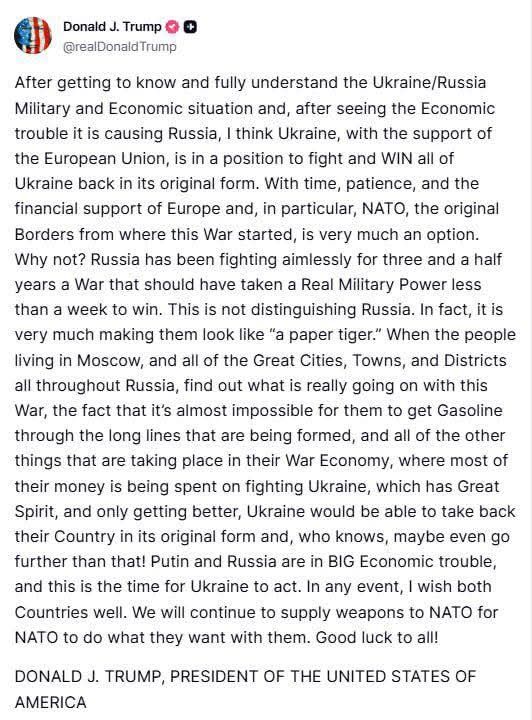
“i think ukraine, with the support of the european union, is in a position to fight and win all of ukraine back in its original form.” – President Trump, September 23)
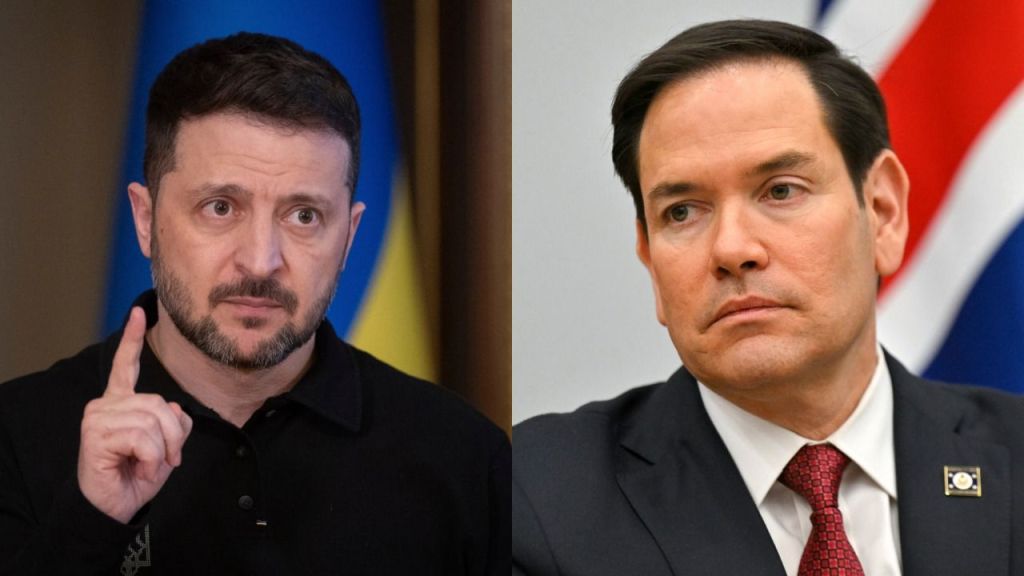
The shift from Trump’s original twenty-eight points to Rubio’s nineteen-point draft came from a familiar pattern inside Washington where hawkish factions shape policy by exploiting procedural control and media pressure. Rubio built a reputation across two decades as a reliable advocate for interventionist positions, from Venezuela to Syria, and his record showed that he viewed confrontation as a default instrument of American power. He inserted terms that guaranteed Russian rejection because his aim was not settlement but maintenance of a strategic pressure campaign. Analysts in Washington have long noted that Trump often adopts the views of whoever speaks to him last, and this tendency allowed Rubio and allied policymakers to rewrite the document while presenting the final version as a presidential plan. The result reflected the worldview of senators and think-tank figures who saw Ukraine as a battlefield for American primacy rather than a country facing territorial collapse. These actors produced a text that stabilised none of the conditions that caused the conflict and replicated the interventionist logic that Rubio applied to Latin America, where he pushed hardline positions without regard for local realities or long-term consequences. The nineteen-point plan embodied that same approach by demanding that Russia accept a framework designed to restore American leverage rather than end the fighting, and the structure of the document showed that the authors sought geopolitical victory rather than a workable agreement.
The failed peace initiative reflects a deeper problem: Western governments continue to draft political terms as though narrative management can substitute for strategic reality. The facts described by military observers, dissident analysts, and independent academics show that any future settlement must incorporate Russian constitutional constraints, battlefield outcomes, local political realities, and demographic limits. Ignore these elements and the conflict continues until the outcome becomes politically undeniable.
Authored By: Global GeoPolitics
If you believe journalism should serve the public, not the powerful, and you’re in a position to help, becoming a PAID SUBSCRIBER truly makes a difference. Alternatively you can support by way of a cup of coffee:
buymeacoffee.com/ggtv


Leave a reply to atmacgillivray Cancel reply