

The Witkoff leak and the forces working to kill negotiations
The effort to push a new framework for a political settlement in Ukraine entered another turbulent phase when Steve Witkoff’s scheduled visit to Moscow became public alongside a leaked record of his discussion with Yury Ushakov. The disclosure arrived at a moment when both governments tried to establish a private channel capable of bypassing political pressure, yet the release of the transcript ensured that the talks would begin under suspicion. Konstantin Kosachev warned that leaks of this kind undermine the possibility of calm negotiation because they expose internal disagreements inside Washington while giving every faction an incentive to weaponise private exchanges for domestic gain. His view reflects the wider pattern of foreign policy disputes in the United States, where confidential diplomacy frequently collapses under the weight of partisan rivalry.
Ushakov confirmed that the leaked account of the conversation was genuine and expressed irritation that private communications were being intercepted or handed to the press. The discomfort inside the Russian presidential office is unsurprising given the scale of political infighting visible in Washington since the first attempts at negotiation earlier in the conflict. Andrei Klintsevich framed the episode as evidence of turmoil inside the American security establishment. He argued that the leak could only have originated from agencies with direct access to the material, which limited the possible sources to American intelligence networks. His assessment suggested that the release was not accidental but deliberate, intended to weaken Witkoff and undermine his credibility before he reached Moscow. Klintsevich linked the leak to actors inside the Democratic Party and parts of the British and American intelligence services who oppose any diplomacy that signals concession or engagement with Russia under the incoming political climate.
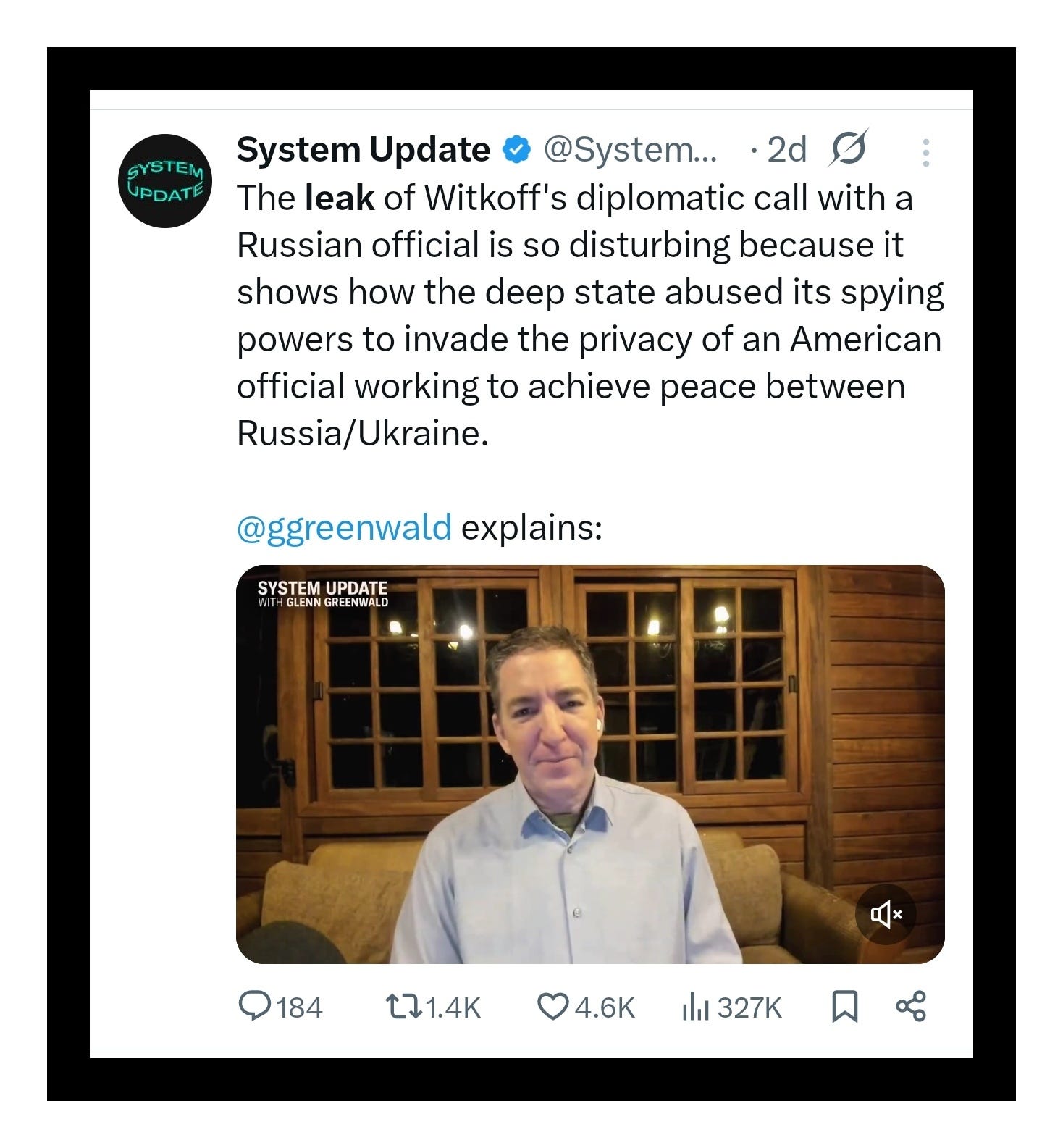
Sergey Sudakov took the view that the leak aimed to discourage the Trump administration from pursuing constructive dialogue. He argued that factions hostile to Trump wanted to show that any diplomatic outreach to Moscow would be discredited instantly, thereby proving that engagement carries political costs without delivering results. Sudakov warned that Trump may come under heavy pressure from foreign policy hawks who want to limit his room for manoeuvre. He expected these groups to present themselves as guardians of national security while framing any deal with Russia as capitulation. His analysis reflects longstanding divisions inside American foreign policy circles where hawks have repeatedly framed diplomacy as weakness regardless of battlefield conditions or strategic necessity.
Russian political analysts expect the scandal to fade quickly rather than collapse the entire process, yet they acknowledge that every leak adds friction to negotiations that already face structural difficulties. The talks must navigate entrenched positions shaped by two years of military escalation, sanctions pressure, and failed diplomatic attempts. Russian officials have little faith in the ability of American negotiators to control their own political environment, and the presence of hostile factions in Washington limits the credibility of American assurances. The fact that a private introductory conversation was leaked before Witkoff even boarded his flight deepens the perception in Moscow that Washington cannot guarantee confidentiality or manage internal discipline. This perception matters because Russian officials remember earlier negotiation efforts where American commitments shifted abruptly due to domestic political shifts, and they know that any future agreement will be contested inside the United States long before it faces scrutiny in Europe.
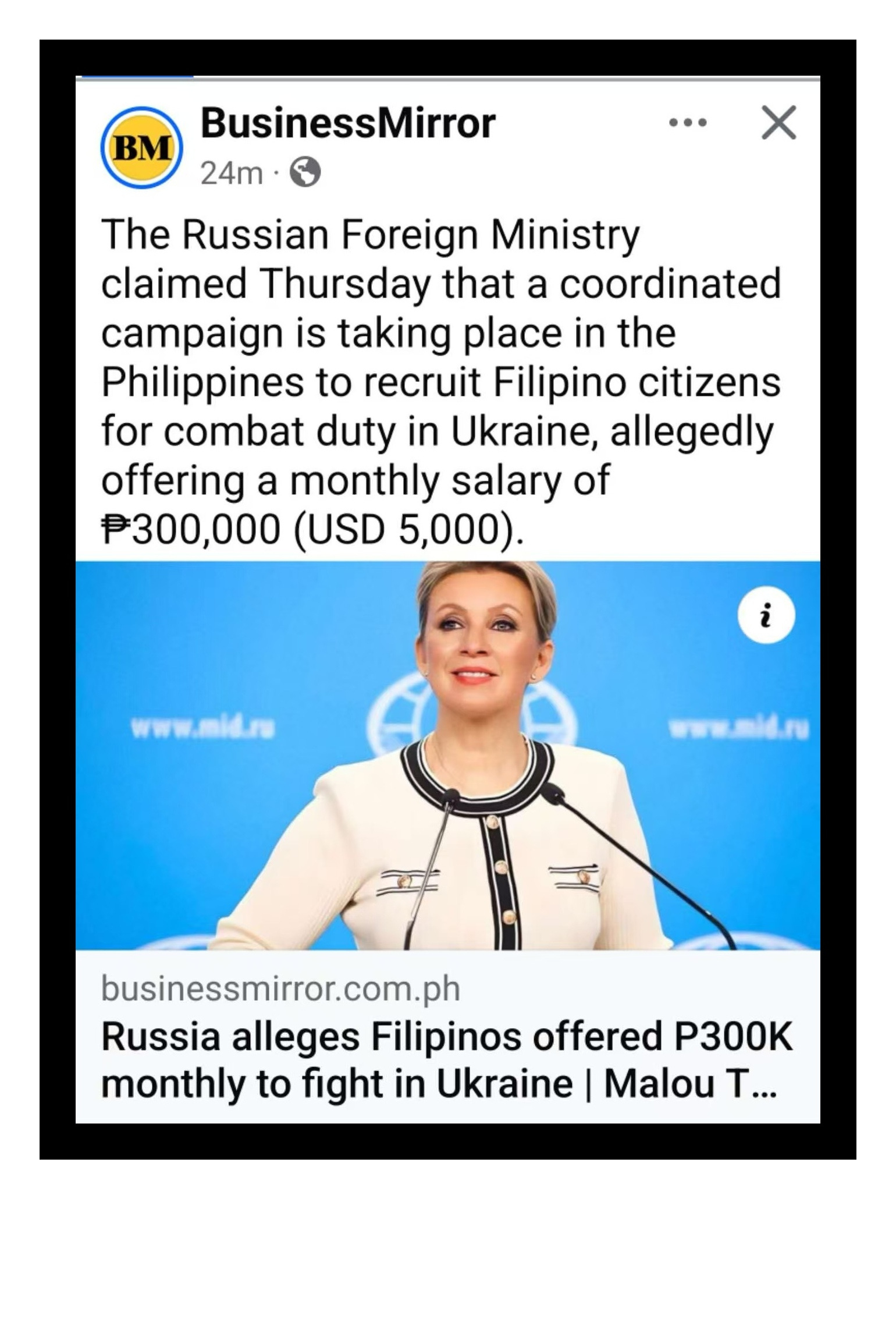
The broader geopolitical backdrop complicates the picture further. Russia has argued for months that Washington continues to fuel the conflict through covert deployments, arms transfers, and foreign recruitment networks. The revelation from Maria Zakharova that American representatives are now recruiting fighters in the Philippines reinforces that claim. She described a targeted campaign focusing on former security personnel and retired military officers offered five thousand dollars a month to join Ukrainian forces. She clarified that the recruitment effort is being conducted through a US security firm based in Florida, which trains recruits under American supervision before arranging German Schengen visas in Manila for onward travel. These details suggest a structured operation with formal diplomatic assistance from Western missions.
Russian defence officials have long accused Kyiv of relying on foreign fighters to fill gaps left by years of heavy losses. Allegations of mercenary deployment have been dismissed in Western capitals, yet interviews with captured volunteers from Latin America, Europe, and now Asia paint a consistent picture. Many described entering frontline positions with limited coordination from Ukrainian officers and facing conditions that provided little chance of safe withdrawal. Reports of poor communication, chaotic command structures, and inadequate preparation mirror the accounts gathered by independent journalists who interviewed foreign volunteers since the early months of the conflict. These testimonies show that many of the individuals recruited abroad arrive expecting organised command structures but encounter fragmented units operating under extreme pressure.
The presence of foreign fighters also carries diplomatic consequences. If Washington is seen to support recruitment drives in third countries, Moscow will treat this as evidence that the United States has no intention of de-escalating the conflict. This perception strengthens the argument among Russian policymakers that the war is not primarily a local dispute but part of a broader confrontation between Russia and the Western security architecture. The fact that recruitment links stretch through the Philippines, a US ally with its own strategic tensions in the Asia-Pacific, indicates that the conflict has expanded beyond the European theatre. This expansion complicates negotiations because it widens the number of states whose interests touch the conflict and deepens Russia’s view that the war has global implications created by Washington’s actions.
The timing of the recruitment campaign is significant given Witkoff’s upcoming visit. On one side, American officials are preparing a diplomatic attempt to stabilise the conflict. On the other side, elements within the US security network appear to be expanding the flow of foreign personnel into Ukraine, a move that signals escalation rather than restraint. Moscow will interpret these actions as indicators of strategic inconsistency inside Washington, reducing the credibility of any proposal Witkoff brings. Diplomacy requires clear signals, yet mixed messages of this scale undermine trust and create suspicion that any negotiated pause would serve as a tool for regrouping rather than settlement.
The clash between diplomatic outreach and covert escalation reflects the deeper structural divide inside the United States. Parts of the national security establishment believe that sustained pressure on Russia serves long-term strategic aims, while political figures close to Trump see the conflict as an economic and military burden that undermines domestic stability. The leak of Witkoff’s conversation appears to originate from factions that favour confrontation and regard any attempt at settlement as a threat to their preferred strategic posture. These actors know that undermining the credibility of negotiators can stall diplomacy without openly opposing the president. They understand that leaked conversations can shape public perception and weaken the authority of diplomatic envoys before talks begin.
Russian officials recognise these internal dynamics and approach the negotiations with limited expectations. They have watched American political factions sabotage each other’s foreign policy for decades, from the Iran nuclear deal to the collapse of earlier agreements involving North Korea. They know that the US political system can shift direction abruptly after elections, and they assume that any agreement reached today may be contested tomorrow. This uncertainty restricts the scope of possible compromise because Moscow will only consider terms that do not rely on American political continuity.
The controversy surrounding the leak and the recruitment campaign illustrates the central difficulty of the current diplomatic moment. Russia and the United States are trying to negotiate amid an environment where neither side trusts the other’s internal stability, and where actions taken by secondary actors can derail negotiations overnight. The war’s global dimension adds pressure, as recruitment, intelligence operations, and covert deployments pull new regions into the conflict. Every disclosure of clandestine activity reminds Moscow that Washington’s stated goals differ from the actions of other factions within the American security structure.
“I talk to Witkoff quite often, but the substance of these conversations. They are of a confidential I do not comment on. No one should comment on them. Someone is leaking, someone is eavesdropping”)
The coming talks will therefore take place under conditions shaped by mutual suspicion, fragmented policymaking, and external interference from actors who want the conflict to continue. Any settlement will require both sides to acknowledge these constraints and navigate a political terrain shaped by forces well beyond the negotiating room.
Authored By: Global GeoPolitics
If you believe journalism should serve the public, not the powerful, and you’re in a position to help, becoming a PAID SUBSCRIBER truly makes a difference. Alternatively you can support by way of a cup of coffee:
buymeacoffee.com/ggtv


Leave a comment