
Structural debt dynamics, declining dollar demand, and rising energy risks now operate beyond political control
An economic crash is approaching, and the conditions now in place mean it cannot be prevented by political leadership or administrative intervention. This outcome is driven by accumulated debt, long-term policy decisions, and financial dynamics that operate independently of elections or governing coalitions. The pressures now converging were constructed gradually over several decades and cannot be unwound through short-term political measures. While policy choices may influence the sequencing or surface appearance of economic stress, they cannot alter the underlying trajectory established by debt accumulation and structural imbalance. The economic system is now reacting to constraints created by its own historical development rather than contemporary political decisions.
The United States carries more than thirty four trillion dollars in federal debt, a level that significantly restricts corrective policy capacity even during periods of nominal growth. This debt has expanded faster than the economy for more than twenty consecutive years, including during expansions when fiscal consolidation would normally occur. Annual deficits remain above five percent of gross domestic product despite stable employment conditions, indicating structural imbalance rather than cyclical disruption. Federal borrowing increasingly exists to service prior obligations rather than to fund productive investment or expansion. This shift reflects a transition from growth-oriented finance to maintenance-driven borrowing.
According to Congressional Budget Office projections, federal interest payments are approaching one trillion dollars annually under current rate structures. These interest costs already exceed defense spending, a condition historically associated with declining fiscal flexibility among major powers. As interest consumes a growing share of federal revenue, discretionary spending capacity steadily erodes regardless of legislative intent. Debt service obligations expand automatically as refinancing continues at higher rates, reinforcing a self-sustaining fiscal burden. This process unfolds independently of political priorities or electoral cycles.
Federal debt held by the public has surpassed one hundred percent of gross domestic product, a threshold extensively studied in historical and empirical economic research. Economists Carmen Reinhart and Kenneth Rogoff have shown that such levels correlate with diminished long-term growth and heightened crisis probability. At this point, additional borrowing no longer stimulates productivity or expansion but reinforces stagnation and fiscal vulnerability. Economic growth loses its ability to stabilize debt ratios when interest obligations grow faster than output. Debt dynamics therefore become self-reinforcing rather than corrective.
Foreign official demand for United States Treasury securities has ceased expanding and has begun fragmenting across reserve holders. Several major central banks have reduced marginal exposure due to sanctions risk, geopolitical uncertainty, and balance sheet considerations. Treasury demand has consequently become more yield-sensitive rather than driven by automatic reserve allocation. Confidence in United States sovereign debt has shifted from structural assumption to conditional evaluation. Historically, such transitions precede monetary and financial instability rather than restore equilibrium.
The expansion of financial sanctions has accelerated global efforts to reduce reliance on dollar-based settlement systems. Major trading economies have pursued bilateral payment arrangements outside traditional dollar clearing frameworks in order to mitigate exposure to financial coercion. Central banks have responded by increasing gold reserves at the fastest pace recorded in modern data. The World Gold Council reported record central bank gold purchases during 2022 and 2023, led primarily by emerging market states. These actions reflect institutional risk management rather than ideological opposition to the dollar itself.
The United States continues to run large trade deficits despite episodes of dollar depreciation, indicating deeper structural causes. These deficits reflect decades of industrial offshoring and deindustrialization rather than short-term currency misalignment. Manufacturing employment has declined from approximately twenty five percent of the workforce in the 1970s to under nine percent today, according to Bureau of Labor Statistics data. Domestic productive capacity is therefore insufficient to support external balance. Consumption remains dependent on foreign capital inflows to sustain living standards.
Former Federal Reserve strategist Zoltan Pozsar has argued that commodity exporters increasingly favor asset-backed trade arrangements that reduce reliance on Treasury recycling. These arrangements diminish dependence on dollar-denominated settlement and alter global liquidity flows. Energy and resource producers now seek insulation from financial weaponization risks associated with sanctions regimes. This shift weakens a central mechanism that historically financed persistent United States deficits at low cost. The erosion occurs incrementally rather than through sudden rupture.
Household balance sheets face increasing pressure from sustained higher borrowing costs across major credit categories. Mortgage rates above seven percent have reduced housing affordability to levels comparable with the pre-2008 period, according to National Association of Realtors data. Credit card and auto loan delinquencies have continued rising across income brackets. These trends reflect structural affordability constraints rather than discretionary consumer behavior. Household financial stress therefore feeds broader economic fragility.
Corporate balance sheets face a refinancing concentration during 2025 and 2026 as low-rate debt matures. Debt issued during emergency monetary conditions must roll into a significantly higher interest rate environment. Moody’s Analytics has warned that speculative-grade default rates could double under moderate recession assumptions. High leverage magnifies vulnerability across corporate sectors. Corporate stress therefore presents systemic financial risks rather than isolated failures.
Banking system vulnerabilities were exposed during the regional bank failures of 2023, revealing underlying balance sheet fragility. Rapid deposit withdrawals highlighted asset-liability mismatches created by long-duration securities holdings accumulated during the low-rate period. Emergency Federal Reserve lending facilities stabilized liquidity conditions but did not eliminate valuation losses. Unrealized losses remain substantial across bank balance sheets under current rate structures. Solvency concerns therefore persist beneath surface stabilization.
Economist Douglas Diamond has emphasized that deposit insurance addresses panic risk but does not resolve insolvency. Sustained negative carry erodes bank capital regardless of depositor confidence or liquidity support. Losses continue accumulating when interest rates remain elevated over time. Accounting pressures eventually assert themselves even in stable funding environments. Liquidity backstops cannot substitute for capital restoration indefinitely.
Fiscal authorities face diminishing maneuvering space as entitlement obligations accelerate due to demographic aging. Social Security and Medicare trust fund projections show widening funding gaps within the next decade. Slowing labor force growth further constrains revenue expansion. Politically feasible tax adjustments cannot close these gaps at required scale. Structural reform has been consistently delayed, increasing long-term fiscal strain.
Energy markets introduce additional fragility despite rising domestic production levels. The United States remains embedded in global energy pricing systems it does not fully control. Major exporters increasingly transact outside dollar-denominated energy settlement frameworks. Research from the Bank for International Settlements confirms expanding use of local currency swap lines among energy-importing economies. These trends reduce automatic demand for dollar assets during periods of stress.
Escalation toward direct conflict with Iran intensifies existing economic vulnerabilities rather than alleviating them. Military operations raise fiscal expenditures while threatening key energy transit routes in the Middle East. Disruption risks surrounding the Strait of Hormuz directly affect global oil pricing structures. Higher energy prices contribute to inflation while simultaneously weakening global demand. Dollar credibility is pressured as energy trade fragments away from dollar settlement.
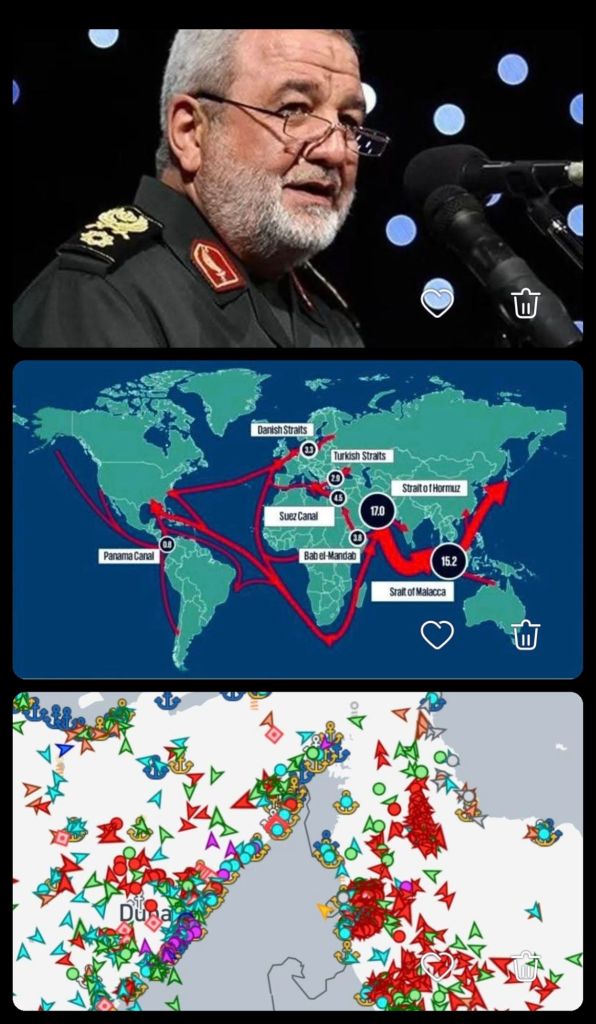
Sanctions escalation related to Iran further accelerates reserve diversification among energy-importing states. Countries exposed to energy supply risk increasingly seek insulation from dollar-based payment systems. This behavior reinforces trends toward gold accumulation and alternative settlement mechanisms. Energy fragmentation and monetary fragmentation increasingly reinforce each other. Conflict therefore amplifies financial instability rather than restoring strategic leverage.
No administration can rebuild industrial capacity, reverse demographic trends, and restore reserve currency dominance within a single electoral cycle. Foreign creditors respond to balance sheet risk and long-term sustainability rather than political messaging. Monetary easing intended to relieve fiscal pressure risks renewed inflation and capital outflows. Barry Eichengreen has demonstrated that reserve currency status erodes when fiscal credibility weakens. Once erosion begins, reversal becomes increasingly difficult.
Markets continue to price United States sovereign risk as relatively low, yet warning indicators persist across multiple metrics. Credit default swap spreads have widened meaningfully since the pandemic period. Rating agencies have cited governance instability and repeated debt ceiling brinkmanship. Historical comparisons with interwar Britain show reserve erosion unfolding through repeated crises rather than a single collapse. Adjustment occurs through cumulative stress rather than orderly transition.
Geopolitical fragmentation further suppresses growth potential across advanced economies. Trade realignment increasingly prioritizes security over efficiency, raising costs and limiting productivity gains. United States total factor productivity growth has averaged below one percent annually since 2007, according to Bureau of Economic Analysis data. Weak productivity constrains revenue expansion. Debt stabilization therefore becomes mathematically difficult.
Financial repression may temporarily extend funding capacity but distorts capital allocation and suppresses private investment. Institutional investors already hold substantial Treasury exposure, limiting additional absorption without yield concessions. Higher yields increase fiscal strain rather than resolve underlying imbalances. The feedback between debt service and borrowing costs intensifies over time. Adjustment pressure therefore grows rather than recedes.
In its 2024 Long-Term Budget Outlook, the Congressional Budget Office stated that federal debt is on track to reach levels “unprecedented in United States history,” while warning that rising interest costs alone will drive deficits higher regardless of economic growth. This assessment reflects arithmetic rather than pessimism, because interest obligations compound faster than revenue under current debt and rate conditions. When debt grows faster than the economy for extended periods, fiscal adjustment occurs through inflation, currency depreciation, or financial instability rather than orderly reform. The economic downturn now forming follows this pattern, as policy tools available today are insufficient to reverse trajectories created over decades.
This adjustment is occurring alongside a global shift away from automatic dollar usage in trade and reserves. As documented by the Bank for International Settlements and the World Gold Council, central banks are actively diversifying reserves and settlement mechanisms in response to sanctions risk and financial fragmentation. These actions reduce baseline demand for dollar assets at the same time the United States must issue increasing volumes of debt to fund existing obligations. The result is upward pressure on yields and financing costs that policy cannot suppress indefinitely without triggering inflation or capital outflows.
Escalation involving Iran intensifies these dynamics rather than offsetting them. The International Energy Agency has repeatedly warned that disruption risks in the Strait of Hormuz directly threaten global energy supply stability. Even limited conflict increases insurance costs, shipping risk premiums, and energy price volatility. Higher energy prices feed inflation, weaken real household incomes, and complicate monetary policy at a moment when debt servicing already constrains fiscal capacity. At the same time, energy-exporting states increasingly transact outside dollar-denominated systems, further reducing the dollar’s central role in energy markets.
Taken together, these conditions describe an economic system entering forced adjustment rather than cyclical slowdown. Debt service growth, reserve diversification, energy fragmentation, and geopolitical strain now reinforce one another instead of providing offsetting support. As economic historian Charles Kindleberger demonstrated in his analysis of systemic crises, financial breakdowns occur when accumulated imbalances reach a scale where stabilization tools lose effectiveness. The current trajectory reflects that condition, meaning the approaching economic crash is not a policy failure waiting to be corrected, but a structural resolution already underway.
When economic systems reach this level of structural constraint, ruling “Epstein Class” historically exhaust political solutions and turn toward symbolic ones. Blame is externalized, crises are reframed as security threats, and economic failure is subordinated to conflict narratives. Large wars have often served as mechanisms to mask insolvency, restructure obligations, or justify extraordinary control measures. These responses do not stop collapse, but they can redefine it as necessity rather than failure. History shows that when adjustment cannot be avoided, power seeks cover rather than correction.
Authored By: Global GeoPolitics
Thank you for visiting. This is a reader-supported publication. I cannot do this without your support. If you believe journalism should serve the public, not the powerful, and you’re in a position to help, becoming a PAID SUBSCRIBER truly makes a difference. Alternatively you can support by way of a cup of coffee:
https://buymeacoffee.com/ggtv |


Leave a comment