
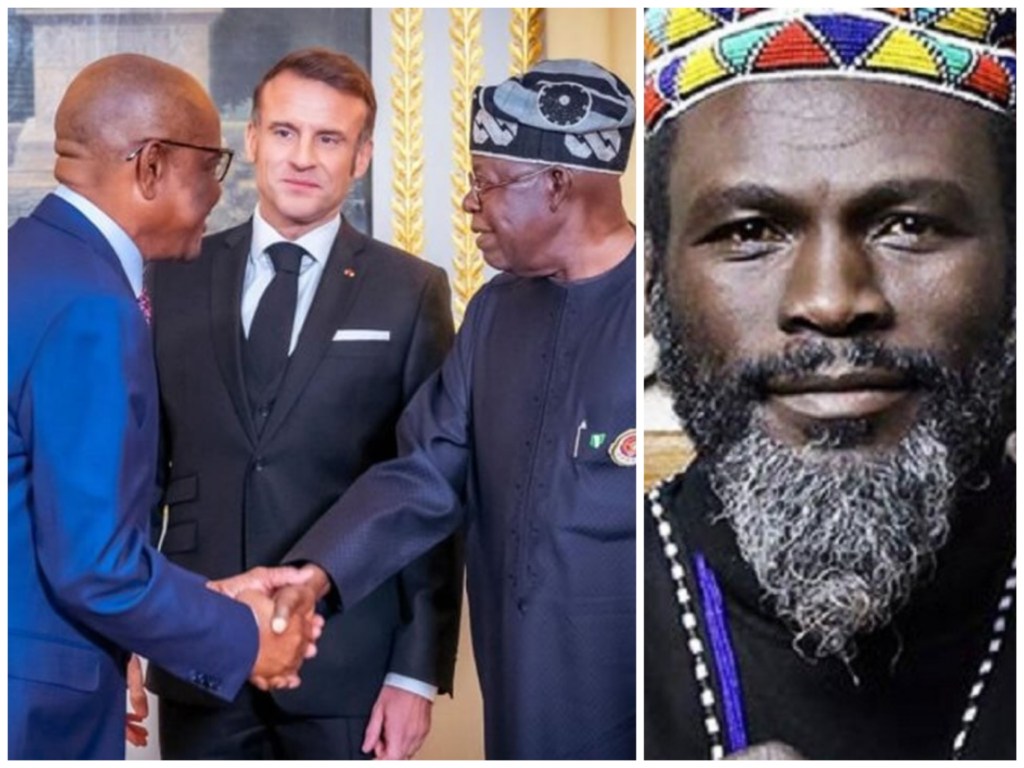
Macron’s vision for “training” African leaders revives an old colonial logic, the enduring grammar of imperial rule
President Macron’s recent remarks, in which he suggested that Europe should identify promising African minds, educate them, and return them to Africa to assist in governance, cannot be treated as an innocent or merely careless choice of words. When placed within the long and uninterrupted history of Europe’s dealings with Africa, such language reveals an attitude that has survived colonialism itself, namely the belief that African political life requires external supervision in order to be legitimate or effective.
This belief has always been central to imperial rule, even when empire clothed itself in the language of civilisation, education, and progress. European powers understood early that domination could not be sustained by arms alone, and they therefore invested heavily in schools, missions, and training institutions designed to produce Africans who would govern according to foreign interests while appearing locally rooted. These institutions did not aim to cultivate independent political judgment, but rather to instil obedience to inherited systems whose ultimate authority lay elsewhere.
Joshua Maponga’s reference to this older method is therefore not rhetorical flourish, but historical accuracy. A great many African leaders who emerged from the era of independence were shaped by missionary education and colonial administration, and though they spoke the language of freedom, they often governed within intellectual and institutional boundaries established by empire. The flags were changed, yet the assumptions governing power, economics, and diplomacy remained stubbornly intact.
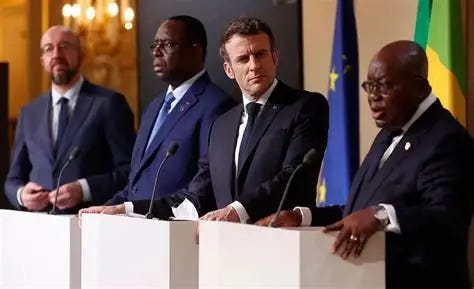
When President Macron now speaks of Europe training Africans to govern Africa, he revives this same assumption under the guise of partnership. The implication is unmistakable, namely that competence is still conferred abroad, that political maturity is still measured by proximity to Europe, and that African societies remain insufficient judges of their own leadership. Such a position is not merely patronising, but openly hostile to the idea of African sovereignty as a lived reality rather than a formal declaration.
This mindset does not exist only in speeches, but finds concrete expression in initiatives such as the French-African Foundation Young Leaders Program, established in 2019 under the high patronage of President Macron himself. The programme selects a small group of African and French professionals, draws them into elite networks, and exposes them to institutions and interests closely aligned with French political and economic priorities. It is supported not only by the French state, but by major corporate actors whose presence in Africa is neither charitable nor incidental.
These arrangements bear an uncomfortable resemblance to the colonial model they claim to have surpassed. A narrow class is identified, cultivated, and advanced, while the broader population remains excluded from meaningful participation in the shaping of power. Over time, this produces leaders whose legitimacy flows upward and outward, rather than downward to the people they are said to serve. Influence is thus preserved through selection and access, rather than through open domination, yet the result differs little in substance.
That such programmes are being emphasised now is no accident, for they arise at a moment when French authority across Africa is visibly eroding. In recent years, a succession of former French colonies, including Mali, Burkina Faso, Niger, Gabon, Senegal, Chad, and Côte d’Ivoire, have revised or abandoned long-standing arrangements of military and political cooperation. Some have demanded the full withdrawal of French troops, thereby rejecting relationships once presented as permanent and mutually beneficial.
President Macron’s response to this shift has been marked less by reflection than by resentment. In remarks delivered to French ambassadors, he complained of African ingratitude and suggested that several African states owed their very existence to French military intervention. Such statements, which openly deny African agency and sacrifice, were received across the continent as confirmation that the old colonial reflexes remain very much alive.
African leaders did not remain silent. Captain Ibrahim Traoré of Burkina Faso described the remarks as insulting and dehumanising, while Senegal’s Prime Minister, Ousmane Sonko, reminded Macron that African soldiers had shed blood for France during the Second World War, and that history does not move in only one direction. Macron’s insistence that recent troop withdrawals had been negotiated was also publicly contradicted by leaders in Chad and Senegal, further corroding whatever trust still existed.
Against this background, reports that French intelligence services may be considering measures against African leaders deemed unfavourable to French interests, whether fully substantiated or not, find a receptive audience. Such reports resonate precisely because they align with a long record of intervention, manipulation, and coercion carried out in the name of stability and partnership. When leadership training schemes, dismissive rhetoric, and strategic interference are viewed together, they form not a series of accidents, but a coherent pattern.
The underlying issue is power itself, and the enduring reluctance to relinquish it, a zero-sum game, rather than shortcomings in education, cooperation, or intercontinental engagement. A continent that must have its leaders selected, trained, and validated elsewhere is not regarded as sovereign, but as administratively autonomous at best. Until this assumption is abandoned, every attempt by France to reset its relationship with Africa will remain hollow.
George Orwell once observed that political language is designed to make lies sound truthful and murder respectable, and the same may be said of imperial language in its modern form. Frantz Fanon warned that colonialism does not end when the flag is lowered, but when the colonised cease to see the world through the coloniser’s eyes. Africa’s present struggle is not merely against foreign troops or unfair agreements, but against the enduring belief that its future must still be authorised from abroad.
If Africa is to be free in any meaningful sense, it must reject not only external control, but the subtle invitations that seek to dress control in the language of mentorship. True independence demands the courage to govern imperfectly, to learn internally, and to answer to one’s own people rather than to foreign patrons. Until Europe accepts this, its talk of partnership will continue to sound, to African ears, like the polished voice of an empire unwilling to admit that its time has passed.
Authored By: Global GeoPolitics
Thank you for visiting. This is a reader-supported publication. You can support by way of a cup of coffee:
https://buymeacoffee.com/ggtv or
https://ko-fi.com/globalgeopolitics
References
AFP via Getty Images. (2022, February 17). Emmanuel Macron holds a joint press conference on France’s engagement in the Sahel region with African leaders at the Élysée Palace. Paris.
Fanon, F. (1963). The Wretched of the Earth. New York: Grove Press.
Macron, E. (2024). Remarks to French ambassadors on France–Africa relations. Paris: Ministry for Europe and Foreign Affairs.
Maponga, J. (n.d.). Public commentary on colonial education and post-independence African leadership.
Orwell, G. (1946). Politics and the English Language. London: Horizon.
French-African Foundation. (2019). Young Leaders Program: Mission and Structure. Paris.
Sonko, O. (2024). Public response to remarks by President Emmanuel Macron on African sovereignty. Dakar.
Traoré, I. (2024). Statement on French–African relations and post-colonial dignity. Ouagadougou.


Leave a comment