
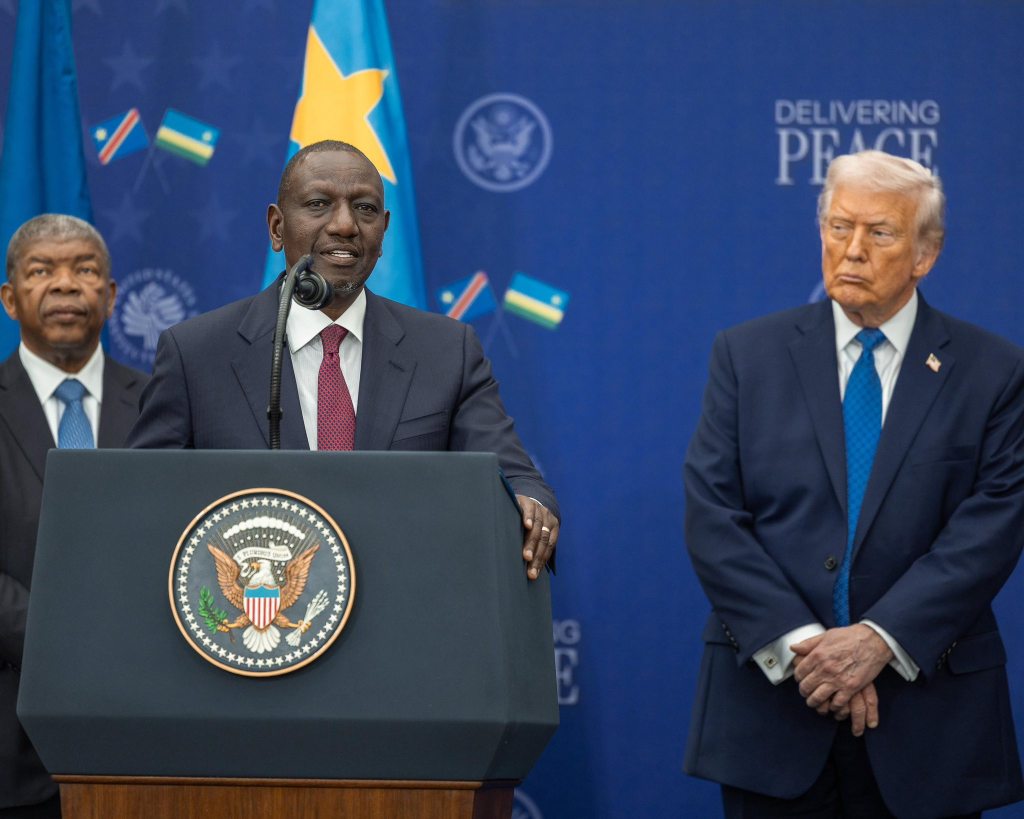
The ruling delivers a political setback to President William Ruto and underscores the constitutional and geopolitical stakes of health diplomacy and data sovereignty.
Sanity prevails in Kenya for now. William Ruto has been the perfect “African Puppet” for the US Empire’s technocrats’ total surveillance digital prison ambitions. On February 12, 2026, Kenya’s High Court declined to lift its December conservatory orders suspending implementation of the KSh 200 billion ($1.6 billion) health cooperation framework between Kenya and the United States, maintaining the freeze amid ongoing constitutional challenges. The decision followed an appeal by Busia Senator Okiya Omtatah, who has argued that the agreement was concluded in violation of statutory and constitutional requirements governing treaty ratification and public participation. Speaking the same day in Nyeri, U.S. Embassy Chargé d’Affaires Susan Burns acknowledged that Washington cannot proceed with implementation of the framework until the legal process is resolved.
The High Court’s decision in December 2025 to suspend the implementation of a $1.6 billion health cooperation agreement with the United States punctuated a growing unease over the terms and implications of new forms of bilateral engagement under Washington’s evolving global health strategy. Signed in Washington on December 4 by Kenya’s Prime Cabinet Secretary Musalia Mudavadi and U.S. Secretary of State Marco Rubio in the presence of President William Ruto, the framework was designed to replace a patchwork of traditional aid programmes with direct government-to-government funding aimed at strengthening health systems, disease surveillance, and emergency preparedness over a five-year period. Yet within days, the Consumers Federation of Kenya (COFEK) successfully petitioned the High Court to issue conservatory orders halting the rollout of the deal’s data-sharing components, on the grounds that it risked violating constitutional safeguards on privacy and was concluded without adequate public participation or parliamentary oversight. The court’s interlocutory order specifically restrains implementation of any provisions that “provide for or facilitate the transfer, sharing, or dissemination of medical, epidemiological or sensitive personal health data,” signaling judicial insistence on procedural and substantive protections in the governance of foreign agreements. (The Standard)
The legal challenge reflects deeper anxieties about sovereignty and data governance in the age of digital health. Kenyan critics, including Busia Senator Okiya Omtatah, argued that the pact lacked ratification by Parliament as required under the Treaty Making and Ratification Act and that its data provisions could undermine domestic regulatory institutions by granting outsized influence to foreign agencies, including presumptive deference to U.S. Food and Drug Administration standards and audit access to health facilities and supply chains. (Capital FM) The petitioners’ concerns resonate with broader debates in global public health over the governance of population-level data, particularly its use in epidemiological modelling, clinical research and commercial applications. While U.S. officials including Charge d’Affaires Susan Burns have sought to reassure Kenyan audiences that only aggregate, non-identifiable data would be shared and that Kenyan privacy laws would prevail, the dispute underscores lingering mistrust around the legal and geopolitical architecture of data flows between the global North and developing countries. (kenyans.co.ke)
In geopolitical terms, the suspension of the Kenya deal is inseparable from the Trump administration’s pivot toward what it styles an “America First” global health strategy, a framework that has already yielded similar agreements with Rwanda, Uganda and other African states. Under this approach, bilateral pacts are paired with expectations of increased domestic spending and alignment with U.S. strategic objectives, even as traditional multilateral mechanisms such as USAID’s programme structures are dismantled. (allAfrica.com) Proponents argue these arrangements offer predictability and mutual benefit; detractors warn they may entrench asymmetries in health governance and data access that mirror historical patterns of dependency and influence. The Kenyan controversy thus echoes wider concerns about “data sovereignty” and the potential for digital footprints of populations to become contested terrain in geopolitical competition, where control over analytics and health information draws strategic value akin to earlier struggles over primary commodities. Though the High Court’s current order is temporary, its insistence on constitutional compliance may well shape how Nairobi and other African capitals negotiate foreign partnerships in an era where health, information and power are increasingly entwined. (english.news.cn)
My Other Relevant Articles on Kenya:
1] Kenya Between Washington and Beijing
Protests, Fiscal Strain and Chinese Finance Drive a Reordering of Alliances
2] Creeping Recolonisation
Military immunity, data governance, and Kenya’s changing sovereignty
3] African Health Data Agreements With US Spark Sovereignty and Transparency Concerns
Critics warn that secretive MOUs signed without public consultation risk exposing strategic population data to foreign interests amid growing geopolitical competition
4] Africa’s New Data Dependency – A Quiet Transfer of Sovereignty
Data agreements are replacing “colonial armies” as tools of domination and returning external governance
Authored By: Global GeoPolitics
Global GeoPolitics is entirely reader supported and independent from corporate or state funding structures. Sustained research and publication on geopolitics, political economy, and systemic analysis require time and material backing from readers who value independent inquiry. Paid subscriptions support archival access, exclusive research publications and the continuation of critical examination of global power structures. Support can also be provided through Buy Me a Coffee or Ko-fi platforms for readers who prefer one-time contributions.
https://buymeacoffee.com/ggtv or
https://ko-fi.com/globalgeopolitics.com/ggtv or
References
[1]: https://www.standardmedia.co.ke/courts/article/2001536245/high-court-suspends-sections-of-ruto-trump-health-deal?utm_source=chatgpt.com “High Court suspends sections of Ruto-Trump health deal – The Standard”
[2]: https://www.capitalfm.co.ke/news/2025/12/omtatah-petitions-high-court-to-halt-implementation-of-unlawful-and-financial-risky-us-kenya-health-pact/?utm_source=chatgpt.com “Omtatah petitions High Court to halt implementation of ‘unlawful and financial risky’ US-Kenya Health pact » Capital News”
[3]: https://www.kenyans.co.ke/news/118774-no-personal-patient-data-will-be-shared-us-envoy-susan-burns-clarifies-ksh200b-health?utm_source=chatgpt.com “No Personal Patient Data Will Be Shared: US Envoy Susan Burns Clarifies Ksh200B Health Deal with Kenya – Kenyans.co.ke”
[4]: https://allafrica.com/view/group/main/main/id/00095185.html?utm_source=chatgpt.com “U.S. Inks Health Agreements with Nine African Nations”
[5]: https://english.news.cn/20251211/7e6363126da54f979b5b8747e193068e/c.html?utm_source=chatgpt.com “Kenyan court halts 1.6-bln-USD health deal with U.S. amid data breach fears”


Leave a comment