
Why Purim, the Fourteenth of Adar, Presents the Most Historically Charged Moment for Confronting Iran as a Deliberate Answer to an Ancient Persian Decree
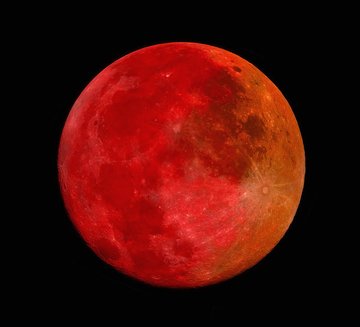
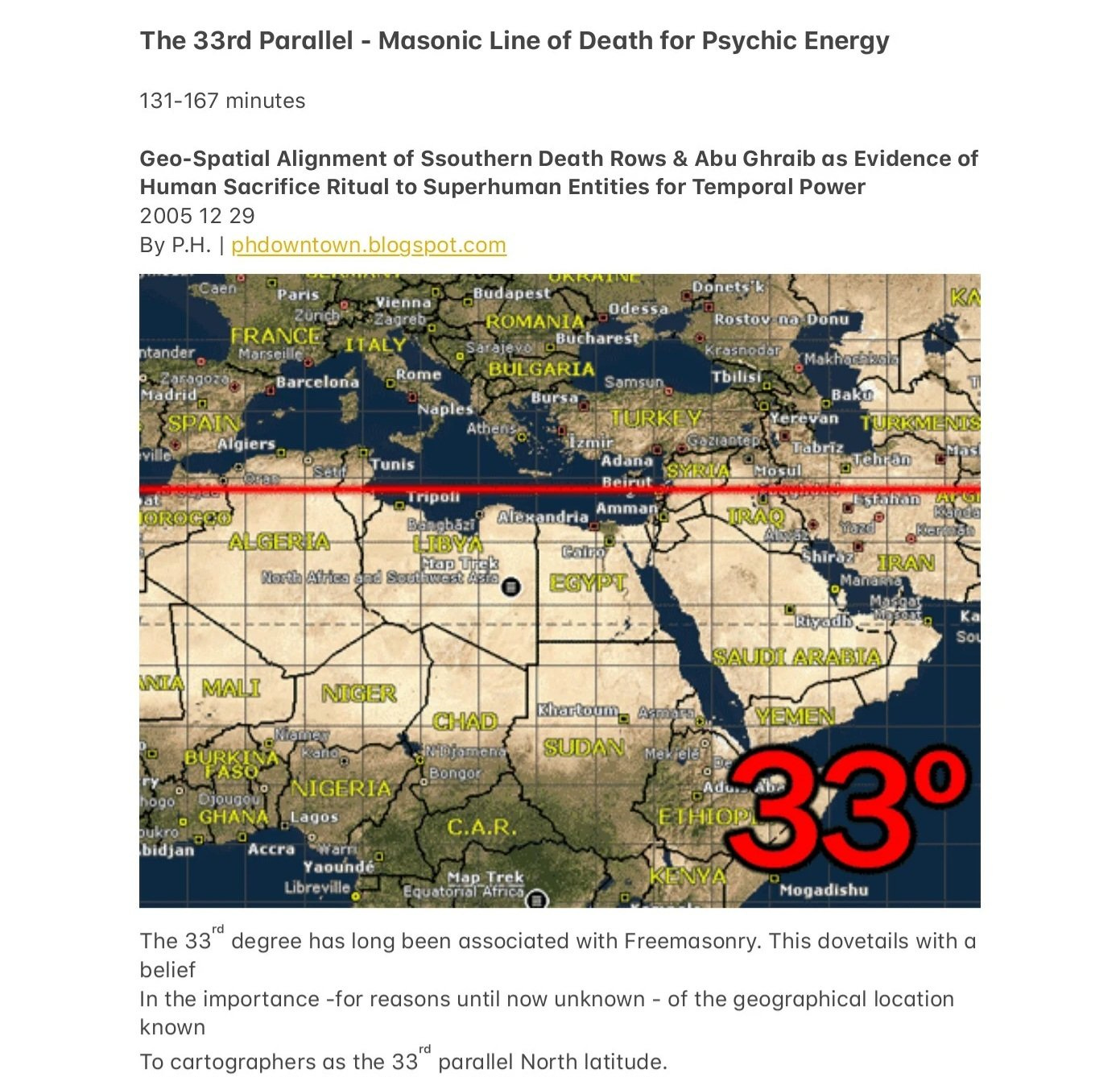
It can be argued that if Israel is going to pick an historic day to strike at Iran, that day would be on Purim (Blood Moon), referred to as the 14th day of Adar (The evening of 2-3rd March will be a rare total lunar eclipse or ‘Blood Moon’). That proposition to select Purim ( A celebration of slaughter of one’s enemies) as the date for a decisive strike against Iran is neither frivolous nor detached from historical consciousness, but rather rooted in the enduring interplay between religion, memory, and statecraft within Jewish political identity. It is regarded by certain Judeo-Masonic interpreters as numerically significant because it falls on a three-three (33) sequence, being the third (3) day of the third (3) month, with its symbolic culmination noted at 3:33 a.m. Pacific Time. Purim commemorates the defeat of a genocidal decree issued within the ancient Persian Empire, traditionally associated with the reign of Xerxes I. The narrative preserved in the Book of Esther recounts how Haman’s state-sanctioned plan to annihilate the Jews was reversed through courage, strategy, and providence. The transformation of impending destruction into deliverance established a paradigm in which existential threat is confronted and overturned. That memory remains active within Jewish collective consciousness and cannot be dismissed as merely liturgical ornament.
The historical aftermath traditionally associated with Persian rule included improved standing for Jewish communities and the eventual consolidation of the Second Temple period. Under Darius I, imperial authorization facilitated the rebuilding of the Temple in Jerusalem, demonstrating how shifts in political power within Persia materially affected Jewish religious destiny. Whether one interprets this sequence as providential or pragmatic, it reveals a structural relationship between Persian imperial authority and Jewish national restoration. The symbolic resonance between ancient Persia and modern Iran, which consciously preserves elements of Persian civilizational identity, is therefore not incidental in political rhetoric.
Modern Israel does not ground its claims solely upon contemporary diplomatic recognition, though such recognition remains crucial. The decision by the United States under Donald Trump to recognize Jerusalem as Israel’s capital and relocate its embassy there formalized a claim that had long existed in Israeli constitutional practice. The Knesset has functioned in Jerusalem since the state’s founding, and Israeli law identifies the city as its undivided capital. These facts illustrate that religious memory and political sovereignty intersect rather than operate in isolation. Jerusalem is not merely a territorial asset but the focal point of Jewish historical continuity.
Within this framework, the plausibility of aligning military action with Purim derives from more than symbolism alone. Political communities often act in ways that reinforce collective narratives, especially when confronting perceived existential threats. Iran’s leadership has repeatedly employed rhetoric questioning Israel’s legitimacy, and its support for armed proxies along Israel’s borders reinforces Israeli perceptions of encirclement. When a state perceives a hostile power as an inheritor of a historical adversary, even metaphorically, symbolic timing can serve strategic communication. An operation undertaken on Purim would convey a message that a modern Persian threat is being answered within the arc of Jewish historical memory.
Classical realist theory, as articulated by thinkers such as Carl von Clausewitz, recognizes that war is a continuation of politics by other means, and politics itself operates within the realm of perception and morale as much as material capability. Symbolic acts can consolidate domestic unity and project resolve externally. States have frequently chosen dates of historical resonance to frame decisive actions, thereby embedding military initiatives within national mythologies. The selection of D-Day by the Allies was not symbolically religious, yet its anniversary has since become a defining moral reference for Western unity. In societies where sacred history forms part of national consciousness, the integration of military timing with religious commemoration is not implausible.
Moreover, Purim is a festival defined by reversal, by the overturning of decrees that appeared irreversible. For Israeli policymakers who interpret Iran’s nuclear ambitions as an existential decree in the making, the symbolic parallel would be unmistakable. If a strike were deemed necessary to prevent strategic encirclement or nuclear breakout, conducting it on Purim would frame the act as preemptive deliverance rather than aggressive escalation. The narrative power of such framing could strengthen internal cohesion during the inevitable regional repercussions.
The argument gains further plausibility when one considers the religious dimensions of territorial claims in Jerusalem. The Temple Mount remains the most sensitive religious site in the Israeli-Palestinian conflict, and aspirations among certain Jewish groups for the construction of a Third Temple persist as theological convictions. While the State of Israel officially maintains the status quo arrangement, history demonstrates that political transformations can alter religious realities. The fall of regimes has frequently preceded changes in sacred architecture and governance, particularly in cities where sovereignty and sanctity intertwine.
If a major geopolitical shift were to occur in Iran, whether through internal collapse or external confrontation, the regional order would be reshaped in unpredictable ways. Advocates of a Third Temple might interpret such a development as the removal of a principal adversary analogous to ancient Persia’s reversal in the Esther narrative. Though such outcomes remain speculative, the symbolic structure linking Persia, deliverance, and temple restoration occupies a coherent place within certain strands of Jewish thought. In that context, Purim represents not only memory but anticipation.
Critics may argue that modern military planning is governed strictly by intelligence, logistics, and alliance coordination. This observation is correct in operational terms, yet it does not negate the influence of symbolic calculation. States are not purely mechanical actors; they are communities animated by history, identity, and narrative. The intertwining of sacred chronology with national decision-making has precedents across civilizations, from medieval Christendom to revolutionary movements that consciously aligned actions with commemorative anniversaries.
“As the days wherein the Jews rested from their enemies, and the month which was turned unto them from sorrow to joy, and from mourning into a good day.” (Esther 9:22, King James Version). Therefore, the suggestion that Israel might consider Purim an auspicious date for confronting Iran cannot be dismissed as mere conjecture devoid of political logic. It rests upon a fusion of historical memory, religious claim, and strategic messaging. Jerusalem’s status as Israel’s capital is both legally asserted and theologically grounded, and the memory of deliverance from a Persian threat remains embedded in Jewish tradition. In moments perceived as existential, nations often draw upon their deepest narratives to frame decisive action. Within such a worldview, the convergence of Purim and confrontation with a modern Persian adversary becomes not inevitable, yet undeniably plausible. “And these days of Purim shall not fail from among the Jews, nor the memorial of them perish from their seed.” (Esther 9:28, King James Version).
Authored By: Global GeoPolitics
Thank you for visiting. This is a reader-supported publication. I cannot do this without your support. If you believe journalism should serve the public, not the powerful, and you’re in a position to help, becoming a PAID SUBSCRIBER truly makes a difference. Alternatively you can support by way of a cup of coffee:
https://buymeacoffee.com/ggtv |


Leave a comment