
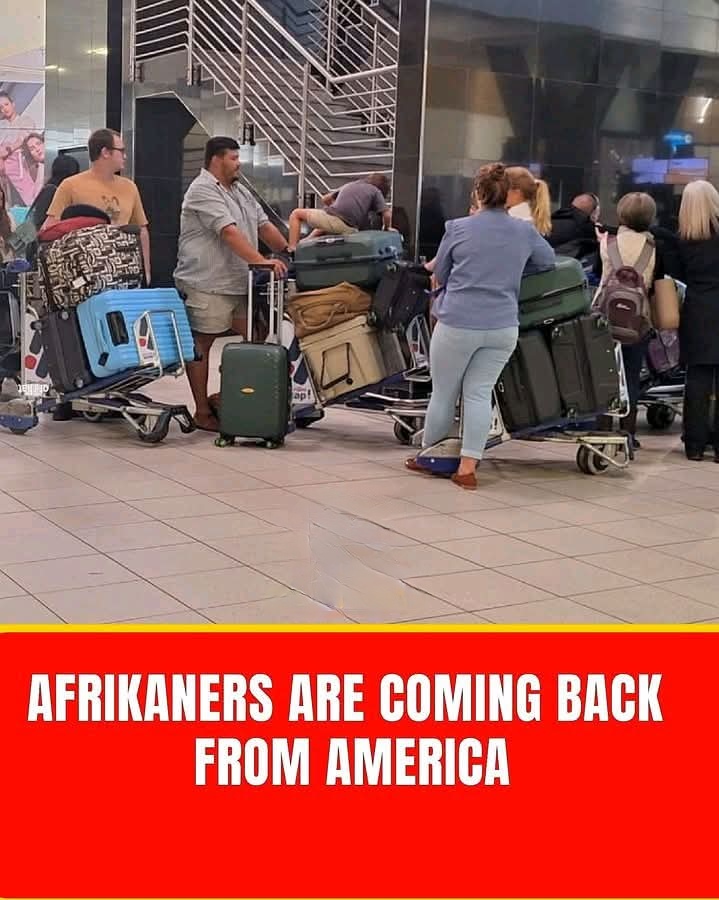
Apparently, the ‘genocide’ wasn’t as scary as Trump’s healthcare premiums, housing crisis, and social isolation.
In 2025, former U.S. President Donald Trump introduced a special refugee pathway that allowed some Afrikaner families to move to the United States, citing alleged genocide, persecution, discrimination and safety concerns in South Africa. The program was supported by Trump’s political allies, including Elon Musk and the right-wing AfriForum organization, all of whom claimed that white South Africans were victims of a “genocide.” These claims were presented as a justification for resettling Afrikaners in the U.S. in the name of protecting them from the supposed systemic persecution by the black majority South African government.
However, these allegations were never substantiated by any credible independent sources. Various human rights organizations, independent experts, and even South African officials, including President Cyril Ramaphosa, dismissed the narrative as politically motivated and unfounded. Nonetheless, Trump and his supporters continued to push this message, aiming to galvanize support among conservative voters in the U.S. and create a political wedge that would allow him to present himself as a champion of white minority rights abroad, particularly in countries where Western narratives of oppression could be leveraged for political gain. Ramaphosa’s public embarrassment during a White House meeting, when he was confronted with accusations of racial violence, became a pivotal moment in Trump’s narrative, even though the charges were unsubstantiated.
This manipulation of the Afrikaner plight was a classic case of political exploitation. Trump and his allies saw an opportunity to further a narrative that painted South Africa as a nation in crisis while positioning themselves as defenders of persecuted white minorities. Yet, the claims never held up under scrutiny. Independent bodies, including the South African Human Sciences Research Council, repeatedly stated that the primary issues facing South Africa were rooted in crime, poverty, and socio-economic inequality, which affected people of all races. The supposed “genocide” was a fabrication used to stir fear and exploit political divisions, both in South Africa and the U.S.
Despite the politically charged narrative and the promises of a better life in the U.S., many Afrikaner families are now returning to South Africa after finding that life in America was not as advertised. Economic realities, cultural adjustments, and a lack of social support have led many of these families to reconsider their decision. While Trump and AfriForum framed the migration as an escape from an allegedly hostile South Africa, the reality of life abroad proved far more challenging than expected.
Reports suggest that the primary reasons for their return include the high cost of healthcare, expensive housing, and the steep cost of childcare and education, issues that many did not fully appreciate when leaving South Africa. The cost of living in many parts of the U.S. quickly eroded any financial advantage these families expected to gain. Despite the higher wages in the U.S., families found that the increased cost of daily life left them struggling to make ends meet.
In particular, the high cost of healthcare and insurance was a significant factor. Families accustomed to the South African public healthcare system, which, despite its challenges, offers subsidized medical services, found it impossible to manage the exorbitant costs of private healthcare in the U.S. Similarly, the cost of housing in cities like Los Angeles or Houston, along with the lack of affordable childcare and education, proved far beyond what they had anticipated.
This return marks an important shift in the narrative around migration and the politics that shaped it. While many of these families had initially left South Africa under the belief that they were fleeing a dangerous and oppressive environment, the reality of their new lives abroad has forced them to reevaluate their decisions. What initially seemed like an escape has turned into a sobering reminder that economic opportunities in foreign countries are not always as they appear.
This unexpected development highlights the critical issue at the heart of the Afrikaner migration, that the political narrative around white persecution in South Africa was a fabrication used for political mileage. While Trump, Musk, and AfriForum promoted the idea that Afrikaners were facing imminent danger and systemic violence, the actual drivers of migration were rooted in economic factors rather than racial persecution. This narrative was designed to align with conservative rhetoric in the U.S. and create a political wedge, but it ultimately lacked factual support.
The return of these Afrikaner families to South Africa undermines the political narrative that Trump and his allies constructed around their migration. It becomes increasingly clear that many who left were motivated not by a genuine fear for their safety but by a combination of economic hardship and the appeal of a new opportunity. When confronted with the reality of life in the U.S., where the cost of living is higher than they anticipated and social isolation set in, many families have found themselves seeking the familiarity of home.
Furthermore, this shift in the migration story underscores broader global migration trends and the realities of moving abroad. Migrants often leave with high hopes of a better life, only to find that the challenges of economic adaptation, cultural integration, and financial pressures are far greater than they had imagined. South Africa’s government, despite its own challenges, remains an anchor for many of its citizens, even those who were initially swept up in the narrative of flight and fear.
In the end, the story of these returning Afrikaner families goes beyond personal decisions. It’s a reminder of how political narratives, especially those designed for electoral gain, can create false perceptions and shape migration trends. The political narrative promoted by Trump, Musk, and AfriForum, portraying South Africa as a country on the brink of racial collapse, was never grounded in reality. It was a strategy to deflect from the real issues facing the West, particularly the genocide in Gaza and South Africa’s growing legal challenges against Israel at the International Court of Justice (ICJ).
The return of these families also offers a more nuanced view of migration and its complexities. While political figures exploited their migration for personal and strategic gain, the actual reasons for the families’ return highlight the economic challenges of life abroad and the eventual pull of home. South Africa, despite its challenges, continues to offer a certain familiarity and stability that many have come to value more than the promises of life in the U.S.
This situation further complicates the narratives surrounding South Africa’s international image. The returnees are not only rejecting the politically motivated claims of persecution but are also engaging with the larger debate about the realities of migration, economic inequality, and the shifting power dynamics between the global South and the West. As the global political environment continues to evolve, this story serves as a reminder that political narratives must reflect economic and social realities, and that migration, whether voluntary or forced, is not always a simple solution to complex problems.
Authored By: Global GeoPolitics
Thank you for visiting. If you believe journalism should serve the public, not the powerful, and you’re in a position to help, becoming a PAID SUBSCRIBER truly makes a difference. Alternatively you can support by way of a cup of coffee:
https://buymeacoffee.com/ggtv |
https://ko-fi.com/globalgeopolitics |
Bitcoin: 3NiK8BoRZnkwJSHZSekuXKFizGPopkE7ns


Leave a comment