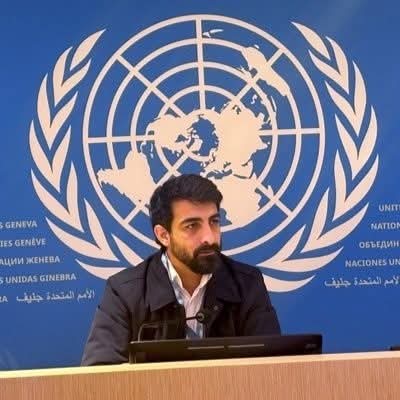
Mohamad Safa abandons 12-year career, accusing UN insiders of preparing for catastrophic action while Iran remains compliant with international law
“The UN is preparing for possible nuclear weapon use in Iran”, said Mohamad Safa, a Lebanese diplomat and human rights advocate.
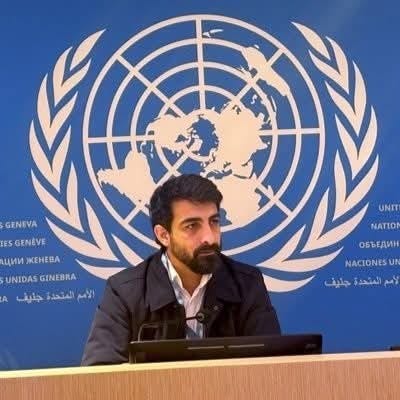
Mohamad Safa, a representative of the Patriotic Vision Alliance at the United Nations, has resigned from his roles while issuing a blunt and deeply alarming accusation: that elements within the UN are preparing for the possible use of nuclear weapons in Tehran. He presents his departure not as a routine resignation but as a moral refusal to remain complicit in what he frames as a potential crime against humanity. After nearly twelve years of involvement across UN committees and leadership cycles, he claims he could no longer justify participation in an institution he now believes is being influenced by what he calls a “powerful lobby” acting against its stated mission.
Mohamad Safa’s resignation should not be treated as just another diplomatic formality. He has walked away from a 12-year career inside the United Nations to refuse complicity in what he claims could lead to catastrophic consequences for millions of civilians. In his public statements, Safa asserts that the UN is systematically failing to uphold international law and human rights. He claims the organization refuses to properly characterise the events in Gaza Strip as genocide, refuses to label events in Lebanon as war crimes or ethnic cleansing, and ignores the legality of any potential war on Iran despite there being no imminent threat from Iran to world peace. He further alleges that the UN shields Israel and United States from accusations of violating international law under pressure from a powerful lobbying influence. Most alarmingly, Safa claims that the UN is preparing for the use of a nuclear weapon on Iran, stating bluntly, “the UN is preparing for possible nuclear weapon use.”
In a public statement, Safa portrays the situation as urgent and catastrophic, insisting that people do not grasp the scale of what is allegedly being considered. He describes Tehran not as an abstract geopolitical target but as a densely populated city of nearly ten million people, emphasizing ordinary families, children, and everyday aspirations, to underline the human cost. He draws direct comparisons to major global capitals such as London, Paris, Berlin, and Washington, D.C. to force a mental image of what nuclear destruction would actually mean in practice. His language is openly confrontational, condemning those he sees as detached advocates of war and accusing them of ignoring the reality of mass civilian death.
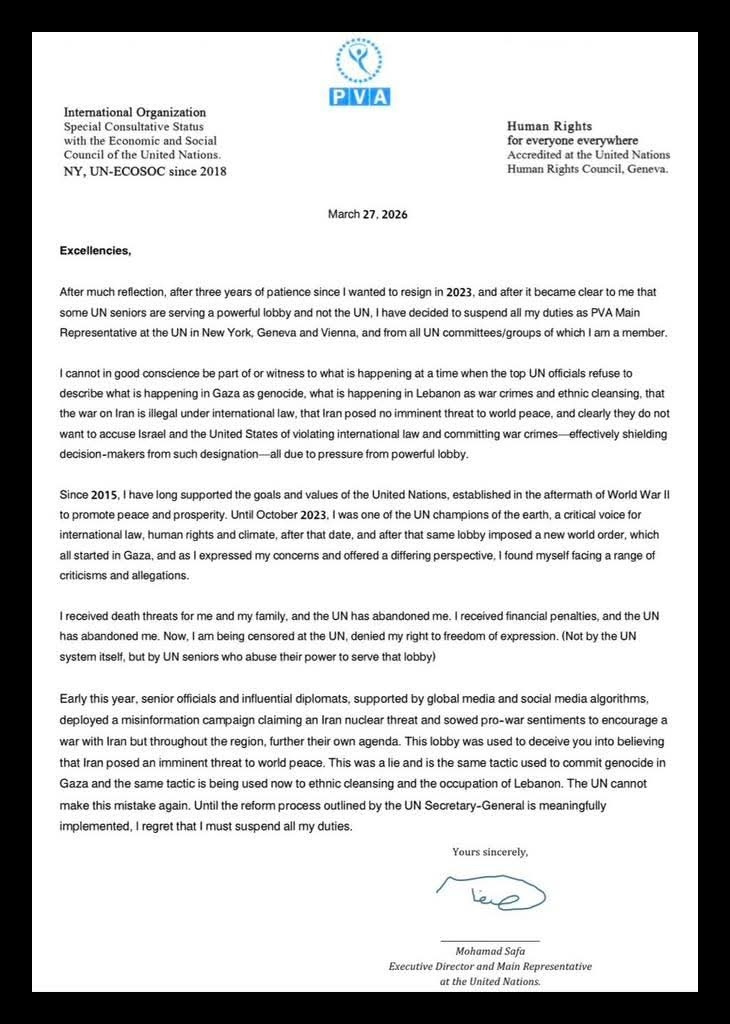
He goes further by claiming he effectively sacrificed his diplomatic career to expose this alleged preparation, framing his actions as a deliberate attempt to prevent a global catastrophe, including the possibility of nuclear fallout escalating into a wider environmental collapse or even a nuclear winter. He provides no public evidence to substantiate the claim, and no other officials or bodies have corroborated his account. The United Nations has not responded to the allegation, leaving a vacuum in which the claim exists without confirmation or formal rebuttal.
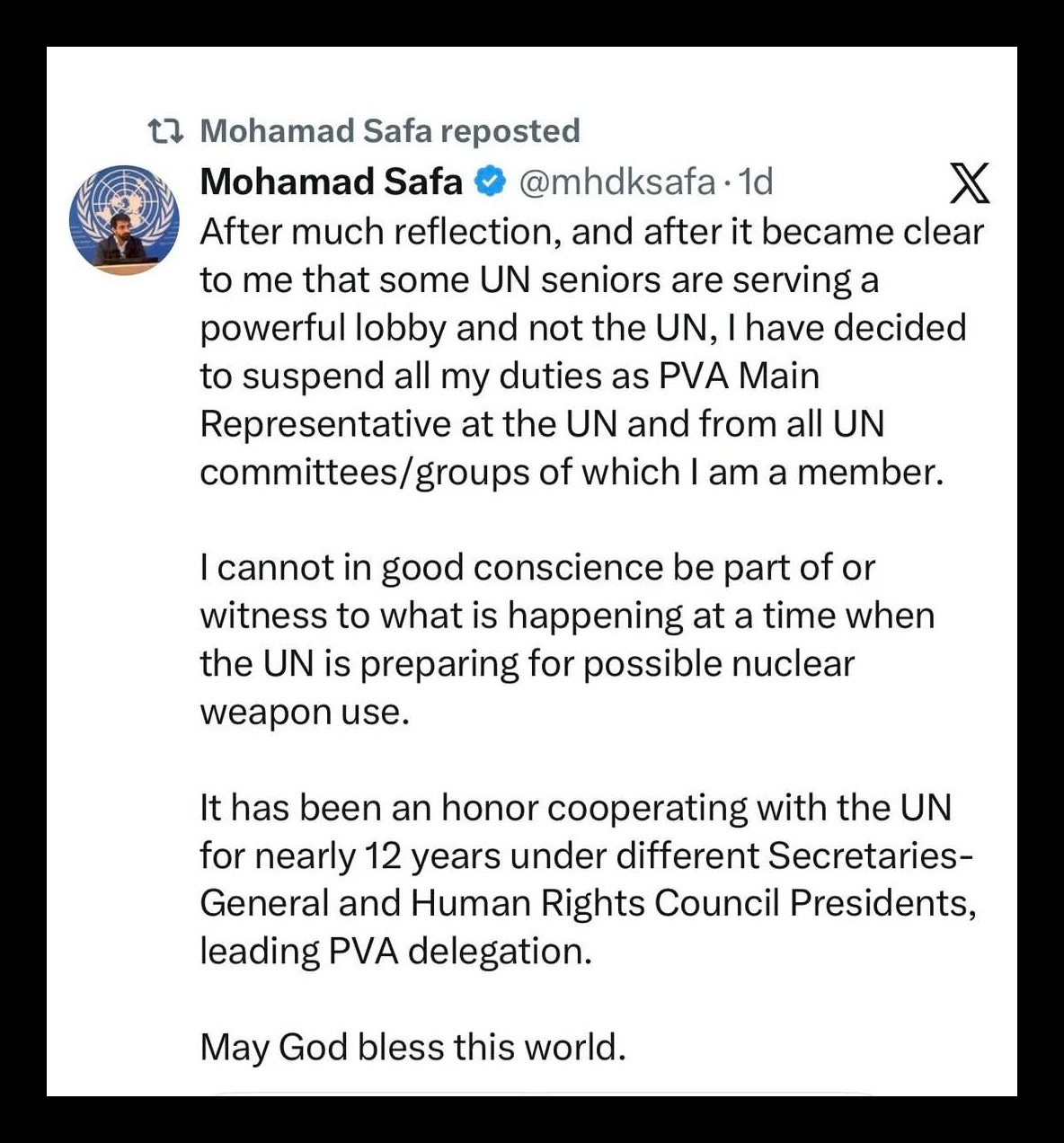
Safa’s statement does not stop at warning; it is a direct call for public mobilisation. He urges people to spread the message globally, take to the streets, and apply pressure from outside institutional channels, arguing that only mass civilian action can stop what he portrays as a looming disaster. He references large-scale protests in the United States as proof that public resistance is possible and frames the moment as one that will be judged by history, positioning inaction as complicity.
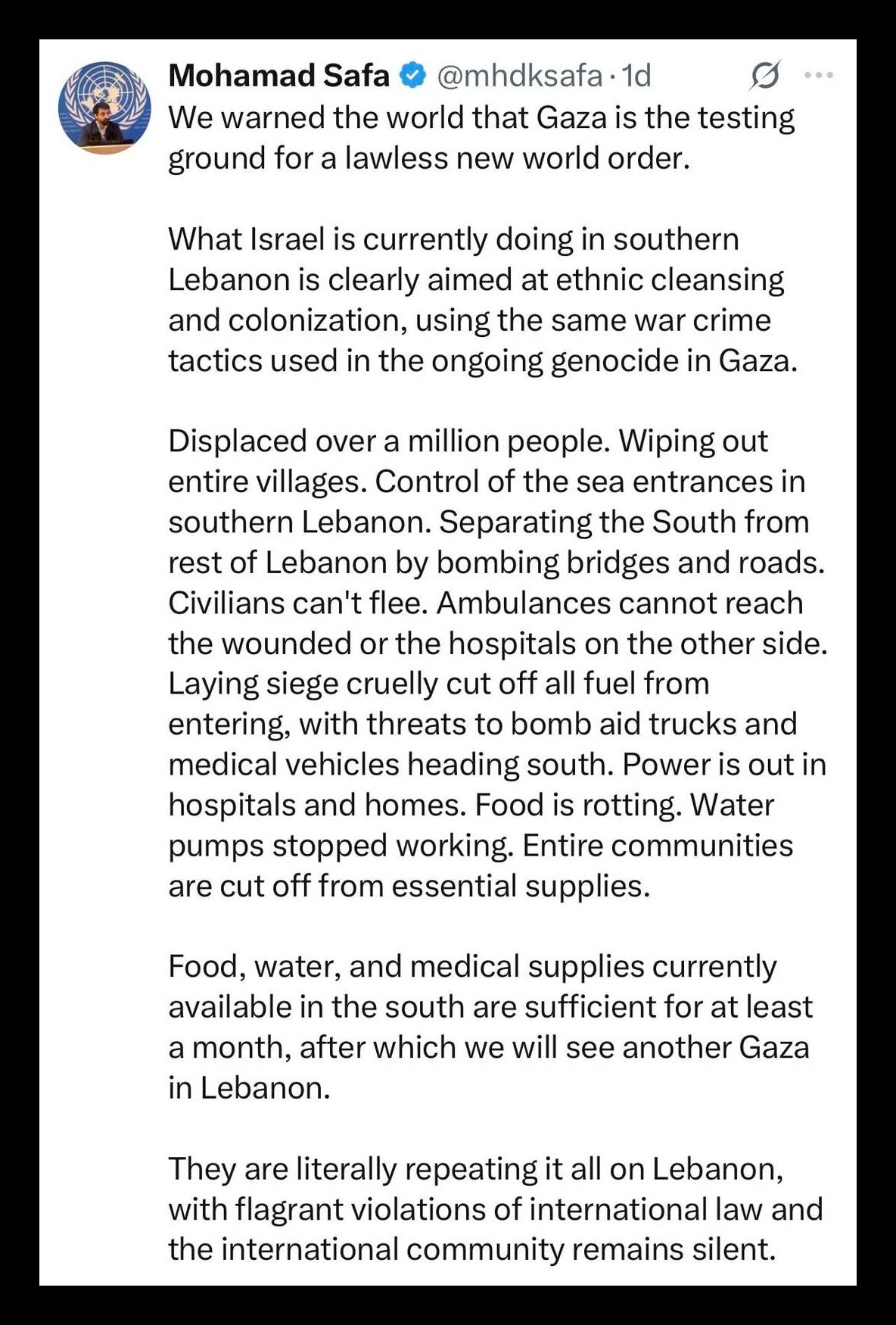
The result is a volatile and unresolved situation. On one hand, the claim carries the weight of insider testimony tied to one of the world’s most powerful international institutions. On the other, it remains entirely unverified, unsupported by evidence, and unanswered by the organisation in question. This creates a stark tension between the possibility of a whistleblower warning of extreme significance and the risk of an unsubstantiated narrative amplifying fear around nuclear conflict. Either way, Safa’s resignation injects a highly charged and disturbing allegation into global discourse, one that demands scrutiny but cannot be accepted at face value without evidence.
His resignation is not some abstract diplomatic footnote; it is a warning tied to the possible destruction of millions of lives. When a figure like Mohamad Safa walks away from years inside the system and claims he is refusing to be part of something he believes could lead to mass civilian death, the burden is not on the public to dismiss it, and it is on the institutions to answer it. The world has already seen what nuclear devastation looks like in the Atomic bombings of Hiroshima and Nagasaki and the long shadow cast by the Chernobyl disaster. There is no moral ambiguity about what is at stake if even a fraction of this warning is true.
The silence from the United Nations and the lack of serious engagement from major media outlets is not reassuring, it is alarming. A resignation tied to allegations of potential nuclear escalation should trigger immediate, visible scrutiny, not quiet avoidance. At the same time, the broader geopolitical contradiction cannot be ignored: the International Atomic Energy Agency has repeatedly indicated Iran does not have an active nuclear weapons program under its monitoring framework, while Israel is widely understood to possess undeclared nuclear capabilities outside that inspection system. The idea that a nuclear strike could even be contemplated under these conditions would strike many as a profound double standard and a dangerous escalation.
This is not a moment for neutral language or procedural delay. It is a moment that demands direct answers. What exactly is being discussed, by whom, and under what authority? Are contingency plans involving nuclear scenarios in Tehran being considered at any level? Why has a resignation of this magnitude not triggered transparent inquiry? These are not rhetorical questions, they are the minimum owed to a global public that would bear the consequences.
Silence is not a response when a UN insider sounds alarm on nuclear danger. Safa’s resignation exposes alleged plans targeting civilians in Tehran, yet major media remain silent. What is clear is that the UN has never been an independent international body by any stretch of imagination, it serves the supranational interests of the Epstein Class.
Authored By: Global GeoPolitics
Thank you for visiting. This is a reader-supported publication. If you believe journalism should serve the public, not the powerful, and you’re in a position to help, becoming a PAID SUBSCRIBER truly makes a difference. Alternatively you can support by way of a cup of coffee:
https://buymeacoffee.com/ggtv |
https://ko-fi.com/globalgeopolitics |
Bitcoin: 3NiK8BoRZnkwJSHZSekuXKFizGPopkE7ns


Leave a comment