
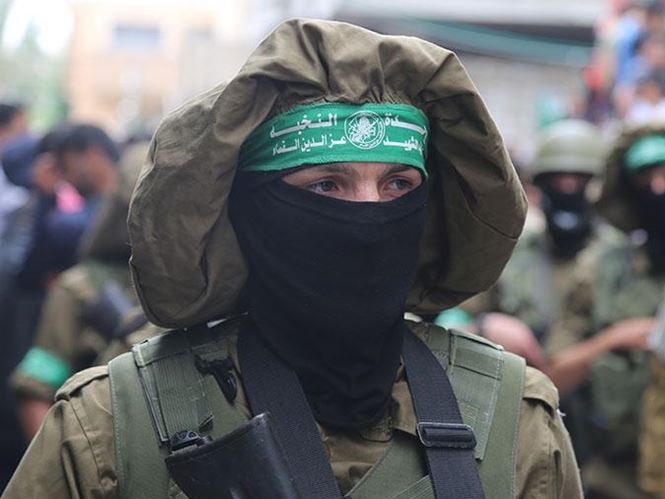
The IDF aims have shifted from disarmament and deep territorial control to maintaining a shallow security zone after resistance proved stronger and regional actors continued effective counter-pressure
Israeli military planning has shifted from an advance toward the Litani River to a reduced objective focused on a narrow buffer zone along the Lebanese border. Government statements previously outlined control extending up to roughly thirty kilometers north, alongside destruction of Hezbollah infrastructure and removal of its combat capability. (Reuters)
Current reporting indicates emphasis on a strip measuring approximately three to four kilometers, supported by forward positions and cleared civilian presence. Operational focus has narrowed to territorial denial near the border rather than dismantling Hezbollah as an organization.
Israeli leadership had maintained for months that Hezbollah forces were significantly degraded. Official claims included thousands of strikes and large numbers of fighters killed, with over 3,500 targets hit during recent operations. (New York Post)
Parallel battlefield data shows Hezbollah continuing sustained rocket and missile fire into Israeli territory, including more than one hundred projectiles launched within a single day alongside Iranian strikes. (The Wall Street Journal)
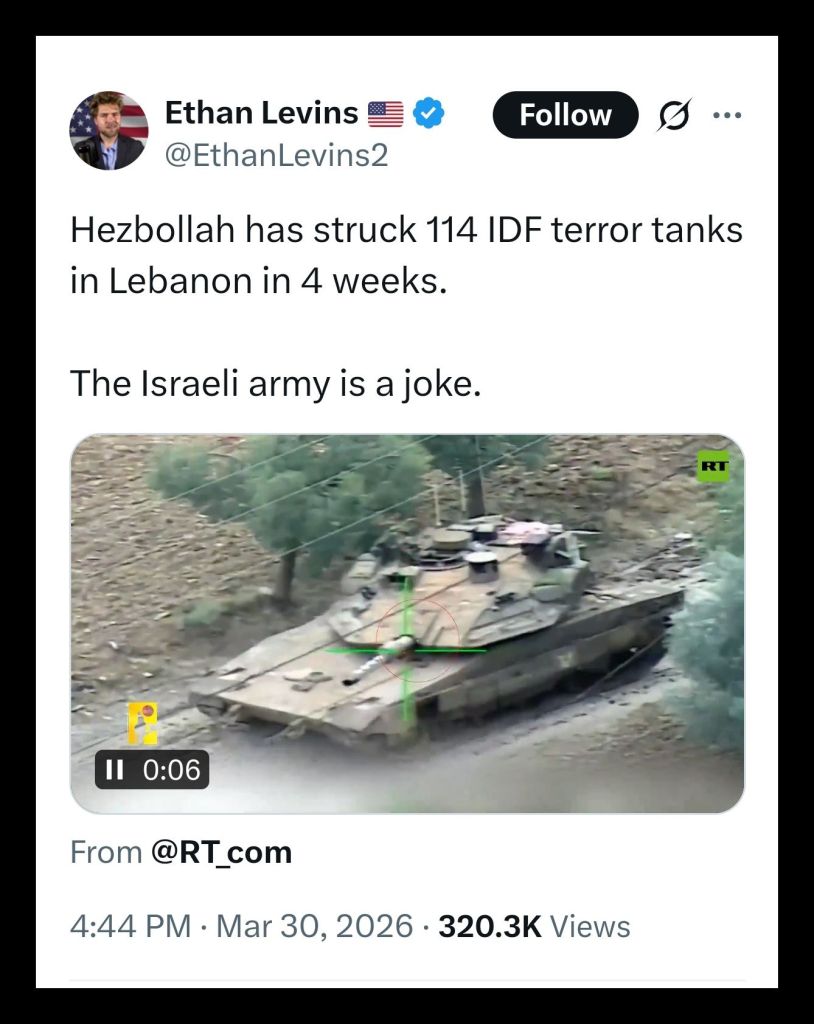
Hezbollah retains operational capacity to target Israeli positions, military infrastructure, and population centers. Rocket salvos exceeding one hundred launches and coordinated attacks on bases and infrastructure demonstrate continued functionality despite sustained Israeli air and ground operations. (Wikipedia)
Israeli ground operations have produced limited territorial gains while incurring casualties. Confirmed Israeli military fatalities continue to accumulate during clashes in southern Lebanon, with additional losses reported over the course of the broader conflict. (Reuters)
Casualty figures remain lower than Lebanese totals but reflect the cost of ground incursions against entrenched positions.
The operational environment has expanded beyond a single front. Hezbollah engagement coincides with direct Iranian missile strikes on Israeli territory and additional attacks from aligned groups. Iranian ballistic missiles have reached Israeli cities and infrastructure, causing deaths, injuries, and structural damage. (Wikipedia)
Missile strikes have also targeted energy infrastructure, including refinery facilities in Haifa, demonstrating reach into critical economic assets. (Reuters)
The conflict now operates across multiple axes involving Lebanon, Iran, and additional regional actors. Houthi participation and attacks on regional targets further extend the operational burden. (Wikipedia)
Sustained multi-front pressure imposes logistical and force allocation constraints. Israeli forces are deployed simultaneously across northern operations, missile defense, and ongoing regional conflict requirements. Public reporting and official statements acknowledge strain on personnel and extended reserve mobilization, limiting capacity for prolonged large-scale ground offensives.
Air defense systems face continuous saturation pressure under combined missile and rocket fire. Iranian and Hezbollah launches include ballistic missiles, drones, and short-range rockets in coordinated patterns designed to stress interception capacity.
Penetration of Israeli airspace by ballistic missiles, including strikes on populated areas and infrastructure, indicates limits in interception coverage under sustained load. (Wikipedia)
Military infrastructure and logistics nodes have faced repeated targeting. Strikes on fuel storage, industrial facilities, and transportation routes complicate sustainment and operational tempo. (Reuters)
Israeli strategy has therefore shifted under combined operational, logistical, and strategic constraints. Initial objectives requiring deep territorial control, large-scale force commitment, and prolonged occupation have been reduced to a narrower defensive posture along the border.
Disarmament of Hezbollah required either state collapse in Lebanon or sustained occupation with continuous counterinsurgency operations. Neither condition has been achieved. Hezbollah maintains command structure, firing capability, and territorial presence despite sustained bombardment and targeted killings.
Buffer zone strategy reflects an attempt to impose distance rather than eliminate capability. Historical precedent indicates such zones require permanent enforcement and remain vulnerable to infiltration, indirect fire, and local resistance.
Population displacement measures face practical limits. Large-scale displacement has already occurred, with approximately one million people affected in Lebanon, yet civilian return patterns persist even under active conflict conditions. (Wikipedia)
Operational outcomes indicate attritional dynamics rather than decisive degradation. Israeli firepower has inflicted significant damage and casualties, while opposing forces continue to generate sustained offensive output across multiple domains.
Strategic contraction reflects accumulated miscalculation across multiple operational assumptions and theatres.
Israeli leadership assessed Hezbollah as significantly degraded following sustained airstrikes, targeted killings, and decapitation operations against senior commanders. Subsequent battlefield activity contradicts that assessment, with Hezbollah maintaining continuous rocket fire, coordinated strikes on military bases, and the ability to impose costs on advancing ground units. (The Wall Street Journal)
Command decapitation produced limited strategic effect, as replacement structures and decentralized operations sustained combat output. Assumptions that leadership removal would collapse operational capacity did not align with Hezbollah’s organizational design or its embedded position within southern Lebanon.
Parallel miscalculations shaped expectations in Yemen, where leadership targeting of Houthi structures failed to halt participation in the conflict. Houthi missile activity expanded the battlespace, adding pressure on Israeli air defense and extending operational demands beyond the northern front. (Wikipedia)
Assessment of Iran followed a similar pattern, with expectations that high-impact strikes and leadership disruption would trigger internal instability or systemic breakdown. Iranian response demonstrated retained command continuity, sustained missile capability, and willingness to escalate through direct strikes on Israeli territory and infrastructure. (The Guardian)
Initial operational concepts relied on rapid escalation and shock effects to produce short-duration outcomes. The conflict instead shifted into sustained multi-front engagement involving Hezbollah, Iran, and aligned actors, with continued missile exchanges and ground combat extending beyond initial timelines. (The Guardian)
Force structure limitations have compounded these miscalculations. Israeli military officials have acknowledged a manpower shortfall estimated between 12,000 and 15,000 personnel, alongside warnings that operational strain has reached critical levels under simultaneous deployments across multiple theatres. (Middle East Monitor)
Attritional dynamics have replaced expectations of rapid decisive outcomes. Ground operations in southern Lebanon have produced limited territorial gains while incurring casualties, with Hezbollah explicitly pursuing a strategy aimed at increasing the cost of Israeli advances. (Al Jazeera)
The reduction of objectives from deep territorial control to a narrow buffer zone aligns with these constraints. Strategic aims have been adjusted to reflect available manpower, sustained resistance, and continued multi-front pressure rather than initial assumptions of rapid collapse among opposing forces.
Authored By: Global GeoPolitics
Thank you for visiting. This is a reader-supported publication. If you believe journalism should serve the public, not the powerful, and you’re in a position to help, becoming a PAID SUBSCRIBER truly makes a difference. Alternatively you can support by way of a cup of coffee:
https://buymeacoffee.com/ggtv |
https://ko-fi.com/globalgeopolitics |
Bitcoin: 3NiK8BoRZnkwJSHZSekuXKFizGPopkE7ns


Leave a comment