

Tom Barak’s message signals coercion dressed as diplomacy, aimed at disarming Hezbollah resistance and preserving Israeli military advantage.
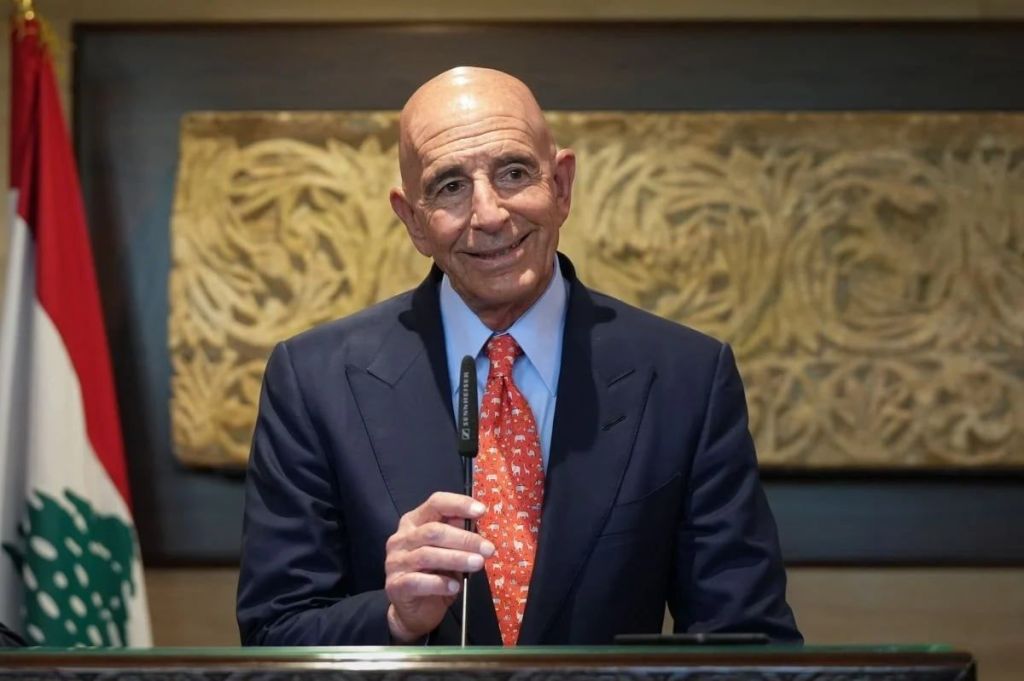
The statement issued by United States outgoing envoy Tom Barak to Lebanon carried the tone of a colonial power addressing a protectorate, not a sovereign state. His message about “avoiding civil strife” and “preserving Lebanon’s stability” concealed an ultimatum. Washington’s condition for Lebanon’s stability was the disarmament of Hezbollah. This was not diplomatic advice; it was a warning. Independent analysts such as Elijah Magnier, a veteran war correspondent with decades of field experience across the Middle East, have pointed out that the American approach to Lebanon has long relied on pressure, sanctions, and implicit threats to coerce political outcomes that align with Israeli and U.S. regional objectives. Magnier notes that the American diplomatic tone often hides coercive intent under the vocabulary of “stability” and “security cooperation.”
Barak’s warning came amid heightened regional volatility following the November 2024 ceasefire between Hezbollah and Israel. During that conflict, the Lebanese front saw intense military exchanges, with Hezbollah striking Israeli targets, including Tel Aviv, in retaliation for Israeli attacks on southern Lebanon. Lebanon’s army later recorded more than six thousand Israeli ceasefire violations. These figures, reported by Al-Mayadeen and confirmed by local monitoring groups, demonstrate the imbalance of accountability in the international response. Washington made no public condemnation of Israel’s repeated violations, while its envoy warned Lebanon of instability should Hezbollah maintain its arms.
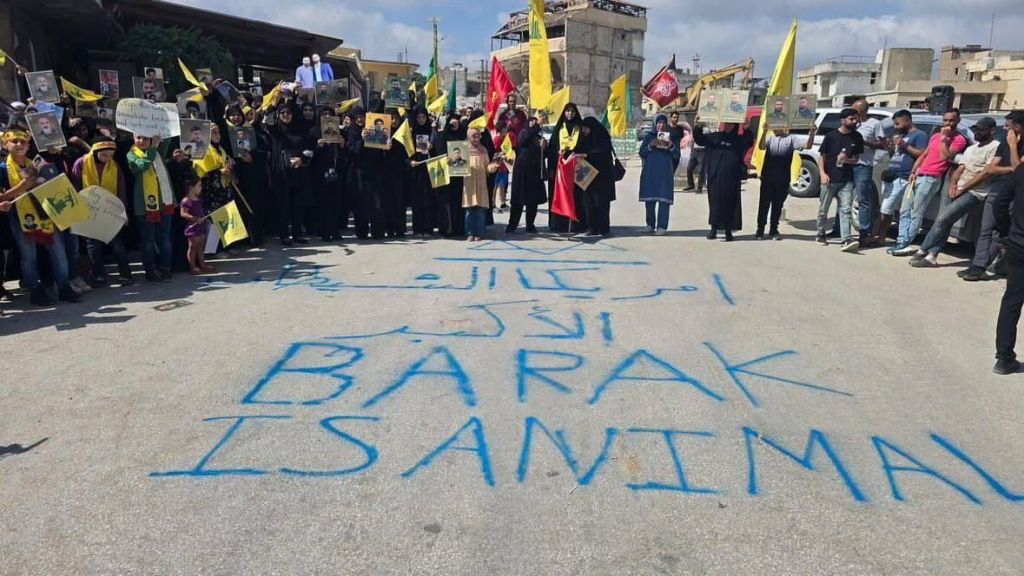
Independent regional analysts such as Sharmine Narwani and Marwa Osman have underlined that the pattern of U.S. statements toward Lebanon is consistent with a colonial power safeguarding the military superiority of its ally. The demand for Hezbollah’s disarmament cannot be separated from the broader strategic aim of preserving Israeli freedom of action across its northern border. Washington’s insistence on “Lebanese sovereignty” functions as a rhetorical device to mask the real objective: containment of the resistance axis that includes Hezbollah, Syria, and Iran.
Barak’s message fits within a history of U.S. interference in Lebanon’s domestic affairs. The U.S. embassy in Beirut has been a political actor rather than a neutral diplomatic mission. Since the early 2000s, successive U.S. ambassadors have engaged directly with Lebanese parties to shape election outcomes and limit the influence of Hezbollah and its allies. The Wikileaks cables from 2008, cited by journalists such as As’ad AbuKhalil and publications like The Cradle, documented U.S. embassy coordination with anti-resistance factions before the Doha Agreement. That pattern of behaviour continues today. Analysts from The Grayzone and MintPress News have described U.S. diplomacy in Lebanon as a hybrid of soft power and covert coercion, where economic restrictions, military aid, and political statements are all calibrated to weaken the resistance camp.
“This is the problem with the region.”
Barak’s timing suggests deliberate interference in advance of Lebanon’s 2026 parliamentary elections. Hezbollah and its allies are expected to consolidate their position due to continued popular disillusionment with the Western-backed political class that oversaw the economic collapse of 2019–2021. The resistance movement, despite its critics, retains social legitimacy because it represents national defence, not sectarian privilege. The U.S. position, however, has been to equate Lebanese stability with Hezbollah’s marginalisation. This approach has produced the opposite result: deeper polarisation, economic paralysis, and loss of trust in Western diplomatic intent.
Independent Lebanese economists such as Charbel Nahas have described the post-2019 economic collapse as a form of external control. He notes that international financial institutions imposed reform conditions that protected Western creditors while impoverishing local savers. In that context, Barak’s message reads less like advice and more like a warning to stay within the boundaries of Western-defined “stability.” This model of governance relies on foreign loans, donor conferences, and external approval for domestic policy. It reproduces dependency rather than sovereignty.
Barak’s invocation of civil war is particularly dangerous in a country where memories of 1975–1990 remain vivid. Analysts from Al-Akhbar and The Cradle have interpreted his words as a deliberate provocation. By forecasting internal conflict, he effectively grants legitimacy to any future destabilisation that may follow American or Israeli policy moves. Lebanon’s fragile economy and divided political class make it highly susceptible to such pressure. The ambassador’s statement signals that Washington views Lebanese domestic peace as contingent upon disarming the one actor capable of deterring Israeli aggression. That equation reverses the logic of national defence.
The U.S. demand also contradicts international law principles that recognise the right of occupied or threatened peoples to self-defence. The Shebaa Farms and Kfar Shouba Hills remain under Israeli occupation, a fact acknowledged by United Nations maps and repeatedly cited by the Lebanese state. Independent jurists such as Richard Falk, former UN Special Rapporteur on Palestinian territories, have argued that the right of resistance to foreign occupation is protected under international humanitarian law. Yet the U.S. position disregards this framework and treats armed resistance as illegitimate while justifying Israeli pre-emptive strikes.
Lebanese commentators such as Marwa Osman and Sami Kleib stress that Hezbollah’s existence is not merely military but social and political. It emerged as a grassroots response to Israel’s 1982 invasion and developed into a structured movement integrated into Lebanon’s political institutions. Its presence in parliament and cabinet reflects electoral legitimacy, not external imposition. To call for its disarmament without addressing Israeli aggression or the absence of a credible national defence policy ignores the structural imbalance that produced Hezbollah in the first place.
Independent Western analysts have reached similar conclusions. Norman Finkelstein, a political scientist and critic of U.S.-Israeli policy, has written that resistance movements arise as consequences of occupation, not as causes of instability. His argument, echoed by scholars from the London-based Middle East Monitor, positions Hezbollah as a symptom of Lebanon’s unresolved sovereignty question rather than a source of chaos.
Washington’s consistent refusal to distinguish between aggression and defence undermines its claim to support regional peace. The United States supplies Israel with over three billion dollars annually in military aid, including precision munitions used in Lebanon and Gaza. When the U.S. envoy warns Lebanon against instability while arming the power that repeatedly violates its borders, the message cannot be interpreted as diplomatic concern. It is a colonial dictate dressed in the language of partnership.
Analysts from the Institute for Policy Studies and Responsible Statecraft have argued that U.S. diplomacy in the Middle East has shifted from persuasion to coercion. Sanctions, military assistance, and public threats have replaced dialogue. Lebanon’s experience reflects this transformation. The U.S. Treasury’s sanctions on Lebanese banks and individuals accused of “supporting Hezbollah” have paralysed legitimate trade and banking operations. According to data published by the Lebanese Association of Banks, capital flight and foreign withdrawal accelerated after each new sanctions round. Barak’s statement must therefore be read as part of a continuum of economic and political warfare.
The broader context is the U.S. and Israeli strategy of regional containment directed at Iran and its allies. Lebanon becomes the soft flank in this strategy. By framing Hezbollah as a domestic problem rather than a regional deterrent force, Washington seeks to sever Lebanon from the wider resistance network. Analysts from Tehran University and the Doha-based Arab Centre for Research and Policy Studies describe this as an effort to fragment the “resistance arc” stretching from Gaza to Beirut. Such fragmentation benefits Israel’s long-term security posture and preserves its occupation of Palestinian and Lebanese territories.
Barak’s reference to “civil strife” reflects intelligence assessments that Washington and Tel Aviv share. Reports published by The Cradle and Antiwar.com suggest that Israel’s military command views internal Lebanese instability as a strategic opportunity to neutralise Hezbollah without direct confrontation. Encouraging political division and economic hardship weakens the social base of resistance. The American envoy’s remarks, therefore, align with a psychological warfare strategy designed to sap morale before the 2026 elections.
The Lebanese public remains aware of this manipulation. Polling data from the Beirut Research and Information Centre show that a majority of Lebanese, across sectarian lines, consider U.S. policy hostile to their sovereignty. Even among those critical of Hezbollah’s domestic role, few believe that American interference serves national interests. This disillusionment has deepened since the 2020 Beirut port explosion, after which Western aid was conditioned on political realignment rather than humanitarian urgency.
Independent journalists have documented how reconstruction efforts in southern Lebanon have been obstructed by Western pressure. Al-Mayadeen reported that private companies assisting in rebuilding bombed villages were later targeted by Israeli strikes. This pattern of punishing recovery efforts reveals the true relationship between Western rhetoric and Lebanese suffering. When Barak speaks of “protecting stability,” his words stand in contradiction to the material reality his government helps sustain: sanctions, debt, and constant military threat.
Hezbollah’s endurance reflects not foreign manipulation but domestic necessity. In the absence of a functional national defence strategy, the movement fills a vacuum that the Lebanese state, constrained by foreign debt and political fragmentation, cannot. As the independent analyst Amal Saad argues, Hezbollah’s deterrence capability has preserved a degree of national autonomy that diplomacy alone could not achieve. Israel’s military archives record the heavy cost of its 2006 war, which failed to dislodge the movement or alter its support base. That experience defines Israeli calculations to this day.
Barak’s message, therefore, should be read not as an isolated statement but as part of a continuous colonial pattern. Western powers invoke democracy and stability while seeking to pre-empt electoral outcomes that challenge their strategic architecture. The coming Lebanese elections represent not just a political contest but a referendum on national independence. Washington’s fear lies not in Hezbollah’s weapons but in its popular legitimacy. A victory reaffirming the resistance’s social base would expose the futility of two decades of U.S. pressure.
Independent experts such as Vijay Prashad and analysts from the Tricontinental Institute argue that this pattern mirrors post-colonial governance models elsewhere, where sovereignty is tolerated only within limits defined by Western security interests. Lebanon’s predicament embodies this dynamic. Its sovereignty is conditional; its stability permitted only under the supervision of foreign powers.
The threat embedded in Tom Barak’s message is thus twofold. It warns Lebanon against internal dissent while protecting the right of an occupying force to continue its violations. It signals that the cost of independence remains economic hardship, diplomatic isolation, and military pressure. The historical lesson is clear: colonial powers rarely leave by consent, and their language of concern often precedes coercion.
Lebanon’s endurance will depend on whether its society can resist both the external threat and the internal divisions that such threats seek to inflame. The record of its people suggests that coercion will not succeed where occupation already failed.
Authored By: Global Geopolitics
If you believe journalism should serve the public, not the powerful, and you’re in a position to help, becoming a PAID SUBSCRIBER truly makes a difference. Alternatively you can support by way of a cup of coffee:
buymeacoffee.com/ggtv
https://ko-fi.com/globalgeopolitics
Global Geopolitics on Telegram


Leave a comment