

Russia’s new roadmap seeks strategic leverage in a market long dominated by China, but capacity gaps remain vast.
In early November 2025 President Putin directed his government to produce by 1 December a detailed “road-map” for the extraction and processing of rare-earth minerals in Russia. (The Moscow Times) Russia has in recent months emphasised that its reserves of so-called critical minerals, including the 17 rare-earth elements (the 15 lanthanides plus scandium and yttrium), present a strategic resource. (RUSSIA’S PIVOT TO ASIA) The decree must be understood against a backdrop of intensifying global competition for supply-chains of high-tech materials, and Russia’s own effort to shift from being a resource-exporter of raw commodities to a more strategically oriented producer.
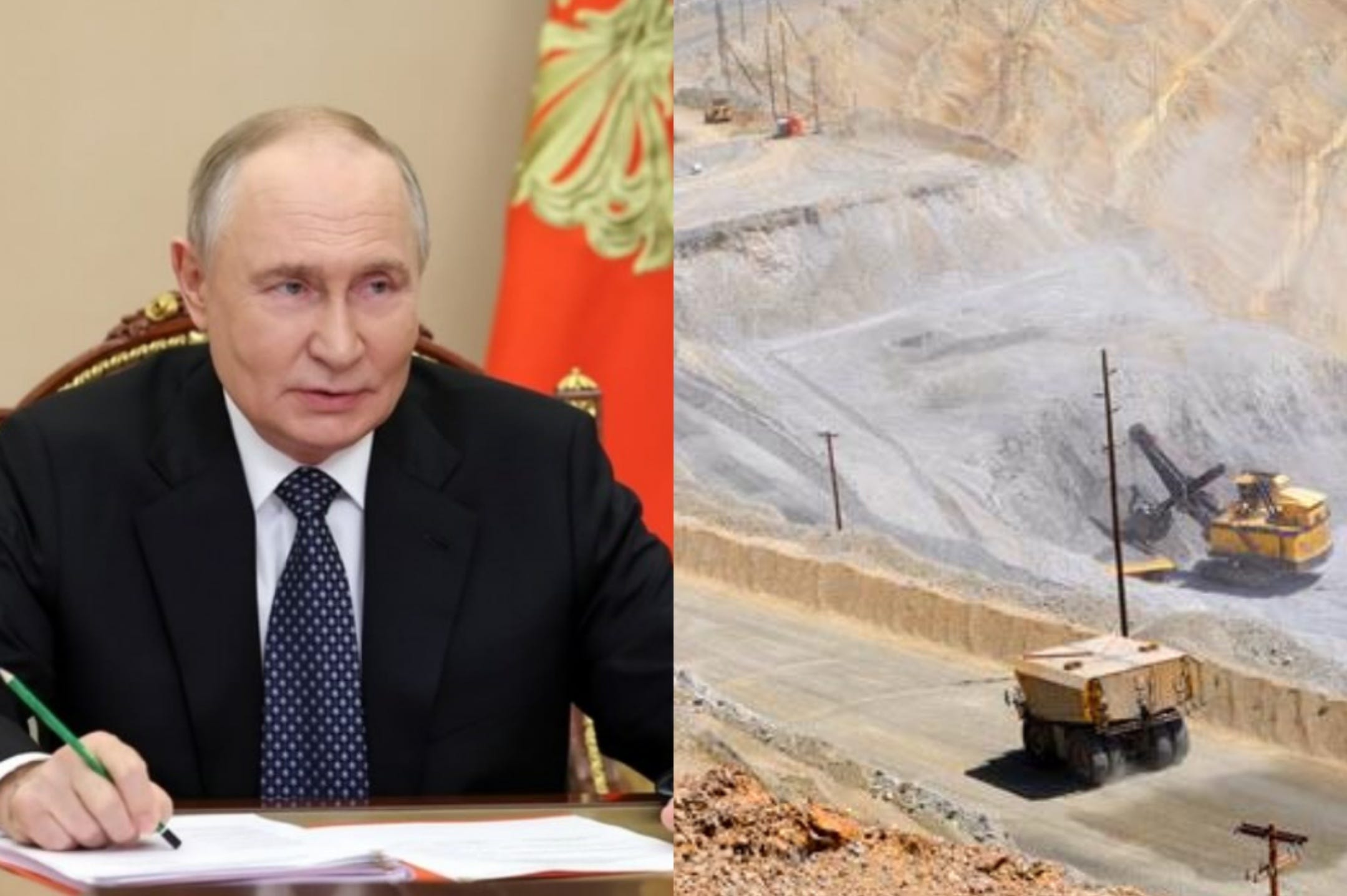
Russia’s strategic position is curious. On one hand the country claims large reserves. According to the Ministry of Natural Resources Moscow estimates reserves of 15 rare-earth metals at roughly 28.7 million tonnes. (Al Jazeera) Independent analysts note the figure is significantly higher than the estimate from the United States Geological Survey (USGS) of around 3.8 million tonnes. (Rare Earth Exchanges) On the other hand Russia currently produces only about 1 per cent of global rare-earth output. (The Moscow Times) The gap between the reserve claim and actual output highlights serious structural challenges. Actually, Vladimir Putin once announced a programme for the rare earth metals mining back in 2013, with little impact on the rare earths metals domestic output growth to date.
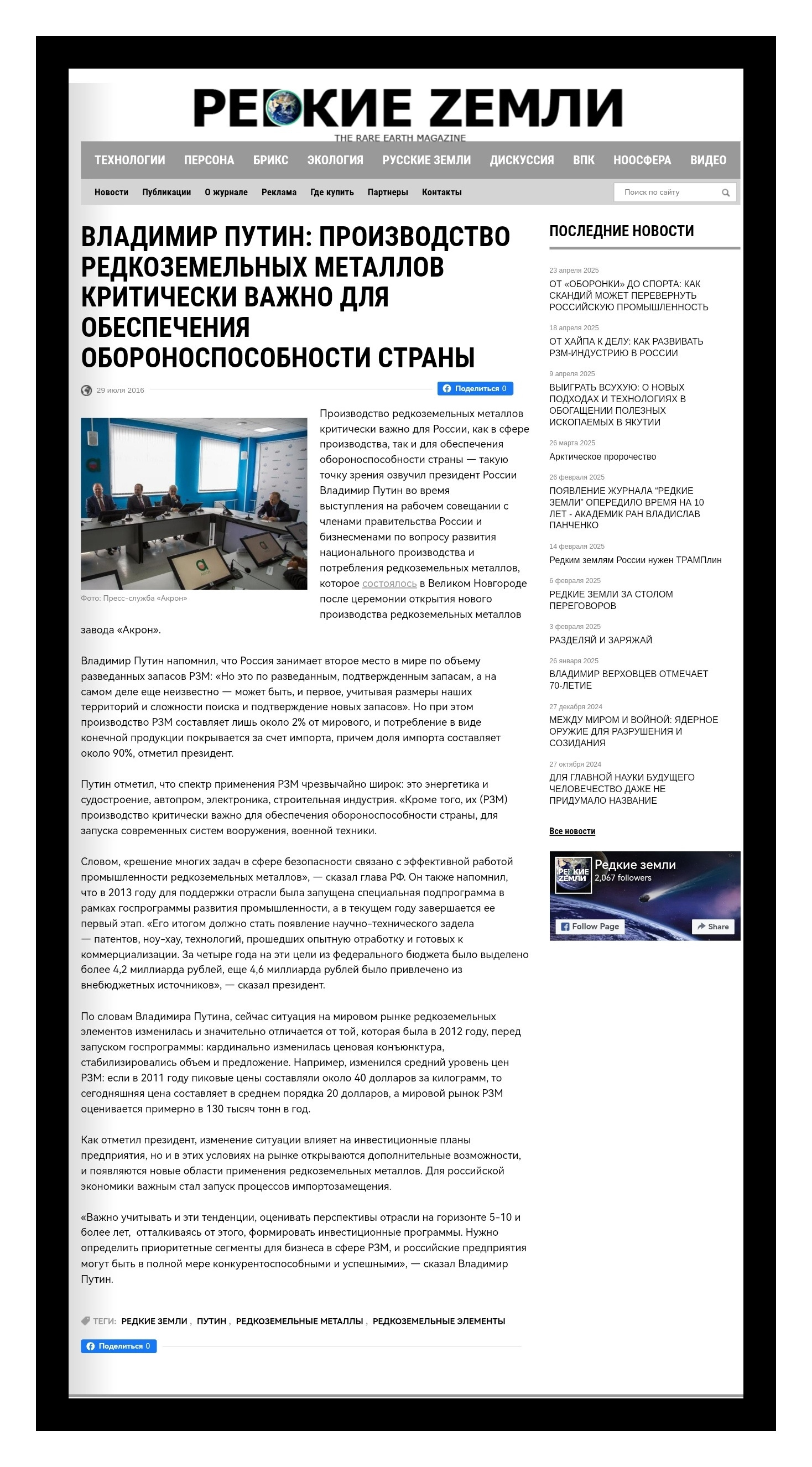
(This is a 2016 report about it)
One of the principal drivers behind Putin’s decree is the current dominance by China of rare-earth processing. China controls circa 60-70 per cent of global separation capacity and thus holds key leverage in global supply-chains. The dependence of other nations on Chinese processing has become a significant vulnerability. Russia’s move therefore reflects a calculated attempt to exploit that weakness and to recast itself as an alternative node. In Putin’s words Russia needs to “implement advanced technologies” and to “stimulate domestic demand”. (The Moscow Times) But rhetoric now meets reality: Russia lacks not just extraction capacity but downstream refining, separation, and manufacturing of rare-earth magnets. Independent commentator RareEarthExchanges observes: “Russia holds vast rare-earth reserves but currently produces only 1 % of global output, with ambitious plans to reach 12 % by 2030.” (Rare Earth Exchanges) That proposal may therefore under-state the scale of the task.
The decree further stipulates investment in “multimodal transport and logistics centres” on Russia’s borders with China and North Korea. (Al Jazeera) That suggests that Russia views rare-earth development not purely as an industrial project but as part of a broader geopolitical and infrastructural strategy. Strengthening links to East Asia fits Moscow’s pivot towards non-Western markets in the face of sanctions and Western supply-chain exclusion.
A number of independent analysts interpret Putin’s roadmap as more signalling than substance at present. RareEarthExchanges argues the decree “contains no new funding, no defined deposits, and repeats promises made since 2019” signalling “political theatre rather than industrial capacity”. (Rare Earth Exchanges) That criticism matters. If Russia cannot move beyond reserve estimates and optimistic targets to actual investment in processing, then the mere announcement will not shift global supply-chain dynamics.
Geopolitically the implications are substantial. First, Russia attempts to reduce its dependency on the West, and to reposition itself in the high-value tier of the resource economy. Second, by positioning rare-earth development as strategic rather than purely economic, Moscow arms itself with a tool of geopolitical leverage. The IISS notes that rare-earths are critical for high-technology, defence and aerospace systems, meaning states that control supply-chains acquire strategic weight. (IISS) Third, Russia’s willingness to speak of cooperation, including with the United States, signals that it may seek to exploit demand for alternatives to China. In March 2025 the Russian investment envoy acknowledged that US companies had shown interest in rare-earth projects in Russia. (The Moscow Times) However that interest remains tentative and subject to sanction-risk and institutional constraints.
There are important caveats. Russia’s processing capabilities are minimal. As the Reuters-derived article in The Moscow Times summarises: “Russia ranks fifth globally in rare-earth reserves. However Russia currently produces just 1 % of the world’s rare metals and has minimal processing capabilities.” (The Moscow Times) Extraction alone does not confer value in rare-earths; refining, separation and magnet manufacturing matter more. China’s advantage lies there. Overcoming the technological gap will require substantial investment, long timelines and skilled labour. Russia faces difficult terrain, harsh climate conditions in remote regions, and weak infrastructure, all of which raise costs. Furthermore, even Russia’s reserve estimates may be optimistic and difficult to monetise in a contested international environment. Some deposits require large energy inputs and complex handling of radioactive by-products.
From a strategic-economic viewpoint, the roadmap announced by Putin can be seen as part of a larger attempt to double-down on resource leverage. Russia is thus signalling that in an era of technological competition and supply-chain decoupling, it refuses to be a passive supplier of raw commodities alone. The intended move up the value chain allows Moscow to claim strategic autonomy and resist dependence on Western finance or technology. It dovetails with Moscow’s efforts to integrate resource corridors with Asian neighbours and to expand Eurasian infrastructure.
But the actual material implications for global rare-earth supply are likely to be limited in the short term. Independent observers remain sceptical that Russia will achieve rapid scale-up given technical, financial and geopolitical headwinds. RareEarthExchanges warns that the missing “middle-stream” capability means Russia remains far behind China and the West. (Rare Earth Exchanges) For Western countries currently seeking to diversify away from China, Russia may present an option, but one wrapped in substantial risk: sanction exposure, geopolitical instability, and weak processing ecosystem.
In summary, Putin’s decree marks a clear strategic pivot of Russia’s resource policy. It anchors rare-earth minerals as a national strategic priority rather than a marginal extractive sector. It seeks to leverage Russia’s claimed reserves to gain bargaining power, reduce supply-chain dependence and reshape global resource flows in Moscow’s favour. Yet the commitment to produce tangible output faces many hurdles and at present remains mostly signalling. For global supply-chains the move may accelerate diversification efforts, but the prospect of Russia rapidly challenging China’s dominance appears remote without a breakthrough in processing and industrial capacity.
Authored By: Global GeoPolitics
If you believe journalism should serve the public, not the powerful, and you’re in a position to help, becoming a PAID SUBSCRIBER truly makes a difference. Alternatively you can support by way of a cup of coffee:
buymeacoffee.com/ggtv


Leave a comment