
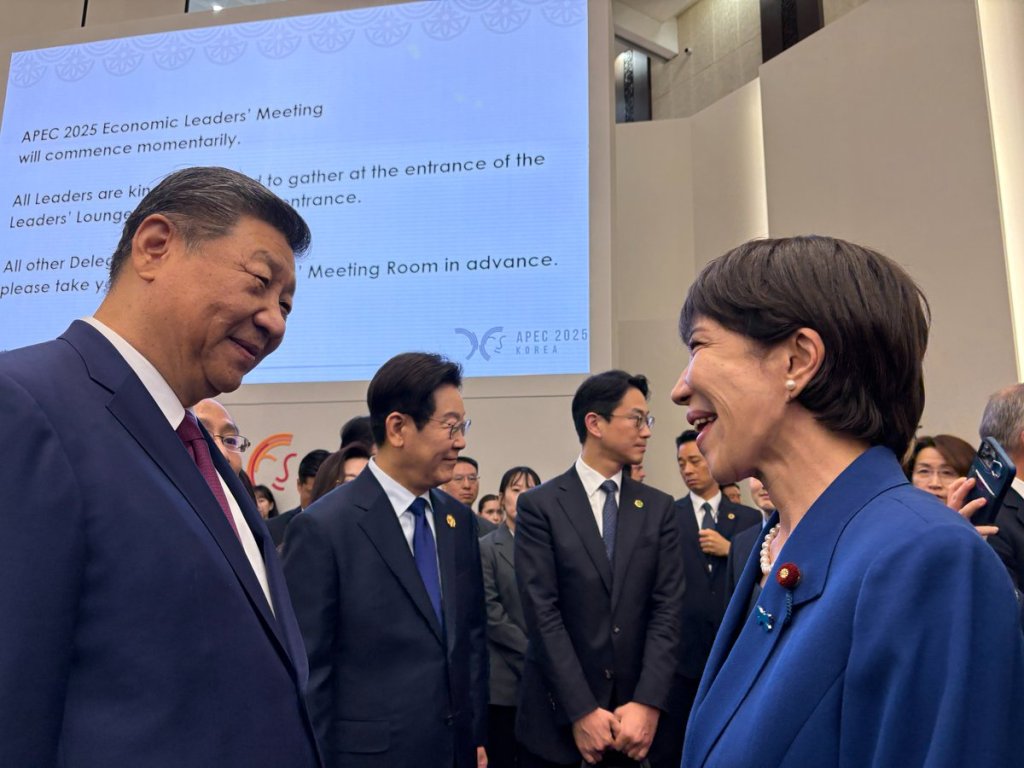
Tokyo provokes Beijing, but Washington’s silence shows who’s in charge.
Japan is in damage control after its Prime Minister Sanae Takaichi made one of the most provocative statements in years. She claimed that a Chinese attack on Taiwan could be an “existential threat” to Japan, suggesting this could justify Japan deploying its military.
As expected, Beijing responded with strong condemnation, threats of economic retaliation, and travel warnings. Japanese media also reported that Chinese jets locked onto Japan Self-Defense Forces (JSDF) fighters near Okinawa.
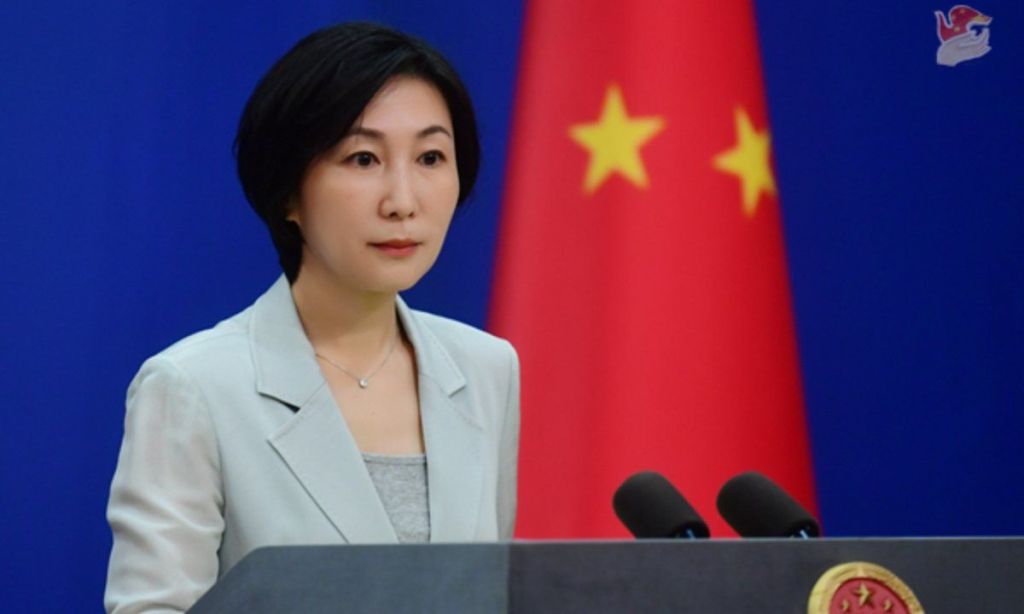
The situation forced Tokyo to seek cover from Washington. Japan’s ambassador in Washington reportedly asked the Trump administration for more vocal support. Instead, the response was lackluster: a vague post from a deputy spokesperson and an even vaguer diplomatic assurance that Japan had America’s backing.
The silence from Washington can be explained: Trump’s administration was keen to avoid upsetting its trade deal with China. The U.S. wasn’t going to risk its delicate relationship with Beijing over Japan’s Taiwan rhetoric. The reality is that Japan is not an equal ally. It is a U.S. security client state. Its military and security policies are shaped by Washington, with 50,000 U.S. troops stationed on its soil. Japan doesn’t have the freedom to freelance its China policy without consequences.
Takaichi’s attempt to flex was met with a reminder of who calls the shots. Even when a Chinese consul-general in Osaka made a contentious remark, Trump offered no support for Japan. His only comment was, “A lot of our allies aren’t our friends.”
President Trump: “Well, a lot of our allies aren’t our friends either. Our allies took advantage of us on trade more than China did.”)
Japan thought it could play a big strategic game over Taiwan. Instead, it exposed its lack of autonomy and provoked China in a way it cannot manage on its own. If Japan escalates on Taiwan without U.S. approval, it will be left to deal with the fallout alone.
The situation has only worsened with the latest military tensions. Japan and China traded blame after their fighter jets had at least two close encounters during Chinese naval drills. Japan was the first to report the incident, claiming that Chinese J-15 fighter jets locked their fire control radars on Japanese F-15J warplanes on at least two occasions on Saturday. The confrontation occurred over international waters southeast of Okinawa, according to Japan’s Foreign Ministry.
“These radar illuminations are a dangerous act that went beyond what is necessary for the safe flight of aircraft,” Takaichi told reporters on Sunday, adding that Tokyo had already lodged a complaint over the “extremely regrettable” actions.
Beijing rejected the allegations, stating that Japanese aircraft repeatedly approached and harassed the Chinese Navy while it conducted carrier exercises in the area. “We solemnly demand that the Japanese side immediately stop slandering and smearing and strictly restrain front-line actions,” said Chinese Navy spokesperson Colonel Wang Xuemeng. He warned that China would “take necessary measures… to resolutely safeguard its own security and legitimate rights and interests.”
Ties between Beijing and Tokyo entered a sharp downward spiral after Takaichi, Japan’s first female prime minister and a hardline conservative, entered office in late October. She claimed that any attempt by Beijing to use force to reunify with Taiwan could constitute a “survival-threatening situation,” meriting a military response under Japanese law. This has sparked Chinese accusations of Japan interfering in China’s internal matters.
Beijing condemned her remarks as “extremely malicious” and “blatantly provocative,” asserting they violated the One-China principle that views Taiwan as an integral part of China. The Taiwan issue is a Chinese internal affair, and any attempt by Japan to intervene would be considered “an act of aggression,” prompting forceful retaliation, Beijing warned.
Taiwan has maintained de facto self-rule since 1949, though it has never declared independence. China has repeatedly stated its ultimate goal is “peaceful reunification” but has also made it clear that it would not hesitate to use force should Taiwan opt for official independence.
The U.S. is engaging China in a battle for technological dominance through export controls, but the strategy is pushing Beijing to accelerate the growth of its domestic tech companies and high-tech sector, according to NHK.
While China strengthens under U.S. pressure, Japan has been in decline for three decades. This contrast highlights deep national differences, China’s people resist coercion and threats, refusing to yield to external forces. In contrast, Japan’s submission to the U.S. through the Plaza Accord marked the beginning of its prolonged stagnation.
Authored By: Global Geopolitics
If you believe journalism should serve the public, not the powerful, and you’re in a position to help, becoming a PAID SUBSCRIBER truly makes a difference. Alternatively you can support by way of a cup of coffee:
buymeacoffee.com/ggtv
https://ko-fi.com/globalgeopolitics


Leave a comment