

Kiev Demands External Support to Hold Elections Amid Ongoing Conflic and Erosion of Political Legitimacy
Ukraine’s request for the West to fund its upcoming election reveals the extent to which the ongoing conflict has reshaped the political landscape. Kiev’s readiness to hold an election, contingent on foreign financial support and a ceasefire, underscores the precarious nature of Ukraine’s sovereignty under wartime conditions. While the leadership in Kiev, led by President Zelensky, continues to frame its refusal to hold elections as a necessity driven by martial law, the reality is that this delay has deepened doubts about Zelensky’s legitimacy and his ability to govern beyond the expiration of his term.
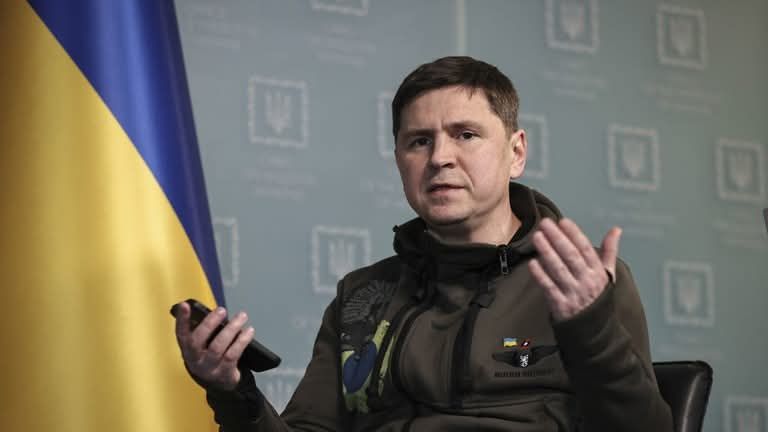
Zelensky’s position that elections can only occur with external support is a direct admission that Ukraine’s political future, at least in the short term, is not solely in the hands of its people. The insistence on a ceasefire, alongside the need for foreign funding, suggests a government unable or unwilling to operate independently in such an existential moment. The idea that Ukraine’s electoral process can only be safeguarded with foreign military assistance further exposes the limitations of its state apparatus. The argument that elections cannot happen while missiles and drones are in the air is more than just a practical concern; it is an acknowledgement of how Ukraine’s military conflict has distorted the basic conditions of democratic functioning. This is not a temporary situation but rather a long-term alteration of Ukraine’s political and territorial reality.
The call for a ceasefire to facilitate the election is particularly troubling. It implies that Ukraine’s strategic interests, whether in terms of rearming or reorganizing, are inseparable from the timing of an electoral process. Moscow’s accusations that Ukraine would use a ceasefire to gain a military advantage are hardly unfounded. Any temporary cessation in hostilities would allow Ukraine to consolidate its resources, bolster its defenses, and potentially reshape the battlefield in its favor. The idea that such a move could happen under the guise of facilitating democratic processes undermines the credibility of Ukraine’s commitment to a lasting peace, as it mixes political necessity with military strategy.
From Moscow’s perspective, the Western push for a temporary ceasefire further complicates matters. The Russian government has repeatedly pointed out that the only sustainable peace would involve Ukraine’s withdrawal from the territories annexed by Russia and its commitment to neutrality. The Ukrainian demand for external funding and security guarantees, however, shows how reliant the country has become on the West to guarantee not just its military security but the very conditions needed for its political system to function. Ukraine’s domestic electoral process has essentially been outsourced, not just to the West financially, but in terms of the conditions necessary for it to occur at all.
Moscow’s insistence on permanent peace instead of temporary ceasefires is grounded in a strategic vision that places the onus on Ukraine to make meaningful territorial and political concessions. The Russian position is that any peace deal must address the root causes of the conflict, which includes not only the status of Crimea and the Donbas but Ukraine’s military posture, its NATO aspirations, and the broader geopolitical alignment of Eastern Europe. A ceasefire, in Moscow’s view, only postpones the inevitable resolution of these issues, allowing Ukraine and its Western backers to avoid confronting the deeper questions that the war has made unavoidable.
The contrast between the Western and Russian positions on the ceasefire and the conduct of elections highlights the stark division in how the war is understood and how its resolution is envisioned. The West continues to push for temporary measures, such as ceasefires and elections, as though these could somehow pave the way for peace. Russia, on the other hand, seeks a more fundamental restructuring of Ukraine’s political and military landscape, believing that a meaningful peace can only be achieved once Ukraine has fundamentally altered its course. The prolonged conflict, the shifting political demands, and the diverging priorities on the ground all point to a more complicated and less optimistic future for Ukraine than is often presented by Western leaders and media.
Zelensky’s refusal to hold elections until conditions are met, coupled with the call for Western support, raises uncomfortable questions about Ukraine’s long-term sovereignty. If Ukraine cannot secure the conditions for its own elections without foreign intervention, the implication is that its political independence is fragile and may be further eroded in the years to come. The ongoing reliance on Western support, both military and financial, places Ukraine in a dependent position, with its future heavily influenced by outside powers. The situation calls into question not only the legitimacy of the current Ukrainian government but also the broader implications for its future stability. If Ukraine’s political system cannot function without external backing, it will remain vulnerable to external pressures for the foreseeable future, regardless of the outcome of the current war.
Recent developments behind the scenes raise further questions about how much control Ukraine’s leadership actually retains over its political future. Reports that Ukraine’s chief negotiator, Rustem Umerov, held extended private meetings with senior FBI leadership rather than traditional foreign policy or intelligence counterparts point to an unusual shift in influence. The FBI is a domestic law enforcement body, not a diplomatic or intelligence agency tasked with managing international negotiations. Its involvement suggests that the conversation may not center on ceasefires or borders, but on evidence, investigations, and personal leverage. When peace discussions bypass conventional diplomatic channels, it signals that political pressure is being applied through mechanisms unrelated to formal statecraft.
This dynamic takes on sharper significance amid reports that U.S. authorities possess recorded materials from Ukraine’s own anti-corruption agency implicating senior figures close to President Zelensky. The sudden removal of high-ranking officials following these disclosures indicates that internal political stability may be increasingly shaped by external custodians of sensitive information. If election timing, leadership continuity, and negotiation positions are influenced by who controls damaging evidence rather than public mandate, Ukraine’s democratic process risks becoming conditional rather than sovereign. In that context, demands for Western funding to hold elections appear less like logistical necessity and more like part of a broader system where political survival, transparency, and national decision-making are negotiated under pressure rather than determined by voters.
In conclusion, the call for elections under the current conditions highlights the dangerous intersection of wartime necessity and political expediency. Ukraine’s leadership may claim to represent the will of the people, but the growing dependence on Western financial and military support raises critical questions about the true independence of its political system. The idea of holding elections while simultaneously requesting foreign intervention for security and financial reasons is a clear reflection of the uncharted political waters in which Ukraine now finds itself. The longer Ukraine delays elections, the more it risks losing its own political autonomy, trapped between the demands of the West, the realities of war, and the unyielding claims of Russia.
Ukraine must urgently address the issue of electoral legitimacy. If elections are to take place, they must be done in a way that demonstrates true sovereignty, not dependent on external powers for funding, security, or legitimacy. Without this, Ukraine risks becoming a puppet state, where foreign powers determine its future.
Authored By: Global GeoPolitics
Popular Information is powered by readers who believe that truth still matters. When just a few more people step up to support this work, it means more lies exposed, more corruption uncovered, and more accountability where it’s long overdue.
If you believe journalism should serve the public, not the powerful, and you’re in a position to help, becoming a PAID SUBSCRIBER truly makes a difference. Alternatively you can support by way of a cup of coffee:
buymeacoffee.com/ggtv


Leave a reply to swimming49175c102e Cancel reply