
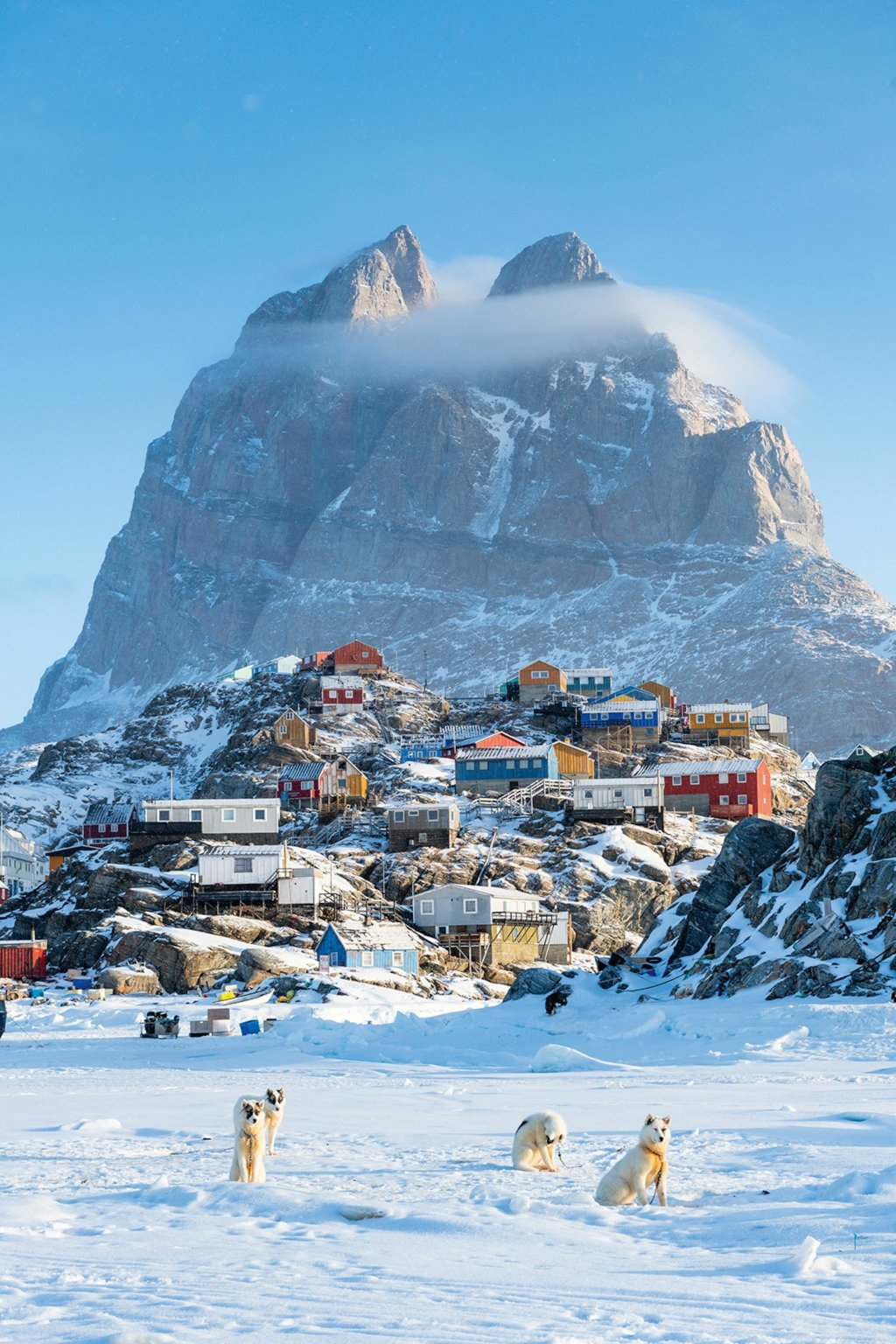
Amid a renewed U.S. legislative push and rising diplomatic and NATO tensions over Greenland’s future
A bill seeking to authorise the annexation of Greenland has been introduced in the U.S. House of Representatives, escalating a contentious campaign by President Donald Trump to bring the Arctic island under American control despite strong opposition from Denmark, Greenlandic leaders, and U.S. allies. The legislation follows renewed statements by Trump asserting that U.S. control of Greenland is essential for national security and for countering Russia and China in the Arctic.
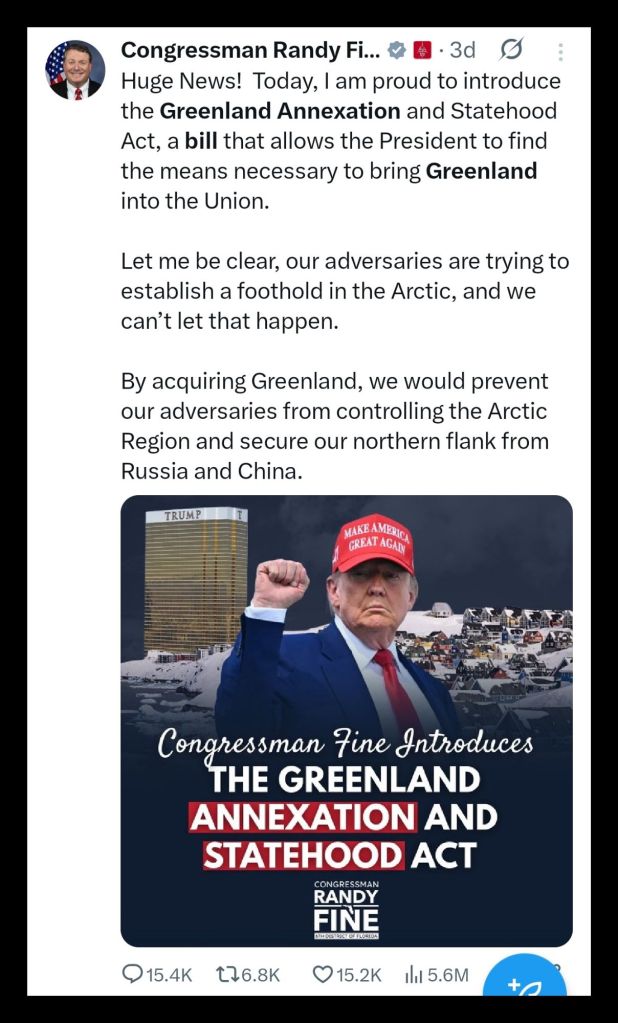
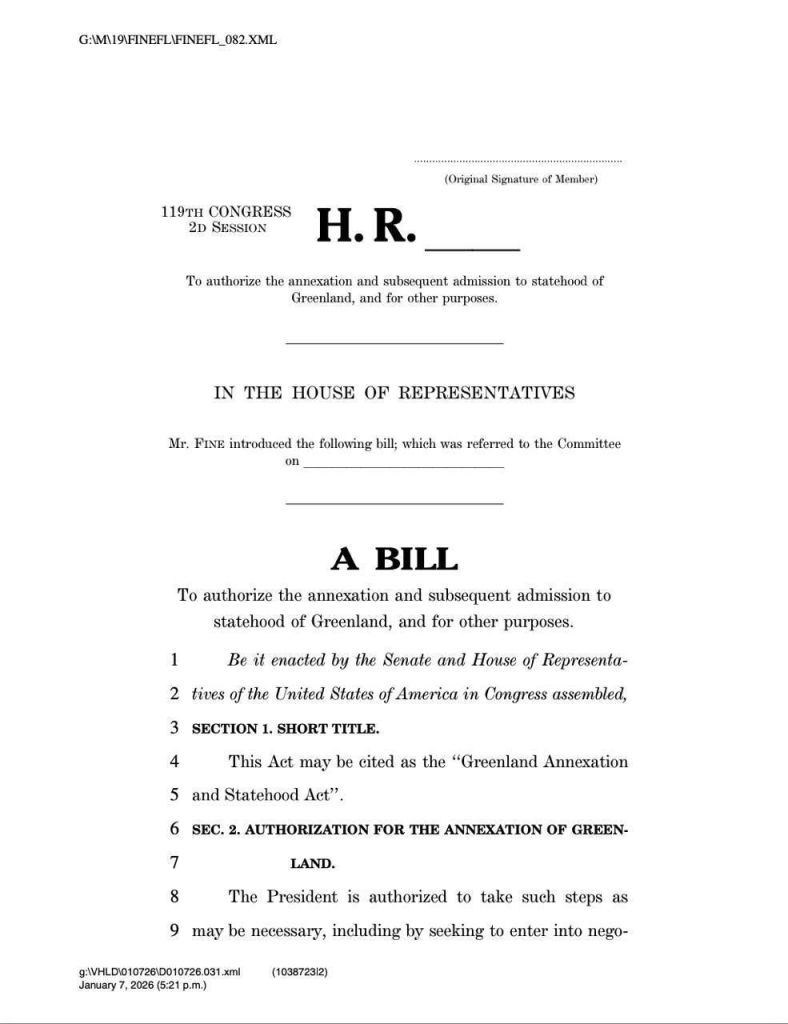
The proposed “Greenland Annexation and Statehood Act,” introduced by Representative Randy Fine, a Republican from Florida, would authorize the president to take “whatever steps necessary” to annex or otherwise acquire Greenland and would require the administration to submit a report to Congress outlining a pathway toward its admission as a U.S. state. Fine argued in a statement that Greenland is central to U.S. defense interests, saying that control of the island is tied to Arctic shipping lanes and missile defense architecture protecting North America. The bill has not yet been scheduled for committee consideration, and its prospects remain unclear.
Trump has repeatedly framed Greenland as a strategic necessity, claiming that without U.S. control the island could fall under the influence of Russia or China. Last week, he said the United States “cannot afford to lose Greenland,” and declined to rule out the use of force. White House Press Secretary Karoline Leavitt told reporters that acquiring Greenland remains a priority for the administration, though she said there is no set timeline. Reuters reported that European officials interpreted the remarks as the most explicit suggestion yet that Washington might contemplate coercive measures against a NATO ally’s territory .
The rhetoric has alarmed European governments and NATO officials. European Commissioner for Defence and Space Andrius Kubilius said on Monday that a U.S. military takeover of Greenland would effectively end the NATO alliance, warning that such an action would amount to an attack on allied territory. “You cannot speak about NATO security while threatening to seize land from a NATO member,” he told Reuters, adding that the credibility of the alliance rests on mutual respect for sovereignty .
Denmark has firmly rejected the proposal. Danish officials have reiterated that Greenland is not for sale and that its future can only be decided by its residents. Greenland, which has a population of about 57,000, gained expanded self-rule in a 2009 referendum while remaining part of the Kingdom of Denmark. Denmark’s ambassador to Washington, Jesper Moller Sorensen, said any discussion of annexation ignores international law and the democratic rights of Greenlanders, according to comments reported by the Associated Press .
Greenlandic political leaders have also pushed back strongly. Party leaders across the island’s political spectrum said there is no appetite for joining the United States and warned that external pressure risks destabilizing Arctic cooperation. “Greenland belongs to Greenlanders,” one senior official told AP, adding that security concerns should be addressed through dialogue, not threats .
Within the United States, the proposal has exposed divisions even among Republicans. Senator Rand Paul criticized the idea as strategically reckless, while Democratic Senator Chris Murphy warned that an attempt to seize Greenland by force would collapse NATO by forcing European allies to choose between the United States and Denmark. “You don’t get to lead the free world if you invade your allies,” Murphy said in remarks cited by multiple U.S. outlets.
Strategic analysts note that the Arctic has become a focal point of global competition as melting ice opens new shipping routes and access to critical minerals. The United States already operates Thule Air Base in northwest Greenland, a key component of its missile warning system. Analysts at the Center for Strategic and International Studies have argued that while Greenland is strategically important, cooperation with Denmark and Greenlandic authorities has long served U.S. interests more effectively than unilateral action, a view echoed by former Pentagon officials cited by Reuters .
Beijing has criticized Washington’s rhetoric, accusing the Trump administration of using China as a pretext for expanding its military footprint in the Arctic. Russian officials, while not directly responding to Trump’s latest statements, have previously warned against the militarization of the region and said Greenland’s status must be determined by its people. With seven of the eight Arctic states already members of NATO, diplomats warn that aggressive moves over Greenland risk turning a region long governed by pragmatic cooperation into another flashpoint of great-power confrontation.
For now, the annexation bill stands as a symbolic but highly provocative marker of the administration’s approach to Arctic security. Even if it stalls in Congress, diplomats and analysts say the episode has already strained transatlantic relations and raised fundamental questions about the future of U.S. leadership within NATO .
Authored By: Global GeoPolitics
This is a reader-supported publication. I cannot do this without your support. If you believe journalism should serve the public, not the powerful, and you’re in a position to help, becoming a PAID SUBSCRIBER truly makes a difference. Alternatively you can support by way of a donation or cup of coffee:
buymeacoffee.com/ggtv


Leave a reply to albertoportugheisyahoocouk Cancel reply