
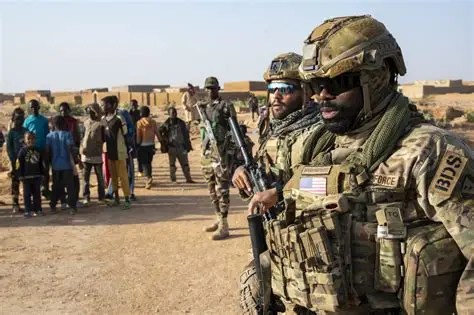
The Quiet Invasion of Nigeria Under the Banner of Peace: How the War on Terror Masks Resource Interests in Nigeria
The recent announcement that the United States has deployed military personnel to Nigeria under the banner of counter-terrorism has generated significant debate about the true motivations behind such interventions. “This decision was announced in the aftermath of reports of coordinated terrorist attacks across northern Nigeria that resulted in the deaths of more than 160 civilians, an escalation that U.S. officials cited as evidence of an urgent and deteriorating security situation. Official statements describe the deployment as a limited effort aimed at assisting Nigerian forces in combating extremist groups linked to the Islamic State. Framed in this way, the presence of U.S. troops is presented as a necessary response to the growing threat of terrorism and regional instability in West Africa.
Nigeria has indeed faced serious security challenges for more than a decade. Insurgent and extremist groups whose source of funding and support hardly anyone dares to discuss mainstream, have carried out attacks that have resulted in thousands of deaths, widespread displacement, and long-term economic disruption. From this perspective, international cooperation, including intelligence sharing, training, and logistical support, can be seen as a legitimate attempt to strengthen Nigeria’s capacity to address internal security threats. The U.S. government has emphasised that its role is “ advisory “ rather than “combative”, reinforcing the idea that the intervention is defensive and supportive in nature.
However, skepticism arises when this security narrative is viewed alongside Nigeria’s economic and strategic importance. Nigeria is one of Africa’s largest producers of oil and gas and possesses substantial mineral resources. Control over, or influence within, resource-rich regions has historically been a central concern of major global powers. As a result, claims that resource considerations are “mere coincidence” are difficult to accept without scrutiny. The overlap between counter-terrorism operations and regions of high economic value has led critics to question whether security concerns are sometimes used as a pretext to secure long-term strategic and economic interests.
This skepticism is reinforced by comparisons to other countries such as Venezuela and Iran, where U.S. foreign policy has been closely tied to energy resources and geopolitical positioning. While each case differs in context and execution, the recurring combination of security justifications and resource-rich environments suggests a broader pattern. In this view, counter-terrorism becomes not only a policy goal but also a diplomatic and military tool that enables access, influence, and leverage in strategically important regions.
Ultimately, the deployment of U.S. forces to Nigeria cannot be understood solely through official statements or surface-level explanations. While the threat of terrorism is real and serious, it exists alongside economic interests and geopolitical calculations that shape foreign policy decisions. A critical examination requires acknowledging both realities: the legitimate need to address “manufactured” violent extremism and the possibility that such efforts also serve to protect and secure valuable mineral and energy resources. Only by recognising this duality can the situation be assessed with clarity and balance. It’s the same old playbook, the Hegelian dialectic.
So, from a Hegelian dialectical perspective, U.S. involvement in Nigeria can be interpreted as the synthesis arising from a familiar contradiction between security and sovereignty. The thesis is the stated objective of counter-terrorism and regional stability; the antithesis is Nigeria’s status as a resource-rich state whose autonomy is historically vulnerable to external influence. Through this lens, military cooperation resolves the contradiction by appearing mutually beneficial while ultimately transforming power relations. As Hegel argued in The Phenomenology of Spirit, historical progress often advances through conflicts that are not immediately transparent to the actors involved, with outcomes that consolidate power in new forms. Applied here, counter-terrorism becomes the moral and political vehicle through which strategic influence is normalized, allowing external powers to embed themselves institutionally while maintaining the appearance of ethical necessity.
Chaos theory further helps explain the timing and justification of this move. In complex systems, small interventions at moments of instability can produce disproportionately large effects. Nigeria’s security environment, marked by “engineered” insurgency, economic strain, and regional spillover from Sahelian conflicts, represents a highly sensitive system. As mathematician and systems theorist James Gleick notes in Chaos: Making a New Science, “simple actions in complex systems can lead to unpredictable but decisive outcomes.” By inserting military assets during a period of volatility, the United States positions itself to influence long-term trajectories in security policy, regional alliances, and resource governance. What appears as a limited deployment may, through nonlinear effects, shape political and economic alignments well beyond its initial scope.
Game theory offers a complementary explanation by framing the situation as a strategic interaction among rational actors operating under uncertainty. From this perspective, Nigeria, the United States, and rival global powers are engaged in a repeated game rather than a one-off encounter. The U.S. move can be seen as a strategy of positioning and signaling, designed to deter competitors and reassure allies while minimising immediate costs. Economist Thomas Schelling emphasised in The Strategy of Conflict that power often lies in “the ability to shape the expectations of others.” By acting under the banner of counter-terrorism, the United States reduces reputational risk while increasing its strategic payoff, securing influence over a critical regional player without overt confrontation. Occupied Nigeria, in turn, accepts cooperation to address immediate “engineered” security needs, even if the long-term equilibrium may constrain its strategic autonomy.
Taken together, these frameworks suggest that the deployment is not merely a reaction to terrorism, but a calculated move within a broader historical, systemic, and strategic logic. Hegelian dialectics reveals how moral narratives resolve power contradictions, chaos theory explains how limited actions can reshape complex environments, and game theory clarifies how states pursue advantage under uncertainty. The convergence of these dynamics reinforces the argument that counter-terrorism functions not only as a security objective, but also as a mechanism for managing influence, resources, and geopolitical competition in an increasingly unstable global order.
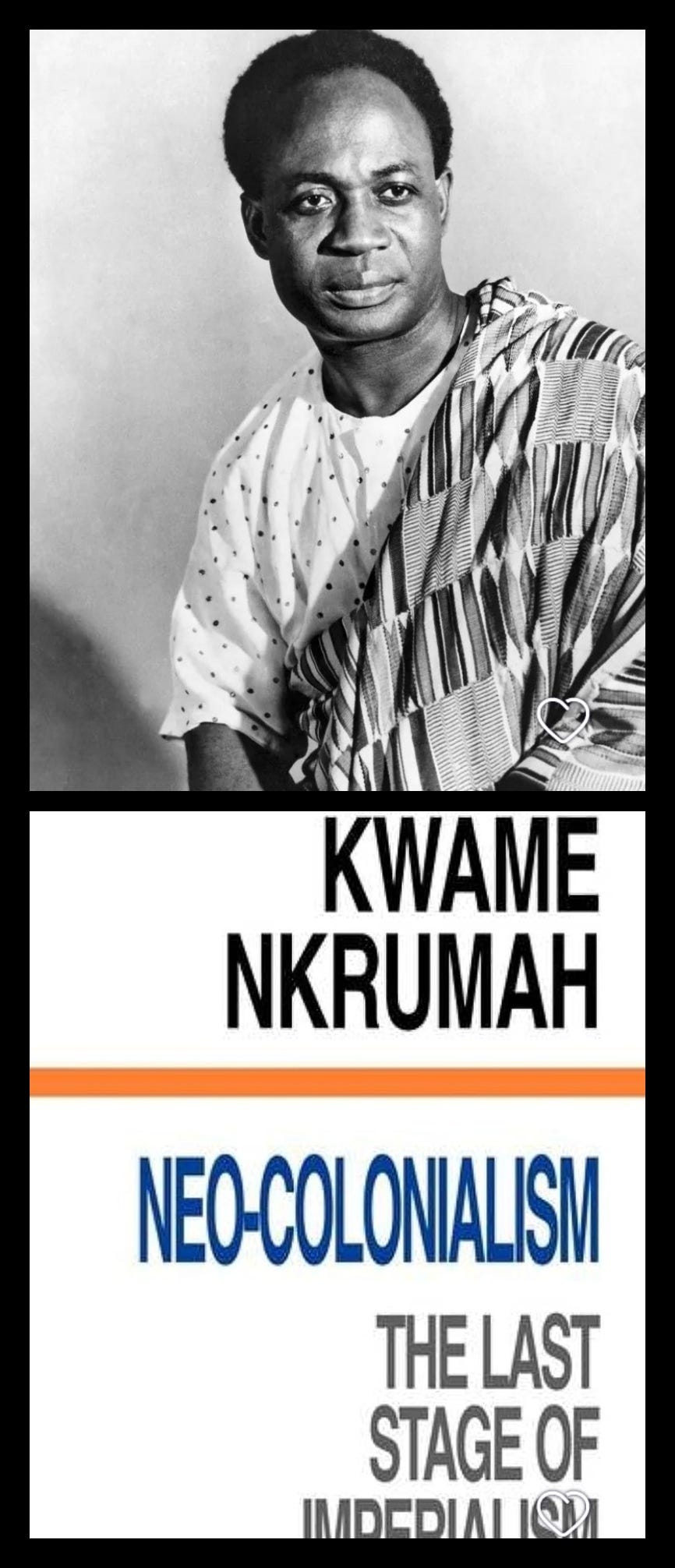
“In this sense, the deployment reflects what Kwame Nkrumah famously described as neo-colonialism: ‘the last stage of imperialism,’ a condition in which a state appears sovereign in form while its political and economic systems are directed from outside. Similarly, Edward Said warned that modern power rarely announces itself as domination, but instead ‘establishes itself through narratives of order, security, and responsibility.’ Framed as counter-terrorism, the presence of foreign military forces in Nigeria illustrates how contemporary occupation has shifted from relying on overt conquest, to coerced consent shaped by crisis, fear, and strategic necessity. The language of security thus becomes the instrument through which influence is normalised, sovereignty is diluted, and control is exercised without ever being formally declared.”
Authored By: Global GeoPolitics
Thank you for visiting. This is a reader-supported publication. I cannot do this without your support. You can support by way of a cup of coffee:
buymeacoffee.com/ggtv or


Leave a comment