Why the US-Iran Impasse Matters to Global Order
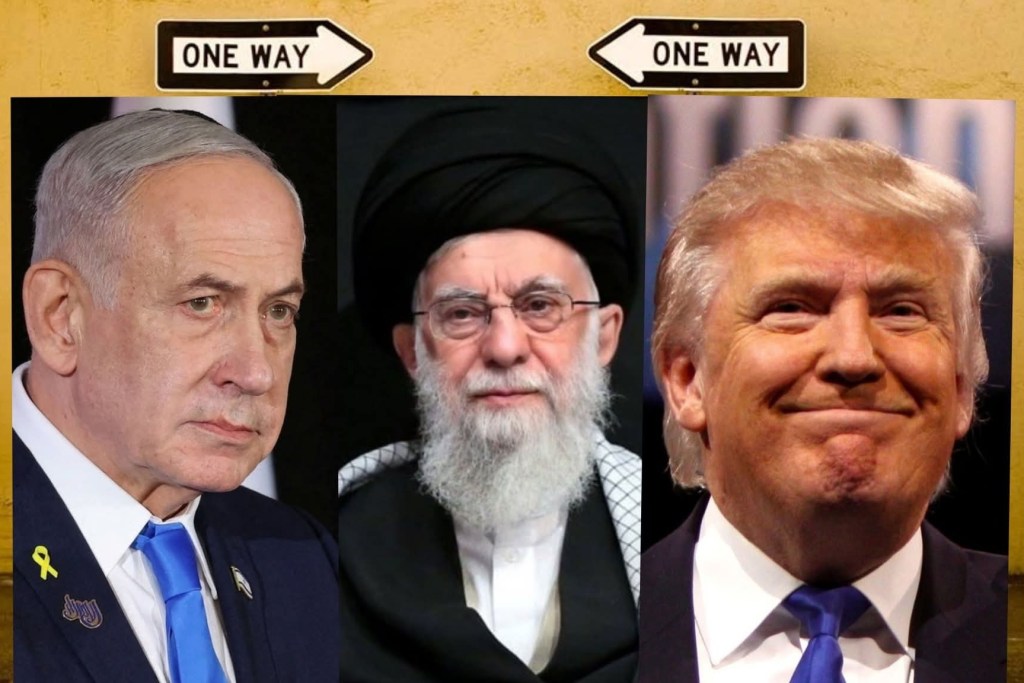
The standoff between the United States and Iran marks a clear deadlock over sovereignty, military deterrence, and regional power. Recent indirect negotiations in Muscat between U.S. envoys and Iranian officials produced little progress, showing that the parties’ red lines remain firmly inplacer. Iranian Foreign Minister Abbas Araghchi conveyed that substantive dialogue cannot proceed under threat or pressure and that this round of talks would focus strictly on Iran’s nuclear programme rather than expand into its missile capabilities or regional influence, a position articulated by Tehran from the outset [Reuters, February 6, 2026]. This stance confirms Tehran’s conception of negotiations as bounded by sovereign prerogatives and a long-standing distrust of coercive diplomacy [Reuters, 6 February 2026].
Iran’s refusal to abandon uranium enrichment arises from both practical and symbolic considerations. Tehran emphasises that enrichment serves peaceful purposes, including civilian electricity generation, medical isotope production, and scientific research, and that demands to cease enrichment or transfer infrastructure abroad effectively constitute a denial of sovereign technological agency. This position emerged clearly in the Muscat talks, where Iranian negotiators rejected broader U.S. agendas and insisted on limiting the discussions to nuclear matters while asserting their right to enrichment [Reuters, 8 February 2026].
The origins of the deep mistrust between Tehran and Washington are rooted in the U.S. withdrawal from the 2015 Joint Comprehensive Plan of Action, a decision that shattered the conditional trust required for negotiating compliance (Reuters, May 2018). Iran’s mistrust deepened when Tehran suspended cooperation with the International Atomic Energy Agency after the June conflict and passed a law in June-July 2025 to halt IAEA inspections of nuclear sites unless expressly approved by Iran’s Supreme National Security Council (25–26 June 2025). Those developments have hardened perceptions in Tehran that Western commitments are contingent and vulnerable to domestic shifts in U.S. politics.
The United States, for its part, views constraints on Iran’s nuclear programme, missile systems, and regional influence as essential to mitigating perceived threats. U.S. policy under President Trump has circled between diplomatic engagement and coercive pressure, signalling readiness for unspecified “steep” consequences if no deal is achieved. Trump’s remarks that Tehran ‘looks like it wants to make a deal very badly’ and that both sides would meet again early next week demonstrate the persistence of contradictory signals that complicate constructive negotiation [Xinhua, 7 February 2026].
Israeli influence on U.S. strategy further deepens the impasse. Israeli Prime Minister Netanyahu’s engagement with senior U.S. envoys has emphasised scepticism about Iranian intentions and pushed Washington to adopt conditions aligned with Israeli security priorities, including zero enrichment and limits on ballistic missiles, all of which Tehran regards as unacceptable infringements on its sovereignty [Reuters, 3 February 2026].
Independent analysts underscore the extensive risks of a military escalation if diplomatic talks collapse. A detailed assessment by the Middle East Institute notes that a conflict with Iran would threaten global energy markets through potential disruption of the Strait of Hormuz, which supports a significant proportion of global oil exports, and could deepen economic instability in allied states as well as reinforcing Iran’s domestic resolve [Middle East Institute, 29 April 2025].
Economists and geopolitical commentators have connected the confrontation with broader questions of systemic strategy and global order. Some argue that U.S. pressure on Iran forms part of an effort to contain ans including pressure on China’s access to energy sources critical to its economy, to undermine the Belt and Road Initiative, and to blunt the strategic connectivity embodied in BRICS and the International North-South Transportation Corridor linking Russia, Iran, and Asia [Azernews. communiqué adopted 13 October 2025].
In game-theory terms, the standoff can be modelled as a repeated strategic game in which Tehran’s firm adherence to sovereign red lines discourages defection without credible assurances of sanctions relief and security guarantees, while Washington’s maximalist stance seeks to alter payoff structures by threatening coercive escalation. In such a dynamic, an attack by the United States would likely trigger retaliatory strategies from Iran with disproportionate costs for U.S. allies and assets, constricting options for de-escalation and risking a cascade of counter-moves. Under a classic chicken game framework, mutual expectations of retaliation increase the probability of “collision” rather than cooperation, particularly since escalation would erode Chinese energy vulnerability to embargoes and incentivise deeper Sino-Iran integration, thereby strengthening multipolar resistance against U.S. unilateralism [Middle East Institute, 29 April 2025]. Absent a credible off-ramp that adjusts payoffs towards cooperative equilibrium, the equilibrium outcome looks more like a costly standoff than a negotiated settlement.
A powerful articulation of Iranian intellectual resistance to perceived U.S. duplicity comes from Professor Seyed Mohammad Marandi of Tehran University, who has argued that “Iran’s nuclear programme now has a strong element of strategic ambiguity … that is very hurtful for the West,” and warned that Iran will not relinquish defensive capabilities if it calculates that doing so invites aggression [Al Mayadeen English, 23 September 2025]. Marandi’s commentary encapsulates Tehran’s distrust of Western intentions and its resolve to utilise strategic ambiguity to offset coercive leverage.
Any military confrontation would also reflect broader historical patterns of imperial overreach. The concept of imperial overstretch, first articulated by historians and geopolitical theorists, holds that great powers often extend themselves beyond their economic and military capacities, weakening their structural foundations and inviting strategic setbacks. As Paul Kennedy observes, the United States now faces a risk “so familiar to historians of the rise and fall of previous great powers, of what might roughly be called imperial overstretch: that is to say, decision-makers in Washington must face the awkward and enduring fact that the sum total of the United States’ global interests and obligations is nowadays far larger than the country’s power to defend them all simultaneously” [Kennedy, 1987, 346]. Hence, empires that have historically overextended themselves geographically and economically have often faced decline as their commitments exceeded sustainable capabilities.
By contrast, Iran’s asymmetric defence posture and regional network of alliances and proxies complicate any effort to coerce it into submission through force alone. Independent assessments note that Iranian military capabilities, including missile forces and proxy networks, provide Tehran with asymmetric leverage such that a straightforward application of Western hard power would provoke significant countermeasures without guaranteeing strategic objectives [Middle East Institute, 29 April 2025].
The impasse also carries economic dimensions beyond military risk. Sustained sanctions and the threat of conflict have ripple effects on global markets, particularly energy and defence sectors, while political uncertainty suppresses investment and undermines economic stability both in Iran and abroad. These factors contribute to a broader environment in which neither side can credibly commit to de-escalation without concrete policy adjustments from the other [global markets analysis, February 2026].
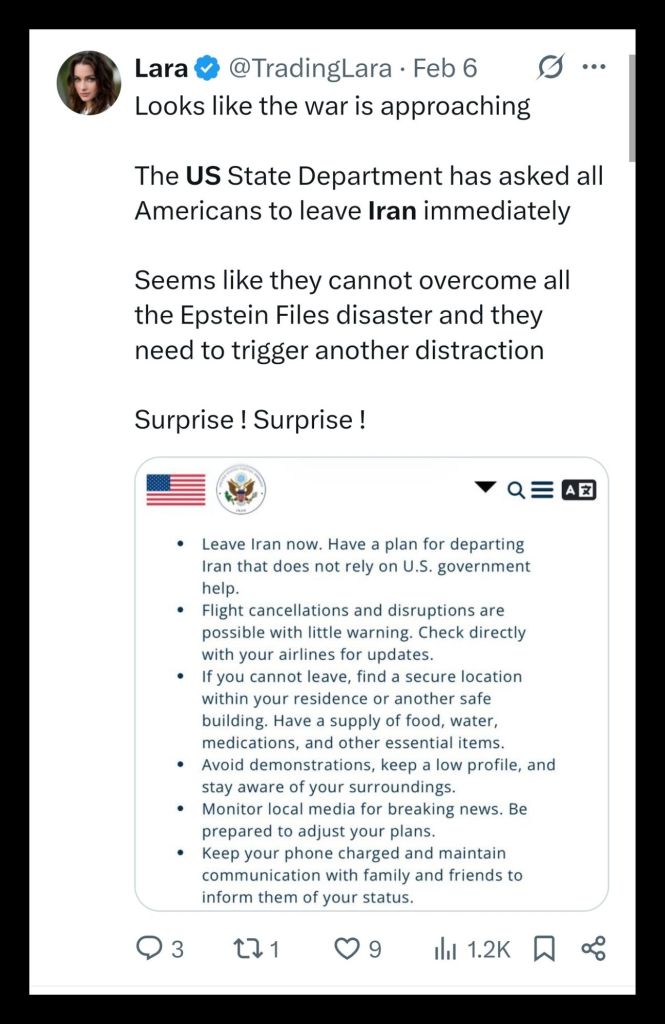
In this context, the meeting between President Trump and Prime Minister Netanyahu gains strategic significance. If U.S. policy tilts further toward coercive postures without reconciliation of core disagreements, the danger of escalation and attendant economic and regional disruption, will grow. Absent a credible off-ramp, escalation could also accelerate realignments that diminish U.S. influence and strengthen multipolar cooperation among actors like China and Russia.
In closing, historical analogies remind policymakers of the strategic dangers of overextension. As Paul Kennedy’s analysis of imperial overstretch suggests, “Every great empire and nation-state eventually fails when its commitments exceed its capacities” [Kennedy, 1987, 5]. Such patterns underline the severity of the strategic challenge the United States faces in its confrontation with Iran, where the risk of overreach and systemic backlash remains profound.
Authored By: Global GeoPolitics
Thank you for visiting. This is a reader-supported publication. I cannot do this without your support. You can support by way of a cup of coffee:
buymeacoffee.com/ggtv or
https://ko-fi.com/globalgeopolitics
References
- Al Mayadeen English. 2025. “Iran’s Strategic Ambiguity and Nuclear Programme.” 23 September 2025. https://english.almayadeen.net
- Kennedy, Paul. 1987. The Rise and Fall of the Great Powers: Economic Change and Military Conflict from 1500 to 2000. New York: Random House.
- Middle East Institute. 2025. “Expert Snapshots: US‑Iran Nuclear Talks.” 29 April 2025. https://mei.nus.edu.sg/publication/expert-snapshots-us-iran-nuclear-talks/
- Reuters. 2018. “U.S. Withdraws from Iran Nuclear Deal, Ending Ten-Year Agreement.” May 2018. https://www.reuters.com/article/us-iran-nuclear-usa-idUSKBN1I70
- Reuters. 2026a. “Iran Nuclear Talks in Muscat: Red Lines Remain.” 6 February 2026. https://www.reuters.com/world/middle-east/iran-nuclear-talks-muscat-2026-02-06
- Reuters. 2026b. “Tehran Emphasises Nuclear Sovereignty in Talks.” 8 February 2026. https://www.reuters.com/world/middle-east/iran-nuclear-sovereignty-muscat-2026-02-08
- Reuters. 2026c. “Netanyahu Urges U.S. Envoy to Be Skeptical of Iran in Revived Nuclear Talks.” 3 February 2026. https://www.reuters.com/world/middle-east/israels-netanyahu-meet-us-envoy-witkoff-amid-revived-iran-nuclear-talks-2026-02-03
- Xinhua. 2026. “Trump Says Iran Looks Eager to Make a Deal, Talks to Continue.” 7 February 2026. https://english.news.cn/20260208/8b71012362054629be82a175186f0753/c.html
- Azernews. 2025. “Azerbaijan, Iran, Russia Adopt Communiqué to Enhance Cooperation on North–South Transport Corridor.” 13 October 2025. https://www.azernews.az/business/248758.html
- Global Markets Analysis. 2026. “Energy and Investment Risks Amid U.S.-Iran Tensions.” February 2026.


Leave a comment