
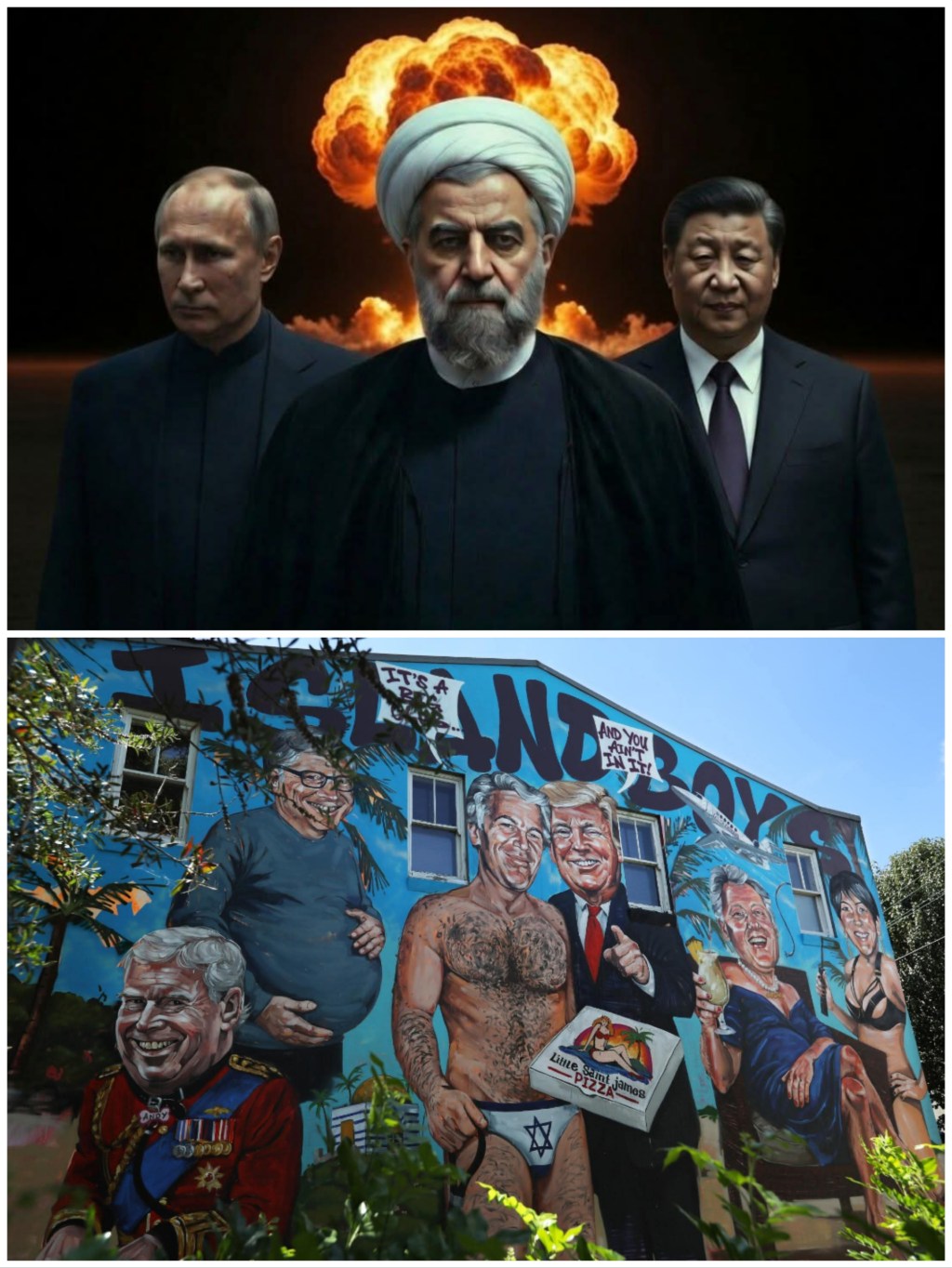
Russian intelligence exposure of United States strike operational plans, combined with Chinese satellite tracking, forced asset redeployment and a recalculation of escalation dynamics.
Russian intelligence penetration on 20 February 2026 exposed a fully developed American strike architecture that envisioned an opening salvo of roughly 400 cruise and ballistic missiles, coordinated bomber sorties, electronic suppression of air defences, and leadership-targeting contingencies. The plan reportedly included phased strikes against hardened nuclear infrastructure, missile storage complexes, and command nodes, with sequencing calibrated for rapid paralysis of Iranian response capacity. Disclosure of target matrices, launch platforms, timing windows, and refuelling patterns reached Tehran before execution, eliminating the element of operational surprise that underpinned the concept of rapid dominance.
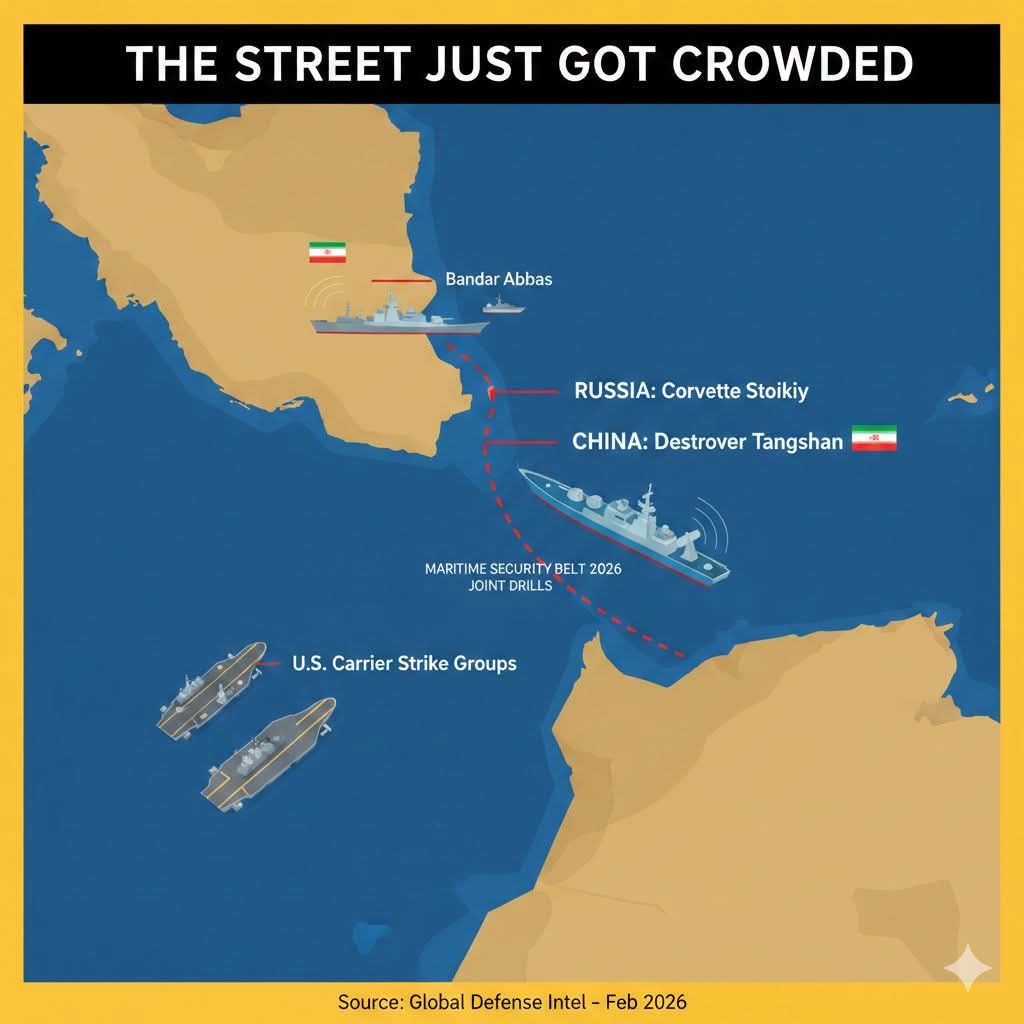
Chinese satellite imagery circulating shortly thereafter mapped carrier strike group positions, bomber dispersal bases, and regional logistics hubs with sufficient clarity to narrow uncertainty regarding sortie generation and missile defence coverage. Lawrence Freedman of King’s College London has argued that strategy concerns the relationship between means and political ends, while operational art concerns the sequencing of force toward those ends. Under those conditions, proceeding would have meant initiating hostilities under compromised secrecy and against an alerted adversary prepared for saturation defence and counterstrike. Washington therefore suspended the immediate strike window and repositioned high-value naval and air assets beyond the densest missile threat envelopes, pulling platforms further from the most confined Gulf waters and adjusting basing patterns to reduce exposure to massed retaliation.
Washington had sought to limit the political and military costs of direct action in order to avoid formal designation as the initiator of war while maintaining coercive leverage through visible force concentration. An Iranian defence source warned that attempts to shift responsibility would not alter the scope of Tehran’s response, stating that “shifting the allocation of responsibility will not alter the scope of Iran’s response.” That statement reflects a doctrine of deterrence by punishment combined with denial. Intelligence channels indicated that American planners anticipated a severe, wide-ranging, and multi-layered retaliation, including missile strikes against regional bases, naval formations, and supporting states. The operational concept aimed to deliver “hard and effective blows” while constructing a layered defensive umbrella over Israel and forward assets to absorb counterstrikes. Exposure of the 400-missile opening package, combined with Iranian preparations for sustained launch tempo and drone saturation, forced recalculation of inventory endurance and interceptor depletion timelines. Asset withdrawal and dispersal reflected recognition that concentrated formations inside confined maritime corridors would face high attrition risk within days of escalation. The intelligence breach therefore reshaped the calculus from controlled coercion toward uncertain, contested warfighting under full transparency. Thomas Schelling wrote in “Arms and Influence” that coercion depends upon the credibility of threat combined with uncertainty regarding execution. Disclosure erodes uncertainty while increasing reputational stakes.
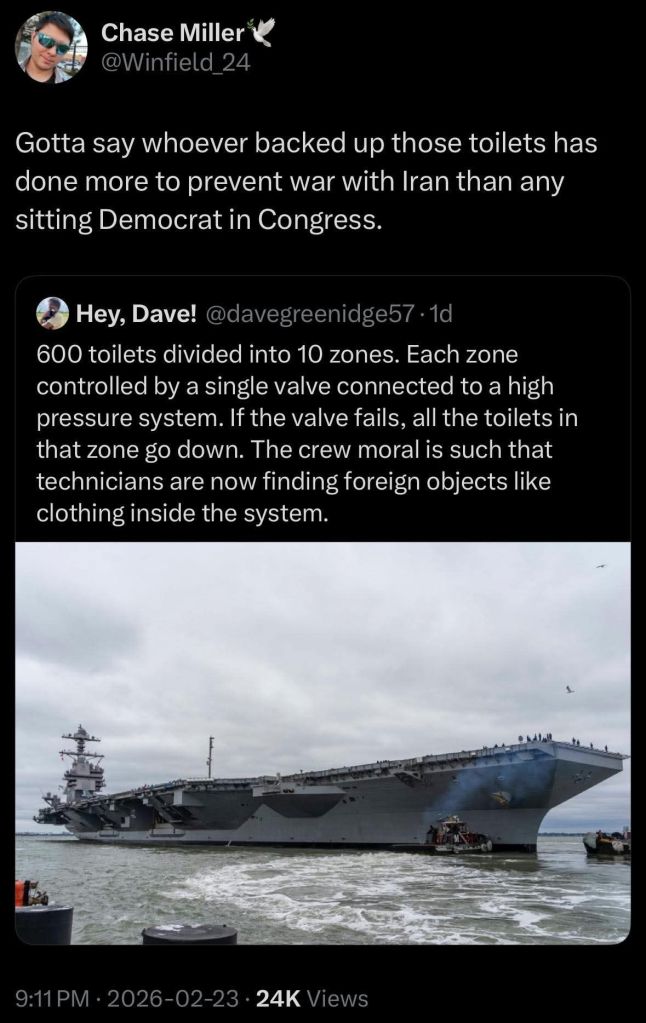
Tehran’s position rests upon the assumption that coordination between Washington and Tel Aviv renders attribution debates irrelevant. Abbas Araghchi stated that diplomatic drafts were under preparation while affirming readiness for war. Dual messaging indicates an effort to preserve optionality while maintaining domestic legitimacy rooted in resistance. Glenn Diesen of the University of South-Eastern Norway has written that sanctions and military pressure often consolidate rather than fragment political resolve in targeted states. Iranian sunk-cost logic reinforces that assessment.
Force concentration in the Gulf now resembles tactical escalation preceding strategic definition. Danny Citrinowicz observed that large scale deployments create expectations among allies, legislatures, and domestic audiences that visible political outcomes must follow. Absence of a clearly articulated end state introduces structural risk. Possible objectives include revised nuclear constraints, deterrent demonstration, strategic rollback, or behavioural modification of Iranian policy. Each objective requires different force application thresholds and diplomatic frameworks. Clausewitz wrote that war must remain subordinate to political purpose. When political purpose lacks precision, military instruments assume momentum of their own.
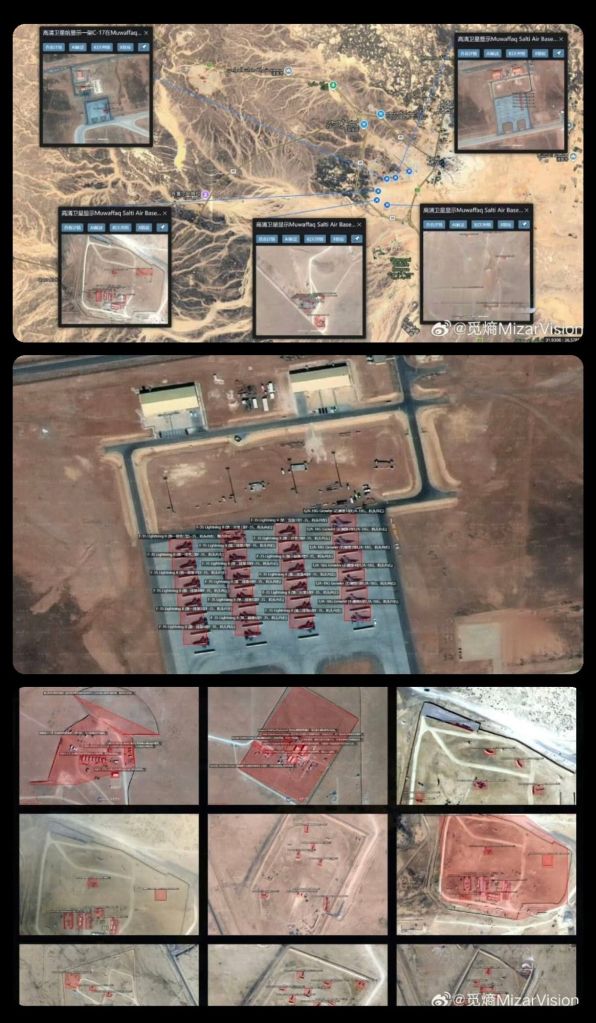
Logistical assessments further complicate the calculus. Independent military analysts have argued that sustained high intensity operations would deplete precision guided munitions within days. Two carrier strike groups field roughly nine hundred to thirteen hundred vertical launch cells, of which approximately half are defensive interceptors. Combined United States and Israeli interceptor inventories across SM-3, SM-6, THAAD, Arrow, Patriot, and David’s Sling systems might sustain roughly fifteen to twenty days of intense defensive operations based on recent consumption ratios. Industrial replenishment cycles for complex interceptors extend into years rather than months. The Royal United Services Institute has noted in multiple studies that Western stockpiles of advanced munitions remain optimised for short duration campaigns rather than protracted peer conflict.
Iranian missile forces are assessed to possess between sixteen hundred and two thousand naval missile launch tubes across the region. Small fast missile craft, coastal batteries, and submarine assets generate layered anti access capabilities. United States naval officers described recent engagements in the Red Sea against Houthi forces as the most intense since the Second World War. Iran fields firepower an order of magnitude greater than those non state actors. Suppression of enemy air defences would face hardened sites protected by integrated radar networks. AN/TPY-2 early warning radars deployed across Gulf states form the backbone of interception architecture. Loss of even one installation would degrade tracking fidelity and reduce interception probability.
Russian warning that strikes on nuclear facilities could trigger radiological disaster introduces further escalation risk. Use of GBU-57 bunker penetrating munitions reportedly failed to achieve decisive results against hardened infrastructure built with ultra high performance concrete. Strategic objectives centred upon nuclear elimination therefore face technical uncertainty. Regime change scenarios confront absence of organised insurgent capacity and insufficient heavy ground forces for occupation. Stephen Walt of Harvard University has written that offensive realism recognises limits to military power in reshaping domestic political orders. Tactical success does not automatically translate into durable strategic outcome.
Aurelien, writing on modern warfare, characterised Western military structure as optimised for single major campaigns rather than sequential protracted wars. United States force posture currently spans Ukraine support commitments, Indo Pacific balancing, and Middle Eastern deployments. Opportunity cost therefore carries strategic weight. Concentration of assets in the Gulf constrains flexibility in other theatres. Barry Posen of MIT has argued that overstretch erodes deterrence credibility by exposing resource limits. Intelligence exposure of strike planning amplifies that risk because adversaries can calibrate responses based on visible force distribution.
The metaphor of a high stakes poker game captures the bargaining dynamic yet obscures structural rigidity. Washington has raised the visible bet through deployments and ultimatums, including a ten to fifteen day deadline concerning nuclear and missile dismantlement. Tehran faces domestic legitimacy costs should it appear to capitulate under overt pressure. Schelling observed that in brinkmanship each side manipulates risk rather than control. Neither actor requires confidence in victory; each requires belief that backing down carries greater political damage than escalation. Such conditions generate commitment traps.
Large scale deployment without defined political end state risks transforming posture into self justification. Allies interpret force concentration as promise of action. Legislators interpret it as demonstration of resolve. Adversaries interpret it as preparation for attack. De escalation without visible gains invites narratives of retreat. Escalation beyond limited strikes risks regional expansion, energy market shock, and global recessionary pressures. Approximately one fifth of globally traded oil transits through Hormuz. Disruption would transmit immediate price shocks across industrial economies. Kenneth Pollack of the American Enterprise Institute has previously warned that Gulf conflict reverberates far beyond regional boundaries through energy and financial channels.
Russian intelligence exposure therefore carries significance beyond tactical warning. Disclosure functions as strategic signalling that Moscow monitors and can potentially augment Iranian situational awareness. Reports suggesting provision of top tier intelligence, surveillance, and reconnaissance data from Russian and Chinese sources would enhance Iranian targeting precision and defensive anticipation. Such augmentation complicates assumptions of rapid dominance. Freedman notes that strategy in multipolar contexts involves shaping perceptions of coalition alignment as much as battlefield outcomes.
Mismatch between expectations and deliverables stands at the centre of present tension. Public rhetoric has created anticipation of decisive outcome. Operational planning reveals constraints imposed by logistics, industrial capacity, and escalation risk. Translation of military action into political settlement remains uncertain. Clausewitz emphasised friction and the unpredictable interaction of opposing wills. Intelligence exposure increases friction before combat commences by altering timing, readiness, and psychological posture.
Strategic ambiguity regarding end state now intersects with exposed operational detail. Deterrence requires credible threat combined with plausible off ramps. Revised nuclear agreement requires diplomatic channel insulated from coercive humiliation. Strategic rollback demands sustained campaign exceeding current stockpile resilience. Behavioural change requires leverage extending beyond kinetic exchange. Each pathway carries distinct resource commitments and time horizons. Without prioritisation, tactical moves accumulate without coherent destination.
regarding basing and sortie generation patterns. Such visibility reduced the operational advantages of concentration and required dispersal measures inconsistent with imminent offensive intent. Intelligence compromise therefore did not merely delay action; it reshaped the calculus of risk by demonstrating that escalation would unfold under conditions of degraded secrecy and contested situational awareness.
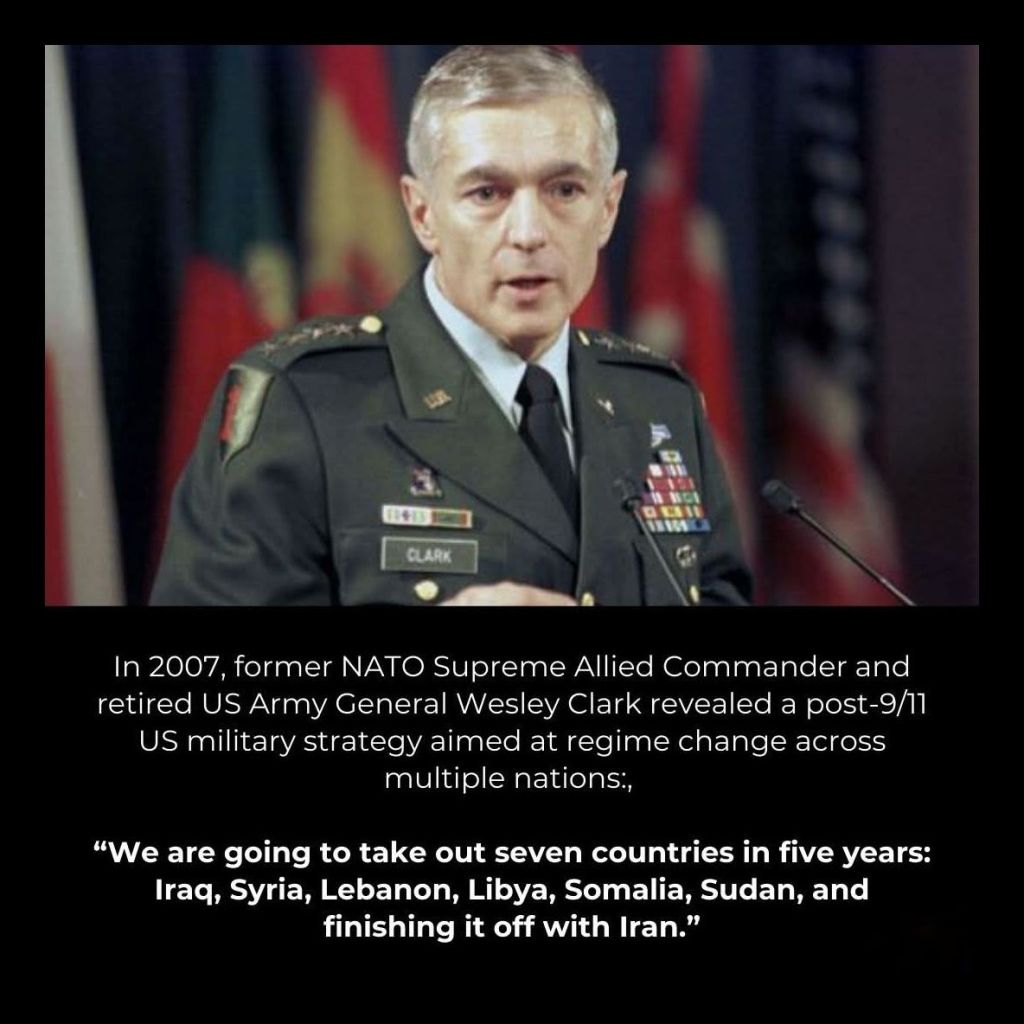
Washington has sought to limit the political and military costs of potential direct action in order to avoid formal designation as the initiator of war, while still preserving coercive leverage through visible deployments. An Iranian defence source warned that attempts to shift responsibility would not alter the scope of Tehran’s response, stating that “shifting the allocation of responsibility will not alter the scope of Iran’s response.” Intelligence channels suggested that American planners anticipated a severe, wide-ranging, and multi-layered Iranian retaliation to any overt strike, including missile attacks on regional bases and maritime assets. The dual objective described involved delivering “hard and effective blows” while constructing a layered defensive umbrella over Israel to absorb counterstrikes. Such planning assumed that offensive action could be contained within a controlled escalation ladder. Exposure of strike plans, combined with demonstrated.
Strategic balance in the Strait of Hormuz now reflects more than bilateral confrontation between Washington and Tehran. Russian naval presence, including a fast attack destroyer operating in proximity to key transit lanes, reinforces Moscow’s declared warning that escalation carries systemic consequences. Chinese surveillance coverage across the maritime corridor, combined with satellite transparency regarding American deployments, embeds Gulf contingencies within broader Eurasian security coordination. Iranian planners therefore operate with awareness that intelligence, maritime observation, and diplomatic backing extend beyond national boundaries.
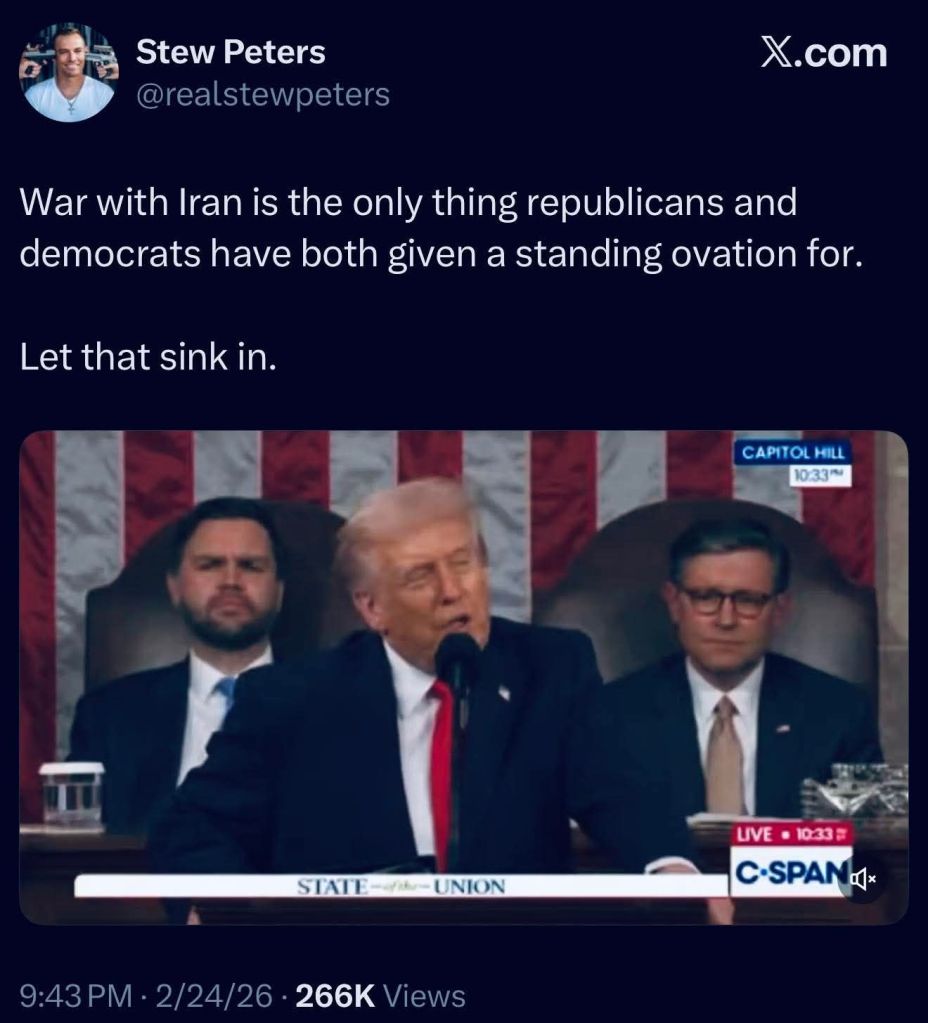
Force concentration by the United States aimed to project resolve and compel compliance, yet compromised secrecy and visible counter-alignment narrowed operational discretion. Iran stands embedded within a network of supportive powers that provide intelligence depth and political cover, altering deterrence dynamics across the theatre. Any renewed strike consideration must now account for contested information space, exposed logistics, and maritime environments monitored by multiple capable actors. Escalation would unfold under persistent observation and potential indirect participation by states whose interests converge in limiting unilateral dominance.
Authored By: Global GeoPolitics
Thank you for visiting. This is a reader-supported publication. You can support by way of a cup of coffee:


Leave a comment