
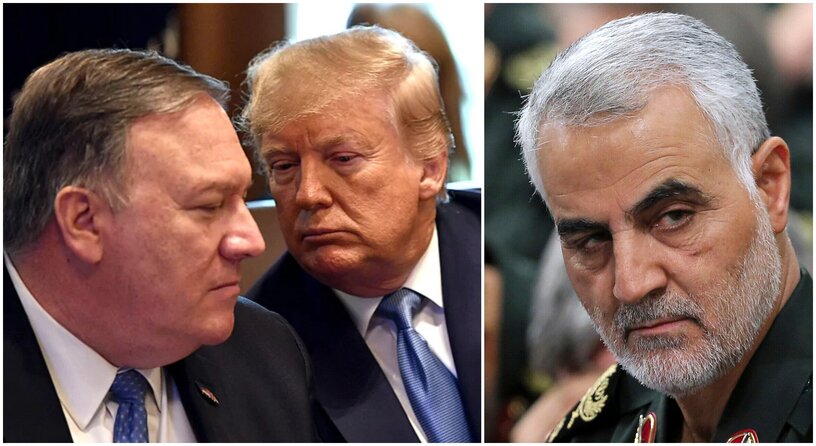
Targeted killing, the normalization of extrajudicial force and the collapse of ethical limits
For decades, the United States has moved along a continuum from covert assassination plots during the Cold War to the open normalisation of “targeted killing” as an instrument of state policy. In the current war involving Iran, that evolution appears to be entering a more dangerous and destabilizing phase.
In mid-March, the United States and Israel reportedly carried out coordinated airstrikes that killed several senior Iranian officials. Among them were Ali Larijani, a veteran figure and secretary of Iran’s Supreme National Security Council; Brigadier General Gholamreza Soleimani, a senior commander in Iran’s internal security apparatus; and Intelligence Minister Esmaeil Khatib.
Larijani, the former president of the Iranian parliament and secretary of the Supreme National Security Council, died alongside over 100 civilians in the attack, with no condemnation reported from the West.
The strike that killed Larijani also reportedly caused extensive civilian casualties, raising immediate concerns about proportionality and adherence to the laws of armed conflict. In the aftermath, Israeli Defense Minister Israel Katz stated that Israeli forces had broad authorisation to target senior Iranian officials, signaling a shift toward a more explicit and expansive assassination doctrine.
Larijani’s killing carries particular geopolitical weight. Unlike purely military figures, he occupied a hybrid role: a security official with deep political experience and a long track record in diplomacy. Since the mid-2000s, he had been involved in negotiations with the United States and other global powers, particularly around nuclear and regional security issues.
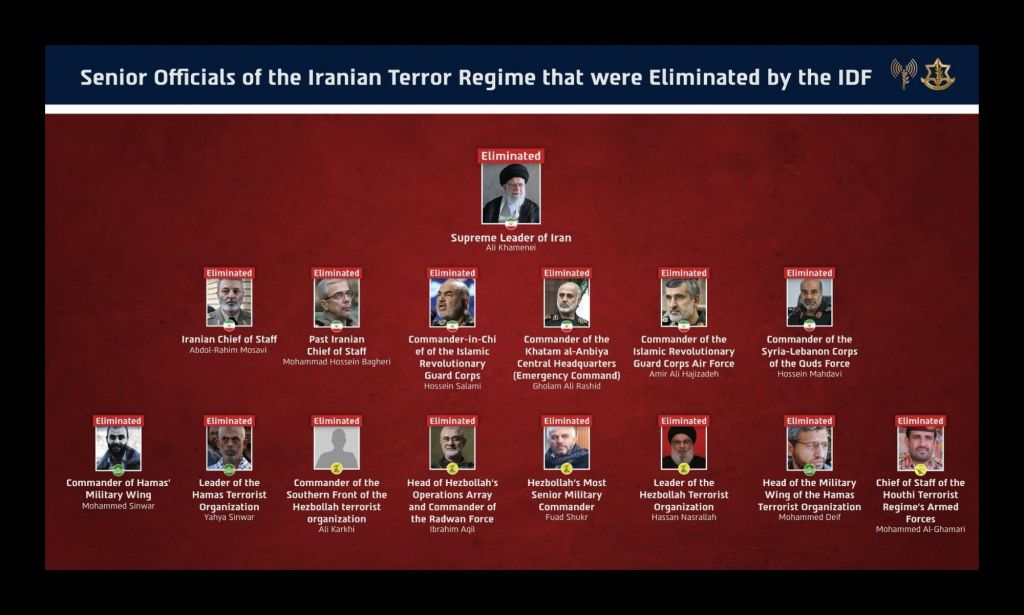
Eliminating figures like Larijani does more than degrade command structures, it narrows the field of potential interlocutors. Historically, backchannel negotiations and elite-level relationships have been critical in de-escalating crises between adversaries. Removing pragmatic or negotiation-capable officials can harden positions on both sides, reducing the probability of near-term diplomatic off-ramps.
One interpretation is that the strikes reflect a prioritization of military pressure over diplomacy. Another, more strategic reading is that removing moderating figures may serve to prolong confrontation by empowering more hardline factions within Iran’s political system. Either way, the operational logic of targeted killing intersects directly with the political architecture of conflict resolution.
The escalation has not been limited to individuals. A major Israeli strike on the South Pars gas field, one of the largest natural gas reserves in the world and jointly shared with Qatar, marked a significant expansion of the conflict into the global energy domain.
Energy infrastructure occupies a uniquely sensitive position in geopolitics. Unlike military targets, its disruption reverberates globally through supply chains, pricing mechanisms, and energy security calculations. Iranian retaliation reportedly included strikes on energy-related sites across Israel and parts of the Gulf, with damage to facilities such as Ras Laffan raising concerns about long-term impacts on liquefied natural gas (LNG) exports. If sustained, such attacks risk transforming a regional military conflict into a systemic economic shock, particularly for energy-importing regions in Europe and Asia. The targeting of shared or transnational assets also increases the likelihood of drawing additional states into the conflict, whether directly or through economic alignment.
A central question in current analysis is the degree of alignment between Washington and Tel Aviv. Reports suggesting coordination between U.S. and Israeli operations complicate public messaging that frames certain actions as unilateral. From a geopolitical perspective, however, the distinction may matter less than it appears. Major power alliances entail shared responsibility, particularly when operations depend on intelligence sharing, logistical support, or diplomatic cover. As Harry S. Truman famously asserted, ultimate accountability in matters of state rests with leadership, not proxies.
This raises broader questions about whether escalation is being jointly pursued as a strategy of coercion, or whether it reflects overlapping but not identical objectives. Israel may prioritize eliminating long-term threats and reshaping regional deterrence, while the United States balances those goals against global stability, alliance cohesion, and domestic political constraints.
The normalization of assassination sits uneasily with both U.S. and international legal frameworks. Executive Order 12333 explicitly prohibits assassination by U.S. personnel. This prohibition emerged in the aftermath of investigations by the Church Committee, which exposed Cold War-era plots against foreign leaders such as Fidel Castro and Patrice Lumumba. At the international level, frameworks like the Geneva Conventions and the Hague Conventions impose constraints on targeting, civilian protection, and proportionality.
Since the post-9/11 era, however, successive administrations have interpreted or circumvented these constraints. The expansion of drone warfare under Barack Obama and earlier “kill or capture” doctrines under Donald Rumsfeld institutionalized targeted killing as a central counterterrorism tool. Over time, practices initially justified as exceptional have become normalized. Today, the change is twofold: in practice, targeted killings have become more overt, and in discourse, they are publicly defended as acceptable policy. What was once covert and legally contested is now increasingly overt and politically defended, suggesting a deeper erosion of normative limits.
The normalization of targeted killing also raises urgent questions about racialized and geopolitical hierarchies. The majority of extrajudicial killings carried out by the United States and its allies have been directed against states and peoples of the Global South, from the Middle East to Africa and South Asia, often under the guise of counterterrorism or regime change. Who decides whose life is expendable? What legal or moral authority permits a powerful state to operate above international law while systematically targeting those with less power? This pattern suggests not just a collapse of ethical limits, but the entrenchment of a modern, lethal form of supremacy, one that treats sovereignty selectively and undermines the UN Charter itself. Assassination as policy becomes a “new license to kill” without accountability, raising profound questions about the legitimacy of any state that claims to uphold international norms while flagrantly violating them.
This trajectory of extrajudicial violence reveals a clear pattern of escalation and geographical expansion over time. From the targeted assassinations of Hamas leaders in Gaza, to Hezbollah operatives in Lebanon, and Iranian military and scientific figures, most prominently Qasem Soleimani, state actors have increasingly employed lethal force to eliminate strategic individuals. The lineage extends further back to revolutionary figures like Khomeini, whose consolidation of power also involved extrajudicial suppression of rivals, and continues to contemporary operations, including the attempted capture of Nicolás Maduro and his spouse, the Ukrainian targeting of Russian military leaders and assassination attempts on Vladimir Putin, and extrajudicial killings at sea in the Caribbean, including the attack on an unarmed Iranian ship in international waters. These events reflect not only a widening scope, across regions and types of actors, but also an intensifying normalization of preemptive, targeted elimination as a tool of geopolitical leverage. The pattern underscores how the strategic calculus of assassination has shifted from exceptional, covert operations to a regularized instrument of statecraft, creating a cycle of reciprocal escalation with global implications.
These developments are unfolding within a broader transition in the international system. The post-World War II order, anchored in institutions like the United Nations and norms codified in the UN Charter, is under strain. Emerging powers across the Global South are asserting greater autonomy, contributing to a more multipolar environment.
In such a system, the widespread use of assassination and extrajudicial force by major powers carries cascading risks. It lowers the threshold for similar actions by other states, weakens legal reciprocity, and increases the likelihood of miscalculation. If adversaries conclude that leadership itself is routinely targetable, incentives shift toward preemption, concealment, and escalation.
Iran’s long-term strategic posture appears to reflect this logic. Over decades of sanctions, isolation, and intermittent confrontation, it has invested in asymmetric capabilities, missiles, drones, and regional partnerships, designed to deter or respond to precisely this kind of pressure. The current conflict suggests those preparations are now being tested in real time.
The cumulative effect of these trends is a shrinking space for diplomacy, the path to de-escalation has narrowed. As military actions target not only infrastructure but also political actors capable of negotiation, pathways to de-escalation become harder to identify and sustain. Warnings from global leaders, including Gustavo Petro, reflect a growing concern that the erosion of collective security mechanisms leaves the international community with fewer tools to manage crises. In such an environment, conflicts risk becoming self-reinforcing.
The United States now faces a strategic choice. It can continue to rely on coercive instruments, military force, economic pressure, and targeted killing, to maintain influence in a changing world. Or it can attempt to recalibrate toward diplomacy and negotiated coexistence, even with adversaries. The stakes extend beyond any single conflict. They concern the durability of international law, the credibility of global institutions, and the degree to which great powers are willing, or able, to restrain themselves.
For both the United States and the wider international system, that choice is becoming increasingly consequential.
Authored By: Global GeoPolitics
Thank you for visiting. This is a reader-supported publication. If you believe journalism should serve the public, not the powerful, and you’re in a position to help, becoming a PAID SUBSCRIBER truly makes a difference. Alternatively you can support by way of a cup of coffee:
https://buymeacoffee.com/ggtv |
https://ko-fi.com/globalgeopolitics |
Bitcoin: 3NiK8BoRZnkwJSHZSekuXKFizGPopkE7ns


Leave a comment