
An examination of the new communique and the making of a multipolar framework
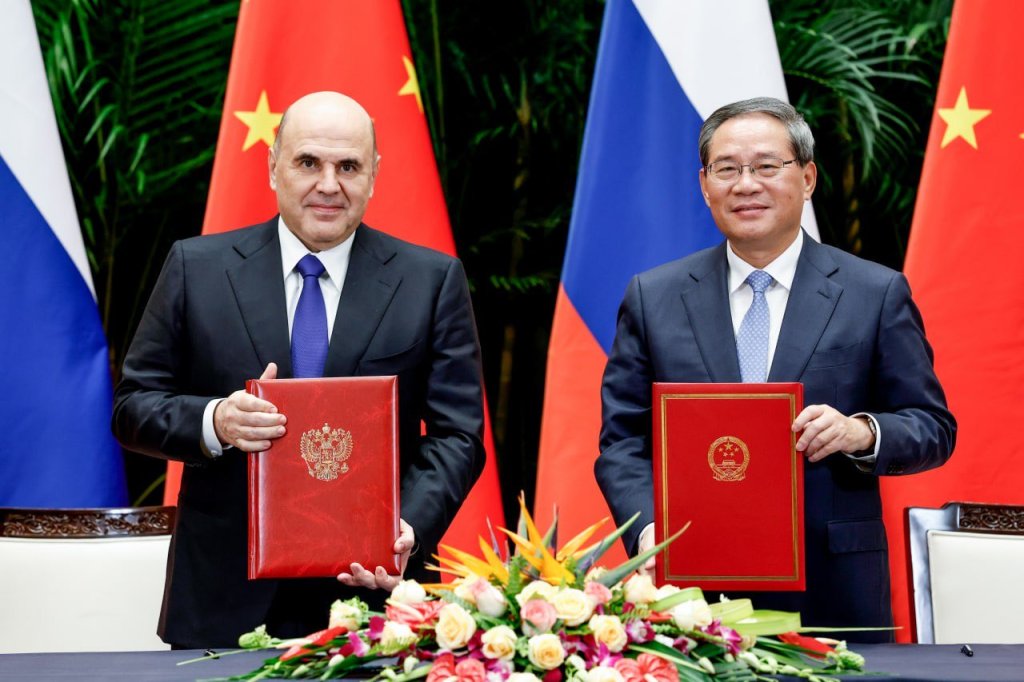
The recent communique between Russia and China, signed by Russian Prime Minister Mikhail Mishustin and Chinese Premier Li Qiang, marks another step in the quiet but steady consolidation of their strategic partnership. The document sets out a framework for expanded cooperation across science, technology, agriculture, trade, ecology, investment, artificial intelligence, culture, tourism, and border-city integration. It reaffirms Russia’s adherence to the One-China policy, supports Beijing’s stance on Taiwan, and records China’s endorsement of Russia’s sovereignty and security concerns. It also outlines a commitment to promote peace and stability in the Arctic, deepen cooperation in space exploration, and encourage greater people-to-people contact, including visa-free travel. Both sides pledged to work together in multilateral formats such as the Shanghai Cooperation Organisation, BRICS, and the United Nations, to counter what they describe as the politicisation of international institutions and to promote a fair, multipolar world and inclusive globalisation.

The communique does not introduce new ideology but consolidates what has already been developing since 2014. Western sanctions imposed after the annexation of Crimea began pushing Russia towards China. The war in Ukraine in 2022 accelerated that trajectory by severing Russia’s access to Western finance and technology. Moscow has since expanded trade with Beijing, with Chinese customs data showing bilateral trade rising from roughly 108 billion US dollars in 2020 to more than 240 billion in 2024. That represents the fastest trade expansion between any major powers during a period of global economic volatility. Russian Finance Minister Anton Siluanov said that 99.1 percent of these transactions are now settled in roubles and yuan, showing a near-complete exit from dollar-based trade between the two. This de-dollarisation is a cornerstone of the roadmap, a deliberate strategy to insulate both economies from the financial dominance of the United States and the European Union.
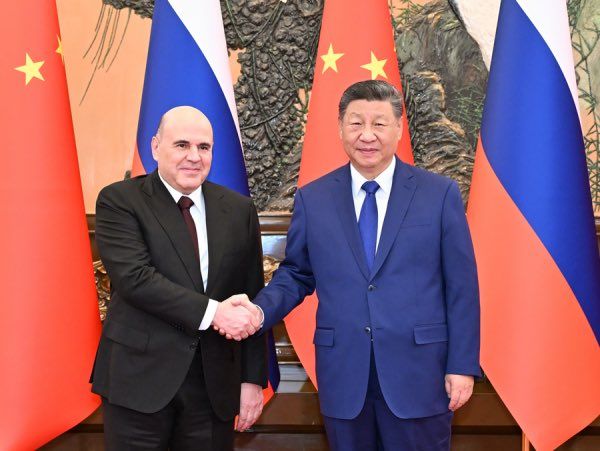
The communique also signals a maturing alignment of political interests. Each government pledged to provide firm mutual support on issues it considers vital to its sovereignty and territorial integrity. Russia’s reaffirmation of the One-China policy is consistent with its long-standing position, but its timing amid tensions in the Taiwan Strait reinforces Beijing’s confidence that Moscow will not be drawn into Western diplomatic efforts to question Chinese unity. China’s expression of support for Russia’s sovereignty and security points to tacit understanding regarding NATO expansion and Western sanctions. Chinese analysts such as Xu Poling of the Chinese Academy of Social Sciences have long argued that Russia’s confrontation with the West is not an aberration but a structural reaction to exclusion from European security arrangements. Beijing’s sympathy for this view underpins its refusal to condemn Russia over Ukraine, even as it calls for peace talks.
Independent analysts from both Russia and the wider non-Western world describe the partnership as a pragmatic arrangement rather than an alliance of sentiment. Russian foreign policy scholar Fyodor Lukyanov has written that the alignment reflects a “convergence of circumstance, not ideology.” The Russian establishment views China as a necessary partner for survival under Western isolation, while China regards Russia as both a buffer and a resource base in its wider struggle to resist US strategic containment. Brazilian analyst Pepe Escobar argues that Moscow and Beijing are “forging a functional counter-system” that seeks autonomy from Western financial and trade structures through parallel institutions in energy, transport and payments. Economist Michael Hudson, a long-time critic of Western economic dominance, describes the current phase of cooperation as “the first serious attempt in a century to build a world economy free of dollar control.” These interpretations emphasise that the partnership is not grounded in ideology but in shared interests and structural necessity.
The economic logic of the relationship rests on complementarity. Russia remains one of the world’s largest exporters of energy, raw materials and fertilisers, while China is the largest importer of those goods and the world’s primary manufacturing and investment power. Sanctions have excluded Russia from Western markets and technology networks, forcing Moscow to pivot eastward. China benefits from discounted energy imports and access to Russian raw materials, including oil, gas, coal, nickel, and uranium. Russia gains Chinese technology, machinery, and consumer goods that substitute for lost Western imports. The resulting trade pattern reinforces dependency: China has become Russia’s dominant trading partner, accounting for nearly one-third of all Russian foreign trade. Independent researcher Alexander Mercouris observes that “Russia’s shift to China is not ideological but systemic. Moscow has nowhere else to turn, and Beijing knows this, which explains the balance of leverage in the relationship.”
The political alignment has been institutionalised through regular meetings, intergovernmental commissions, and coordination in multilateral forums. The Shanghai Cooperation Organisation has become the principal political platform for Eurasian security cooperation outside Western frameworks. BRICS has evolved into a financial coordination mechanism where Russia and China promote the use of local currencies and alternative payment systems. The 2023 expansion of BRICS to include Iran, Saudi Arabia, the United Arab Emirates, and Egypt, backed by both Moscow and Beijing, demonstrated how the grouping is being reshaped into an instrument of South-South cooperation independent of the US-led global order. In the United Nations and other institutions, Russia and China frequently coordinate positions to block Western-sponsored resolutions on sanctions or interventions.
However, the relationship has limits rooted in history, geography, and asymmetry. Scholars such as Bobo Lo and Feng Huiyun note that despite the rhetoric of a “no-limits partnership,” the two powers remain strategically autonomous. They have differing conceptions of world order and different regional priorities. China’s primary focus lies in the Asia-Pacific and the Indo-Pacific maritime sphere, while Russia’s is in Europe, the Arctic, and the former Soviet space. Their security perceptions overlap but do not fully align. Russia fears NATO expansion and Western interference in its near abroad; China fears encirclement in the western Pacific and the undermining of Communist Party rule through ideological and economic pressure. The communique conceals these differences under the language of “mutual support,” but neither side commits to joint defence obligations or military integration.
China’s reluctance to provide Russia with direct military support for its war in Ukraine demonstrates that the relationship remains transactional. Beijing avoids overt violation of Western sanctions that might expose it to secondary restrictions. Instead, it provides Russia with dual-use goods, components and civilian technology through indirect channels. Russia’s need for such supplies reinforces its dependence on China, which creates unease within parts of the Russian elite. Independent Russian commentators such as Sergey Karaganov and Dmitry Trenin have warned that overreliance on China could reduce Russia to “a junior partner” whose foreign policy space is constrained by Beijing’s priorities. Such warnings have grown louder as trade and currency settlement data show the balance of advantage tilting steadily toward China.
The asymmetry is evident in the financial structure of the partnership. The yuan is not a fully convertible reserve currency, but it has gained prominence in Russia’s reserves and trade settlements since 2022. The rouble, by contrast, has little role in Chinese reserves or global trade. The so-called de-dollarisation process therefore strengthens Chinese monetary influence while not providing Russia with equal autonomy. Analysts such as Michael Roberts note that “the move to national currencies is not balanced. The yuan is becoming a regional settlement medium under Chinese terms, while Russia remains a price-taker.” Yet Moscow accepts this trade-off as the price of survival.
The roadmap outlined in the communique extends cooperation to frontier sectors such as artificial intelligence, biotechnology, space exploration and the Arctic. These are areas where each side sees both opportunity and sensitivity. Joint space projects offer Russia a means to maintain relevance in high-technology domains where Western sanctions have cut it off from international collaboration. China gains access to Russian experience in orbital mechanics, rocketry, and human spaceflight. Arctic cooperation is more complex. Russia controls vast northern territories rich in hydrocarbons and minerals. China declares itself a “near-Arctic state” and seeks access to new shipping routes opened by melting ice. Both governments claim that their cooperation will promote peace and stability, but the real aim is to establish a joint presence in a region where the United States and its allies have increased naval activity. The communique’s inclusion of the Arctic is a signal of intent to defend and develop alternative maritime corridors that bypass Western choke points.
Cultural and people-to-people exchanges occupy a smaller but politically symbolic place in the roadmap. Both sides have expanded language programmes, university partnerships and tourism initiatives to strengthen what they call “civilisational understanding.” These soft-power moves aim to consolidate public support for the partnership and reduce mutual suspicion that historically limited Russo-Chinese relations. In practice the asymmetry persists. Chinese investment dominates Russia’s Far East, where demographic and economic trends favour Chinese influence. Russian scholars such as Vladimir Portyakov have observed that “the economic weight of China in the Russian Far East is growing faster than local capacities to absorb it.” The communique’s emphasis on border-city cooperation and visa-free travel is therefore also a management tool to institutionalise this reality under state control rather than leaving it to unregulated migration and trade.
The joint stance on global governance reflects shared grievances. Both states argue that the post-Cold War order has been monopolised by the United States and its allies. They view Western sanctions, military interventions, and control over financial institutions as instruments of domination rather than rules of law. By calling for an “inclusive globalisation,” the communique uses language that echoes the Non-Aligned Movement rather than Soviet rhetoric. It suggests a convergence between Russian traditionalism and Chinese developmentalism around a common opposition to Western liberal hegemony. Independent analyst Alastair Crooke notes that “the multipolar idea promoted by Moscow and Beijing is not utopian but defensive. It is a shield against being subsumed by the Western value system and its economic conditionalities.”
China’s earlier twelve-point plan for resolving the Ukraine conflict, which Russia described as the most reasonable framework presented by any major power, fits within this approach. The plan avoided explicit condemnation of either side and called for respect for sovereignty alongside recognition of legitimate security interests. The West dismissed it as vague, but Moscow viewed it as evidence that Beijing would not join Western pressure campaigns. This diplomatic posture continues in the communique, which commits both sides to promoting peace but without endorsing Western interpretations of peace based on withdrawal or reparations.
The future course of the relationship will likely follow the pattern already evident since 2022. Trade and investment will deepen, financial cooperation will expand, and multilateral coordination will become more regular. The power imbalance will grow as China’s economy outpaces Russia’s. Russia will continue to supply resources and energy in exchange for manufactured goods, technology, and political cover. The partnership will remain a mechanism for both countries to shield themselves from Western pressure, not a formal alliance. Military coordination will increase in visibility through joint exercises, naval patrols and arms technology exchanges, but without a binding defence commitment. The two governments will keep their options open to avoid entanglement in each other’s wars.
Independent observers diverge on whether this trajectory will stabilise or eventually generate friction. Some, such as Andrew Korybko, predict a lasting strategic alignment because the shared opposition to US dominance outweighs any internal tension. Others, including Gilbert Doctorow, suggest that dependence breeds resentment and that Russia’s political culture will not tolerate long-term subordination to China. The balance will depend on external pressures. As long as the United States maintains sanctions on Russia and rivalry with China, both will find common cause. Should Washington attempt rapprochement with either, the other could find itself marginalised. The communique therefore functions as both a declaration of solidarity and a hedge against uncertainty in the global system.
For the broader international community, the roadmap signals that the era of uncontested Western leadership in global economic and political affairs is ending. The rise of parallel institutions, payment systems, and diplomatic groupings supported by Russia and China indicates a diversification of global governance. Independent think tanks such as the Tricontinental Institute and the Geopolitical Economy Research Group argue that this represents “the material emergence of multipolarity” rather than a temporary alliance of convenience. They note that the volume of trade conducted outside the dollar has expanded significantly since 2022, not only between Russia and China but across parts of Asia, the Middle East and Africa influenced by their example.
The communique also exposes a divide in analytical approaches. Western establishment media describe the partnership as authoritarian collusion aimed at undermining the liberal order. Independent scholars and journalists emphasise the structural context: Western sanctions and interventions have driven both powers to cooperate for self-preservation. The contrast reflects differing assumptions about legitimacy in international relations. For the Western establishment, stability equals adherence to existing rules; for Moscow and Beijing, stability means autonomy from coercion by dominant powers.
In evaluating the significance of the communique, one must consider the practical realities behind the language. Russia’s dependence on Chinese technology and finance gives Beijing leverage, but China’s reliance on Russian energy and security coordination in Central Asia ensures interdependence. Neither can easily break away without strategic loss. Their coordination in BRICS and the SCO provides a forum for managing this balance. Analysts such as John Ross of Renmin University note that “the partnership is the most advanced expression of a shift toward the majority world taking back control of its economic destiny.” That claim may overstate coherence, but it reflects a genuine perception across the Global South that the Russo-Chinese axis provides alternative space for national development outside Western tutelage.
The communique between Mishustin and Li Qiang is therefore best understood not as a symbolic gesture but as a functional roadmap for continued convergence. Its clauses on technology, investment and border cooperation show that both sides intend to embed the relationship in practical projects that will endure beyond leadership cycles. Its commitment to multipolarity defines the ideological frame, but the engine is economic necessity. The document’s tone, pragmatic and bureaucratic, avoids grand declarations because the partnership itself is a work in progress shaped by circumstance rather than doctrine.
The implications extend beyond Eurasia. As Russia and China deepen their coordination, countries in the Global South find new bargaining leverage. Energy exporters such as Iran, Saudi Arabia and Venezuela can trade in non-dollar currencies; developing states in Africa and Latin America gain alternative investment sources free of Western conditionality. The communique’s language on “inclusive globalisation” appeals to these constituencies. Whether the model succeeds depends on the durability of Sino-Russian cooperation and their ability to maintain internal stability under economic strain.
In conclusion, the roadmap for relations issued by Russia and China consolidates an existing trajectory rather than inaugurating a new era. It formalises their economic interdependence, institutionalises cooperation in multilateral bodies, and codifies mutual political support against Western pressure. Independent experts agree that the partnership is pragmatic, asymmetrical, and likely to persist so long as the international environment remains adversarial. Its success will depend on how both manage the balance of power within it. Russia risks excessive dependence; China risks overextension and potential backlash. For now, necessity binds them. The communique is less a statement of ideology than a charter of survival in a world moving away from unipolarity.
Authored By: Global GeoPolitics
If you believe journalism should serve the public, not the powerful, and you’re in a position to help, becoming a PAID SUBSCRIBER truly makes a difference. Alternatively you can support by way of a cup of coffee:
buymeacoffee.com/ggtv
https://ko-fi.com/globalgeopolitics
Global Geopolitics on Telegram


Leave a comment